


6 months 2 weeks ago
"I never believed in God before." - that I understand. But not: "I never really believed in Him before."
▼
Source
source
p. 53e
7 months 3 weeks ago
When people are friends, they have no need of justice, but when they are just, they need friendship in addition.
5 months 4 weeks ago
Gratitude is a burden, and every burden is made to be shaken off.

5 months 3 weeks ago
If there is to be any philosophy at all, this contradiction must be resolved - and the solution of this problem, or answer to the question: how can we think both of Presentations as conforming to objects, and objects as conforming to presentations? is, not the first, but the highest task of transcendental philosophy.

6 months 3 weeks ago
Reason nevertheless prevails in world history.
6 months 3 weeks ago
The ancient Egyptians had a superstitious antipathy to the sea; a superstition nearly of the same kind prevails among the Indians; and the Chinese have never excelled in foreign commerce.
▼
Source
source
Chapter V, p. 402.

6 months 3 weeks ago
Who looks in the sun will see no light else; but also he will see no shadow. Our life revolves unceasingly, but the centre is ever the same, and the wise will regard only the seasons of the soul.
▼
Source
source
March 10, 1841
6 months 3 weeks ago
From another side: is Achilles possible with powder and lead? Or the Iliad with the printing press, not to mention the printing machine? Do not the song and saga of the muse necessarily come to an end with the printer's bar, hence do not the necessary conditions of epic poetry vanish?
▼
Source
source
Introduction, p. 31.

2 months 3 weeks ago
The soul follows the progress of the body, as it does the progress of education.

5 months 2 weeks ago
Have no fear, little flock, for your Father has approved of giving you the Kingdom.
▼
Source
source
12:32
7 months 1 week ago
The wise find pleasure in water; the virtuous find pleasure in hills. The wise are active; the virtuous are tranquil. The wise are joyful; the virtuous are long-lived.

3 months 2 weeks ago
On the dust of our heroic ancestors we too sit ballot-boxing, saying to one another, It is well, it is well! By inheritance of their noble struggles, we have been permitted to sit slothful so long. By noble toil, not by shallow laughter and vain talk, they made this English Existence from a savage forest into an arable inhabitable field for us; and we, idly dreaming it would grow spontaneous crops forever,-find it now in too questionable a state.
3 months 2 weeks ago
In a valiant suffering for others, not in a slothful making others suffer for us, did nobleness ever lie.

6 months 3 weeks ago
It was the excess to which imaginary systems of religion had been carried, and the intolerance, persecutions, burnings, and massacres, they occasioned, that first induced certain persons to propagate infidelity; thinking, that upon the whole, that it was better not to believe at all, than to believe a multitude of things and complicated creeds, that occasioned so much mischief in the world. But those days are past, persecution has ceased, and the antidote then set up against it has no longer even the shadow of apology. We profess, and we proclaim in peace, the pure, unmixed, comfortable, and rational belief of a God, as manifested to us in the universe. We do this without any apprehension of that belief being made a cause of persecution as other beliefs have been, or of suffering persecution ourselves. To God, and not to man, are all men to account for their belief.
▼
Source
source
A Discourse, &c. &c.

5 months 3 weeks ago
Politics and the pulpit are terms that have little agreement.
7 months 1 week ago
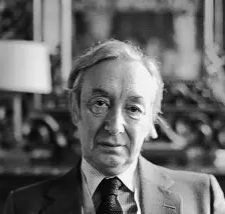
If a man has reported to you, that a certain person speaks ill of you, do not make any defense (answer) to what has been told you: but reply, The man did not know the rest of my faults, for he would not have mentioned these only.
▼
Source
source
(33) [tr. George Long (1888)].
5 months 2 weeks ago
While moral rules may be propounded by authority the fact that these were so propounded would not validate them.
▼
Source
source
"The Meaning of Life".
3 months 2 weeks ago
In science, as in the playing card experiment, novelty emerges only with difficulty, manifested by resistance, against a background provided by expectation.
▼
Source
source
p. 64

5 months 3 weeks ago
Blood will stream over Europe until the nations become aware of the frightful madness which drives them in circles. And then, struck by celestial music and made gentle, they approach their former altars all together, hear about the works of peace, and hold a great celebration of peace with fervent tears before the smoking altars.
▼
Source
source
As quoted in the Fourth Leaflet of the White Rose
6 months 3 weeks ago
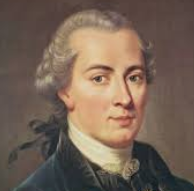
The sensuous may be exceedingly distinct, while intellectual concepts are extremely confused. The former we observe in the prototype of sensuous knowledge geometry; the latter, in the organon of all intellectual concepts, metaphysics. It is evident how much toil the latter is expending to dispel the fogs of confusion darkening the common intellect, though not always with the happy success of the former science.


5 months 1 week ago
The most authentic Catholic ethic, monastic asceticism, is an ethic of eschatology, directed to the salvation of the individual soul rather than to the maintenance of society. And in the cult of virginity may there not perhaps be a certain obscure idea that to perpetuate ourselves in others hinders our own personal perpetuation?

2 months 2 weeks ago
The controlling Intelligence understands its own nature, and what it does, and whereon it works.
▼
Source
source
VI, 5
2 months 3 weeks ago
There is only one woman in the world. One woman, with many faces.
▼
Source
source
This occurs in the film The Last Temptation of Christ (1988), based upon the novel by Kazantzakis, but has not been located in the novel itself.

6 months 3 weeks ago
I went to Salt Lake City and the Mormons tried to convert me, but when I found they forbade tea and tobacco I thought it was no religion for me.
▼
Source
source
Letter to C. P. Sanger, 23 December, 1929


5 months 3 weeks ago
A widow, the mother of a family, and from her heart she produces chords to which my whole being responds.
▼
Source
source
Part 1, Chapter 12
6 months 5 days ago
Love is a God, who cooperates in securing the safety of the city.
▼
Source
source
As quoted in Deipnosophists by Athenaeus, xiii. 561c.

5 months 6 days ago
The average mind is slow in grasping a truth, but when the most thoroughly organized, centralized institution, maintained at an excessive national expense, has proven a complete social failure, the dullest must begin to question its right to exist. The time is past when we can be content with our social fabric merely because it is "ordained by divine right," or by the majesty of the law.

3 months 1 week ago
To no creature besides man has been given wisdom, foresight, industry, and reflection.

4 months 3 weeks ago
World War I a railway war of centralization and encirclement. World War II a radio war of decentralization concluded by the Bomb. World War III a TV guerrilla war with no divisions between civil and military fronts.
▼
Source
source
(p. 152)
6 months 3 weeks ago
In politics, love is a stranger, and when it intrudes upon it nothing is being achieved except hypocrisy. All the characteristics you stress in the Negro people: their beauty, their capacity for joy, their warmth, and their humanity, are well-known characteristics of all oppressed people. They grow out of suffering and they are the proudest possession of all pariahs. Unfortunately, they have never survived the hour of liberation by even five minutes. Hatred and love belong together, and they are both destructive; you can afford them only in private and, as a people, only so long as you are not free.
▼
Source
source
Letter to James Baldwin

6 months 3 weeks ago
This inner revolution is realistic because it maintains itself deliberately within the framework of existing institutions; the oppressed reckon with the real situation.
▼
Source
source
p. 66

5 months 2 weeks ago
Anyone can escape into sleep, we are all geniuses when we dream, the butcher's the poet's equal there.

3 months 2 weeks ago
The End of History was never linked to a specifically American model of social or political organisation. Following Alexandre Kojève, the Russian-French philosopher who inspired my original argument, I believe that the European Union more accurately reflects what the world will look like at the end of history than the contemporary United States. The EU's attempt to transcend sovereignty and traditional power politics by establishing a transnational rule of law is much more in line with a "post-historical" world than the Americans' continuing belief in God, national sovereignty, and their military.
▼
Source
source
In "The history at the end of history", The Guardian
5 months 2 weeks ago
Mere imagination would indeed be mere trifling; only no imagination is mere.
▼
Source
source
Vol. VI, par. 286
5 months 5 days ago
Man is born as a freak of nature, being within nature and yet transcending it. He has to find principles of action and decision-making which replace the principles of instincts. He has to have a frame of orientation which permits him to organize a consistent picture of the world as a condition for consistent actions. He has to fight not only against the dangers of dying, starving, and being hurt, but also against another danger which is specifically human: that of becoming insane. In other words, he has to protect himself not only against the danger of losing his life but also against the danger of losing his mind.
▼
Source
source
The Revolution of Hope: Toward a Humanized Technology (1968), p. 61
7 months 3 weeks ago
Where is the boundary for the single individual in his concrete existence between what is lack of will and what is lack of ability; what is indolence and earthly selfishness and what is the limitation of finitude? For an existing person, when is the period of preparation over, when this question will not arise again in all its initial, troubled severity; when is the time in existence that is indeed a preparation? Let all the dialecticians convene-they will not be able to decide this for a particular individual in concreto.
7 months 3 weeks ago
God creates out of nothing. Wonderful you say. Yes, to be sure, but He does what is still more wonderful: He makes saints out of sinners.
5 months 3 weeks ago
I considerd a general War against Jacobins and Jacobinism, as the only possible chance of saving Europe, (and England as included in Europe) from a truly frightful revolution. ... It is my Protest against the delusion, by which some have been taught to look upon this Jacobin contest at home as an ordinary party squabble about place or Patronage; and to regard this Jacobin War abroad as a common War about Trade, or Territorial Boundaries, or about a political Balance of power among Rival or jealous States.
▼
Source
source
Letter to the Duke of Portland (29 September 1793), quoted in P. J. Marshall and John A. Woods (eds.)

7 months 1 week ago
What once sprung from earth sinks back into the earth.
▼
Source
source
Book II, lines 999-1000 (tr. Bailey)
6 months 3 weeks ago
Philosophy, if it cannot answer so many questions as we could wish, has at least the power of asking questions which increase the interest of the world, and show the strangeness and wonder lying just below the surface even in the commonest things of daily life.

7 months 3 weeks ago
Deep within every human being there still lives the anxiety over the possibility of being alone in the world, forgotten by God, overlooked among the millions and millions in this enormous household. One keeps this anxiety at a distance by looking at the many round about who are related to him as kin and friends, but the anxiety is still there, nevertheless, and one hardly dares think of how he would feel if all this were taken away.
3 months 1 week ago
Philosophy is a hypothetical interpretation of the unknown (as in metaphysics), or of the inexactly known (as in ethics or political philosophy); it is the front trench in the siege of truth.
2 months 3 weeks ago
By scientific thought we mean the application of past experience to new circumstances by means of an observed order of events. By saying that this order of events is exact we mean that it is exact enough to correct experiments by, but we do not mean that it is theoretically or absolutely exact, because we do not know. The process of inference [is] in itself an assumption of uniformity, and... as the known exactness of the uniformity became greater, the stringency of the inference [is] increased. By saying that the order of events is reasonable we do not mean that everything has a purpose, or that everything can be explained, or that everything has a cause; for neither of these is true. But we mean that to every reasonable question there is an intelligible answer, which either we or posterity may know by the exercise of scientific thought.
▼
Source
source
155-156.
5 months 2 weeks ago
The concept of guilt is found most powerfully developed even in the most primitive communal forms which we know: ... the man is guilty who violates one of the original laws which dominate the society and which are mostly derived from a divine founder; the boy who is accepted into the tribal community and learns its laws, which bind him thenceforth, learns to promise; this promise is often given under the sign of death, which is symbolically carried out on the boy, with a symbolical rebirth.
▼
Source
source
p. 178
2 months 2 weeks ago
Don't let yourself forget how many doctors have died, after furrowing their brows over how many deathbeds. How many astrologers, after pompous forecasts about others' ends. How many philosophers, after endless disquisitions on death and immortality. How many warriors, after inflicting thousands of casualties themselves. How many tyrants, after abusing the power of life and death atrociously, as if they were themselves immortal.
▼
Source
source
(Hays translation) IV, 48
7 months 1 day ago
Man is certainly crazy. He could not make a mite, and he makes gods by the dozen.
▼
Source
source
Ch. 12
CivilSimian.com created by AxiomaticPanic, CivilSimian, Kalokagathia