

5 months 2 weeks ago
The person who is going to preach ought to live in the Christian thoughts and ideas: they ought to be his daily life. If so, this is the view of Christianity, then you, too, will have eloquence enough and precisely that which is needed when you speak extemporaneously without specific preparation. However, it is fallacious eloquence if someone, without otherwise occupying himself with, without living in these thoughts, once in a while sits down and laboriously collects such thoughts, perhaps in the field of literature, and then works them into a well-composed discourse, which is then committed to memory and delivered superbly, with respect both to voice and diction and gestures.
3 months 2 weeks ago
The ideal of Morality has no more dangerous rival than the ideal of highest Strength, of most powerful life; which also has been named (very falsely as it was there meant) the ideal of poetic greatness. It is the maximum of the savage; and has, in these times, gained, precisely among the greatest weaklings, very many proselytes. By this ideal, man becomes a Beast-Spirit, a Mixture; whose brutal wit has, for weaklings, a brutal power of attraction.
3 months 1 week ago
Perhaps the only true dignity of man is his capacity to despise himself.
3 months 5 days ago
Philosophy ... must not bargain away anything of the emphatic concept of truth.
▼
Source
source
p. 7
4 months 3 weeks ago
Now I say this to keep the conscience free from mischievous laws and fictitious sins, and not because I would defend images. Nor would I condemn those who have destroyed them, especially those who destroy divine and idolatrous images. But images for memorial and witness, such as crucifixes and images of saints, are to be tolerated.
▼
Source
source
p. 91
3 months 1 day ago
I believe that man is the product of natural evolution that is born from the conflict of being a prisoner and separated from nature, and from the need to find unity and harmony with it.
4 months 2 weeks ago
Indeed, it is tempting to suppose that it is self evident that things should be so arranged so as to lead to the most good.
▼
Source
source
Chapter I, Section 5, pg. 25
2 weeks 5 days ago
I would rather be exposed to the inconveniences attending too much liberty, than those attending too small a degree of it.
▼
Source
source
Letter to Archibald Stuart , Philadelphia

1 month 1 week ago
"Genius" (which means transcendent capacity of taking trouble, first of all).
▼
Source
source
Life of Fredrick the Great, Bk. IV, ch. 3 (1858-1865). Sometimes misreported as "Genius is an infinite capacity for taking pains";
3 months 2 weeks ago
To conceive that compulsion and punishment are the proper means of reformation, is the sentiment of a barbarian; civilisation and science are calculated to explode so ferocious an idea. It was once universally admitted and approved; it is now necessarily upon the decline.
▼
Source
source
Vol. 2, bk. 7, ch. 5
2 months 3 weeks ago
We're terrible animals. I think that the Earth's immune system is trying to get rid of us, as well it should.
▼
Source
source
On humans, interviewed by Jon Stewart, The Daily Show
3 months 1 week ago
The determination of the mot juste, of the right incident in the right place, of exquisiteness of proportion, of the precise tone, hue, and shade that helps unify the whole while it defines a part, is accomplished by emotion. Not every emotion, however, can do this work, but only one informed by material that is grasped and gathered. Emotion is informed and carried forward when it is spent indirectly in search for material and in giving it order, not when it is directly expended.
▼
Source
source
p. 73
4 months 3 weeks ago
If a big diamond is cut up into pieces, it immediately loses its value as a whole; or if an army is scattered or divided into small bodies, it loses all its power; and in the same way a great intellect has no more power than an ordinary one as soon as it is interrupted, disturbed, distracted, or diverted; for its superiority entails that it concentrates all its strength on one point and object, just as a concave mirror concentrates all the rays of light thrown upon it. Noisy interruption prevents this concentration. This is why the most eminent intellects have always been strongly averse to any kind of disturbance, interruption and distraction, and above everything to that violent interruption which is caused by noise; other people do not take any particular notice of this sort of thing.
▼
Source
source
On Noise
4 months 3 weeks ago
Means at our disposal should be regarded as a bulwark against the many evils and misfortunes that can occur. We should not regard such wealth as a permission or even an obligation to procure for ourselves the pleasures of the world.
▼
Source
source
E. Payne, trans. (1974) Vol. 1, p. 348
2 months 3 days ago
The ideology of development has implied the globalization of the priorities, patterns, and prejudices of the West. Instead of self-generated, development is imposed. Instead of coming from within, it is externally guided. Instead of contributing to the maintenance of diversity, development has created homogeneity...
▼
Source
source
Monocultures of the Mind: Perspectives on Biodiversity and Biotechnology
4 months 1 week ago
Pyrrhus said, "If I should overcome the Romans in another fight, I were undone."
▼
Source
source
47 Pyrrhus
2 months 4 weeks ago
One might call habit a moral friction: something that prevents the mind from gliding over things but connects it with them and makes it hard for it to free itself from them.
▼
Source
source
A 10
3 months 5 days ago
Necessity resides in the way we talk about things, not in the things we talk about.
▼
Source
source
Ways of Paradox and Other Essays (1976), p. 174

3 months 1 week ago
See thou tell no man; but go thy way, shew thyself to the priest, and offer the gift that Moses commanded, for a testimony unto them.
▼
Source
source
8:4 (KJV) Said to a man cured of leprosy.

4 months 2 weeks ago
Nihilism is not overcome by arguments or analyses; it is tamed by love and care. Any disease of the soul must be conquered by a turning of one's soul.
▼
Source
source
(p19)
2 weeks 5 days ago
One of our fan-coloring biographers, who paints small men as very great, inquired of me lately with real affection too, whether he might consider as authentic, the change of my religion much spoken of in some circles. Now this supposed that they knew what had been my religion before, taking for it the word of their priests, whom I certainly never made the confidants of my creed. My answer was "say nothing of my religion. It is known to my God and myself alone. Its evidence before the world is to be sought in my life; if that has been honest and dutiful to society, the religion which has regulated it cannot be a bad one."
▼
Source
source
Letter to John Adams (11 January 1817), published in The Works of Thomas Jefferson in Twelve Volumes, Federal Edition, Paul Leicester Ford, ed., New York: G. P. Putnam's Sons, 1904, Vol. 12, pp. 48-49

4 months 2 weeks ago
My aim is: to teach you to pass from a piece of disguised nonsense to something that is patent nonsense.
▼
Source
source
§ 464
1 month 1 week ago
I cannot call this Shakspeare a "Sceptic," as some do; his indifference to the creeds and theological quarrels of his time misleading them. No: neither unpatriotic, though he says little about his Patriotism; nor sceptic, though he says little about his Faith. Such "indifference" was the fruit of his greatness withal: his whole heart was in his own grand sphere of worship (we may call it such); these other controversies, vitally important to other men, were not vital to him.

4 months 2 weeks ago
I do like clarity and exact thinking and I believe that very important to mankind because when you allow yourself to think inexactly your prejudices, your bias, your self interest comes in in ways you don't notice and you do bad things without knowing that you are doing them: self deception is very easy. So that I do think clear thinking immensely important.
▼
Source
source
Television interview ("On clarity and exact thinking" - available on youtube)

5 months 2 weeks ago
The important thing isn't the soundness or otherwise of the argument, but for it to make you think.

3 months 3 weeks ago
In America the majority raises formidable barriers around the liberty of opinion; within these barriers an author may write what he pleases, but woe to him if he goes beyond them.
▼
Source
source
Chapter XV, in a section titled Tryanny of the Majority.
1 week 2 days ago
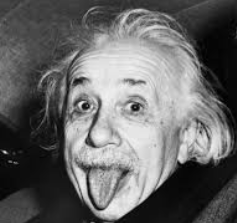
The meaning of relativity has been widely misunderstood. Philosophers play with the word, like a child with a doll. Relativity, as I see it, merely denotes that certain physical and mechanical facts, which have been regarded as positive and permanent, are relative with regard to certain other facts in the sphere of physics and mechanics. It does not mean that everything in life is relative and that we have the right to turn the whole world mischievously topsy-turvy.
3 months 1 day ago
If a person loves only one other person and is indifferent to all others, his love is not love but a symbiotic attachment, or an enlarged egotism.
1 month 1 week ago
He who would write heroic poems should make his whole life a heroic poem.
▼
Source
source
Life of Schiller.
4 months 2 weeks ago
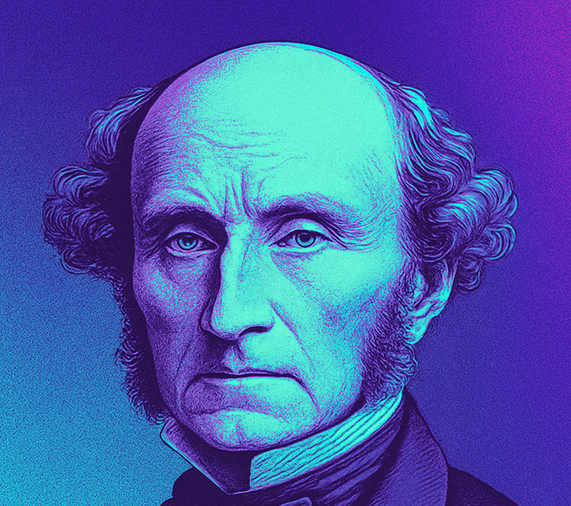
The utilitarian morality does recognise in human beings the power of sacrificing their own greatest good for the good of others. It only refuses to admit that the sacrifice is itself a good. A sacrifice which does not increase, or tend to increase, the sum total of happiness, it considers as wasted. The only self-renunciation which it applauds, is devotion to the happiness, or to some of the means of happiness, of others; either of mankind collectively, or of individuals within the limits imposed by the collective interests of mankind.
▼
Source
source
Ch. 2

4 months 2 weeks ago
Under no pretext should arms and ammunition be surrendered; any attempt to disarm the workers must be frustrated, by force if necessary.
▼
Source
source
Address of the Central Committee to the Communist League in London, March 1850

4 months 3 weeks ago
I am angry at the custom of forbidding children to call their father by the name of father, and to enjoin them another, as more full of respect and reverence, as if nature had not sufficiently provided for our authority. We call Almighty God Father, and disdain to have our children call us so. I have reformed this error in my family.-[As did Henry IV of France]-And 'tis also folly and injustice to deprive children, when grown up, of familiarity with their father, and to carry a scornful and austere countenance toward them, thinking by that to keep them in awe and obedience; for it is a very idle farce that, instead of producing the effect designed, renders fathers distasteful, and, which is worse, ridiculous to their own children.
▼
Source
source
Ch. 8. On the Affections of Fathers to their Children, tr. Cotton, rev. W. Carew Hazlitt, 1877

4 months 2 weeks ago
Real culture lives by sympathies and admirations, not by dislikes and disdain - under all misleading wrappings it pounces unerringly upon the human core.
▼
Source
source
The Social Value of the College-Bred
5 months 2 days ago
The source of the errors of these two sects, is in not having known that the state of man at the present time differs from that of his creation; so that the one, remarking some traces of his first greatness and being ignorant of his corruption, has treated nature as sound and without need of redemption, which leads him to the height of pride; whilst the other, feeling the present wretchedness and being ignorant of the original dignity, treats nature as necessarily infirm and irreparable, which precipitates it into despair of arriving at real good, and thence into extreme laxity.
2 months 2 weeks ago
Adversity shows whether we have friends, or only the shadows of friends.
▼
Source
source
Maxim 35
4 months 2 weeks ago
"Everything is already there in...." How does it come about that [an] arrow points? Doesn't it seem to carry in it something besides itself? - "No, not the dead line on paper; only the psychical thing, the meaning, can do that." - That is both true and false. The arrow points only in the application that a living being makes of it.
▼
Source
source
§ 454
5 months 2 weeks ago
The first philosophers, in investigating the truth and the nature of things, wandered, as if led by ignorance, into a certain... path. Hence, they say that no being is either generated or corrupted, because it is necessary that what is generated should be generated either from being or non-being: but both these are impossible; for neither can being be generated, since it already is; and from nothing, nothing can be generated... And thus... they said that there were not many things, but that being alone had a subsistence. ...the ancient philosophers ...through this ignorance added so much to their want of knowledge, as to fancy that nothing else was generated or had a being; but they subverted all generation.

4 months 2 weeks ago
Shallow men believe in luck.
▼
Source
source
Worship

3 months 2 days ago
It seemed perfectly possible that, in spite of my certainty of my own genius, I might die of some illness, or perhaps even in a street accident, before I had ever glimpsed the meaning of life. My moods of happiness and self-confidence convinced me that I had a "destiny" to become a famous writer, and to be remembered as one of the most important thinkers of the century.
▼
Source
source
p. 67
3 months 1 week ago
Institutionalized desublimation thus appears to be an aspect of the "conquest of transcendence" achieved by the one-dimensional society. Just as this society tends to reduce, and even absorb opposition (the qualitative difference!) in the realm of politics and higher culture, so it does in the instinctual sphere. The result is the atrophy of the mental organs for grasping the contradictions and the alternatives and, in the one remaining dimension of technological rationality, the Happy Consciousness comes to prevail.
▼
Source
source
p. 79

4 months 1 week ago
Practice no sloth, so that the duty and good work, which it is necessary for thee to do, may not remain undone.
▼
Source
source
(p. 59)

2 months 2 weeks ago
Every innovation scraps its immediate predecessor and retrieves still older figures - it causes floods of antiques or nostalgic art forms and stimulates the search for museum pieces.
3 months 3 weeks ago
I cannot help fearing that men may reach a point where they look on every new theory as a danger, every innovation as a toilsome trouble, every social advance as a first step toward revolution, and that they may absolutely refuse to move at all.
▼
Source
source
Book Three, Chapter XXI.
1 month 3 weeks ago
In a free system any large, popular, revolutionary movement should be able to bring about its ends by such a voluntary process. As more and more people see how it works more and more will wish to participate in or support it. And so it will grow, without being necessary to force everyone or a majority or anyone into the pattern.
▼
Source
source
Ch. 10 : A Framework for Utopia; Utopian Means and Ends, p. 327
4 months 2 weeks ago
The best life is the one in which the creative impulses play the largest part and the possessive impulses the smallest.

4 months 2 weeks ago
It is Christ Himself, not the Bible, who is the true Word of God. The Bible, read in the right spirit and with the guidance of good teachers, will bring us to Him.
▼
Source
source
Letter (8 November 1952); published in Letters of C. S. Lewis (1966), p. 247
4 months 2 weeks ago
No text in the tradition seems as lucid concerning the way in which the political is becoming worldwide. concerning the irreducibility of the technical and the media in the current of the most thinking thought-and this goes beyond the railroad and the newspapers of the time whose powers were analyzed in such an incomparable way in the Manifesto. And few texts have shed so much light on law. international law. and nationalism.
▼
Source
source
Injunctions of Marx
3 months 5 days ago
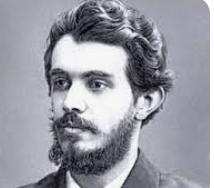
Religion for [Berdyaev] is a social phenomenon and is adapted to the needs of the masses; as such, it is embodied in visible institutions and in authoritative formulas. The mystic, on the other hand, is aristocratic in temperament and never quite at home where the masses are catered for. He cannot remain in the world of form and convention and second-hand truths which is all about us and with which official religion has to come to terms; he aspires to a contact with spiritual reality as it is, a return to the ultimate sources of his being.
▼
Source
source
Edgar Leonard Allen (1893-1961), Freedom in God: A Guide to the Thought of Nicholas Berdyaev
2 months 2 weeks ago
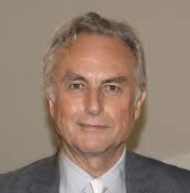
The world becomes full of organisms that have what it takes to become ancestors. That, in a sentence, is Darwinism.

3 months 3 days ago
The crisis facing men is not the crisis of masculinity, it is the crisis of patriarchal masculinity. Until we make this distinction clear, men will continue to fear that any critique of patriarchy represents a threat.
▼
Source
source
The Will To Change: Men, Masculinity, and Love
CivilSimian.com created by AxiomaticPanic, CivilSimian, Kalokagathia