Because in the end particularity is a slanderous joke to deterministic universality.


If a well were sunk at our feet in the midst of the city of Norwich, the diggers would very soon find themselves at work in that white substance almost too soft to be called rock, with which we are all familiar as "chalk".
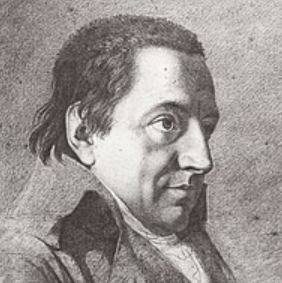
I have distinctly announced the grounds upon which I regard the Apostle John as the only teacher of true Christianity:-namely, that the Apostle Paul and his party, as the authors of the opposite system of Christianity, remained half Jews, and left unaltered the fundamental error of Judaism as well as of Heathenism, which we must afterwards notice. For the present the following may be enough: -It is only with John that the philosopher can deal, for he alone has respect for Reason, and appeals to that evidence which alone has weight with the philosopher-the internal. "If any man will do the will of him that sent me, he shall know of the doctrine, whether it be of God." But this Will of God, accord ing to John, is, that we should truly believe in God, and in Jesus Christ whom he hath sent. The other promulgators of Christianity, however, rely upon the external evidence of Miracle, which, to us at least, proves nothing.

To this man life is already as earnest and awful, and beautiful and terrible, as death.

Do you see this egg? With this you can topple every theological theory, every church or temple in the world. What is it, this egg, before the seed is introduced into it? An insentient mass. And after the seed has been introduced to into it? What is it then? An insentient mass. For what is the seed itself other than a crude and inanimate fluid? How is this mass to make a transition to a different structure, to sentience, to life? Through heat. And what will produce that heat in it? Motion. "Conversation Between D'Alembert and Diderot", as quoted in Selected Writings (1966) edited by Lester G. Crocker, and The Enlightenment and the Intellectual Foundations of Modern Culture (2004) by Louis K Dupré, p. 30 Variant translation: See this egg. It is with this that all the schools of theology and all the temples of the earth are to be overturned.
The "imagination that shudders at the Hell of Dante," is not that the same faculty, weaker in degree, as Dante's own? No one but Shakspeare can embody, out of Saxo Grammaticus, the story of Hamlet as Shakspeare did: but every one models some kind of story out of it; every one embodies it better or worse. We need not spend time in defining. Where there is no specific difference, as between round and square, all definition must be more or less arbitrary. A man that has so much more of the poetic element developed in him as to have become noticeable, will be called Poet by his neighbors.
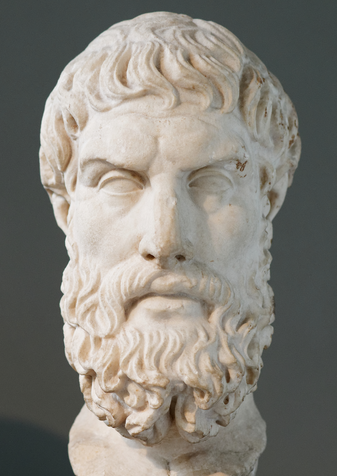
The wealth required by nature is limited and is easy to procure; but the wealth required by vain ideals extends to infinity.

But petitional prayer is only one department of prayer; and if we take the word in the wider sense as meaning every kind of inward communion or conversation with the power recognized as divine, we can easily see that scientific criticism leaves it untouched. Prayer in this wide sense is the very soul and essence of religion.
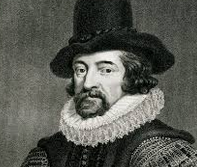
Again, we should notice the force, effect, and consequences of inventions, which are nowhere more conspicuous than in those three which were unknown to the ancients; namely, printing, gunpowder, and the compass. For these three have changed the appearance and state of the whole world; first in literature, then in warfare, and lastly in navigation: and innumerable changes have been thence derived, so that no empire, sect, or star, appears to have exercised a greater power and influence on human affairs than these mechanical discoveries.

Objective judgment, now, at this very moment. Unselfish action, now, at this very moment. Willing acceptance-now, at this very moment-of all external events. That's all you need.
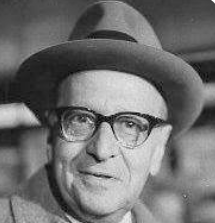
Whoever desires to live among men has to obey their laws-this is what the secular morality of Western civilization comes down to. ... Rationality in the form of such obedience swallows up everything, even the freedom to think.

"Neither this world, nor the next, nor happiness are for the being abandoned to doubt." - This point in the Gita is my death sentence.

One of the major problems of our society is that so many people are too intelligent to accept religion, but not intelligent or strong-minded enough to look for acceptable alternatives; in the same way, many people are strong-minded enough not to want to be 'organization men', but incapable of seeing beyond an act of protest. These situations produce a sense of being 'between two stools', lacking real motive; a sense of mental strain is produced that may find its outlet in violence, or in organised anti-social behaviour.

The world is upheld by the veracity of good men: they make the earth wholesome.
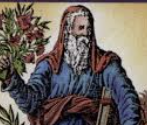
The Pythagoreans called the monad "intellect" because they thought that intellect was akin to the One; for among the virtues, they likened the monad to moral wisdom; for what is correct is one. And they called it "being," "cause of truth," "simple," "paradigm," "order," "concord," "what is equal among the greater and the lesser," "the mean between intensity and slackness," "moderation in plurality," "the instant now in time," and moreover they call it "ship," "chariot," "friend," "life," "happiness."
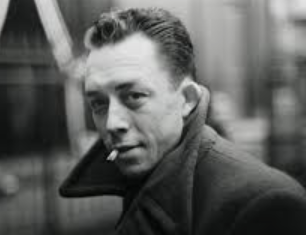
Since we're all going to die, it's obvious that when and how don't matter.

Some modern philosophers have gone so far as to say that words should never be confronted with facts but should live in a pure, autonomous world where they are compared only with other words. When you say, 'the cat is a carnivorous animal,' you do not mean that actual cats eat actual meat, but only that in zoology books the cat is classified among carnivora. These authors tell us that the attempt to confront language with fact is 'metaphysics' and is on this ground to be condemned. This is one of those views which are so absurd that only very learned men could possibly adopt them.
The last peculiarity of consciousness to which attention is to be drawn in this first rough description of its stream is that it is always interested more in one part of its object than in another, and welcomes and rejects, or chooses, all the while it thinks.
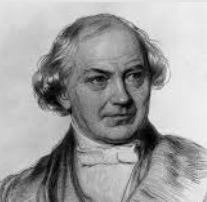
The Plan of the System, may aim at a Natural or an Artificial System. But no classes can be absolutely artificial, for if they were, no assertions could be made concerning them.

The contradictory conceptual couple, identity and difference, is not the adequate framework for understanding the organization of the multitude. Instead we are a multiplicity of singular forms of life and at the same time share a common global existence. The anthropology of the multitude is an anthropology of singularity and commonality.
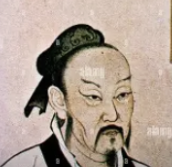
The superior man has three things in which he delights, and to be ruler over the kingdom is not one of them. That his father and mother are both alive, and that the condition of his brothers affords no cause for anxiety;-this is one delight. That, when looking up, he has no occasion for shame before Heaven, and, below, he has no occasion to blush before men;-this is a second delight. That he can get from the whole kingdom the most talented individuals, and teach and nourish them;-this is the third delight.
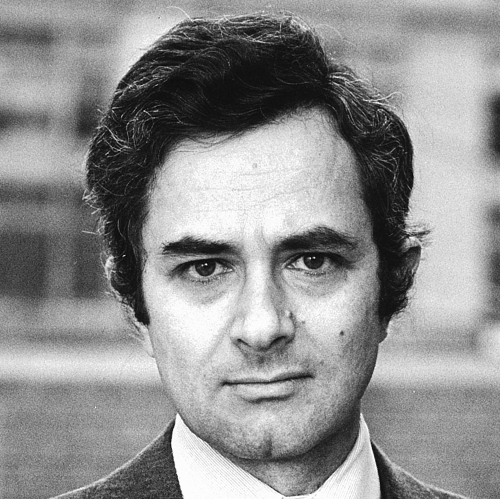
With regard to the rather common general distinction between good and bad sex ..., bad sex is generally better than none at all. This should not be controversial: it seems to hold for other important matters, like food, music, literature, and society. In the end, one must choose from among the available alternatives, whether their availability depends on the environment or on one's own constitution. And the alternatives have to be fairly grim before it becomes rational to opt for nothing.

I will not talk about people a thousand miles off, but come as near home as I can. As the time is short, I will leave out all the flattery, and retain all the criticism. Let us consider the way in which we spend our lives.

The demands of a free populace, too, are very seldom harmful to liberty, for they are due either to the populace being oppressed or to the suspicious that it is going to be oppressed... and, should these impressions be false, a remedy is provided in the public platform on which some man of standing can get up, appeal to the crowd, and show that it is mistaken. And though, as Tully remarks, the populace may be ignorant, it is capable of grasping the truth and readily yields when a man, worthy of confidence, lays the truth before it.
Soon you will have forgotten the world, and soon the world will have forgotten you.
No criticism can be brought against a branch of technical science from outside; no thought fitted out with the knowledge of a period and setting its course by definite historical aims could have anything to say to the specialist. Such thought and the critical, dialectical element it communicates to the process of cognition, thereby maintaining conscious connection between that process and historical life, do not exist for empiricism; nor do the associated categories, such as the distinction between essence and appearance, identity in change, and rationality of ends, indeed, the concept of man, of personality, even of society and class taken in the sense that presupposes specific viewpoints and directions of interest.
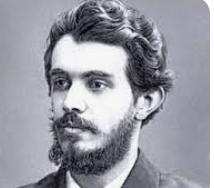
It appears that liberty is bound up with imperfection, with a right to imperfection. Socialism leads to the same type of authoritarian state as Theocracy. ... One must choose: either Socialism or liberty of spirit, the liberty of man's conscience. ... Socialism uses a "sacred" authority and establishes a "sacred" society in which there is no place for the "lay," for the free, for choice, for the unrestrained activity of human forces.
Instinct leads, intelligence does but follow.

Given that annihilation of nature in its entirety is impossible, and that death and dissolution are not appropriate to the whole mass of this entire globe or star, from time to time, according to an established order, it is renewed, altered, changed, and transformed in all its parts.
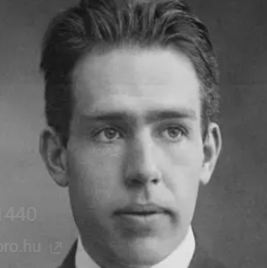
An expert is a person who has found out by his own painful experience all the mistakes that one can make in a very narrow field.
Can the man say, Fiat lux, Let there be light; and out of chaos make a world? Precisely as there is light in himself, will he accomplish this.

A man who has no mental needs, because his intellect is of the narrow and normal amount, is, in the strict sense of the word, what is called a philistine.
Only charity admitteth no excess. For so we see, aspiring to be like God in power, the angels transgressed and fell.

His business is here, it is here that he is despised and vilified, it is here that he must carry out his undertaking.
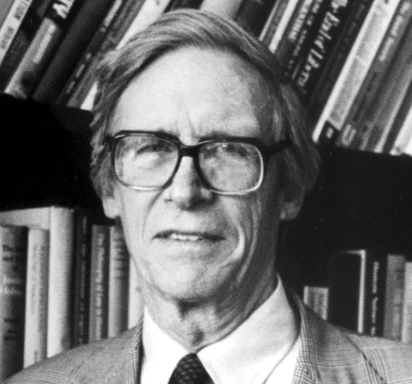
The concept of justice I take to be defined, then, by the role of its principles in assigning rights and duties and in defining the appropriate division of social advantages. A conception of justice is an interpretation of this role.
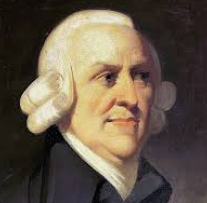
III. Every tax ought to be levied at the time, or in the manner, in which it is most likely to be convenient for the contributor to pay it.

The production relations of capitalist society approach more and more the production relations of socialist society. But on the other hand, its political and juridical relations established between capitalist society and socialist society a steadily rising wall. This wall is not overthrown, but is on the contrary strengthened and consolidated by the development of social reforms and the course of democracy. Only the hammer blow of revolution, that is to day, the conquest of political power by the proletariat can break down this wall.
There are people with whom everything they consider a means turns mysteriously into an end.

No man's error becomes his own Law; nor obliges him to persist in it.
I: My consciousness of the object is only a yet unrecognised consciousness of my production of the representation of an object. Of this production I know no more than that it is I who produce, and thus is all consciousness no more than a consciousness of myself, and so far perfectly comprehensible. Am I in the right? Spirit. Perfectly so ; but whence then is derived the necessity and universality thou hast ascribed to these propositions, to that of causality for instance?
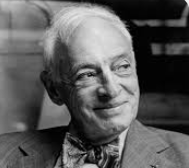
There are evils, as someone has pointed out, that have the ability to survive identification and go on for ever - money, for instance, or war.

The human soul has need of truth and of freedom of expression. The need for truth requires that intellectual culture should be universally accessible, and that it should be able to be acquired in an environment neither physically remote nor psychologically alien.

I regard Peter as one of the great moralists, because I suspect that more than anyone he has helped to change the attitudes of very many people to the sufferings of animals. Peter is a utilitarian in normative ethics, and a humane attitude to animals is a natural corollary of utilitarianism. Utilitarian concern for animals goes back to Bentham, who, presumably alluding to the Kantians, said that the question was not whether animals can reason, but whether they can suffer.

I spoke after Sasha, for an hour. I discussed the farce of a government undertaking to carry democracy abroad by suppressing the last vestiges of it at home. I took up the contention of Judge Mayer that only such ideas are permissible as are "within the law." Thus he had instructed the jurymen when he had asked them if they were prejudiced against those who propagate unpopular ideas. I pointed out that there had never been an ideal, however humane and peaceful, which in its time had been considered "within the law." I named Jesus, Socrates, Galileo, Giordano Bruno. "Were they 'within the law"?" I asked. "And the men who set America free from British rule, the Jeffersons and the Patrick Henrys? The William Lloyd Garrisons, the John Browns, the David Thoreaus and Wendell Phillipses-were they within the law?"
The rudest heathen that worshipped Canopus, or the Caabah Black-Stone, he, as we saw, was superior to the horse that worshipped nothing at all! Nay there was a kind of lasting merit in that poor act of his; analogous to what is still meritorious in Poets: recognition of a certain endless divine beauty and significance in stars and all natural objects whatsoever.
CivilSimian.com created by AxiomaticPanic, CivilSimian, Kalokagathia