


3 months 2 days ago
Obviously, Anarchism, or any other social theory, making man a conscious social unit, will act as a leaven for rebellion.
2 weeks 5 days ago
The Plan of the System, may aim at a Natural or an Artificial System. But no classes can be absolutely artificial, for if they were, no assertions could be made concerning them.

3 months 3 weeks ago
Nothing seems at first sight less important than the outward form of human actions, yet there is nothing upon which men set more store: they grow used to everything except to living in a society which has not their own manners.
▼
Source
source
Book Three, Chapter XIV.
4 months 3 weeks ago
Good and evil, reward and punishment, are the only motives to a rational creature: these are the spur and reins whereby all mankind are set on work, and guided.
▼
Source
source
Sec. 54
3 months 1 week ago
Few new truths have ever won their way against the resistance of established ideas save by being overstated.
▼
Source
source
As quoted in Communications and History : Theories of Knowledge, Media and Civilization (1988) by Paul Heyer, p. 125
3 months 2 weeks ago
The man that does not know himself not to be at the mercy of other men, that does not feel that he is invulnerable to all the vicissitudes of fortune, is incapable of a constant and inflexible virtue.
▼
Source
source
Book V, "Of Education"
1 month 4 weeks ago
If we already lived in a cruelty-free world, the notion of re-introducing suffering, exploitation and creatures eating each other would seem not so much frightful as unimaginable - no more seriously conceivable than reverting to surgery without anaesthesia today.
▼
Source
source
Reprogramming Predators, BLTC Research, 2009


2 months 2 weeks ago
Language is a form of organized stutter.
▼
Source
source
Interview with John Lennon, December 1969, CBS Television
3 months 1 day ago
Fairness means not to use fraud and trickery in the exchange of commodities and services and the exchange of feelings.

1 month 1 week ago
Insurrection, never so necessary, is a most sad necessity; and governors who wait for that to instruct them are surely getting into the fatalest courses,-proving themselves sons of Nox and Chaos, of blind Cowardice, not of seeing Valour! How can there be any remedy in insurrection? It is a mere announcement of the disease,-visible now even to sons of Night. Insurrection usually gains little; usually wastes how much. One of its worst kinds of waste, to say nothing of the rest, is that of irritating and exasperating men against each other, by violence done, which is always sure to be injustice done; for violence does even justice unjustly. Book I, Chap. III
3 weeks 6 days ago
If we should classify one by one all those who hate others and injure others, should we find them to be universal in love or partial? Of course we should say they are partial. Now, since partiality against one another is the cause of the major calamities in the empire, then partiality is wrong.
▼
Source
source
Book 4; Universal Love III
4 months 1 week ago
The man who is tenacious of purpose in a rightful cause is not shaken from his firm resolve by the frenzy of his fellow citizens clamoring for what is wrong, or by the tyrant's threatening countenance.
▼
Source
source
Book III, ode iii, line 1

3 months 1 week ago
Are not five sparrows sold for two farthings, and not one of them is forgotten before God? But even the very hairs of your head are all numbered. Fear not therefore: ye are of more value than many sparrows.
▼
Source
source
12:6-7

4 months 2 weeks ago
If there were in the world today any large number of people who desired their own happiness more than they desired the unhappiness of others, we could have a paradise in a few years.
▼
Source
source
As quoted in Think, Vol. 27 (1961), p. 32
4 months 3 weeks ago
Money is the password, and all doors, which are closed to the man of lesser means, fly open to those whom Plutus favors. The invention of money, which has no other usefulness (or at least it should not have any) except for the commercial exchange of the products of man's industry, now serves all that is physically good among men. Especially after money was represented by metal, it has produced avarice which, finally, without indulgence, but by its mere possession, and even with the resolution (of the stingy) not to spend it, still contains a power which people believe can sufficiently compensate for the lack of any other power.
▼
Source
source
Kant, Immanuel (1996), pages 181-182

3 months 2 weeks ago
Good health is the best weapon against religion. Healthy bodies and healthy minds have never been shaken by religious fears.
2 weeks 6 days ago
Do you believe in dreams, Uncle Simeon? I do; I believe in nothing else. One night I dreamed that invisible enemies had me tied to a dead cypress. Long red arrows were sticking into me from my head to my feet, and the blood was flowing. On my head they had placed a crown of thorns, and intertwined with the thorns were fiery letters which said: "Saint Blasphemer." I am Saint Blasphemer, Rabbi Simeon. So you'd better not ask me anything else, or I'll start my blasphemies.
▼
Source
source
Ch. 10

4 months 3 weeks ago
A sound mind in a sound body, is a short but full description of a happy state in this world.
▼
Source
source
Sec. 1

4 months 2 weeks ago
Do you think that I count the days? There is only one day left, always starting over: it is given to us at dawn and taken away from us at dusk.
▼
Source
source
Act 10, sc. 2

1 month 3 weeks ago
The repression of liberty that took place in the countries in which Communist regimes were established cannot be adequately explained as a product of backwardness, or of errors in the application of Marxian theory. It was the result of a resolute attempt to realize an Enlightenment utopia - a condition of society in which no serious form of conflict any longer exists.
▼
Source
source
'Isaiah Berlin: The Value of Decency' (p.99)
5 months 2 weeks ago
Anxiety may be compared with dizziness. He whose eye happens to look down into the yawning abyss becomes dizzy. But what is the reason for this? It is just as much in his own eye as in the abyss, for suppose he had not looked down. Hence, anxiety is the dizziness of freedom, which emerges when the spirit wants to posit the synthesis and freedom looks down into its own possibility, laying hold of finiteness to support itself. Freedom succumbs to dizziness. Further than this, psychology cannot and will not go. In that very moment everything is changed, and freedom, when it again rises, sees that it is guilty. Between these two moments lies the leap, which no science has explained and which no science can explain. He who becomes guilty in anxiety becomes as ambiguously guilty as it is possible to become.
3 months 1 week ago
Answers determined by the social division of labor become truth as such.
▼
Source
source
p. 50: Describing the pragmatist view
4 months 3 weeks ago
Covetousness, and the desire of having in our possession, and under our dominion, more than we have need of, being the root of all evil, should be early and carefully weeded out, and the contrary quality of a readiness to impart to others, implanted. This should be encourag'd by great commendation and credit, and constantly taking care that he loses nothing by his liberality.
▼
Source
source
Sec. 110
2 months 5 days ago
The method of scientific investigation is nothing but the expression of the necessary mode of working of the human mind.
▼
Source
source
Our Knowledge of the Causes of the Phenomena of Organic Nature

1 month 4 days ago
To roam in open walks, that the soul may increase and lift itself up in the free air and with much spirit; sometimes travel and a change of country will give vigor, and marriage and more liberal drink. Sometimes even to the point of drunkenness, not that it drowns us, but that it depresses us: for it washes away cares and moves the mind from below, and, as with certain diseases, so it heals sadness.
4 months 1 week ago
Contemporary intellectuals have given up the Enlightenment assumption that religion, myth, and tradition can be opposed to something ahistorical, something common to all human beings qua human.
1 month 1 week ago
Of the radical and iconoclastic ideals preached in the early years of the revolution, all were discarded except those which helped the state to exert absolute control over the individual. Hence the idea of collective education and reduction of parental authority to the minimum continued to hold sway, but an end was put to "progressive" educational methods designed to promote initiative and independence. Strict discipline became once more the rule, and in this respect Soviet schools differed from Tsarist ones only in the immensely increased emphasis on indoctrination. In due course, puritanical sexual ethics were restored to favour.
▼
Source
source
(pg. 53)

4 months 1 week ago
Bear no improper envy, so that thy life may not become tasteless.
2 months 2 weeks ago
In an age of multiple and massive innovations, obsolescence becomes the major obsession.
▼
Source
source
"Innovation is obsolete", Evergreen review, Volume 15, Issues 86-94, Grove Press, 1971, p. 64

3 months 6 days ago
The immeasurable beauty of life is a very fine thing to write about, and there are, indeed, some who resign themselves to accept it and accept it as it is, and even some who would persuade us that there is no problem in the "trap." But it has been said by Calderón that "to seek to persuade a man that the misfortunes which he suffers are not misfortunes, does not console him for them, but it is another misfortune in addition." And furthermore, "only the heart can speak to the heart," as Fray Diego de Estella said.
▼
Source
source
(Vanidad del Mundo, cap. xxi.)
2 months 1 week ago
Any artist should be grateful for a naïve grace which puts him beyond the need to reason elaborately.
▼
Source
source
Foreword to The Closing of the American Mind by Allan Bloom
2 months 2 weeks ago
The sociologist permits himself to see only what is acceptable to his colleagues.
▼
Source
source
(p. 370)

3 months 1 week ago
This language controls by reducing the linguistic forms and symbols of reflection, abstraction, development, contradiction; by substituting images for concepts. It denies or absorbs the transcendent vocabulary; it does not search for but establishes and imposes truth and falsehood.
▼
Source
source
p. 103
3 months 2 weeks ago
The premonition of madness is complicated by the fear of lucidity in madness, the fear of the moments of return and reunion, when the intuition of disaster is so painful that it almost provokes a greater madness. One would welcome chaos if one were not afraid of lights in it.
3 months 2 weeks ago
It has never been in my power to study anything, - mathematics, ethics, metaphysics, gravitation, thermodynamics, optics, chemistry, comparative anatomy, astronomy, psychology, phonetics, economics, the history of science, whist, men and women, wine, metrology, except as a study of semeiotic.
▼
Source
source
Letter to Victoria
3 months 1 day ago
To hope means to be ready at every moment for that which is not yet born, and yet not become desperate if there is no birth in our lifetime.
3 months 5 days ago
In a world that has been thoroughly permeated by the structures of the social order, a world that so overpowers every individual that scarcely any option remains but to accept it on its own terms, such naiveté reproduces itself incessantly and disastrously. What people have forced upon them by a boundless apparatus, which they themselves constitute and which they are locked into, virtually eliminates all natural elements and becomes "nature" to them.
▼
Source
source
p. 12
1 month 1 week ago
"Do the Duty which lies nearest thee," which thou knowest to be a Duty! Thy second Duty will already have become clearer.
▼
Source
source
Bk. II, ch. 9.
3 months 2 days ago
And in a flash I understood the meaning of sex. It is a craving for the mingling of consciousness, whose symbol is the mingling of bodies. Every time a man and a woman slake their thirst in the strange waters of the other's identity, they glimpse the immensity of their freedom.
▼
Source
source
p. 252

3 months 2 weeks ago
Brothers, love is a teacher; but one must know how to acquire it, for it is hard to acquire, it is dearly bought, it is won slowly by long labour. For we must love not only occasionally, for a moment, but for ever. Everyone can love occasionally, even the wicked can.
▼
Source
source
Book VI, Chapter 3: Conversations and Exhortations of Father Zossima
4 months 3 weeks ago
Mark what 'tis his mind aims at in the question, and not what words he expresses it in: and when you have informed and satisfied him in that, you shall see how his thoughts will enlarge themselves, and how by fit answers he may be led on farther than perhaps you could have imagine. For knowledge is grateful to the understanding, as light to the eyes.
▼
Source
source
Sec. 118
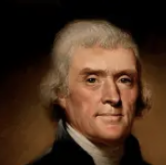
2 weeks 5 days ago
It is always better to have no ideas than false ones; to believe nothing, than to believe what is wrong.
▼
Source
source
Letter From Thomas Jefferson to the Rev. James Madison, 19 July 1788
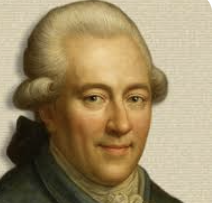
2 months 4 weeks ago
Where the frontier of science once was is now the centre.
▼
Source
source
As quoted in A Dictionary of Scientific Quotations (1991) edited by Alan Lindsay Mackay, p. 153
3 months 2 weeks ago
Man grows used to everything, the scoundrel.
4 months 2 weeks ago
The observer, when he seems to himself to be observing a stone, is really, if physics is to be believed, observing the effects of the stone upon himself.
▼
Source
source
An Inquiry into Meaning and Truth (1940), Introduction, p. 15
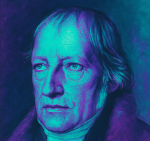
4 months 2 weeks ago
It is a matter of perfect indifference where a thing originated; the only question is: "Is it true in and for itself?" Many think that by pronouncing a doctrine to be Neo-Platonic, they have ipso facto banished it from Christianity. Whether a Christian doctrine stands exactly thus or thus in the Bible, the point to which the exegetical scholars of modern times devote all their attention is not the only question. The Letter kills, the Spirit makes alive: this they say themselves, yet pervert the sentiment by taking the Understanding for the Spirit.
▼
Source
source
Pt. III, sec. 3, ch. 2 Lectures on the History of History Vol 1 p. 344 John Sibree translation (1857), 1914
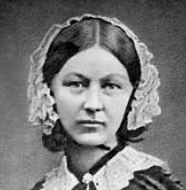
3 months 1 day ago
Instead of wishing to see more doctors made by women joining what there are, I wish to see as few doctors, either male or female, as possible. For, mark you, the women have made no improvement - they have only tried to be men and they have only succeeded in being third-rate men.
▼
Source
source
Letter to John Stuart Mill (12 September 1860), published in Florence Nightingale on Society and Politics, Philosophy, Science, Education (2003) edited by Lynn McDonald
3 months 5 days ago
In organized groups such as the army or the Church there is either no mention of love whatsoever between the members, or it is expressed only in a sublimated and indirect way, through the mediation of some religious imagine in the love of whom the members unite and whose all-embracing love they are supposed to imitate in their attitude towards each other. ... It is one of the basic tenets of fascist leadership to keep primary libidinal energy on an unconscious level so as to divert its manifestations in a way suitable to political ends.
▼
Source
source
"Freudian Theory and the Pattern of Fascist Propaganda," The Essential Frankfurt School Reader (1982), p. 123
CivilSimian.com created by AxiomaticPanic, CivilSimian, Kalokagathia