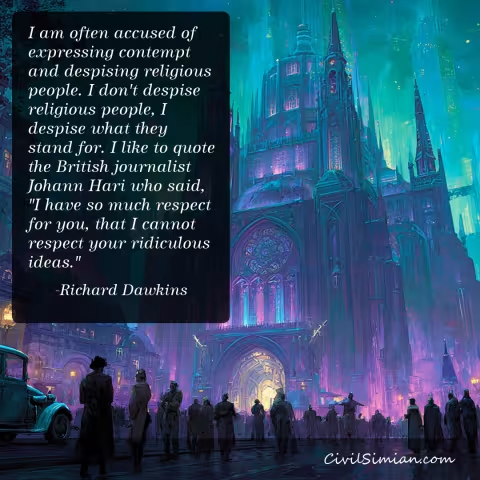
Humanity can survive with religion IF:
1) Religion respects obvious reality.
2) Religion respects universal human rights.
Quit lying and dreaming of killing. Is that really too much to ask?


The stars are scattered all over the sky like shimmering tears, there must be great pain in the eye from which they trickled.
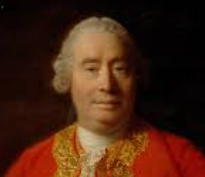
Does a man of sense run after every silly tale of hobgoblins or fairies, and canvass particularly the evidence? I never knew anyone, that examined and deliberated about nonsense who did not believe it before the end of his enquiries.
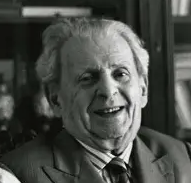
The transition of the subject-object relation to that of the I-Thou implies a passage of consciousness to a new sphere of existence, viz, the interval, betweenness or Zwischen; and this is a passage from thought to Umfassung.

Humans kill one another - and in some cases themselves - for many reasons, but none is more human than the attempt to make sense of their lives. More than the loss of life, they fear loss of meaning.

Cock-sure certainty is the source of much that is worst in our present world, and it is something of which the contemplation of history ought to cure us, not only or chiefly because there were wise men in the past, but because so much that was thought wisdom turned out to be folly - which suggests that much of our own supposed wisdom is no better. I do not mean to maintain that we should lapse into a lazy scepticism. We should hold our beliefs, and hold them strongly. Nothing great is achieved without passion, but underneath the passion there should always be that large impersonal survey which sets limits to actions that our passions inspire.
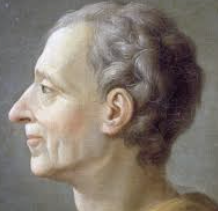
Raillery is a mode of speaking in favor of one's wit at the expense of one's better nature.
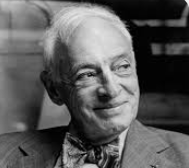
Our media make crisis chatter out of news and fill our minds with anxious phantoms of the real thing - a summit in Helsinki, a treaty in Egypt, a constitutional crisis in India, a vote in the U.N., the financial collapse of New York. We can't avoid being politicized (a word as murky as the condition which it describes) because it is necessary after all to know what is going on. Worse yet, what is going on will not let us alone. Neither the facts nor the deformations, the insidious platitudes of the media (tormenting because the underlying realities are so large and so terrible), can be screened out. The study of literature itself is heavily "politicized."
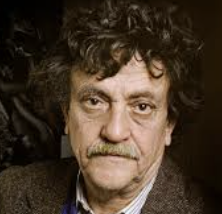
One of the great American tragedies is to have participated in a just war. It's been possible for politicians and movie-makers to encourage us we're always good guys. The Second World War absolutely had to be fought. I wouldn't have missed it for the world. But we never talk about the people we kill. This is never spoken of.

The young generations of the world, who had in them the freshness of young children, and yet the depth of earnest men, who did not think that they had finished off all things in Heaven and Earth by merely giving them scientific names, but had to gaze direct at them there, with awe and wonder: they felt better what of divinity is in man and Nature; they, without being mad, could worship Nature, and man more than anything else in Nature.
It's hard for writers to get on with their work if they are convinced that they owe a concrete debt to experience and cannot allow themselves the privilege of ranging freely through social classes and professional specialties. A certain pride in their own experience, perhaps a sense of the property rights of others in their experience, holds them back.
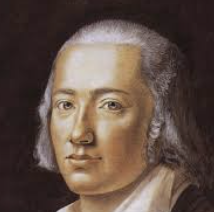
What has always made the state a hell on earth has been precisely that man has tried to make it heaven.

Every man may claim the fullest liberty to exercise his faculties compatible with the possession of like liberties by every other man.

I conceive that the description so often given of a Benthamite, as a mere reasoning machine, though extremely inapplicable to most of those who have been designated by that title, was during two or three years of my life not altogether untrue of me. ...There is nothing very extraordinary in this fact: no youth of the age I then was, can be expected to be more than one thing, and this was the thing I happened to be. Ambition and desire of distinction, I had in abundance; and zeal for what I thought the good of mankind was my strongest sentiment, mixing with and colouring all others. But my zeal was as yet little else, at that period of my life, than zeal for speculative opinions. It had not its root in genuine benevolence, or sympathy with mankind; though these qualities held their due place in my ethical standard. Nor was it connected with any high enthusiasm for ideal nobleness.
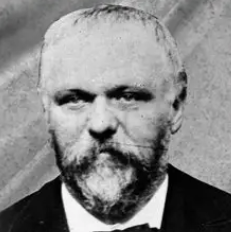
In ignoring the important fundamental contribution of the followers of Marx, and by insisting exclusively on the phenomenon of superficial adaptation and variation, Sorel passed in silence over all that was healthy, live and fruitful in the Marxist doctrine.
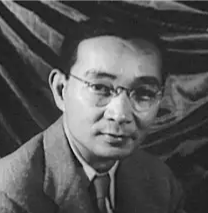
No one realizes how beautiful it is to travel until he comes home and rests his head on his old, familiar pillow.

It is impossible to care for each other more or differently than we care for the earth. This last statement becomes obvious enough when it is considered that the earth is what we all have in common, that it is what we are made of and what we live from, and that we therefore cannot damage it without damaging those with whom we share it. But I believe it goes farther and deeper than that. There is an uncanny resemblance between our behavior toward each other and our behavior toward the earth. Between our relation to our own sexuality and our relation to the reproductivity of the earth, for instance, the resemblance is plain and strong. By some connection we do not recognize, the willingness to exploit one becomes the willingness to exploit the other.

A very few, as heroes, patriots, martyrs, reformers in the great sense, and men, serve the State with their consciences also, and so necessarily resist it for the most part; and they are commonly treated by it as enemies.
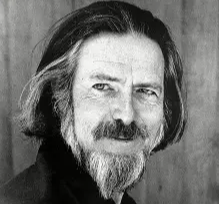
It was a basic Confucian principle that "it is man who makes truth great, not truth which makes man great." For this reason, "humanness" or "human-heartedness" (jen) was always felt to be superior to "righteousness" (i), since man himself is greater than any idea which he may invent. There are times when men's passions are much more trustworthy than their principles.
The great majority of men and women, in ordinary times, pass through life without ever contemplating or criticising, as a whole, either their own conditions or those of the world at large. They find themselves born into a certain place in society, and they accept what each day brings forth, without any effort of thought beyond what the immediate present requires. Almost as instinctively as the beasts of the field, they seek the satisfaction of the needs of the moment, without much forethought, and without considering that by sufficient effort the whole conditions of their lives could be changed.

On our earth we can only love with suffering and through suffering. We cannot love otherwise, and we know of no other sort of love. I want suffering in order to love. I long, I thirst, this very instant, to kiss with tears the earth that I have left, and I don't want, I won't accept life on any other!"
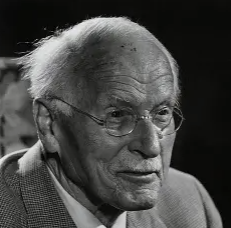
We Shall Naturally look round in vain the macrophysical world for acausal events, for the simple reason that we cannot imagine events that are connected non-causally and are capable of a non-causal explanation. But that does not mean that such events do not exist... The so-called "scientific view of the world" based on this can hardly be anything more than a psychologically biased partial view which misses out all those by no means unimportant aspects that cannot be grasped statistically.
I have seen no more evident monstrosity and miracle in the world than myself.
Why may not a goose say thus: "All the parts of the universe I have an interest in: the earth serves me to walk upon, the sun to light me; the stars have their influence upon me; I have such an advantage by the winds and such by the waters; there is nothing that yon heavenly roof looks upon so favourably as me. I am the darling of Nature! Is it not man that keeps and serves me?"
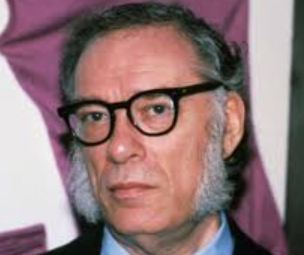
It is all too easy to forget that there are emotional motivations in history, as well as economic ones.
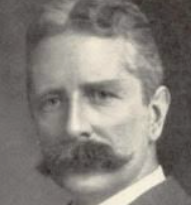
The mechanical mind has a passion for control - of everything except itself. Beyond the control it has won over the forces of nature it would now win control over the forces of society of stating the problem and producing the solution, with social machinery to correspond.
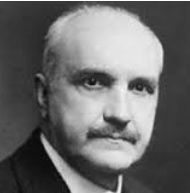
Liberalism has merely cleared a field in which every soul and every corporate interest may fight with every other for domination. Whoever is victorious in this struggle will make an end of liberalism; and the new order, which will deem itself saved, will have to defend itself in the following age against a new crop of rebels.
Apollo said that every one's true worship was that which he found in use in the place where he chanced to be.

In the history of bourgeois society, legislative reform served to strengthen progressively the rising class till the latter was sufficiently strong to seize political power, to suppress the existing juridical system and to construct itself a new one.
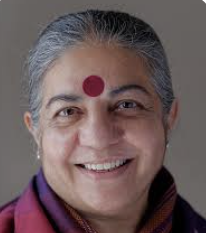
I think we have reached a stage now where we need to find solutions to economic injustice in the same place and in the same ways that we find solutions to sustainability. Sustainability on environmental grounds and justice in terms of everyone having a place in the production and consumption system - these are two aspects of the same issue. They have been artificially separated and have to be put back again in the Western way of thinking.
Marxism was a philosophical or semi-philosophical doctrine and a political ideology which was used by the communist state as the main source of legitimacy and the obligatory faith.

There is something between the gross specialised values of the mere practical man, and the thin specialised values of the mere scholar. Both types have missed something; and if you add together the two sets of values, you do not obtain the missing elements.

People who live in society have learned how to see themselves in mirrors as they appear to their friends. I have no friends. Is that why my flesh is so naked?

Our place is somewhere between being and nonbeing - between two fictions.
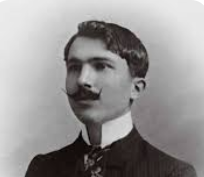
Descend you weary-laden, descend in the dark earth,help me to finish swiftly my dread master's shroud,let each hem hold my pain, each corner hide a crow,a lean, voracious crow to peck his heart out bit by bit.
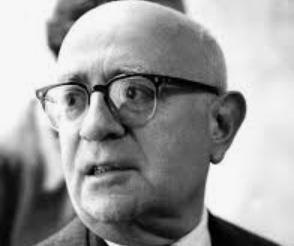
Jazz is the false liquidation of art - instead of utopia becoming reality it disappears from the picture.
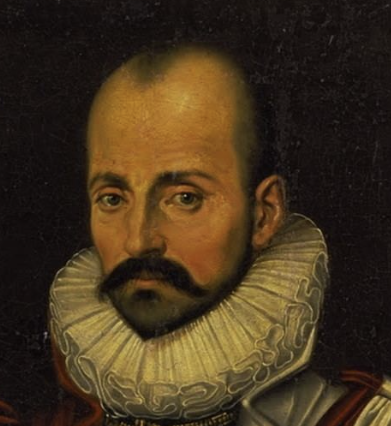
The fundamental political question is why do people obey a government. The answer is that they tend to enslave themselves, to let themselves be governed by tyrants. Freedom from servitude comes not from violent action, but from the refusal to serve. Tyrants fall when the people withdraw their support.
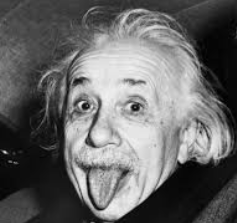
Without disarmament there can be no lasting peace. On the contrary, the continuation of military armaments in their present extent will with certainty lead to new catastrophies...For the creation of this public opinion in favor of disarmament every person living shares the responsibility, through ever deed and every word.

The definition of definition is at bottom just what the maxim of pragmatism expresses.

Now the basic impulse behind existentialism is optimistic, very much like the impulse behind all science. Existentialism is romanticism, and romanticism is the feeling that man is not the mere he has always taken himself for. Romanticism began as a tremendous surge of optimism about the stature of man. Its aim - like that of science - was to raise man above the muddled feelings and impulses of his everyday humanity, and to make him a god-like observer of human existence.
The secret is that only that which can destroy itself is truly alive.
Religion comforts us for the defeat of our will to power. It adds new worlds to ours, and thus brings us hope of new conquests and new victories. We are converted to religion out of fear of suffocating within the narrow confines of this world.
I've always believed that a writer has got to remain an outsider. If I was offered anything like the Nobel Prize for Literature, I'd find it an extremely difficult conflict because I'd be basically disinclined to accept.

The most successful tempters and thus the most dangerous are the deluded deluders.

Everything that makes diversity of kinds, of species, differences, properties... everything that consists in generation, decay, alteration and change is not an entity, but a condition and circumstance of entity and being, which is one, infinite, immobile, subject, matter, life, death, truth, lies, good and evil.
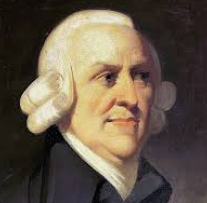
The rulers of Great Britain have, for more than a century past, amused the people with the imagination that they possessed a great empire on the west side of the Atlantic. This empire, however, has hitherto existed in imagination only.
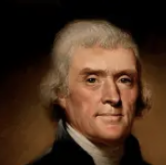
The liberty of the whole earth was depending on the issue of the contest, and was ever such a prize won with so little innocent blood? My own affections have been deeply wounded by some of the martyrs to this cause, but rather than it should have failed, I would have seen half the earth desolated. Were there but an Adam & an Eve left in every country, & left free, it would be better than as it now is.
CivilSimian.com created by AxiomaticPanic, CivilSimian, Kalokagathia