

3 months 3 days ago
Value is not intrinsic, it is not in things. It is within us; it is the way in which man reacts to the conditions of his environment. Neither is value in words and doctrines, it is reflected in human conduct. It is not what a man or groups of men say about value that counts, but how they act.

5 months ago
Everything I have written in these lectures underlines the importance to the intellectual of passionate engagement, risk, exposure, commitment to principles, vulnerability in debating and being involved in worldly causes. For example, the difference I drew earlier between a professional and an amateur intellectual rests precisely on this, that the professional claims detachment on the basis of a profession and pretends to objectivity, whereas the amateur is moved neither by reward nor by the fulfillment of an immediate career plan but by a committed engagement with ideas and values in the public sphere.
▼
Source
source
p. 109

2 months 2 weeks ago
We are firmly convinced, and we act on that conviction, that with nations, as with individuals, our interests, soundly calculated, will ever be found inseparable from our moral duties; and history bears witness to the fact that a just nation is taken on its word, when recourse is had to armaments and wars to bridle others.
5 months 3 days ago
The thesis of the identity of concept and thing is in general the vital nerve of idealist thought, and indeed traditional thought in general. ... Negative dialectics as critique means above all criticism of precisely this claim to identity.
▼
Source
source
p. 20

2 months 2 weeks ago
The abyss of endless time that swallows it all. The emptiness of all those applauding hands. The people who praise us-how capricious they are, how arbitrary. And the tiny region in which it all takes place.
▼
Source
source
(Hays translation) IV, 4
4 months 4 weeks ago
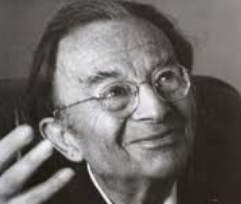
I believe that love is the main key to open the doors to the "growth" of man. Love and union with someone or something outside of oneself, union that allows one to put oneself into relationship with others, to feel one with others, without limiting the sense of integrity and independence. Love is a productive orientation for which it is essential that there be present at the same time: concern, responsibility, and respect for and knowledge of the object of the union. I believe that the experience of love is the most human and humanizing act that it is given to man to enjoy and that it, like reason, makes no sense if conceived in a partial way.

5 months 2 weeks ago
For a long while I have lived with the notion that I was the most normal being that ever existed. This notion gave me the taste, even the passion for being unproductive: what was the use of being prized in a world inhabited by madmen, a world mired in mania and stupidity? For whom was one to bother, and to what end? It remains to be seen if I have quite freed myself from this certitude, salvation in the absolute, ruin in the immediate.

5 months 2 weeks ago
Mere parsimony is not economy. Expense, and great expense, may be an essential part in true economy.

6 months 1 week ago
In the weightiest matters we must go to school to the animals, and learn spinning and weaving from the spider, building from the swallow, singing from the birds,-from the swan and the nightingale, imitating their art.

5 months 1 day ago
Jung believed that alchemy is about the transmutation of the mind and the discovery of the self. Inevitably, he saw the male and female elements of the prima materia -- the king and queen of alchemy -- as the animus and anima; this seemed to indicate the (sic) alchemy is about psychological processes.
▼
Source
source
p. 103

6 months 2 weeks ago
But petitional prayer is only one department of prayer; and if we take the word in the wider sense as meaning every kind of inward communion or conversation with the power recognized as divine, we can easily see that scientific criticism leaves it untouched. Prayer in this wide sense is the very soul and essence of religion.
▼
Source
source
Lecture XIX, "Other Characteristics"
5 months 2 weeks ago
It is not by genius, it is by suffering, and suffering alone, that one ceases to be a marionette.

6 months 2 weeks ago
The discovery of truth is prevented more effectively, not by the false appearance things present and which mislead into error, not directly by weakness of the reasoning powers, but by preconceived opinion, by prejudice.
▼
Source
source
Vol. 2, Ch. 1, § 17
6 months 1 week ago
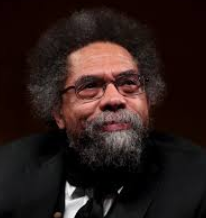
Without the presence of black people in America, European-Americans would not be "white"-- they would be Irish, Italians, Poles, Welsh, and other engaged in class, ethnic, and gender struggles over resources and identity.
▼
Source
source
(p. 107-108)
6 months 2 weeks ago
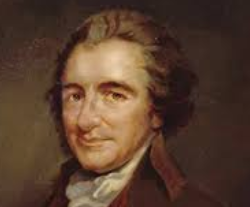
And the final event to himself has been, that, as he rose like a rocket, he fell like the stick.
▼
Source
source
On Edmund Burke's reactions to the American and French revolutions.
2 months 3 weeks ago
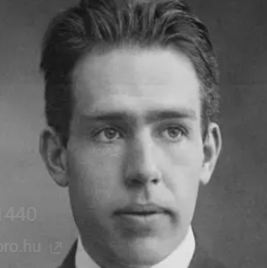
Physics is to be regarded not so much as the study of something a priori given, but rather as the development of methods of ordering and surveying human experience. In this respect our task must be to account for such experience in a manner independent of individual subjective judgement and therefore objective in the sense that it can be unambiguously communicated in ordinary human language.
▼
Source
source
The Unity of Human Knowledge

6 months 2 weeks ago
It costs a beautiful person no exertion to paint her image on our eyes; yet how splendid is that benefit! It costs no more for a wise soul to convey his quality to other men.
▼
Source
source
Uses of Great Men
5 months 2 weeks ago
Because we cannot discover God's throne in the sky with a radiotelescope or establish (for certain) that a beloved father or mother is still about in a more or less corporeal form, people assume that such ideas are "not true." I would rather say that they are not "true" enough, for these are conceptions of a kind that have accompanied human life from prehistoric times, and that still break through into consciousness at any provocation.

5 months 1 week ago
Jesus said to His disciples, "Compare me to someone and tell Me whom I am like." Simon Peter said to Him, "You are like a righteous angel." Matthew said to Him, "You are like a wise philosopher." Thomas said to Him, "Master, my mouth is wholly incapable of saying whom You are like." Jesus said, "I am not your master. Because you have drunk, you have become intoxicated by the bubbling spring which I have measured out." And He took him and withdrew and told him three things. When Thomas returned to his companions, they asked him, "What did Jesus say to you?" Thomas said to them, "If I tell you one of the things which he told me, you will pick up stones and throw them at me; a fire will come out of the stones and burn you up."
5 months 1 week ago
Leibniz's theory on the subject as substantia ideans in the sense of a causative agent of decision and acts stands much closer to a materialist interpretation of history than does a philosophy which reduces the thinking subject to the role of subsuming protocol sentences under general propositions and deducing other sentences from them.
▼
Source
source
p. 149.
7 months 2 weeks ago
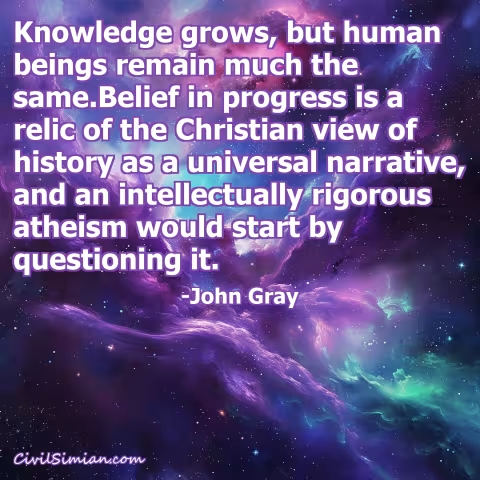
This is the mistake which I seem to make eternally, that I imagine the sufferings of others as far greater than they really are. Ever since my childhood, the proposition, my greatest dangers lie in pity, has been confirmed again and again.

6 months 2 weeks ago
It appears... that a work similar in its object and general conception to that of Adam Smith, but adapted to the more extended knowledge and improved ideas of the present age, is the kind of contribution which Political Economy at present requires. The Wealth of Nations is in many parts obsolete, and in all, imperfect. Political Economy... has grown up almost from infancy since the time of Adam Smith; and the philosophy of society... has advanced many steps beyond the point at which he left it.
▼
Source
source
Preface, 1848

4 months 1 week ago
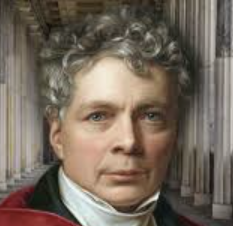
What concerns me most here are the ways in which contemporary voices considered to be leftist have abandoned the philosophical ideas that are central to any left-wing standpoint: a commitment to universalism over tribalism, a firm distinction between justice and power, and a belief in the possibility of progress.
▼
Source
source
Polity (2023), p. 5
5 months 2 weeks ago
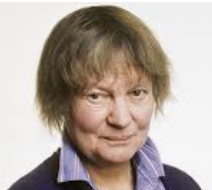
If the State, modeled after the universe, is split into two spheres or classes of beings - wherein the free represent the ideas and the unfree the concrete and sensate things - then the ultimate and uppermost order remains unrealized by both. By using sensate things as tools or organs, the ideas obtain a direct relationship to the apparitions and enter into them as souls. God, however, as identity of the highest order, remains above all reality and eternally has merely an indirect relationship. If then in the higher moral order the State represents a second nature, then the divine can never have anything other than an indirect relationship to it, never can it bear any real relationship to it, and religion, if it seeks to preserve itself in unscathed pure ideality, can therefore never exist - even in the most perfect State - other than esoterically in the form of mystery cults.
▼
Source
source
P. 51
5 months 1 week ago
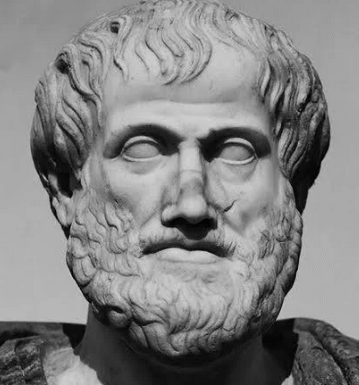
We know that the real lesson to be taught is that the human person is precious and unique; but we seem unable to set it forth except in terms of ideology and abstraction.
▼
Source
source
Ch. 10, p. 148

6 months 2 weeks ago
In speaking of sociological laws or natural laws of social life I have in mind such laws as are formulated by modern economic theories, for instance, the theory of international trade, or the theory of the trade cycle. These and other important sociological laws are connected with the functioning of social institutions. These laws play a role in our social life corresponding to the role played in mechanical engineering by, say, the principle of the lever. For institutions, like levers, are needed if we want to achieve anything which goes beyond the power of our muscles. Like machines, institutions multiply our power for good or evil. Like machines, they need intelligent supervision by someone who understands their way of functioning and, most of all, their purpose, since we cannot build them so that they work entirely automatically.
▼
Source
source
Karl Popper, The Open Society and its Enemies, Vol I Plato Chapter 5: Nature and Convention. P. 67
7 months 2 weeks ago
The bodies of which the world is composed are solids, and therefore have three dimensions. Now, three is the most perfect number, it is the first of numbers, for of one we do not speak as a number, of two we say both, but three is the first number of which we say all. Moreover, it has a beginning, a middle, and an end.
5 months 2 weeks ago
It is of great importance to observe that the character of every man is, in some degree, formed by his profession. A man of sense may only have a cast of countenance that wears off as you trace his individuality, whist the weak, common man has scarcely ever any character, but what belongs to the body; at least, all his opinions have been so steeped in the vat consecrated by authority, that the faint spirit which the grape of his own vine yields, cannot be distinguished.
▼
Source
source
Ch. 1

6 months 2 weeks ago
It is not enough to be industrious; so are the ants. What are you industrious about?
▼
Source
source
Letter to Harrison Blake, November 16, 1857

6 months 3 weeks ago
Our stubbornness is right, because we want to preserve the liberty which we have in Christ. Only by preserving our liberty shall we be able to retain the truth of the Gospel inviolate.
▼
Source
source
Chapter 2

6 months 2 weeks ago
A great deal of capital, which appears to-day in the United States without any certificate of birth, was yesterday, in England, the capitalised blood of children.
▼
Source
source
Vol. I, Ch. 31, pg. 829.
5 months 3 days ago
In the general tendency toward specialization, philosophy too has established itself as a specialized discipline, one purified of all specific content. In so doing, philosophy has denied its own constitutive concept: the intellectual freedom that does not obey the dictates of specialized knowledge.
▼
Source
source
p. 6
5 months 1 week ago
I have compassion on the multitude, because they continue with me now three days, and have nothing to eat: and I will not send them away fasting, lest they faint in the way.
▼
Source
source
15:32 (KJV)

4 months 2 weeks ago
Cartoons drove the photo back to myth and dream screen.

6 months 2 weeks ago
Tout existant naît sans raison, se prolonge par faiblesse et meurt par rencontre. Every existing thing is born without reason, prolongs itself out of weakness and dies by chance.
4 months 2 weeks ago
The only cool PR is provided by one's enemies. They toil incessantly and for free.

3 months 2 days ago
No man has ever been so far advanced by Fortune that she did not threaten him as greatly as she had previously indulged him.
2 months 4 weeks ago
The individual is reduced to a negligible quantity, perhaps less in his consciousness than in his practice and in the totality of his obscure emotional states that are derived from this practice. The individual has become a mere cog in an enormous organization of things and powers which tear from his hands all progress, spirituality, and value in order to transform them from their subjective form into the form of a purely objective life. It needs merely to be pointed out that the metropolis is the genuine arena of this culture which outgrows all personal life. Here in buildings and educational institutions, in the wonders and comforts of space-conquering technology, in the formations of community life, and in the visible institutions of the state, is offered such an overwhelming fullness of crystallized and impersonalized spirit that the personality, so to speak, cannot maintain itself under its impact.
▼
Source
source
p. 422

3 months 1 week ago
The Republican party has really gone off the rails and has become... in many ways a quasi-authoritarian party because many Republicans are not willing to accept the results of a... free and fair election. ...We've learned a lot from the... House committee that's studying the January 6th insurrection... What that committee has revealed was that this wasn't just a demonstration that spontaneously got out of hand. It was planned very deliberately by the White House as a way of pressuring former vice president Pence to overturn the election and keep Donald Trump in office, and right now a lot of state level Republican legislatures are trying to modify their rules for counting votes in the next election so that they would be in a better position to do what they tried to do in 2020, but didn't get away with... So this is probably the most severe threat to American democracy... since the Civil War... and I'm quite worried about that.
▼
Source
source
43:51:00
5 months 2 weeks ago
What an incitation to hilarity, hearing the word goal while following a funeral procession!
6 months 2 weeks ago
Secrecy is an instrument of conspiracy; it ought not, therefore, to be the system of a regular government.
▼
Source
source
On Publicity from The Works of Jeremy Bentham volume 2, part 2, 1839
4 months 3 weeks ago
Part of what makes moral philosophy an anachronistic field is that its practitioners continue to argue in this very traditional and aprioristic way even though they themselves do not claim that one can provide a systematic and indubitable 'foundation' for the subject. Most of them rely on what are supposed to be 'intuitions' without claiming that those intuitions deliver uncontroversial ethical premises, on the one hand, or that they have an ontological or epistemological explanation of the reliability of those intuitions, on the other.
▼
Source
source
How Not to Solve Ethical Problems
2 months 4 weeks ago
Einstein's theory of relativity has advanced our ideas of the structure of the cosmos a step further. It is as if a wall which separated us from Truth has collapsed. Wider expanses and greater depths are now exposed to the searching eye of knowledge, regions of which we had not even a presentiment. It has brought us much nearer to grasping the plan that underlies all physical happening.
▼
Source
source
From the Author's Preface to First Edition
5 months 1 week ago
The French symbolists had a special term to express their love for things that had lost their objective significance, namely, 'spleen.' The conscious, challenging arbitrariness in the choice of objects, its 'absurdity' and 'perverseness,' as if by a silent gesture discloses the irrationality of utilitarian logic, which it then slaps in the face in order to demonstrate its inadequacy with regard to human experience. And while making it conscious, by this shock, of the fact that it forgets the subject, the gesture simultaneously expresses the subject's sorrow over his inability to achieve an objective order. Twentieth-century society is not troubled by such inconsistencies. For it, meaning can be achieved in only one way-service for a purpose.
▼
Source
source
p. 38.

6 months 1 week ago
Sometimes, because my position has not been made clear enough, people think I'm a sort of radical anarchist who has an absolute hatred of power. No! What I am trying to do is to approach this extremely important and tangled phenomenon in our society, the exercise of power, with the most reflective, and I would say prudent attitude. Prudent in my analysis, in the moral and theoretical postulates I use: I try to figure out what's at stake. But to question the relations of power in the most scrupulous and attentive manner possible, looking into all the domains of its exercise, that's not the same thing as constructing a mythology of power as the beast of the apocalypse.
▼
Source
source
"Power, Moral Values, and the Intellectual", interview in History of the Present 4

6 months 2 weeks ago
We cannot suppose that an individual's thinking survives bodily death, since that destroys the organization of the brain and dissipates the energy which utilized the brain tracks. God and immortality, the central dogma of the Christian religion, find no support in science. But we in the West have come to think of them as the irreducible minimum of theology. No doubt people will continue to entertain these beliefs, because they are pleasant, just as it is pleasant to think ourselves virtuous and our enemies wicked. But for my part I cannot see any grounds for either. I do not pretend to be able to prove that there is no God. I equally cannot prove Satan is a fiction. The Christian God may exist, so might the Gods of Olympus, Ancient Egypt or Babylon; but no one of these hypotheses is more probable than any other. They lie outside the region of provable knowledge and there is no reason to consider any of them.
CivilSimian.com created by AxiomaticPanic, CivilSimian, Kalokagathia