

3 weeks 5 days ago
In reality, chivalry was animated by the impulse toward a 'traditional' restoration in the highest sense of the word, with the silent or explicit overcoming of the Christian religious spirit.
5 months 4 days ago
Thus, in this universal catastrophe, the sufferings of Christians have tended to their moral improvement, because they viewed them with eyes of faith.
▼
Source
source
I, 9
4 months 2 weeks ago
Those in the crossing must in the end know what is mistaken by all urging for intelligibility: that every thinking of being, all philosophy, can never be confirmed by "facts," ie, by beings. Making itself intelligible is suicide for philosophy. Those who idolize "facts" never notice that their idols only shine in a borrowed light. They are also meant not to notice this; for thereupon they would have to be at a loss and therefore useless. But idolizers and idols are used wherever gods are in flight and so announce their nearness.
▼
Source
source
Contributions to Philosophy (From Enowning) [Beitrage Zur Philosophie (Vom Ereignis)], notes of 1936-1938, as translated by Parvis Emad and Kenneth Maly

2 months 2 weeks ago
One can only live while one is intoxicated with life; as soon as one is sober it is impossible not to see that it is all a mere fraud and a stupid fraud! Ch. 4 Variant: It is possible to live only as long as life intoxicates us; once we are sober we cannot help seeing that it is all a delusion, a stupid delusion.
2 months 3 weeks ago
This world wants to be childish in order to make us believe that the adults are elsewhere, in the "real" world, and to conceal the fact that true childishness is everywhere-that it is that of the adults themselves who come here to act the child in order to foster illusions as to their real childishness.
▼
Source
source
"The Precession of Simulacra," p. 13

3 months ago
Jesus Christ raised women above the condition of mere slaves, mere ministers to the passions of the man, raised them by His sympathy, to be Ministers of God. He gave them moral activity. But the Age, the World, Humanity, must give them the means to exercise this moral activity, must give them intellectual cultivation, spheres of action.
3 months 4 days ago
We must leave on one side the beliefs which fill up voids and sweeten what is bitter. The belief in immortality. The belief in the utility of sin: etiam peccata. The belief in the providential ordering of events - in short the "consolations" which are ordinarily sought in religion.
▼
Source
source
p. 258

4 months 2 weeks ago
All mortals tend to turn into the thing they are pretending to be.
▼
Source
source
Letter X

3 months 2 weeks ago
Who consciously throws himself into the water or onto the knife?
▼
Source
source
Part 2, Chapter ?
5 months 4 days ago
Since you cannot do good to all, you are to pay special regard to those who, by the accidents of time, or place, or circumstance, are brought into closer connection with you.
▼
Source
source
1:28:29 English Latin Latin: Sed cum omnibus prodesse non possis, his potissimum consulendum est, qui pro locorum et temporum vel quarumlibet rerum opportunitatibus constrictius tibi quasi quadam sorte iunguntur.
3 months 2 weeks ago
The Scientific discourse extracts truths from the errors which surround and oppose it on all sides and in every form; and, by demolition of these opposing views as error, and as impossible to true thought, shows the truth as that which alone remains after their withdrawal, and therefore as the only possible truth:--and in this separation of opposites, and elucidation of the truth from the confused chaos in which truth and error lie mingled together, consists the peculiar and characteristic nature of the Scientific discourse. This method creates and produces truth, before our eyes, out of a world full of error.
▼
Source
source
P. 26-27
2 months 3 weeks ago
Rational mechanics must be the science of the motions which result from any forces, and of the forces which are required for any motions, accurately propounded and demonstrated. For many things induce me to suspect, that all natural phenomena may depend upon some forces by which the particles of bodies are either drawn towards each other, and cohere, or repel and recede from each other: and these forces being hitherto unknown, philosophers have pursued their researches in vain. And I hope that the principles expounded in this work will afford some light, either to this mode of philosophizing, or to some mode which is more true.
▼
Source
source
Preface, translation in William Whewell's History of the Inductive Sciences
3 months 3 days ago
Rightness of limitation is essential for growth of reality.Unlimited possibility and abstract creativity can procure nothing. The limitation, and the basis arising from what is already actual, are both of them necessary and interconnected.
▼
Source
source
Religion in the Making (February 1926), Lecture IV: "Truth and Criticism".

4 months 2 weeks ago
Kant [...] stated that he had "found it necessary to deny knowledge [...] to make room for faith," but all he had "denied" was knowledge of things that are unknowable, and he had not made room for faith but for thought.
▼
Source
source
p. 63

5 months 2 weeks ago
A nihilist is not one who believes in nothing, but one who does not believe in what exists.

4 months 2 weeks ago
After silence that which comes nearest to expressing the inexpressible is music.
▼
Source
source
"The Rest is Silence"

1 month 3 days ago
The old Romans had a custom which survived even into my lifetime. They would add to the opening words of a letter: "If you are well, it is well; I also am well." Persons like ourselves would do well to say. "If you are studying philosophy, it is well." For this is just what "being well" means. Without philosophy the mind is sickly.
5 months 2 weeks ago
Earth is a ball that is over 12,000 kilometres in diameter, and if it were modelled into an object the size of a billiard ball, with all its surface unevenness reproduced exactly to scale, the model would be smoother than an ordinary billiard ball and the ocean would be an all but unnoticeable mist of dampness over 70 percent of its surface.

4 months 3 weeks ago
For truth itself does not have the privilege to be employed at any time and in every way; its use, noble as it is, has its circumscriptions and limits.
▼
Source
source
Ch. 13
5 months 2 weeks ago
For the purposes of poetry a convincing impossibility is preferable to an unconvincing possibility.

3 months 2 weeks ago
It is a general popular error to suppose the loudest complainers for the publick to be the most anxious for its welfare.
▼
Source
source
Observations on a Late Publication on the Present State of the Nation

4 months 2 weeks ago
Most people would sooner die than think; in fact, they do so.
3 months 3 weeks ago
The philosopher has never killed any priests, whereas the priest has killed a great many philosophers.
2 months 1 week ago
Take any aspect of the Western inheritance of which our ancestors were proud, and you will find university courses devoted to deconstructing it. Take any positive feature of our political and cultural inheritance, and you will find concerted efforts in both the media and the academy to place it in quotation marks, and make it look like an imposture or a deceit.
▼
Source
source
(p. 40)
2 weeks 3 days ago
How absurd it must seem for an immortal soul to be destined for Heaven or Hell, and yet be sitting in a kitchen, as a maid, or to see oneself objectified as a mechanic! how falsely the usual sunrise waked us, the clock dial, the city street the job! How wrongfully people find themselves in these systems - our time isn't there, our space isn't there, our space isn't even here... the whole social story of waking, and certainly the day of the mechanic, is false.
▼
Source
source
Traces (1930), p. 27
3 months 1 week ago
Strictly speaking, the mass, as a psychological fact, can be defined without waiting for individuals to appear in mass formation. In the presence of one individual we can decide whether he is "mass" or not. The mass is all that which sets no value on itself - good or ill - based on specific grounds, but which feels itself "just like everybody," and nevertheless is not concerned about it; is, in fact, quite happy to feel itself as one with everybody else.
▼
Source
source
Chap.I: The Coming Of The Masses

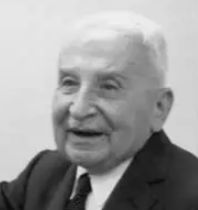
1 month 4 days ago
If one takes pleasure in calling the gold standard a "barbarous relic," one cannot object to the application of the same term to every historically determined institution. Then the fact that the British speak English - and not Danish, German, or French - is a barbarous relic too, and every Briton who opposes the substitution of Esperanto for English is no less dogmatic and orthodox than those who do not wax rapturous about the plans for a managed currency.
▼
Source
source
The Gold Standard - LvMI, excerpt from chapter 17 of Human Action
4 months 2 weeks ago
The Prodigal Son at least walked home on his own feet. But who can duly adore that Love which will open the high gates to a prodigal who is brought in kicking, struggling, resentful, and darting his eyes in every direction for a chance of escape?

4 months 1 week ago
But what then is this confrontation below the language of reason? Where might this interrogation lead, following not reason in its horizontal becoming, but seeking to retrace in time this constant verticality, which, the length of Western culture, confronts it with what it is not, measuring it with its own extravagance?
▼
Source
source
Preface to 1961 edition
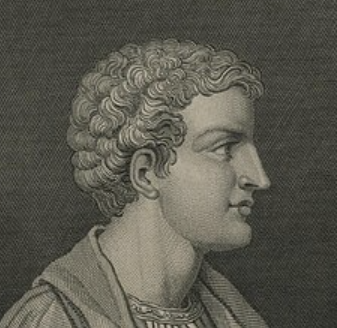
4 months 1 week ago
So live, my boys, as brave men; and if fortune is adverse, front its blows with brave hearts.
▼
Source
source
Book II, Satire II, Line 135-136 (trans. E. C. Wickham)

3 months 1 day ago
It seems that thought itself has a power for which it has never been given credit.
▼
Source
source
p. 16
3 months 3 days ago
The safest general characterization of the European philosophical tradition is that it consists of a series of footnotes to Plato.
▼
Source
source
Pt. II, ch. 1, sec. 1.
5 months 1 week ago
It pertains to all men to know themselves and to learn self-control.
5 months 4 days ago
In matters that are so obscure and far beyond our vision, we find in Holy Scripture passages which can be interpreted in very different ways without prejudice to the faith we have received. In such cases, we should not rush in headlong and so firmly take our stand on one side that, if further progress in the search for truth justly undermines this position, we too fall with it.
▼
Source
source
I, xviii, 37. Modern translation by J.H. Taylor
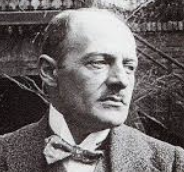
3 months 1 week ago
Ressentiment is always to some degree a determinant of the romantic type of mind. At least this is so when the romantic nostalgia for some past era (Hellas, the Middle Ages, etc.) is not primarily based on the values of that period, but on the wish to escape from the present. Then all praise of the "past" has the implied purpose of downgrading present-day reality.
▼
Source
source
L. Coser, trans. (1973), p. 68
3 months 1 week ago
A man discovers what he is actually worth in this world when he faces society as a man, without money, name, or powerful connections, stripped of all but his native potentialities. He soon finds that nothing has less weight than his human qualities. They are prized so low that the market does not even list them. Strict science, which acknowledges man only as a biological concept, reflects man's lot in the actual world; in himself, man is nothing more than a member of a species. In the eyes of the world, the quality of humanity confers no title to existence, nay, not even a right of sojourn. Such title must be certified by special social circumstances stipulated in documents to be presented on demand.
▼
Source
source
p. 137.

2 months 2 days ago
I have had to suffer the violence and brutality that comes with rising fundamentalism, and I've asked myself how a society that is the cradle of peace, the land of Gandhi and Buddha, could be reduced to one of the most volatile societies in the world.

3 months 3 weeks ago
I should have loved freedom, I believe, at all times, but in the time in which we live I am ready to worship it.
▼
Source
source
Book Four, Chapter VII.
2 months 4 weeks ago
If this is philosophy it is at any rate a philosophy that is not in its right mind.
▼
Source
source
L 23

5 months 2 weeks ago
In the New Testament sense, to be a Christian is, in an upward sense, as different from being a man as, in a downward sense, to be a man is different from being a beast. A Christian in the sense of the New Testament, although he stands suffering in the midst of life's reality, has yet become completely a stranger to this life; in the words of the Scripture and also of the Collects (which still are read-O bloody satire!-by the sort of priests we now have, and in the ears of the sort of Christians that now live) he is a stranger and a pilgrim-just think, for example of the late Bishop Mynster intoning, We are strangers and pilgrims in this world! A Christian in the New Testament sense is literally a stranger and a pilgrim, he feels himself a stranger, and everyone involuntarily feels that this man is a stranger to him.

3 months 1 week ago
Behold, we go up to Jerusalem; and the Son of man shall be betrayed unto the chief priests and unto the scribes, and they shall condemn him to death, And shall deliver him to the Gentiles to mock, and to scourge, and to crucify him: and the third day he shall rise again.
▼
Source
source
20:18-19 (KJV)

4 months 2 weeks ago
In early times, the great majority of the male sex were slaves, as well as the whole of the female. And many ages elapsed, some of them ages of high cultivation, before any thinker was bold enough to question the rightfulness, and the absolute social necessity, either of the one slavery or of the other.
▼
Source
source
Ch. 1
2 weeks ago
I must confess (sayes Eleutherius) I have, in the reading of Paracelsus and other Chymical Authors, been troubled to find, that such hard Words and Equivocal Expressions, as You justly complain of, do even when they treat of Principles, seem to be studiously affected by those Writers; whether to make themselves to be admir'd by their Readers, and their Art appear more Venerable and Mysterious, or, (as they would have us think) to conceal from them a Knowledge themselves judge inestimable.

2 months 1 week ago
Statues are not about history. We don't memorialize each piece of history. We memorialize things that we want to value and things that we want our children to walk by and say "This person embodied the values that I care about." Therefore, statues are about values not about history.

4 months 3 weeks ago
When speaking of the spiritual nature or the soul, we are referring to that which is "inner" or "new." When speaking of the bodily nature, or that which is flesh and blood, we are referring to that which is called "sensual," "outward," or "old." Paul writes in 2 Corinthians 4:16: "Even though our outer nature is wasting away, our inner nature is being renewed day by day."
▼
Source
source
p. 51
2 weeks 1 day ago
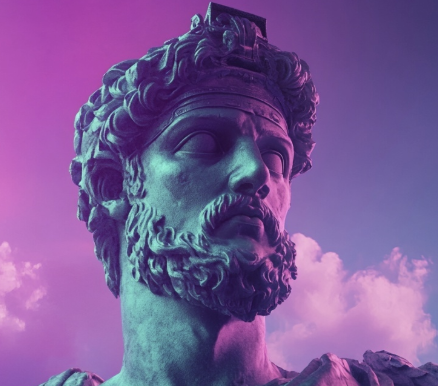
The healthy eye ought to see all visible things and not to say, I wish for green things; for this is the condition of the diseased eye. And the healthy hearing and smelling ought to be ready to perceive all that can be heard and smelled. And the healthy stomach ought to be with respect to all food just as the mill with respect to all things which it is formed to grind. And accordingly the healthy understanding ought to be prepared for everything which happens; but that which says, Let my dear children live, and let all men praise whatever I may do, is an eye which seeks for green things, or teeth which seek for soft things.
▼
Source
source
X, 35
5 months 2 weeks ago
Thus I progressed on the surface of life, in the realm of words as it were, never in reality. All those books barely read, those friends barely loved, those cities barely visited, those women barely possessed! I went through the gestures out of boredom or absent-mindedness. Then came the human beings, they wanted to cling, but there was nothing to cling to, and that was unfortunate for them. As for me, I forgot. I never remembered anything but myself.
CivilSimian.com created by AxiomaticPanic, CivilSimian, Kalokagathia