


4 months 2 weeks ago
I am writing to you to tell you of my decision to return to your Government the Carl von Ossietzsky medal for peace. I do so reluctantly and after two years of private approaches on behalf of Heinz Brandt, whose continued imprisonment is a barrier to coexistence, relaxation of tension and understanding between East and West... I regret not to have heard from you on this subject. I hope that you will yet find it possible to release Brandt through an amnesty which would be a boon to the cause of peace and to your country.
▼
Source
source
Letter to Walter Ulbricht, January 7, 1964.
2 months 1 week ago
Conservatives believe that our identities and values are formed through our relations with other people, and not through our relation with the state. The state is not an end but a means. Civil society is the end, and the state is the means to protect it. The social world emerges through free association, rooted in friendship and community life. And the customs and institutions that we cherish have grown from below, by the 'invisible hand' of co-operation. They have rarely been imposed from above by the work of politics, the role of which, for a conservative, is to reconcile our many aims, and not to dictate or control them.
▼
Source
source
"Stand up for the real meaning of freedom," The Spectator

4 months 2 weeks ago
I cannot imagine how the clockwork of the universe can exist without a clockmaker.
▼
Source
source
As attributed in More Random Walks in Science : An Anthology (1982) by Robert L. Weber, p. 65
3 months 1 week ago
To call war the soil of courage and virtue is like calling debauchery the soil of love.
▼
Source
source
Ch. III: Industry, Government, the peasants

3 months 1 day ago
The pornographic face says nothing. It has no expressivity or mystery.

4 months 2 weeks ago
But the chief design of this paper is not to disprove it, which many have sufficiently done; but to entreat Americans to consider.
2 months 2 weeks ago
A fair exterior is a silent recommendation.
▼
Source
source
Maxin 267

3 months 1 day ago
The natural impulse of the primitive man to strike back, to avenge a wrong, is out of date. Instead, the civilized man, stripped of courage and daring, has delegated to an organized machinery the duty of avenging his wrongs, in the foolish belief that the State is justified in doing what he no longer has the manhood or consistency to do.


4 months ago
Happiness is a good flow of life.
▼
Source
source
As quoted by Stobaeus, ii. 77.

4 months 2 weeks ago
For what are they all in their high conceit, When man in the bush with God may meet?
▼
Source
source
Good-bye, st. 4

3 months 2 weeks ago
It appears to me impossible that I should cease to exist, or that this active, restless spirit, equally alive to joy and sorrow, should only be organised dust - ready to fly abroad the moment the spring snaps, or the spark goes out which kept it together. Surely something resides in this heart that is not perishable, and life is more than a dream.

2 weeks ago
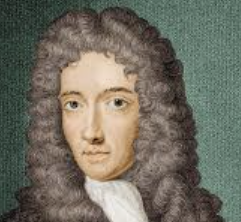
Doubtless, it shews the wisdom of God, to have so fram'd things at first, that there can seldom or never need any extraordinary interposition of his power; or the employing from, time to time, an intelligent overseer, to regulate, assist, and control the motions of matter.
▼
Source
source
Sect.1.
4 months 2 weeks ago
He who dares not offend cannot be honest.
▼
Source
source
24 April 1776, The Forester's Letters", Letter III: To Cato, Pennsylvania Journal
3 months 2 weeks ago
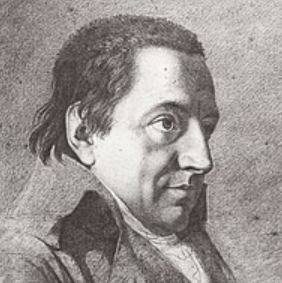
The fundamental maxim of those who stand at the head of this Age, and therefore the principle of the Age, is this,-to accept nothing as really existing or obligatory, but that which they can understand and clearly comprehend. With regard to this fundamental principle, as we have now declared and adopted it without farther definition or limitation, this third Age is precisely similar to that which is to follow it, the fourth, or age of Reason as Science,-and by virtue of this similarity prepares the way for it. Before the tribunal of Science, too, nothing is accepted but the Conceivable. Only in the application of the principle there is this difference between the two Ages,-that the third, which we shall shortly name that of Empty Freedom, makes its fixed and previously acquired conceptions the measure of existence; while the fourth-that of Science-on the contrary, makes existence the measure, not of its acquired, but of its desiderated beliefs.
▼
Source
source
p. 19


3 months 3 weeks ago
No natural boundary seems to be set to the efforts of man; and what is not yet done is only what he has not yet attempted to do. Variant: What is not yet done is only what we have not yet attempted to do.
▼
Source
source
Chapter XVIII.

5 months 2 weeks ago
This is approximately the way Christendom relates to the essentially Christian, the unconditioned. After seventeen, eighteen detours and running all around someone finally has his finite existence assured, and then we receive a sermon about Seek first the kingdom of God. Is this sobriety or is this intoxication?

4 months 2 weeks ago
I sit astride life like a bad rider on a horse. I only owe it to the horse's good nature that I am not thrown off at this very moment.
▼
Source
source
p. 36e

2 months 2 weeks ago
The user of the electric light -- or a hammer, or a language, or a book -- is the content. As such, there is a total metamorphosis of the user by the interface. It is the metamorphosis that I consider the message.
▼
Source
source
Letter to Edward T. Hall, 1971, Letters of Marshall McLuhan, p. 397
4 months 3 weeks ago
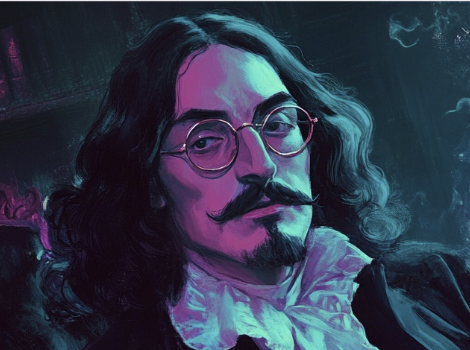
Staying as I am, one foot in one country and the other in another, I find my condition very happy, in that it is free.
▼
Source
source
Letter to Elisabeth of Bohemia, Princess Palatine, Paris, June/July 1648

4 months 2 weeks ago
Karsky: I met your father last week. Are you still interested in hearing how he is doing?
Hugo: No.
Karsky: It is very probable that you will be responsible for his death.
Hugo: It is virtually certain that he is responsible for my life. We are even.
▼
Source
source
Act 4, sc. 4


4 months 2 weeks ago
You can do everything with bayonets except sit on them. If you want to preserve your power indefinitely you have to get the consent of the ruled. And this they will do partly by drugs as I foresaw in "Brave new World", and partly by these new techniques of propaganda. They will do it by bypassing the sort of rational side of man and appealing to his subconscious, and his deeper emotions, and his physiology, even, and so making him actually love his slavery. I mean I think this is the danger that actually people may be, in some ways, happy under the new regime. But they will be happy in situations when they oughtn't be happy.

4 months 2 weeks ago
Of all tyrannies a tyranny sincerely exercised for the good of its victims may be the most oppressive. It may be better to live under robber barons than under omnipotent moral busybodies. The robber baron's cruelty may sometimes sleep, his cupidity may at some point be satiated; but those who torment us for our own good will torment us without end for they do so with the approval of their own conscience. They may be more likely to go to Heaven yet at the same time likelier to make a Hell of earth. This very kindness stings with intolerable insult. To be "cured" against one's will and cured of states which we may not regard as disease is to be put on a level of those who have not yet reached the age of reason or those who never will; to be classed with infants, imbeciles, and domestic animals.
▼
Source
source
"The Humanitarian Theory of Punishment" (1949), p. 292 Similar statements were included in "A Reply to Professor Haldane" (1946) (see above), published posthumously.

2 weeks 1 day ago
Why then dost thou choose to act in the same way? and why dost thou not leave these agitations which are foreign to nature, to those who cause them and those who are moved by them? And why art thou not altogether intent upon the right way of making use of things which happen to thee? for then thou wilt use them well, and they will be material for thee. Only attend to thyself, and resolve to be a good man in every act which thou doest; and remember...
▼
Source
source
VII, 58
3 months 3 weeks ago
There are two things which a democratic people will always find very difficult-to begin a war and to end it.
▼
Source
source
Book Three, Chapter XXII.
5 months 2 weeks ago
And happiness is thought to depend on leisure; for we are busy that we may have leisure, and make war that we may live in peace.

5 months 1 week ago
Of all people, girls and servants are the most difficult to behave to. If you are familiar with them, they lose their humility. If you maintain a reserve towards them, they are discontented.
4 months 2 days ago
I think that when friendship and perception of kinship ruled everything, no one killed any creature, because people thought the other animals were related to them.
▼
Source
source
2, 22, 1

4 months 2 weeks ago
If pains be to be taken to give him a manly air and assurance betimes, it is chiefly as a fence to his virtue when he goes into the world under his own conduct.
▼
Source
source
Sec. 70

4 months 2 weeks ago
The infliction of cruelty with a good conscience is a delight to moralists. That is why they invented Hell.
▼
Source
source
Ch. 1: The Value of Scepticism

1 month 1 week ago
All greatness is unconscious, or it is little and naught.
4 months 2 weeks ago
We have two bits of evidence about the Somebody. One is the universe He has made. If we used that as our only clue, I think we should have to conclude that He was a great artist (for the universe is a very beautiful place), but also that He is quite merciless and no friend to man (for the universe is a very dangerous and terrifying place.) ...The other bit of evidence is that Moral Law which He has put in our minds. And this is a better bit of evidence than the other, because it is inside information. You find out more about God from the Moral Law than from the universe in general just as you find out more about a man by listening to his conversation than by looking at a house he has built.
▼
Source
source
Book I, Chapter 5, "We Have Cause to Be Uneasy"
4 months 2 weeks ago
If you want to deserve Hell, you need only stay in bed. The world is iniquity; if you accept it, you are an accomplice, if you change it you are an executioner.
▼
Source
source
Act 3, sc. 6
3 months 1 week ago
The process of aging can only be fruitful and satisfactory if the important transitions are accompanied by free resignation, by the renunciation of the values proper to the preceding stage of life. Those spiritual and intellectual values which remain untouched by the process of aging, together with the values of the next stage of life, must compensate for what has been lost. Only if this happens can we cheerfully relive the values of our past in memory, without envy for the young to whom they are still accessible. If we cannot compensate, we avoid and flee the "tormenting" recollection of youth, thus blocking our possibilities of understanding younger people. At the same time we tend to negate the specific values of earlier stages. No wonder that youth always has a hard fight to sustain against the ressentiment of the older generation.
▼
Source
source
L. Coser, trans. (1973), pp. 62-63

2 weeks 4 days ago
They have retired into the Judiciary as a stronghold. There the remains of federalism are to be preserved and fed from the Treasury; and from that battery all the works of republicanism are to be beaten down and erased.
▼
Source
source
Letter to J. Dickinson

5 months 2 weeks ago
To two men living the same number of years, the world always provides the same sum of experiences. It is up to us to be conscious of them.
3 months 2 weeks ago
Since the Devil is the adversary of Christ he should occupy a position equivalent to his and be the Son of God as well. Satan would be the first Son of God and Christ the second.
▼
Source
source
Paris, 1991, p. 207. As quoted in Curzio Nitoglia

3 months 2 weeks ago
There never, gentlemen, was a period in which the steadfastness of some men has been nut to so sore a trial. It is not very difficult for well-formed minds to abandon their interest; but the separation of fame and virtue is an harsh divorce. Liberty is in danger of being made unpopular to Englishmen. Contending for an imaginary power, we begin to acquire the spirit of domination, and to lose the relish of honest equality.
2 months 4 weeks ago
The American who first discovered Columbus made a bad discovery.
▼
Source
source
G 42

2 weeks 1 day ago
Among animals, some learn to speak and sing; they remember tunes, and strike the notes as exactly as a musician. Others, for instance the ape, show more intelligence... would it be absolutely impossible to teach the ape a language? I do not think so.
4 months 2 weeks ago
The only thing that will redeem mankind is co-operation, and the first step towards co-operation lies in the hearts of individuals.
▼
Source
source
p. 212

3 months 4 days ago
The full expression of personality depends upon its being inflated by social prestige; it is a social privilege.
▼
Source
source
p. 64
3 months 1 week ago
You do not attain to knowledge by remaining on the shore and watching the foaming waves, you must make the venture and cast yourself in, you must swim, alert and with all your force, even if a moment comes when you think you are losing consciousness; in this way, and in no other, do you reach anthropological insight.
▼
Source
source
p. 148

5 months 3 weeks ago
This is the mistake which I seem to make eternally, that I imagine the sufferings of others as far greater than they really are. Ever since my childhood, the proposition, my greatest dangers lie in pity, has been confirmed again and again.

3 months 1 week ago
The revolution, Stahl declared, is the 'world-historic mark of our age.' It would found 'the entire State on the will of man instead of on the commandment and ordinance of God.'
▼
Source
source
p. 364
1 month 3 days ago
Every rock in the ocean where a cormorant can perch is occupied by our troops - has a governor, deputy-governor, storekeeper, and deputy-storekeeper - and will soon have an archdeacon and a bishop. Military colleges, with thirty-four professors, educating seventeen ensigns per annum, being half an ensign for each professor, with every species of nonsense, athletic, sartorial, and plumigerous.
▼
Source
source
Catholics, published in The Edinburgh Review (1827). See The Works of the Rev. Sydney Smith. 2. 1859. p. 123.
CivilSimian.com created by AxiomaticPanic, CivilSimian, Kalokagathia