
1 day ago
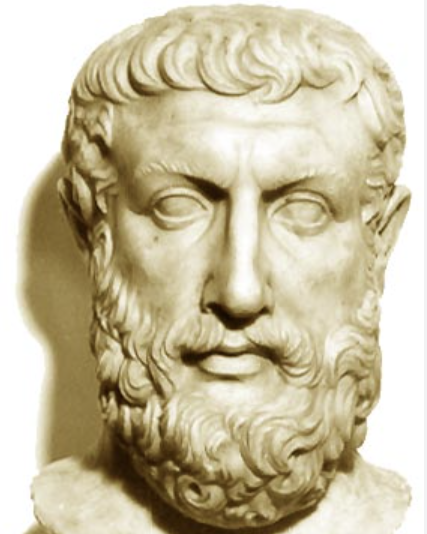
The great novelty in the poem of Parmenides is the method of argument. He... asks what is the common of all the views... and he finds... this is the existence of what is not. ...[C]an [this] be thought ...it cannot. If you think... you must think of something. Therefore there is no nothing. Philosophy had not yet learned to make the admission that a thing might be unthinkable and nevertheless exist. Only that can be which can be thought (fr. 5); for thought exists for the sake of what is (fr. 8, 34). ...[I]f we ... allow nothing but what we can understand, we come into direct conflict with the evidence of our senses, ...a world of change and decay. So much the worse for the senses, says Parmenides.
CivilSimian.com created by AxiomaticPanic, CivilSimian, Kalokagathia