
1 day ago
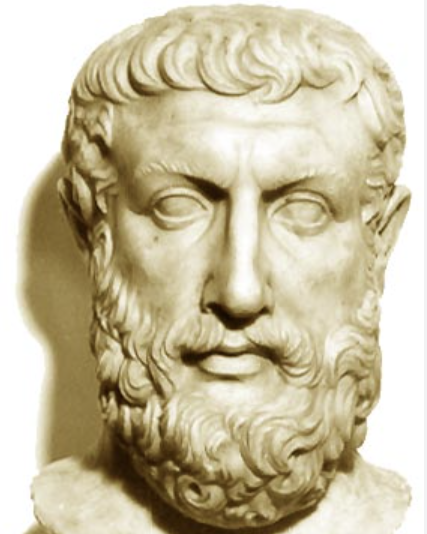
The crisis at the heart of Parmenides' argument, "is or is not," rules out any candidate for an ultimate entity in an explanation of what there is that is subject to coming-to-be, passing-away, or alteration of any sort. Such an entity must be a whole, complete, unchanging unity: it must be a thing that is of a single kind … But it does not follow from this that there can be only one such entity. Parmenides' arguments allow for a plurality of fundamental, predicationally unified entities that can be used to explain the world reported by the senses.
▼
Source
source
Patricia Curd, in The Legacy of Parmenides (1997), p. 241
CivilSimian.com created by AxiomaticPanic, CivilSimian, Kalokagathia