


2 months 1 week ago
Saints live in flames; wise men, next to them.
1 day ago
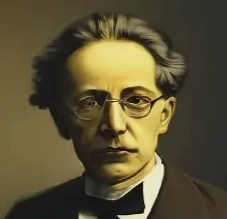
The divine is God's concern; the human, man's. My concern is neither the divine nor the human, not the true, good, just, free, etc., but solely what is mine, and it is not a general one, but is - unique, as I am unique. Nothing is more to me than myself!
▼
Source
source
Cambridge 1995, p. 7

3 months 2 weeks ago
What point of morals, of manners, of economy, of philosophy, of religion, of taste, of the conduct of life, has he not settled? What mystery has he not signified his knowledge of? What office, or function, or district of man's work, has he not remembered? What king has he not taught state, as Talma taught Napoleon? What maiden has not found him finer than her delicacy? What lover has he not outloved? What sage has he not outseen? What gentleman has he not instructed in the rudeness of his behavior?
▼
Source
source
Shakespeare; or, The Poet

1 month 2 weeks ago
I sit on a man's back, choking him, and making him carry me, and yet assure myself and others that I am very sorry for him and wish to ease his lot by any means possible, except getting off his back.
▼
Source
source
Writings on Civil Disobedience and Nonviolence
3 months 2 weeks ago
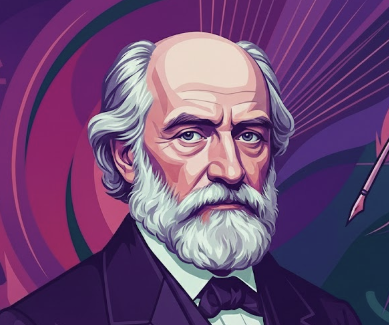
The presence of a thought is like the presence of a lover.
2 months 2 weeks ago
Pithy sentences are like sharp nails which force truth upon our memory.
▼
Source
source
As quoted in A Dictionary of Thoughts : Being a Cyclopedia of Laconic Quotations (1908) by Tryon Edwards, p. 338
1 month 1 week ago
Such is the content of the mental life of the Hemingway hero and the good guy in general. Every day he gets beaten into a servile pulp by his own mechanical reflexes, which are constantly busy registering and reacting to the violent stimuli which his big, noisy, kinesthetic environment has provided for his unreflective reception.
▼
Source
source
Eye Appeal, p. 79-80
2 months 1 week ago
The great problems of life - sexuality, of course, among others - are always related to the primordial images of the collective unconscious. These images are really balancing or compensating factors which correspond with the problems life presents in actuality. This is not to be marvelled at, since these images are deposits representing the accumulated experience of thousands of years of struggle for adaptation and existence.
▼
Source
source
Ch. 5, p. 271
1 month 3 weeks ago
Man's biological weakness is the condition of human culture.
▼
Source
source
Ch. 2
3 months 2 weeks ago
In doing Good, I lose myself in Being, I abandon my particularity, I become a universal subject.
▼
Source
source
p. 77

2 months 3 weeks ago
A Dialogue between two Infants in the womb concerning the state of this world, might handsomely illustrate our ignorance of the next, whereof methinks we yet discourse in Plato's Den, and are but Embryon Philosophers.
▼
Source
source
Chapter IV

3 months 1 week ago
Humility is the fruit of inner security and wise maturity. To be humble is to be so sure of one's self and one's mission that one can forego calling excessive attention to one's self and status. And, even more pointedly, to be humble is to revel in the accomplishments or potentials of others -- especially those with whom one identifies and to whom one is linked organically.
▼
Source
source
(p38)
1 week 3 days ago
If you could see the earth illuminated when you were in a place as dark as night, it would look to you more splendid than the moon.
▼
Source
source
Salviati, p. 88
1 week 3 days ago
Nature ... is inexorable and immutable; she never transgresses the laws imposed upon her, or cares a whit whether her abstruse reasons and methods of operation are understandable to men. For that reason it appears that nothing physical which sense-experience sets before our eyes, or which necessary demonstrations prove to us, ought to be called in question (much less condemned) upon the testimony of biblical passages which may have some different meaning beneath their words. For the Bible is not chained in every expression to conditions as strict as those which govern all physical effects; nor is God any less excellently revealed in Nature's actions than in the sacred statements of the Bible.

2 months 1 week ago
The kingdom of heaven can be compared to a king who wanted to settle accounts with his slaves.
▼
Source
source
18:23
2 months 2 weeks ago
Instinct is blind;-a consciousness without insight. Freedom, as the opposite of Instinct, is thus seeing, and clearly conscious of the grounds of its activity.
▼
Source
source
p. 7

3 months 2 weeks ago
It seems that sin is geographical. From this conclusion, it is only a small step to the further conclusion that the notion of "sin" is illusory, and that the cruelty habitually practised in punishing it is unnecessary.
▼
Source
source
A Fresh Look at Empiricism: 1927-42 (1996), p. 283
2 months 1 week ago
If there is a devil in human history, that devil is the principle of command. It alone, sustained by the ignorance and stupidity of the masses, without which it could not exist, is the source of all the catastrophes, all the crimes, and all the infamies of history.
▼
Source
source
On the Program of the Alliance (1871), in Bakunin on Anarchy (1971), translated and edited by Sam Dolgoff Variant translation: If there is a devil in history, it is the power principle.

3 months 2 weeks ago
The mass of men lead lives of quiet desperation. What is called resignation is confirmed desperation.
▼
Source
source
p. 10

3 months 1 week ago
Our language can be seen as an ancient city: a maze of little streets and squares, of old and new houses, and of houses with additions from various periods; and this surrounded by a multitude of new boroughs with straight regular streets and uniform houses.
▼
Source
source
§ 18
3 months 3 weeks ago
A prince who is not wise himself will never take good advice.
▼
Source
source
The Prince (1513), Ch. 23; translated by W. K. Marriot

3 months 1 week ago
It was an important moment. The old partners of the spectacle of punishment, the body and the blood, gave way. A new character came of the scene, masked. It was the end of a certain kind of tragedy; comedy began, with shadow play, faceless voices, impalpable entities. The apparatus of punitive justice must now bite into this bodiless reality.
▼
Source
source
pp. 17
3 months 2 weeks ago
Philosophy is by its nature something esoteric, neither made for the mob nor capable of being prepared for the mob.
▼
Source
source
Introduction to the Critical Journal of Philosophy, cited in W. Kaufmann, Hegel (1966), p. 56

2 months 2 weeks ago
I have often seen an actor laugh off the stage, but I don't remember ever having seen one weep.
▼
Source
source
"Paradox on Acting" (1830), as quoted in Selected Writings (1966) edited by Lester G. Crocker
3 months 1 week ago
To convince someone of the truth, it is not enough to state it, but rather one must find the path from error to truth.
▼
Source
source
Ch. 7 : Remarks on Frazer's Golden Bough, p. 119

6 days ago
Never till now, in the history of an Earth which to this hour nowhere refuses to grow corn if you will plough it, to yield shirts if you will spin and weave in it, did the mere manual two-handed worker (however it might fare with other workers) cry in vain for such "wages" as he means by "fair wages," namely food and warmth!
1 month 2 weeks ago
The problem posed by indirect speech acts is the problem of how it is possible for the speaker to say one thing and mean that but also to mean something else.
▼
Source
source
Expression and Meaning, p. 31, Cambridge University Press (1979).

2 months 3 weeks ago
Work at these things, practice them, these are the things you ought to desire; they are what will put you on the path of divine virtue - yes, by the one who entrusted our soul with the tetraktys, source of ever-flowing nature. Pray to the gods for success and get to work.
▼
Source
source
As quoted in Divine Harmony: The Life and Teachings of Pythagoras by John Strohmeier and Peter Westbrook.

3 months 2 weeks ago
But though there be naturally a wide difference in point of delicacy between one person and another, nothing tends further to encrease and improve this talent, than practice in a particular art, and the frequent survey or contemplation of a particular species of beauty.
3 months 2 weeks ago
The finest workers in stone are not copper or steel tools, but the gentle touches of air and water working at their leisure with a liberal allowance of time.
1 month 4 weeks ago
As we search as a nation for constructive ways to challenge racism and white supremacy, it is absolutely essential that progressive female voices gain a hearing.

1 week 4 days ago
Empire is emerging today as the center that supports the globalization of productive networks and casts its widely inclusive net to try to envelop all power relations within its world order - and yet at the same time it deploys a powerful police function against the new barbarians and the rebellious slaves who threaten its order.

4 months 2 weeks ago
These people who have fled inward for their freedom also have to live outwardly, become visible, let themselves be seen; they are united with mankind through countless ties of blood, residence, education, fatherland, chance, the importunity of others; they are likewise presupposed to harbour countless opinions simply because these are the ruling opinions of the time; every gesture which is not clearly a denial counts as agreement.
1 week 4 days ago
I do not admire myself as a person. My successes do not override my shortcomings.
▼
Source
source
Journal of Humanistic Psychology (Spring 1991) Vol. 31 No. 2, p. 112
2 months 1 week ago
The revolution, Stahl declared, is the 'world-historic mark of our age.' It would found 'the entire State on the will of man instead of on the commandment and ordinance of God.'
▼
Source
source
p. 364

3 months 2 weeks ago
The annual produce of the land and labour of any nation can be increased in its value by no other means, but by increasing either the number of its productive labourers, or the productive powers of those labourers who had before been employed.
▼
Source
source
Chapter III, p. 377.

4 months 5 days ago
There are two kinds of pleasure: one consisting in a state of rest, in which both body and mind are undisturbed by any kind of pain; the other arising from an agreeable agitation of the senses, producing a correspondent emotion in the soul. It is upon the former of these that the enjoyment of life chiefly depends. Happiness may therefore be said to consist in bodily ease, and mental tranquility.
3 months 2 weeks ago
We do not live for idle amusement. I would not run round a corner to see the world blow up.
▼
Source
source
p. 491

1 month 3 weeks ago
The similarity between Marxism and neoconservativism might be expressed in the following way: both perspectives say that certain injustices can't be cured under our present system of political democracy and mixed economy. The Marxist concludes that we have to overthrow the present system and the neoconservative concludes that we have to live with the injustices. But they are both wrong.
▼
Source
source
How Not to Solve Ethical Problems

4 months 2 weeks ago
Who is to blame but her and the third factor, from whence no one knows, which moved me with its stimulus and transformed me? After all, what I have done is praised in others.-Or is becoming a poet my compensation? I reject all compensation, I demand my rights-that is, my honor. I did not ask to become one, I will not buy it at this price. – Or if I am guilty, then I certainly should be able to repent of my guilt and make it good again. Tell me how. On top of that, must I perhaps repent that the world plays with me as a child plays with a beetle?-Or is it perhaps best to forget the whole thing? Forget-indeed, I shall have ceased to be if I forget it. Or what kind of life would it be if along with my beloved I have lost honor and pride and lost them in such a way that no one knows how it happened, for which reason I can never retrieve them again? Shall I allow myself to be shoved out in this manner? Why, then, was I shoved in?
2 months 3 weeks ago
We all labour against our own cure, for death is the cure of all diseases.
▼
Source
source
Section 9
1 month 2 weeks ago
When an individual passes from one period of life to another a time comes when he cannot go on in senseless activity and excitement as before, but has to understand that although he has out-grown what before used to direct him, this does not mean that he must live without any reasonable guidance, but rather that he must formulate for himself an understanding of life corresponding to his age, and having elucidated it must be guided by it. And in the same way a similar time must come in the growth and development of humanity.
▼
Source
source
VI
2 months ago
Art is the imposing of a pattern on experience, and our aesthetic enjoyment in recognition of the pattern.
▼
Source
source
Ch. 29, June 10, 1943.

3 months 3 weeks ago
And I myself, in Rome, heard it said openly in the streets, "If there is a hell, then Rome is built on it." That is, "After the devil himself, there is no worse folk than the pope and his followers."
▼
Source
source
Against the Roman Papacy, An Institution of the Devil
2 months 1 week ago
In proportion as a man's interests become humane and his efforts rational, he appropriates and expands a common life, which reappears in all individuals who reach the same impersonal level of ideas.
▼
Source
source
Ch. VIII: Ideal Society
3 months 2 weeks ago
I would say to the readers of the Scriptures, if they wish for a good book, read the Bhagavad-Gita...translated by Charles Wilkins. It deserves to be read with reverence even by yankees...Besides the Bhagvat-Geeta, our Shakespeare seems sometimes youthfully green...Ex oriente lux may still be the motto of scholars, for the Western world has not yet derived from the East all the light it is destined to derive thence.
▼
Source
source
Quoted in Sushama Londhe, A Tribute to Hinduism (New Delhi: Pragun Publication, 2008) p. 26
2 months 2 weeks ago
To attempt the destruction of our passions is the height of folly. What a noble aim is that of the zealot who tortures himself like a madman in order to desire nothing, love nothing, feel nothing, and who, if he succeeded, would end up a complete monster!
▼
Source
source
Ch. 5, as quoted in Selected Writings (1966) edited by Lester G. Crocker
CivilSimian.com created by AxiomaticPanic, CivilSimian, Kalokagathia