

1 month 1 day ago
The consciousness of brutes would appear to be related to the mechanism of their body simply as a collateral product of its working, and to be as completely without any power of modifying that working as the steam-whistle which accompanies the work of a locomotive engine is without influence upon its machinery. Their volition, if they have any, is an emotion indicative of physical changes, not a cause of such changes.

1 month 1 week ago
The user of the electric light -- or a hammer, or a language, or a book -- is the content. As such, there is a total metamorphosis of the user by the interface. It is the metamorphosis that I consider the message.
▼
Source
source
Letter to Edward T. Hall, 1971, Letters of Marshall McLuhan, p. 397

1 month 4 weeks ago
You cannot conduct war with equals; you cannot have militarism with free born men; you must have slaves, automatons, machines, obedient disciplined creatures, who will move, act, shoot and kill at the command of their superiors. That is preparedness, and nothing else.
1 month 1 week ago
One of the many effects of television on radio has been to shift radio from an entertainment medium into a kind of nervous information system.
▼
Source
source
(p. 298)
1 month 1 week ago
The hardware world tends to move into software form at the speed of light.
3 months 1 week ago
In the old system, the body of the condemned man became the king's property, on which the sovereign left his mark and brought down the effects of his power. Now he will be rather the property of society, the object of a collective and useful appropriation.
▼
Source
source
Chapter Three, The Gentle Way in Punishment

2 months 3 weeks ago
Educate the children and it won't be necessary to punish the men.
▼
Source
source
As quoted in Geary's Guide to the World's Great Aphorists (2007) by James Geary

6 days ago
All work is as seed sown; it grows and spreads, and sows itself anew.

2 months 1 week ago
Fourth, this supreme law, which is celestial and living harmony, does not so much as demand that the special ideas shall surrender their peculiar arbitrariness and caprice entirely; for that would be self-destructive. It only requires that they influence and be influenced by one another.
1 month 3 weeks ago
The two most far-reaching critical theories at the beginning of the latest phase of industrial society were those of Marx and Freud. Marx showed the moving powers and the conflicts in the social-historical process. Freud aimed at the critical uncovering of the inner conflicts. Both worked for the liberation of man, even though Marx's concept was more comprehensive and less time-bound than Freud's.
▼
Source
source
The Art of Being" Pt. 3

4 months 1 week ago
The Autarch maintained his indifferent calm, but a certain lack of certainty was gathering, and he did not like to experience a lack of certainty. He liked nothing which made him aware of limitations. An Autarch should have no limitations, and on Lingane he had none that natural law did not impose.

3 months 3 weeks ago
There must then be something that is better, and that must be God. When you see a stately and stupendous edifice, though you do not know who is the owner of it, you would yet conclude it was not built for rats. And this divine structure, that we behold of the celestial palace, have we not reason to believe that it is the residence of some possessor, who is much greater than we?
▼
Source
source
Ch. 12, tr. Cotton, rev. W. Carew Hazlitt, 1877

4 months 5 days ago
There are only the wise of the highest class, and the stupid of the lowest class, who cannot be changed.
2 months 1 week ago
Some Machians were sufficiently impressed by Einstein's interpretations of Brownian movement to accept atomism. Mach himself brushed such objections aside, and also emphatically rejected Einstein's relativity theory.
▼
Source
source
W. W. Bartley III, "Philosophy of biology versus philosphy of physics" (2004) p. 412, Karl Popper: Critical Assessments of Leading Philosophers, Vol. III: Philosophy of Science 2.

3 months 5 days ago
The hopes of the right-minded may be realized, those of fools are impossible.

4 months 1 day ago
It is not by change of place that we can come nearer to Him who is in every place, but by the cultivation of pure desires and virtuous habits.
▼
Source
source
p. 433
1 month 1 week ago
Pornography and obscenity...work by specialism and fragmentation. They deal with a figure without a ground -- situations in which the human factor is suppressed in favor of sensations and kicks.
▼
Source
source
Letter to Clare Westcott, November 26 1975. Letters of Marshall McLuhan, p. 514
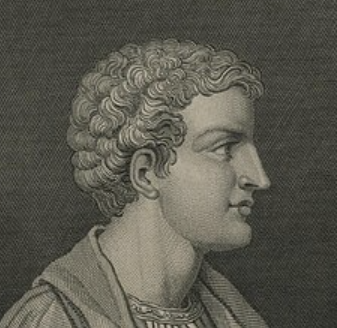
3 months 5 days ago
For joys fall not to the rich alone, nor has he lived ill, who from birth to death has passed unknown.
▼
Source
source
Book I, epistle xvii, line 9
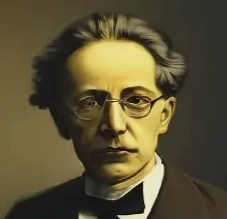
1 day ago
One is not worthy to have what one, through weakness, lets be taken from him; one is not worthy of it because one is not capable of it.

2 months 1 week ago
What to think of other people? I ask myself this question each time I make a new acquaintance. So strange does it seem to me that we exist, and that we consent to exist.

3 months 2 weeks ago
It is remarkable, that almost all speakers and writers feel it to be incumbent on them, sooner or later, to prove or to acknowledge the personality of God. ... In reading a work on agriculture, we have to skip the author's moral reflections, and the words "Providence" and "He" scattered along the page, to come at the profitable level of what he has to say. What he calls his religion is for the most part offensive to the nostrils. ... There is more religion in men's science than there is science in their religion.

Just now
You see that man can endure toil: Cato, on foot, led an army through African deserts. You see that thirst can be endured: he marched over sun-baked hills, dragging the remains of a beaten army and with no train of supplies, undergoing lack of water and wearing a heavy suit of armour; always the last to drink of the few springs which they chanced to find. You see that honour, and dishonour too, can be despised: for they report that on the very day when Cato was defeated at the elections, he played a game of ball. You see also that man can be free from fear of those above him in rank: for Cato attacked Caesar and Pompey simultaneously, at a time when none dared fall foul of the one without endeavouring to oblige the other. You see that death can be scorned as well as exile: Cato inflicted exile upon himself and finally death, and war all the while.

3 months 6 days ago
If you are well-to-do and can maintain your household, love your wife in your home according to good custom...Make her happy while you are alive, for she is land profitable to her lord.
▼
Source
source
Maxim no. 21.

3 months 1 week ago
I believe that one of the things Christianity says is that sound doctrines are all useless. That you have to change your life. (Or the direction of your life.)
▼
Source
source
p. 53e
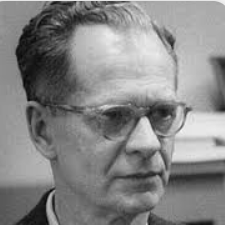
1 week 4 days ago
The way positive reinforcement is carried out is more important than the amount.
▼
Source
source
As quoted in Meditations for Parents Who Do Too Much (1993) by Jonathon Lazear and Wendy Lazear, p. 5
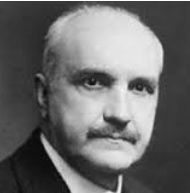
2 months 1 week ago
They [the wise spirits of antiquity in the first circle of Dante's Inferno] are condemned, Dante tells us, to no other penalty than to live in desire without hope, a fate appropriate to noble souls with a clear vision of life.
▼
Source
source
Obiter Scripta
1 month 1 week ago
It may be that brain hardware has co-evolved with the internal virtual worlds that it creates. This can be called hardware-software co-evolution.
1 month 1 week ago
Learn to see in another's calamity the ills which you should avoid.
▼
Source
source
Maxim 120
1 month 1 week ago
Decisive actions are often taken in a moment and without any conscious deliverance from the rational parts of man.
▼
Source
source
The Rajah's Diamond, Story of the Young Man in Holy Orders.
3 months 1 week ago
The political, ethical, social, philosophical problem of our day is not to try to liberate the individual from the state and from the state's institutions but to liberate us both from the state and from the type of individualization which is linked to the state. We have to promote new forms of subjectivity through the refusal of this kind of individuality which has been imposed on us for several centuries.
▼
Source
source
p. 785

3 months 2 weeks ago
Though the Earth, and all inferior Creatures be common to all Men, yet every Man has a Property in his own Person. Thus no Body has any Right to but himself.
▼
Source
source
Second Treatise of Government, Ch. V, sec. 27
3 months 5 days ago
Conquered Greece took captive her savage conqueror and brought her arts into rustic Latium.
▼
Source
source
Book II, epistle i, lines 156-157
4 months ago
For freedom is not acquired by satisfying yourself with what you desire, but by destroying your desire.
▼
Source
source
Book IV, ch. 1, 175.
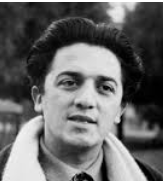
3 weeks 3 days ago
Even if I set out to make a film about a fillet of sole, it would be about me.
▼
Source
source
On the autobiographical nature of his films, in The Atlantic

3 weeks 3 days ago
Confusion of sapience with sentience can be ethically catastrophic.
▼
Source
source
Social Media Unsorted Postings 2016
1 day ago
Political freedom means this: that the polis, the state, is free; religious freedom this: that religion is free, just as freedom of conscience indicates that conscience is free; thus, it does not that I am free from state, from religion, from conscience, or that I am rid of them. It does not mean my freedom, but the freedom of a power that rules and vanquishes me; it means that one of my oppressors, like state, religion, conscience, is free.
▼
Source
source
Landstreicher, p. 76
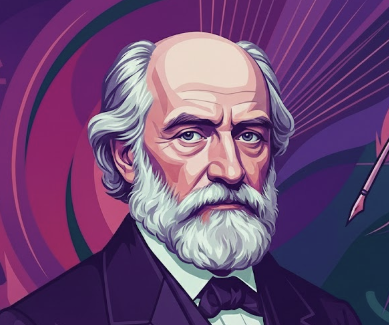
3 months 2 weeks ago
For what is modesty but hypocritical humility, by means of which, in a world swelling with vile envy, a man seeks to beg pardon for his excellences and merits from those who have none? For whoever attributes no merit to himself because he really has none is not modest, but merely honest.
▼
Source
source
Vol. I, Ch. III, The World As Representation: Second Aspect

3 months 2 weeks ago
The force of the word World, as commonly used, of itself falls in with us. For no one will attribute accidents to the World as parts, but as determinations, states; hence the so-called world of the ego, unrestrained by the single substance and its accidents, is not very appositely called a World, unless, perhaps, an imaginary one.
Just now
Of all these experiences that seem so frightful, none is insuperable. Separate trials have been over- come by many: fire by Mucius, crucifixion by Regulus, poison by Socrates, exile by Rutilius, and a sword-inflicted death by Cato; therefore, let us also overcome something.
3 months 2 weeks ago
It may indeed be said that since Philosophy began to take a place in Germany, it has never looked so badly as at the present time - never have emptiness and shallowness overlaid it so completely, and never have they spoken and acted with such arrogance, as though all power were in their hands ! To combat the shallowness, to strive with German earnestness and honesty, to draw Philosophy out of the solitude into which it has wandered - to do such work as this we may hope that we are called by the higher spirit of our time.
▼
Source
source
p. xi Ibid

3 months 2 weeks ago
But such a straight identification of religion with any and every form of happiness leaves the essential peculiarity of religious happiness out. The more commonplace happinesses which we get are 'reliefs,' occasioned by our momentary escapes from evils either experienced or threatened. But in its most characteristic embodiments, religious happiness is no mere feeling of escape. It cares no longer to escape. It consents to the evil outwardly as a form of sacrifice - inwardly it knows it to be permanently overcome. ... In the Louvre there is a picture, by Guido Reni, of St. Michael with his foot on Satan's neck. The richness of the picture is in large part due to the fiend's figure being there. The richness of its allegorical meaning also is due to his being there - that is, the world is all the richer for having a devil in it, so long as we keep our foot upon his neck.
▼
Source
source
Lecture II, "Circumscription of the Topic"

3 months 2 weeks ago
As long as this deliberate refusal to understand things from above, even where such understanding is possible, continues, it is idle to talk of any final victory over materialism.

3 months 2 weeks ago
A good indignation brings out all one's powers.
▼
Source
source
1841
3 months 1 week ago
The criticism of the reformers was directed not so much at the weakness or cruelty of those in authority, as at a bad economy of power.
▼
Source
source
Chapter Two, pp.. 79
3 months 2 weeks ago
The yogi, absorbed in contemplation, contributes in his degree to creation: he breathes a divine perfume, he hears wonderful things. Divine forms traverse him without tearing him, and, united to the nature which is proper to him, he goes, he acts as animating original matter. To some extent, and at rare intervals even I am a yogi .
▼
Source
source
Quoted in R. Malhotra and V. Viswanathan, Snakes in the Ganga: Breaking India 2.0., 2022
1 week 4 days ago
Wisdom, virtue, morality, all these have fallen out of fashion: everybody worships at the shrine of commerce.
▼
Source
source
The Theory of the Four Movements (1808), G. Jones, ed. (1966), p. 269
2 months 1 week ago
In the Gospels, for instance, we sometimes find the kingdom of heaven illustrated by principles drawn from observation of this world rather than from an ideal conception of justice; ... They remind us that the God we are seeking is present and active, that he is the living God; they are doubtless necessary if we are to keep religion from passing into a mere idealism and God into the vanishing point of our thought and endeavour.
▼
Source
source
Interpretations of Poetry and Religion (1900), p. 54
1 month 1 day ago
There is no alleviation for the sufferings of mankind except veracity of thought and of action, and the resolute facing of the world as it is, when the garment of make-believe, by which pious hands have hidden its uglier features, is stripped off.
▼
Source
source
Autobiography
1 month 1 week ago
Writers, poets, painters, musicians, philosophers, political thinkers, to name only a few of the categories affected, must woo their readers, viewers, listeners, from distraction. To this we must add, for simple realism demands it, that these same writers, painters, etc., are themselves the children of distraction. As such, they are peculiarly qualified to approach the distracted multitudes. They will have experienced the seductions as well as the destructiveness of the forces we have been considering here. This is the destructive element in which we do not need to be summoned to immerse ourselves, for we were born to it.
▼
Source
source
The Distracted Public (1990), p. 167
3 months 4 weeks ago
Rules for Demonstrations. I. Not to undertake to demonstrate any thing that is so evident of itself that nothing can be given that is clearer to prove it. II. To prove all propositions at all obscure, and to employ in their proof only very evident maxims or propositions already admitted or demonstrated. III. To always mentally substitute definitions in the place of things defined, in order not to be misled by the ambiguity of terms which have been restricted by definitions.
CivilSimian.com created by AxiomaticPanic, CivilSimian, Kalokagathia