

2 months 2 days ago
I have always observed that to succeed in the world one should appear like a fool but be wise.

3 months 2 weeks ago
We have been given free will, in order that we may will our self-will out of existence and so come to live continuously in a 'state of grace.' All our actions must be directed, in the last analysis, to making ourselves passive in relation to the activity and the being of divine reality. We are, as it were, aeolian harps, endowed with the power either to expose themselves to the wind of the Spirit or to shut themselves away from it.

2 months 2 weeks ago
He who carries self-regard far enough to keep himself in good health and high spirits, in the first place thereby becomes an immediate source of happiness to those around, and in the second place maintains the ability to increase their happiness by altruistic actions. But one whose bodily vigour and mental health are undermined by self-sacrifice carried too far, in the first place becomes to those around a cause of depression, and in the second place renders himself incapable, or less capable, of actively furthering their welfare. In estimating conduct we must remember that there are those who by their joyousness beget joy in others, and that there are those who by their melancholy cast a gloom on every circle they enter.
▼
Source
source
Ethics (New York:1915), § 72, pp. 193-194
4 months 1 day ago
Since love grows within you, so beauty grows. For love is the beauty of the soul.

6 days ago
There have been other Priests perhaps equally notable, in calmer times, for doing faithfully the office of a Leader of Worship; bringing down, by faithful heroism in that kind, a light from Heaven into the daily life of their people; leading them forward, as under God's guidance, in the way wherein they were to go. But when this same way was a rough one, of battle, confusion and danger, the spiritual Captain, who led through that, becomes, especially to us who live under the fruit of his leading, more notable than any other.
3 months 2 weeks ago
We have ...as M. Ribot says, not memory so much as memories. The visual... tactile... muscular... auditory memory may all vary independently... and different individuals may have them developed in different degrees. As a rule, a man's memory is good in the departments in which his interest is strong; but those departments are apt to be those in which his discriminative sensibility is high. ...[D]ifferences in men's imagining power... the machinery of memory must be largely determined thereby.
▼
Source
source
Ch. 16
1 week 5 days ago
News and truth are not the same thing and must be clearly distinguished. The function of news is to signalize an event, the function of truth is to bring to light the hidden facts, to set them into relation with each other, and make a picture of reality on which men can act. Only at those points, where social conditions take recognizable and measurable shape, do the body of truth and the body of news coincide.
▼
Source
source
Ch. XXIV: "News, Truth, and a Conclusion", p. 358 The clause in bold is sometimes quoted on its own in the form, "The news and the truth are not the same thing."

4 months 2 weeks ago
Morality is herd instinct in the individual.
1 month 2 weeks ago
Dying is nothing. You have to know how to disappear. Dying comes down to a biological chance and that is of no consequence. Disappearing is of a far higher order of necessity. You must not leave it to biology to decide when you will disappear. To disappear is to pass into an enigmatic state which is neither life nor death. Some animals know how to do this, as do savages, who withdraw while still alive, from the sight of their own people.
2 months 1 week ago
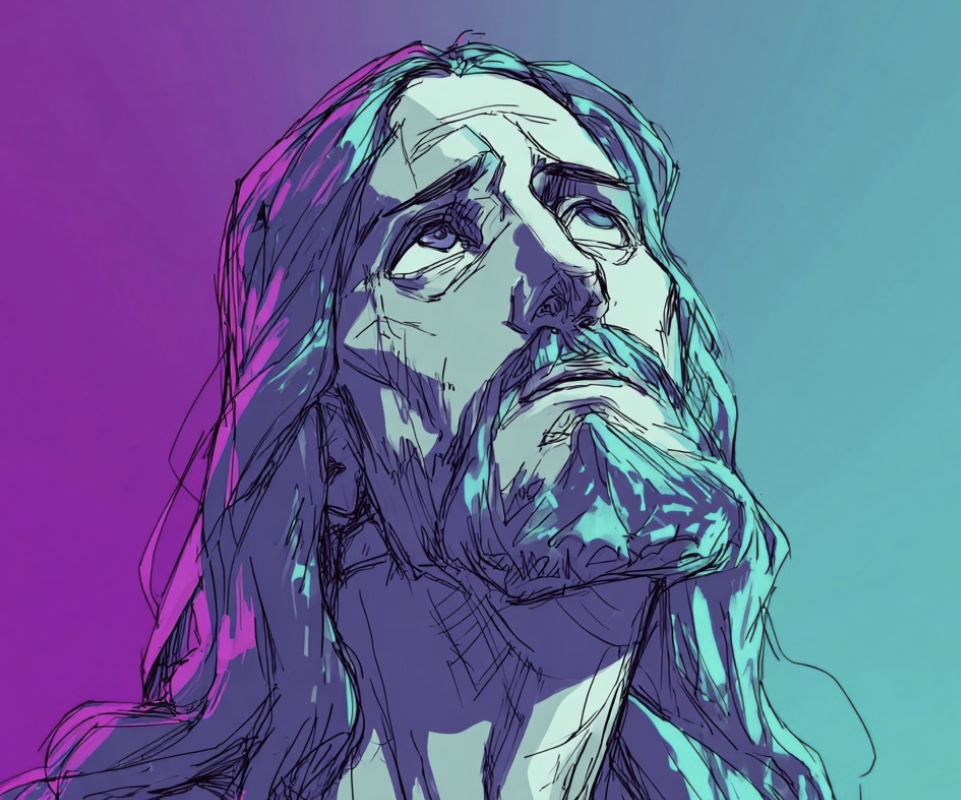
Take, eat; this is my body. And he took the cup, and gave thanks, and gave it to them, saying, Drink ye all of it; For this is my blood of the new testament, which is shed for many for the remission of sins. But I say unto you, I will not drink henceforth of this fruit of the vine, until that day when I drink it new with you in my Father's kingdom.
▼
Source
source
26:26-29 (KJV)

3 months 2 weeks ago
Human infirmity in moderating and checking the emotions I name bondage: for, when a man is a prey to his emotions, he is not his own master, but lies at the mercy of fortune: so much so, that he is often compelled, while seeing that which is better for him, to follow that which is worse.
▼
Source
source
Part IV, Preface; translation by R. H. M. Elwes
6 days ago
No sadder proof can be given by a man of his own littleness than disbelief in great men.
6 days ago
Whoso belongs only to his own age, and reverences only its gilt Popinjays or smoot-smeared Mumbojumbos, must needs die with it.

Just now
1) Preserve Life
2) State of war (opportunism)
3) Relativism
4) Confusion
Civilization, goodness, justice, fairness all contained inside the first option. Under # 1 (Universal Humanism):
1) Survive.
2) Don't prevent another from surviving.
3) Help the less fortunate.
2 months 1 week ago
A bad review is even less important than whether it is raining in Patagonia.
▼
Source
source
Quoted in The Times (6 July 1989).
1 month 1 week ago
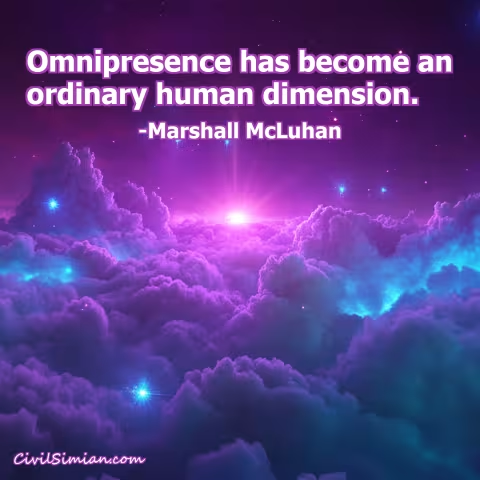
Faced with information overload, we have no alternative but pattern-recognition.
▼
Source
source
(p. 132)

3 months 2 weeks ago
The principal source of the harm done by the State is the fact that power is its chief end.
▼
Source
source
Principles of Social Reconstruction (1917), Ch. II: The State

2 months 1 week ago
To try curing someone of a "vice," of what is the deepest thing he has, is to attack his very being, and this is indeed how he himself understands it, since he will never forgive you for wanting him to destroy himself in your way and not his.
2 months ago
Rightness of limitation is essential for growth of reality.Unlimited possibility and abstract creativity can procure nothing. The limitation, and the basis arising from what is already actual, are both of them necessary and interconnected.
▼
Source
source
Religion in the Making (February 1926), Lecture IV: "Truth and Criticism".
2 months 6 days ago
Reason is like an open secret that can become known to anyone at any time; it is the quiet space into which everyone can enter through his own thought.
▼
Source
source
As quoted in Philosophy for a Time of Crisis : An Interpretation, with Key Writings by Fifteen Great Modern Thinkers (1959) by Adrienne Koch, Ch. 18, "Karl Jaspers : A New Humanism"

2 months 3 weeks ago
There is surely a Physiognomy, which those experienced and Master Mendicants observe... For there are mystically in our faces certain Characters that carry in them the motto of our Souls, wherein he that cannot read A.B.C. may read our natures.
▼
Source
source
Section 2
6 days ago
To such a one, already filled with intellectual substance, and possessing what we may call the practical gold-bullion of human culture, it was an obvious improvement that he should be taught to speak it out of him on occasion; that he should carry a spiritual banknote producible on demand for what of "gold-bullion" he had, not so negotiable otherwise, stored in the cellars of his mind. A man, with wisdom, insight and heroic worth already acquired for him, naturally demanded of the schoolmaster this one new faculty, the faculty of uttering in fit words what he had. A valuable superaddition of faculty:-and yet we are to remember it was scarcely a new faculty; it was but the tangible sign of what other faculties the man had in the silent state.
1 week 1 day ago
Pragmatism starts from assumptions similar to those of empiriocriticism, but differs from the latter by its striking formulations, loose aphorisms, and analytical unscrupulousness.
▼
Source
source
Chapter Seven, Pragmatism and Positivism, p. 166
3 weeks 3 days ago
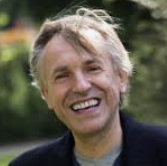
All moral tradeoffs are messy. However, on some fairly modest ethical assumptions, when a severe and irreconcilable conflict of interests occurs, then the interests of the more sentient take precedence over the less sentient. This rule of thumb holds regardless of the age, race or species of the victim. Reply to "Why is David Pearce a vegan and a negative utilitarian given industrial agriculture's decimation of insect populations and, therefore, suffering the greater number of insects than farm animals? Shouldn't insects outweigh farm animals?
▼
Source
source
, Quora, 3 Sept. 2019
4 months 1 week ago
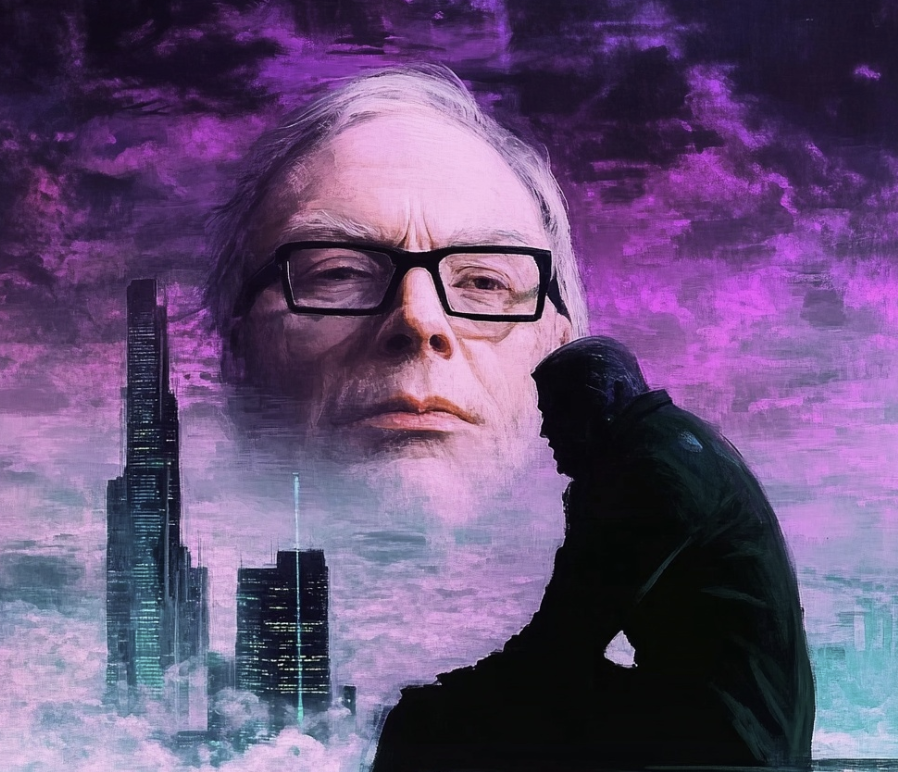
If you're going to write a story, avoid contemporary references. They date a story and they have no staying power.
2 months 1 week ago
The refutation of suicide: is it not inelegant to abandon a world which has so willingly put itself at the service of our melancholy?
1 week 2 days ago
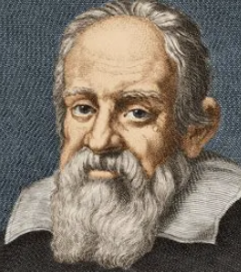
Names and attributes must be accommodated to the essence of things, and not the essence to the names, since things come first and names afterwards.
▼
Source
source
As quoted in Discoveries and Opinions of Galileo (1957) by Stillman Drake, p. 92

3 months 3 weeks ago
I doubt if a single individual could be found from the whole of mankind free from some form of insanity. The only difference is one of degree. A man who sees a gourd and takes it for his wife is called insane because this happens to very few people.
▼
Source
source
As quoted in Words from the Wise : Over 6,000 of the Smartest Things Ever Said (2007) by Rosemarie Jarski, p. 312. From The Praise of Folly.
6 days ago
Europe has made much; great cities, great empires, encyclopaedias, creeds, bodies of opinion and practice: but it has made little of the class of Dante's Thought.

2 months 2 weeks ago
I know of no country, indeed, where the love of money has taken stronger hold on the affections of men, and where the profounder contempt is expressed for the theory of the permanent equality of property.
▼
Source
source
Chapter III, Part I.
3 months 3 weeks ago
There is no pleasure to me without communication: there is not so much as a sprightly thought comes into my mind that it does not grieve me to have produced alone, and that I have no one to tell it to.
2 months 1 week ago
To reckon on anything at all, here or elsewhere, is to afford proofs that we are still burdened with chains. The reprobate aspires to paradise; this aspiration disparages, compromises him. To be free is to rid yourself forever of the notion of reward, it is to expect nothing of men or gods, it is to renounce not only this world and all worlds but salvation itself-it is to destroy even the notion of it, that chain among chains.

3 months 2 weeks ago
Most of the luxuries, and many of the so-called comforts of life, are not only not indispensable, but positive hindrances to the elevation of mankind.
▼
Source
source
p. 18
3 months 2 weeks ago
He who seeks equality between unequals seeks an absurdity.
▼
Source
source
Ch. 9, Of Aristocracy, Continuation
1 month 1 week ago
Death is the dark backing that a mirror needs if we are to see anything.
▼
Source
source
Humboldt's Gift (1975), p. 265
2 months 1 week ago
The apparatus defeats its own purpose if its purpose is to create a humane existence on the basis of a humanized nature.
▼
Source
source
pp. 145-146
3 months 2 weeks ago
All human activities are equivalent ... and ... all are on principle doomed to failure.
▼
Source
source
Conclusion, II
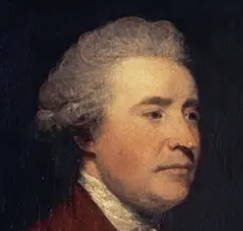
2 months 2 weeks ago
It is a general popular error to suppose the loudest complainers for the publick to be the most anxious for its welfare.
▼
Source
source
Observations on a Late Publication on the Present State of the Nation
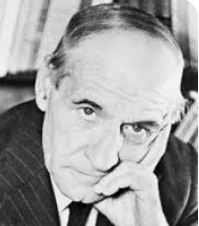
2 months 6 days ago
Every living creature is happy when he fulfills his destiny, that is, when he realizes himself, when he is being that which in truth he is. For this reason, Schlegel, inverting the relationship between pleasure and destiny, said, "We have a genius for what we like." Genius, man's superlative gift for doing something, always carries a look of supreme pleasure.
▼
Source
source
pp. 16-17
3 months 2 weeks ago
To travel is to discover that everyone is wrong.
▼
Source
source
Part II: Malaya,

3 months 2 weeks ago
Every hero becomes a bore at last.
▼
Source
source
Uses of Great Men
3 months 3 weeks ago
Wonder is the foundation of all philosophy, research is the means of all learning, and ignorance is the end.

1 week 3 days ago
In situations of de facto diversity, attempts to impose a single way of life on an entire population is a formula for dictatorship.
2 months 2 weeks ago
He laid it down as a maxim, that monarchy was the basis of all good government and the nearer to monarchy any government approached, the more perfect it was, and vice versa; and he certainly in his wildest moments, never had so far forgotten the nature of government, as to argue that we ought to wish for a constitution that we could alter at pleasure, and change like a dirty shirt. He was by no means anxious for a monarchy with a dash of republicanism to correct it. But the French constitution was the exact opposite of the English in every thing, and nothing could be so dangerous as to set it up to the view of the English, to mislead and debauch their minds.
▼
Source
source
Speech in the House of Commons (6 May 1791), quoted in The Parliamentary History of England, From the Earliest Period to the Year 1803, Vol. XXIX (1817), column 385

1 week 4 days ago
The possibility of democracy on a global scale is emerging today for the very first time.
▼
Source
source
(xi)
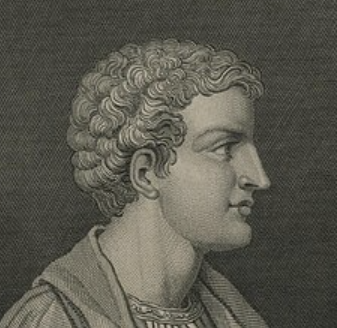
3 months 5 days ago
Struggling to be brief I become obscure.
▼
Source
source
Line 25
3 months 2 weeks ago
I wish that life should not be cheap, but sacred. I wish the days to be as centuries, loaded, fragrant.
▼
Source
source
Considerations by the Way

3 months 2 weeks ago
Morality is a subject that interests us above all others: We fancy the peace of society to be at stake in every decision concerning it; and 'tis evident, that this concern must make our speculations appear more real and solid, than where the subject is, in a great measure, indifferent to us. What affects us, we conclude can never be a chimera; and as our passion is engag'd on the one side or the other, we naturally think that the question lies within human comprehension; which, in other cases of this nature, we are apt to entertain some doubt of. Without this advantage I never should have ventur'd upon a third volume of such abstruse philosophy, in an age, wherein the greatest part of men seem agreed to convert reading into an amusement, and to reject every thing that requires any considerable degree of attention to be comprehended.
▼
Source
source
Part 1, Section 1
CivilSimian.com created by AxiomaticPanic, CivilSimian, Kalokagathia