


3 months 2 weeks ago
A great deal of capital, which appears to-day in the United States without any certificate of birth, was yesterday, in England, the capitalised blood of children.
▼
Source
source
Vol. I, Ch. 31, pg. 829.
2 months 6 days ago
Naturalism is a word of many meetings in philosophy as well as in art. like most isms - classicism and romanticism, idealism and realism in art - it's has become an emotional term, a war cry of partisans.
▼
Source
source
p. 157

3 months 2 weeks ago
As usurpation is the exercise of power which another has a right to, so tyranny is the exercise of power beyond right, which nobody can have a right to...
▼
Source
source
Second Treatise of Government, Ch. XVIII, sec. 199
3 months 1 week ago
Eternity, not as a static "now," nor as a sequence of "nows" rolling off into the infinite, but as the "now" that bends back into itself. ... Thinking the most difficult thought of philosophy means thinking being as time.
▼
Source
source
p. 20

2 months 2 weeks ago
Arms are not yet taken up; but virtually, you are in a civil war. You are not people of differing opinions in a public council;-you are enemies, that must subdue or be subdued, on the one side or the other. If your hands are not on your swords, their knives will be at your throats. There is no medium,-there is no temperament,-there is no compromise with Jacobinism.
▼
Source
source
Letter to William Windham (30 December 1794), quoted in R. B. McDowell (ed.)
1 month ago
The doctrine that all men are, in any sense, or have been, at any time, free and equal, is an utterly baseless fiction.
▼
Source
source
On The Natural Inequality of Men
2 weeks ago
Kaufmann's Nietzsche is important for other reasons as well. It is a book that everyone seems to be familiar with but few have actually read, as if, having succeeded in upending the traditional picture of Nietzsche, it can now be safely ignored. But reading it (or rereading it) repays the effort. Kaufmann's own views are considerably more nuanced than I have been able to suggest, and his accounts of Nietzsche's dependence of Goethe, of his naturalism-the view that human beings are continuous with the rest of the animal world, in the spirit of Darwin-the mechanisms of sublimation, and his affinities with American pragmatism are genuine and lasting contributions to our understanding of this still seductive and enigmatic philosopher who is now, thanks to this book, part and parcel of our intellectual heritage. Kaufmann's Nietzsche is still very much alive, and for that reason his Nietzsche deserves to come alive once again.
▼
Source
source
Alexander Nehamas, Foreword to Kaufmann's Nietzsche
1 month 1 week ago
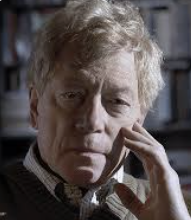
Of course, there are those - Sandel, Walzer and Dworkin, for example - who propose "communitarian" ways of thinking, as a further move in the direction which a sophisticated liberalism requires. But none of them is prepared to accept the real price of community: which is sanctity, intolerance, exclusion, and a sense that life's meaning depends upon obedience, and also on vigilance against the enemy.
▼
Source
source
'In Defence of the Nation', The Philosopher on Dover Beach (1990), p. 310
3 months 2 weeks ago
When communist workmen associate with one another, theory, propaganda, etc., is their first end. But at the same time, as a result of this association, they acquire a new need - the need for society - and what appears as a means becomes an end. You can observe this practical processing its most splendid results whenever you see French socialist workers together. Such things as smoking, drinking, eating, etc., are no longer means of contact or means that bring together. Company, association, and conversation, which again has society as its end, are enough for them; the brotherhood of man is on mere phase with them, but a fact of life, and the nobility of man shines upon us from their work-hardened bodies.
▼
Source
source
"The Meaning of Human Requirements" p.99-100,The Marx-Engels Reader

3 months 3 weeks ago
I have seen no more evident monstrosity and miracle in the world than myself.
▼
Source
source
Ch. 11

2 months 1 week ago
No psychic value can disappear without being replaced by another of equivalent intensity.
▼
Source
source
p. 209

3 weeks ago
Progress in civilization seems possible only in interludes when history is idling.
▼
Source
source
An Old Chaos: The Emperor's Tomb (p. 35)
3 weeks 6 days ago
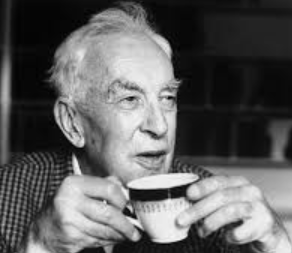
These immense cities lie basking on the beaches of the continent like whales that have taken to the land again. What do these great, sleek, well-fed creatures live on so sumptuously?
▼
Source
source
12. The Elusive Continent (on the six state capitals of Australia)

3 months 2 weeks ago
... no testimony is sufficient to establish a miracle, unless the testimony be of such a kind, that its falsehood would be more miraculous, than the fact, which it endeavors to establish.
▼
Source
source
Section 10 : Of Miracles Pt. 1

2 months 2 weeks ago
The best definition of man is: a being that goes on two legs and is ungrateful.
▼
Source
source
Part 1, Chapter 8 (tr. David Magarshack, 1950) The best definition of man is: a biped, ungrateful.
3 months 3 weeks ago
It is a thorny undertaking, and more so than it seems, to follow a movement so wandering as that of our mind, to penetrate the opaque depths of its innermost folds, to pick out and immobilize the innumerable flutterings that agitate it.
▼
Source
source
Ch. 6. Of Preparation, tr. E. J. Trechmann, 1927
2 months 6 days ago
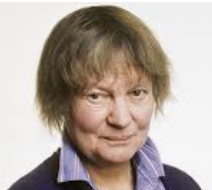
All metaphysical theories are inconclusively vulnerable to positivist attack.
▼
Source
source
Ch. 9, p. 127



3 months 2 weeks ago
Free in this world as the birds in the air, disengaged from every kind of chains, those who have practiced the Yoga gather in Brahmin the certain fruit of their works. Depend upon it; rude and careless as I am, I would fain practice the yoga faithfully. This Yogi, absorbed in contemplation, contributes in his degree to creation; he breathes a divine perfume, he heard wonderful things. Divine forms traverse him without tearing him and he goes, he acts as animating original matter. To some extent, and at rare intervals, even I am a Yogi.
▼
Source
source
Letter to H. G. O. Blake, November 20, 1849
3 weeks 6 days ago
The value of the goal lies in the goal itself; and therefore the goal cannot be attained unless it is pursued for its own sake.
▼
Source
source
Vol. 12

5 days ago
It is all work and forgotten work, this peopled, clothed, articulate-speaking, high-towered, wide-acred World. The hands of forgotten brave men have made it a World for us; they,- honour to them; they, in spite of the idle and the dastard. This English Land, here and now, is the summary of what was found of wise, and noble, and accordant with God's Truth, in all the generations of English Men. Our English Speech is speakable because there were Hero-Poets of our blood and lineage; speakable in proportion to the number of these. This Land of England has its conquerors, possessors, which change from epoch to epoch, from day to day; but its real conquerors, creators, and eternal proprietors are these following, and their representatives if you can find them: All the Heroic Souls that ever were in England, each in their degree; all the men that ever cut a thistle, drained a puddle out of England, contrived a wise scheme in England, did or said a true and valiant thing in England.

1 month 1 week ago
I think that New York is not the cultural center of America, but the business and administrative center of American culture.
▼
Source
source
BBC radio interview, The Listener

Just now
I am owner of my might, and I am so when I know myself as unique. In the unique one the owner himself returns into his creative nothing, of which he is born. Every higher essence above me, be it God, be it man, weakens the feeling of my uniqueness, and pales only before the sun of this consciousness. If I concern myself for myself, the unique one, then my concern rests on its transitory, mortal creator, who consumes himself, and I may say: All things are nothing to me.
▼
Source
source
Dover 2005, p. 366

3 months 2 weeks ago
For I now saw, or thought I saw, what I had always before received with incredulity-that the habit of analysis has a tendency to wear away the feelings: as indeed it has, when no other mental habit is cultivated, and the analysing spirit remains without its natural complements and correctives.
▼
Source
source
(p. 137)
1 month 1 week ago
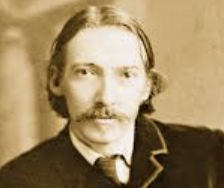
I regard you with an indifference closely bordering on aversion.
▼
Source
source
The Rajah's Diamond, Story of the House with the Green Blinds.

3 months 2 weeks ago
The cup of life is not so shallow
That we have drained the best
That all the wine at once we swallow
And lees make all the rest.
▼
Source
source
1827
1 month 2 weeks ago
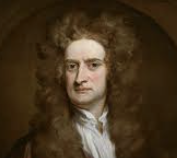
I can calculate the motions of erratic bodies, but not the madness of a multitude.
▼
Source
source
As quoted in "Mammon and the Money Market", in The Church of England Quarterly Review (1850), p. 142

3 months 2 weeks ago
[T]hings are impressed better by active than by passive repetition. ...[I]t pays better to wait and recollect by an effort from within, than to look at the book again.
▼
Source
source
Ch. 16
1 month ago
M. Comte's philosophy, in practice, might be compendiously described as Catholicism minus Christianity.
▼
Source
source
On the Physical Basis of Life

2 months 1 week ago
Imaginary pains are by far the most real we suffer, since we feel a constant need for them and invent them because there is no way of doing without them.

2 months 1 week ago
He also said to them, "You completely invalidate God's command in order to maintain your tradition! For Moses said: Honor your father and your mother; and, Whoever speaks evil of father or mother must be put to death.
▼
Source
source
7:9-10
2 months 1 week ago
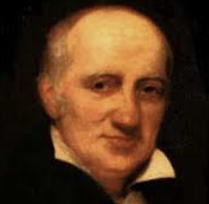
Privilege is a regulation rendering a few men, and those only, by the accident of their birth, eligible to certain situations. It kills all liberal ambition in the rest of mankind, by opposing to it an apparently insurmountable bar. It diminishes it in the favored class itself, by showing them the principal qualification as indefeasibly theirs. Privilege entitles a favored few to engross to themselves gratifications which the system of the universe left at large to all her sons; it puts into the hands of those few the means of oppression against the rest of their species; it fill them witth vain-glory, and affords them every incitement to insolence and a lofty disregard to the feeling and interests of others.
▼
Source
source
Book V, Chapter 11, "Moral Effects of Aristocracy"

3 months 1 week ago
But how can the characters in a play guess the plot? We are not the playwright, we are not the producer, we are not even the audience. We are on the stage. To play well the scenes in which we are "on" concerns us much more than to guess about the scenes that follow it.

4 months 4 days ago
Virtue (or the man of virtue) is not left to stand alone. He who practices it will have neighbors.
3 months 4 days ago
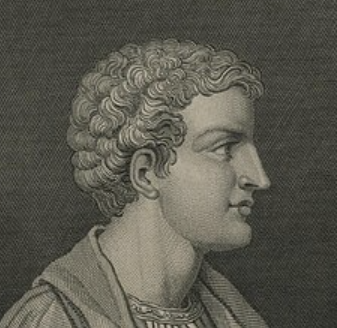
Tis not sufficient to combine well-chosen words in a well-ordered line.
▼
Source
source
Book I, satire iv, line 54 (translated by John Conington)
3 months 2 weeks ago
"And your education! Is not that also social, and determined by the social conditions under which you educate, by the intervention, direct or indirect, of society, by means of schools, etc.? The Communists have not invented the intervention of society in education; they do but seek to alter the character of that intervention, and to rescue education from the influence of the ruling class."
▼
Source
source
As quoted in The Communist Manifesto (21 February 1848), p19-20.

3 months 4 days ago
Men have fashioned an image of Chance as an excuse for their own stupidity. For Chance rarely conflicts with intelligence, and most things in life can be set in order by an intelligent sharpsightedness.
▼
Source
source
Freeman (1948), p. 155
2 months 2 weeks ago
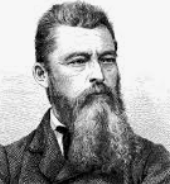
...for stones, plants, and animals there is no God, but only for man.
2 months 1 week ago
What is not heartrending is superfluous, at least in music.

4 months 1 week ago
The characters of self-restrained officials are exceedingly careful and just and conservative, but they lack keenness and a certain quick and active boldness. The courageous natures, on the other hand, are deficient in justice and caution in comparison with the former, but excel in boldness of action; and unless both these qualities are present it is impossible for a state to be entirely prosperous in public and private matters.
1 month 1 week ago
Can we find nothing good to say about TV? Well, yes, it brings scattered solitaries into a sort of communion. TV allows your isolated American to think that he participates in the life of the entire country. It does not actually place him in a community, but his heart is warmed with the suggestion (on the whole false) that there is a community somewhere in the vicinity and that his atomized consciousness will be drawn back toward the whole.
▼
Source
source
The Distracted Public (1990), p. 159

3 months 1 week ago
I hate victims who respect their executioners.
▼
Source
source
Loser Wins (Les Séquestrés d'Altona: A Play in Five Acts)

1 week 2 days ago
He whom God has touched will always be a being apart: he is, whatever he may do, a stranger among men; he is marked by a sign.
▼
Source
source
Oeuvres Complètes, vol. 3. L'Avenir de la Science (1890).

2 months 3 weeks ago
Of the eternal corporeal substance (which is not producible ex nihilo, nor reducible ad nihilum, but rarefiable, condensable, formable, arrangeable, and "fashionable") the composition is dissolved, the complexion is changed, the figure is modified, the being is altered, the fortune is varied, only the elements remaining what they are in substance, that same principle persevering which was always the one material principle, which is the true substance of things, eternal, ingenerable and incorruptible.
▼
Source
source
As translated by Arthur Imerti

4 months 1 week ago
Maman used to say that you can always find something to be happy about.
3 months 2 weeks ago
The profit of books is according to the sensibility of the reader. The profoundest thought or passion sleeps as in a mine until an equal mind and heart finds and publishes it.
▼
Source
source
Quotation and Originality
3 months 1 week ago
There is nothing outside the text," which Derrida opponents have characterized to mean that nothing exists but language.
▼
Source
source
Il n'y a pas de hors-texte. Of Grammatology (1967). G. Spivak translated this as "
3 months 3 weeks ago
Saturninus said, "Comrades, you have lost a good captain to make him an ill general."
▼
Source
source
Book III, Ch. 9. Of Vanity
1 week 1 day ago
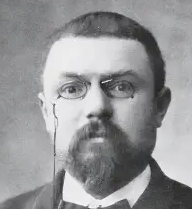
But these labels can only be finite in number. On that score, psychologic time should be discontinuous.
CivilSimian.com created by AxiomaticPanic, CivilSimian, Kalokagathia