


2 months 1 week ago
Nothing is so wearing as the possession or abuse of liberty.

2 months 6 days ago
Verily I say unto you, All sins shall be forgiven unto the sons of men, and blasphemies wherewith soever they shall blaspheme: But he that shall blaspheme against the Holy Ghost hath never forgiveness, but is in danger of eternal damnation.
▼
Source
source
Mark 3:28-29 (KJV)

3 weeks ago
No doubt markets transmit information in the way that Hayek claimed. But what reason is there to believe that - unlike any other social institution - they have a built-in capacity to correct their mistakes? History hardly supports the supposition. Moods of irrational exuberance and panic can, and often do, swamp the price-discovery functions of markets.

3 months 2 weeks ago
New truth is often uncomfortable, especially to the holders of power; nevertheless, amid the long record of cruelty and bigotry, it is the most important achievement of our intelligent but wayward species.
▼
Source
source
Religion and Science (1935), Ch. X: Conclusion
1 month 1 week ago
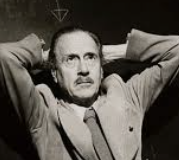
The newspaper is a corporate symbolist poem, environmental and invisible, as poem.

1 month 3 weeks ago
It isn't at all a matter of being optimistic, but rather of continuing to have faith in the ongoing and literally unending process of emancipation and enlightenment that, in my opinion, frames and gives direction to the intellectual vocation.
▼
Source
source
Preface to 25th anniversary edition of Orientalism (1994), p. xv
2 months 1 week ago
No one has the audacity to exclaim: "I don't want to do anything!" - we are more indulgent with a murderer than with a mind emancipated from actions.
3 months 2 weeks ago
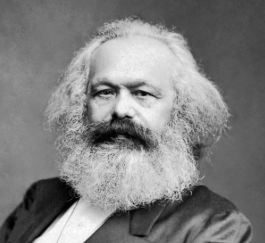
In England women are still occasionally used instead of horses for hauling canal boats, because the labour required to produce horses and machines is an accurately known quantity, while that required to maintain the women of the surplus population is below all calculation.
▼
Source
source
Vol. I, Ch. 15, Section 2, pg. 430.

3 months 4 days ago
One who is serious all day will never have a good time, while one who is frivolous all day will never establish a household.
▼
Source
source
Maxim no. 25.
2 months 1 week ago
Anyone who speaks in the name of others is always an impostor.
3 months 3 weeks ago
This right which you have, is not founded any more than his upon any quality or any merit in yourself which renders you worthy of it. Your soul and your body are, of themselves, indifferent to the state of boatman or that of duke; and there is no natural bond that attaches them to one condition rather than to another.

4 months 3 days ago
When you have faults, do not fear to abandon them.
6 days ago
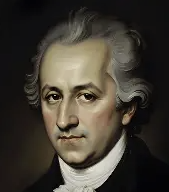
Nothing is great but truth, and the smallest truth is great. The other day I had a thought, which I put like this: Even a harmful truth is useful, for it can be harmful only for the moment and will lead to other truths, which must always become useful, very much so. Conversely, even a useful error is harmful, for it can be useful only for the moment, enticing us into other errors, which become more and more harmful.
▼
Source
source
Letter to Charlotte von Stein (1787) in Goethe's World View: Presented in His Reflections and Maxims (1963), Edited with an Introduction by Frederick Ungar, Translated by Heinz Norden, pp. 72-73, Frederick Ungar Publishing Company, New York.
1 month 1 week ago
War has become the environment of our time if only because it is an accelerated form of innovation and education.
▼
Source
source
(p. 381)
2 months 2 weeks ago
The doctrine of the transmigration of souls was indigenous to India and was brought into Greece by Pythagoras.
▼
Source
source
quoted in Londhe, S. (2008). A tribute to Hinduism: Thoughts and wisdom spanning continents and time about India and her culture. New Delhi: Pragun Publication.
3 months 1 week ago
If a victory is told in detail, one can no longer distinguish it from a defeat.
▼
Source
source
Act 1
1 month 1 week ago
I am an American, Chicago born - Chicago, that somber city - and go at things as I have taught myself, free-style, and will make the record in my own way: first to knock, first admitted; sometimes an innocent knock, sometimes a not so innocent.
▼
Source
source
Ch. 1 (opening line)
1 month 1 week ago
I think that New York is not the cultural center of America, but the business and administrative center of American culture.
▼
Source
source
BBC radio interview, The Listener

3 months 3 weeks ago
There is a great difference between the Idols of the human mind and the Ideas of the divine. That is to say, between certain empty dogmas, and the true signatures and marks set upon the works of creation as they are found in nature.
▼
Source
source
Aphorism 23
2 months 2 weeks ago
Only through blind Instinct, in which the only possible guidance of the Imperative is awanting, does the Power in Intuition remain undetermined; where it is schematised as absolute it becomes infinite; and where it is presented in a determinate form, as a principle, it becomes at least manifold. By the above-mentioned act of Intelligising, the Power liberates itself from Instinct, to direct itself towards Unity.
1 month 4 weeks ago
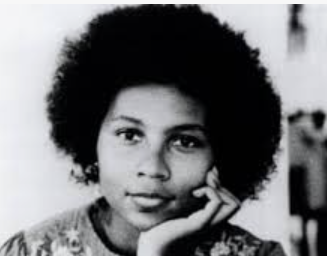
As we search as a nation for constructive ways to challenge racism and white supremacy, it is absolutely essential that progressive female voices gain a hearing.
3 months 1 week ago
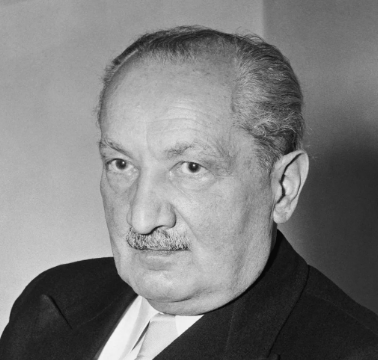
The critique of the highest values hitherto does not simply refute them or declare them invalid. It is rather a matter of displaying their origins as impositions which must affirm precisely what ought to be negated by the values established.
▼
Source
source
p. 26
1 month 1 week ago
The specialist is one who never makes small mistakes while moving towards the grand fallacy.
▼
Source
source
(p. 154)

4 months 1 week ago
There is no version of primeval history, preceding the discoveries of modern science, that is as rational and as inspiring as that of the first eleven chapters of the Book of Genesis.

3 months 1 week ago
The world and life are one.
▼
Source
source
(5.621) Original German: Die Welt und das Leben sind Eins.
1 month 1 week ago
It has become almost a cliché to remark that nobody boasts of ignorance of literature, but it is socially acceptable to boast ignorance of science and proudly claim incompetence in mathematics.
3 weeks 5 days ago
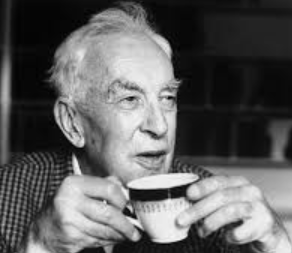
America is like a large, friendly dog in a very small room. Every time it wags its tail, it knocks over a chair!
▼
Source
source
In Quote: The Weekly Digest, vol. 23, no. 19 (4 May 1952) p. 16
1 month 4 weeks ago
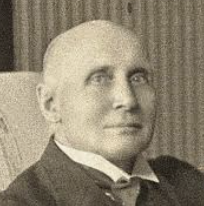
In its solitariness the spirit asks, What, in the way of value, is the attainment of life? And it can find no such value till it has merged its individual claim with that of the objective universe.
▼
Source
source
Religion is world-loyalty. Religion in the Making (February 1926), Lecture II: "Religion and Dogma".
2 months 1 day ago
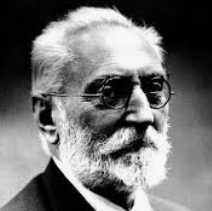
Not only are we unable to conceive of the full and living God as masculine simply, but we are unable to conceive of Him as individual simply, as the projection of a solitary I, an unsocial I, an I that is in reality an abstract I. My living I is an I that is really a We; my living personal I lives only in other, of other, and by other I's; I am sprung from a multitude of ancestors. I carry them within me in extract, and at the same time I carry within me, potentially, a multitude of descendants, and God, the projection of my I to the infinite - or rather I, the projection of God to the finite - must also be a multitude. Hence, in order to save the personality of God - that is to say, in order to save the living God - faith's need - the need of the feeling and the imagination - of conceiving Him and feeling Him as possessed of a certain internal multiplicity.
2 months 1 day ago
Isolation is the worst possible counselor.
▼
Source
source
Civilization is Civilism

3 months 2 weeks ago
He thinks like a philosopher, but governs like a king.
▼
Source
source
Of Frederick the Great XII
1 month 1 week ago
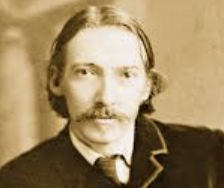
To be what we are, and to become what we are capable of becoming, is the only end of life.
▼
Source
source
Familiar Studies of Men and Books (1882).

3 months 1 week ago
Man is always separated from what he is by all the breadth of the being which he is not. He makes himself known to himself from the other side of the world and he looks from the horizon toward himself to recover his inner being.
2 months 6 days ago
Science is the knowledge of Consequences, and dependence of one fact upon another: by which, out of that we can presently do, we know how to do something else when we will, or the like, another time.
▼
Source
source
The First Part, Chapter 5, p. 21
2 months 6 days ago
Heaven and earth shall pass away, but my words shall not pass away.
▼
Source
source
Mark 13:31, KJV
3 months 2 weeks ago
We later learned that all the nineteen passengers in the non-smoking compartment had been killed. When the plane had hit the water a hole had been made in the plane and the water had rushed in. I had told a friend at Oslo who was finding me a place that he must find me a place where I could smoke, remarking jocularly, 'If I cannot smoke, I shall die'. Unexpectedly, this turned out to be true.

3 months 2 weeks ago
The imagination is not a talent of some men but is the health of every man.
▼
Source
source
Poetry and Imagination

2 months 5 days ago
Perhaps when distant people on other planets pick up some wave-length of ours all they hear is a continuous scream.
▼
Source
source
The Message to the Planet (1989) p. 509.
2 months 4 days ago
The process of aging can only be fruitful and satisfactory if the important transitions are accompanied by free resignation, by the renunciation of the values proper to the preceding stage of life. Those spiritual and intellectual values which remain untouched by the process of aging, together with the values of the next stage of life, must compensate for what has been lost. Only if this happens can we cheerfully relive the values of our past in memory, without envy for the young to whom they are still accessible. If we cannot compensate, we avoid and flee the "tormenting" recollection of youth, thus blocking our possibilities of understanding younger people. At the same time we tend to negate the specific values of earlier stages. No wonder that youth always has a hard fight to sustain against the ressentiment of the older generation.
▼
Source
source
L. Coser, trans. (1973), pp. 62-63

4 months 1 week ago
Neither family, nor privilege, nor wealth, nor anything but Love can light that beacon which a man must steer by when he sets out to live the better life.
2 months 1 week ago
Even in childhood I watched the hours flow, independent of any reference, any action, any event, the disjunction of time from what was not itself, its autonomous existence, its special status, its empire, its tyranny. I remember quite clearly that afternoon when, for the first time, confronting the empty universe, I was no more than a passage of moments reluctant to go on playing their proper parts. Time was coming unstuck from being - at my expense.
4 months 1 week ago
Once you've dissected a joke, you're about where you are when you've dissected a frog. It's dead. Banquets of the Black Widowers (1984), p. 49; comparable to "Humor can be dissected, as a frog can, but the thing dies in the process and the innards are discouraging to any but the pure scientific mind."
3 months 2 weeks ago
Pragmatism, on the other hand, asks its usual question. "Grant an idea or belief to be true," it says, "what concrete difference will its being true make in anyone's actual life? How will the truth be realized? What experiences will be different from those which would obtain if the belief were false? What, in short, is the truth's cash-value in experiential terms?"
▼
Source
source
Lecture VI, Pragmatism's Conception of Truth
1 month 2 weeks ago
It seems to me obvious that infants and many animals that do not in any ordinary sense have a language or perform speech acts nonetheless have Intentional states. Only someone in the grip of a philosophical theory would deny that small babies can literally be said to want milk and that dogs want to be let out or believe that their master is at the door.
▼
Source
source
P. 5.

3 months 2 weeks ago
One thing I have frequently observed in children, that when they have got possession of any poor creature, they are apt to use it ill: they often torment, and treat it very roughly, young birds, butterflies, and such other poor animals which fall into their hands, and that with a seeming kind of pleasure. This I think should be watched in them, and if they incline to any such cruelty, they should be taught the contrary usage. For the custom of tormenting and killing of beasts, will, by degrees, harden their minds even towards men; and they will delight in the suffering and destruction of inferior creatures, will not be apt to be very compassionate or benign to those of their own kind. Our practice takes notice of this in the exclusion of butchers from juries of life and death.
▼
Source
source
Sec. 116
3 months 2 weeks ago
I should say that the universe is just there, and that is all.
▼
Source
source
BBC Radio Debate on the Existence of God, Bertrand Russell v. Frederick Copleston, 1948

3 months 2 weeks ago
The guardians who have kindly undertaken the supervision will see to it that by far the largest part of mankind, including the entire "beautiful sex," should consider the step into maturity, not only as difficult but as very dangerous. After having made their domestic animals dumb and having carefully prevented these quiet creatures from daring to take any step beyond the lead-strings to which they have fastened them, these guardians then show them the danger which threatens them, should they attempt to walk alone.
4 months 1 day ago
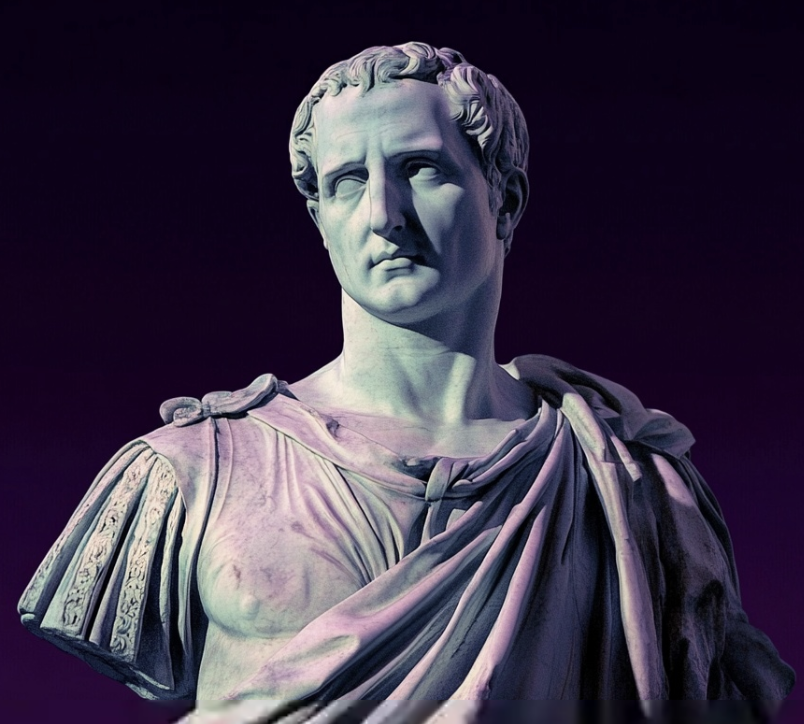
The greatest states have been overthrown by the young and sustained and restored by the old. ... Rashness is the product of the budding-time of youth, prudence of the harvest-time of age.
▼
Source
source
section 20
1 month 2 weeks ago
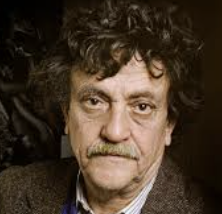
Be kind. Don't kill for any reason. Don't even kill out of self-defense. Really - I mean that. Don't take any more than you need of anything. Help others.
▼
Source
source
From a speech given on 20 January 1969 at the University of Michigan, about two months before Slaughterhouse Five was published
CivilSimian.com created by AxiomaticPanic, CivilSimian, Kalokagathia