


2 months 1 week ago
Since it is difficult to approve the reasons people invoke, each time we leave one of our 'fellow men', the question which comes to mind is invariably the same: how does he keep from killing himself?
1 month 4 weeks ago
In its solitariness the spirit asks, What, in the way of value, is the attainment of life? And it can find no such value till it has merged its individual claim with that of the objective universe.
▼
Source
source
Religion is world-loyalty. Religion in the Making (February 1926), Lecture II: "Religion and Dogma".

3 months 3 weeks ago
How many worthy men have we seen survive their own reputation!
▼
Source
source
Book II, Ch. 16. Of Glory

3 months 3 weeks ago
As to the people; in all these countries the greater part of the people certainly detest war, and most devoutly wish for peace. A very few of them, indeed, whose unnatural happiness depends upon the public misery, may wish for war; but be it yours to decide, whether it is equitable or not, that the unprincipled selfishness of such wretches should have more weight than the anxious wishes of all good men united.

3 months 2 weeks ago
Our merchants and master-manufacturers complain much of the bad effects of high wages in raising the price, and thereby lessening the sale of their goods both at home and abroad. They say nothing concerning the bad effects of high profits. They are silent with regard to the pernicious effects of their own gains. They complain only of those of other people.
▼
Source
source
Chapter IX, p. 117.

3 months 1 week ago
The rule of Big Money and its attendant culture of cupidity and mendacity has so poisoned our hearts, minds and souls that a dominant self-righteous neoliberal soulcraft of smartness, dollars and bombs thrives with little opposition.
▼
Source
source
America is spiritually bankrupt. We must fight back together. The Guardian,
2 months 1 week ago
This morning I thought, hence lost my bearings, for a good quarter of an hour.

3 months 1 week ago
Is not marriage an open question, when it is alleged, from the beginning of the world, that such as are in the institution wish to get out, and such as are out wish to get in?
▼
Source
source
Montaigne; or, The Skeptic

2 months ago
Uncertainty, doubt, perpetual wrestling with the mystery of our final destiny, mental despair, and the lack of any solid and stable foundation, may be the basis of an ethic.
3 months 2 weeks ago
The beginning of religion, more precisely its content, is the concept of religion itself, that God is the absolute truth, the truth of all things, and subjectively that religion alone is the absolutely true knowledge.

3 months 2 weeks ago
Something that is merely negative creates nothing.
▼
Source
source
Notebook VI, The Chapter on Capital, p. 532.

2 months 2 weeks ago
The science of government being, therefore, so practical in itself, and intended for such practical purposes, a matter which requires experience, and even more experience than any person can gain in his whole life, however sagacious and observing he may be, it is with infinite caution that any man ought to venture upon pulling down an edifice which has answered in any tolerable degree for ages the common purposes of society, or on building it up again without having models and patterns of approved utility before his eyes.
2 months 1 week ago
May some future student go over this ground again, and have the leisure to give his results to the world.

1 month 3 weeks ago
Husserl has shown that man's prejudices go a great deal deeper than his intellect or his emotions. Consciousness itself is 'prejudiced' - that is to say, intentional.
▼
Source
source
p. 54

3 months 4 days ago
Do not repeat slander; you should not hear it, for it is the result of hot temper.
▼
Source
source
Maxim no. 23.

3 months 1 week ago
The process of being brought up, however well it is done, cannot fail to offend.

3 months 2 weeks ago
Do not most of us resemble that old general of ninety who, having come upon some young officers debauching some girls, said to them angrily: "Gentlemen, is that the example I give you?" "Character"
▼
Source
source
1764

2 months 3 weeks ago
The Athenians are right to accept advice from anyone, since it is incumbent on everyone to share in that sort of excellence, or else there can be no city at all.
▼
Source
source
As quoted in Protagoras by Plato
1 month 6 days ago
Conservatives have, on the whole, accepted nationality as a sphere of local duties and loyalties, defining an inheritance and a community that has a right to pass on its values from generation to generation. The nation may indeed be the best that we now have, by way of a society linking the dead to the unborn, in the manner extolled by Burke. And for this very reason it arouses the hostility of liberals, who are constantly searching for a place outside loyalty and obedience, from which all human claims can be judged. Hence, in the conflicts of our times, while conservatives leap to the defense of the nation and its interests, wishing to maintain its integrity and to enforce its law, liberals advocate transnational initiatives, international courts, and doctrines of universal rights, all of which, they believe, should stand in judgment over the nation and hold it to account.
▼
Source
source
"The Limits of Liberty," The American Spectator
3 months 1 week ago
This year, or this month, or, more likely, this very day, we have failed to practise ourselves the kind of behaviour we expect from other people.
▼
Source
source
Book I, Chapter 1, "The Law of Human Nature"

3 months 2 weeks ago
Do we call this the land of the free? What is it to be free from King George and continue the slaves of King Prejudice? What is it to be born free and not to live free? What is the value of any political freedom, but as a means to moral freedom? Is it a freedom to be slaves, or a freedom to be free, of which we boast? We are a nation of politicians, concerned about the outmost defences only of freedom. It is our children's children who may perchance be really free.
▼
Source
source
p. 493

3 months 3 days ago
In peace, as a wise man, he should make suitable preparation for war.
▼
Source
source
Book II, satire ii, line 111

6 days ago
I have often felt a bitter sorrow at the thought of the German people, which is so estimable in the individual and so wretched in the generality. A comparison of the German people with other peoples arouses a painful feeling, which I try to overcome in every possible way.
▼
Source
source
Goethes Gespraeche
1 month 1 week ago
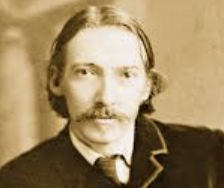
I shall doubtless outlive some troublesome desires; but I am in no hurry about that; nor, when the time comes, shall I plume myself on the immunity just in the same way, I do not greatly pride myself on having outlived my belief in the fairy tales of Socialism. Old people have faults of their own; they tend to become cowardly, niggardly, and suspicious. Whether from the growth of experience or the decline of animal heat, I see that age leads to these and certain other faults; and it follows, of course, that while in one sense I hope I am journeying towards the truth, in another I am indubitably posting towards these forms and sources of error.
▼
Source
source
Crabbed Age and Youth.

3 months 1 week ago
What has to be accepted, the given, is - so one could say - forms of life.
▼
Source
source
Pt II, p. 226 of the 1968 English edition

1 month 1 week ago
The "tragic flaw" is not a detail of characterization, a mere "fly in the ointment", but a structural feature of ordinary consciousness.
▼
Source
source
(p.45)
1 month 4 weeks ago
Philosophy finds religion, and modifies it; and conversely religion is among the data of experience which philosophy must weave into its own scheme. Religion is an ultimate craving to infuse into the insistent particularity of emotion that non-temporal generality which primarily belongs to conceptual thought alone. In the higher organisms the differences of tempo between the mere emotions and the conceptual experiences produce a life-tedium, unless this supreme fusion has been effected. The two sides of the organism require a reconciliation in which emotional experiences illustrate a conceptual justification, and conceptual experiences find an emotional illustration.
▼
Source
source
Pt. I, ch. 1, sec. 6.
2 months 1 week ago
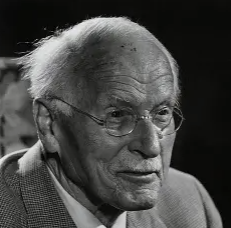
Where love rules, there is no will to power; and where power predominates, there love is lacking. The one is the shadow of the other.
▼
Source
source
P. 97

4 months 3 days ago
The superior man, even when he is not moving, has a feeling of reverence, and while he speaks not, he has the feeling of truthfulness.

3 months 4 weeks ago
Never trust her at any time, when the calm sea shows her false alluring smile.
▼
Source
source
Book II, lines 557-559 (tr. Rouse)

2 months 2 weeks ago
Fathers and teachers, I ponder, "What is hell?" I maintain that it is the suffering of being unable to love.
▼
Source
source
Book VI, Chapter 3 (trans. Constance Garnett)

3 months 3 weeks ago
Nothing is more common than good things: the point in question is only to discriminate them; and it is certain that they are all natural and within our reach and even known to all mankind.

4 months 1 week ago
The Law of conservation of energy tells us we can't get something for nothing, but we refuse to believe it.
3 months 3 weeks ago
In plain truth, lying is an accursed vice. We are not men, nor have any other tie upon another, but by our word.
▼
Source
source
Book I, Ch. 9

2 months 2 weeks ago
All things are artificial, for nature is the Art of God.
▼
Source
source
Section 16
2 months 1 week ago
This world is empty to him alone who does not understand how to direct his libido towards objects, and to render them alive and beautiful for himself, for Beauty does not indeed lie in things, but in the feeling that we give to them.

4 months 2 weeks ago
Between God and man there is and remains an eternal, essential, qualitative difference. The paradoxical relationship (which, quite rightly, cannot be thought, but only believed) appears when God appoints a particular man to divine authority, in relation, be it carefully noted, to that which has entrusted to him.
2 months 6 days ago
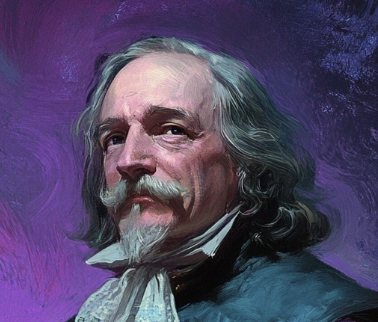
Science is the knowledge of Consequences, and dependence of one fact upon another: by which, out of that we can presently do, we know how to do something else when we will, or the like, another time.
▼
Source
source
The First Part, Chapter 5, p. 21

1 month 2 weeks ago
You learn about life by the accidents you have, over and over again, and your father is always in your head when that stuff happens. Writing, most of the time, for most people, is an accident and your father is there for that, too. You know, I taught writing for a while and whenever somebody would tell me they were going to write about their dad, I would tell them they might as well go write about killing puppies because neither story was going to work. It just doesn't work. Your father won't let it happen.
▼
Source
source
Interviewed by J. Rentilly, "The Best Jokes Are Dangerous", McSweeny's

4 months 1 week ago
Moreover, there is a victory and defeat, the first and best of victories, the lowest and worst of defeat, which each man gains or sustains at the hands, not of another, but of himself; this shows that there is a war against ourselves going on within every one of us. Book I Sometimes paraphrased as "The first and best victory is to conquer self".

3 weeks 1 day ago
My own sense of how to behave in a simulation has more traditional roots in the theory of perception. I've long believed that each of us lives in an egocentric simulation of the world run by the mind/brain. Since the zombies of each (waking) simulation have sentient real world counterparts, one should treat them as though they were real. Nonetheless as an angst-ridden teenager, my dawning acceptance of an inferential realist theory of perception made me feel as if I'd been condemned to solitary confinement for life. The sense of loneliness was indescribable. Naïve realism is better for one's mental health.
▼
Source
source
Origins and Theory of the World Transhumanist Association, Institute for Ethics and Emerging Technologies, 26 Dec. 2007
3 months 1 week ago
All that we call human history-money, poverty, ambition, war, prostitution, classes, empires, slavery-the long terrible story of man trying to find something other than God which will make him happy.
▼
Source
source
Book II, Chapter 3, "The Shocking Alternative"
1 month 1 week ago
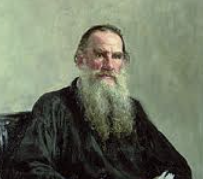
I know-as we all do-very little of the practice and the spoken and written doctrine of former times on the subject of non-resistance to evil. I knew what had been said on the subject by the fathers of the Church-Origen, Tertullian, and others-I knew too of the existence of some so-called sects of Mennonites, Herrnhuters, and Quakers, who do not allow a Christian the use of weapons, and do not enter military service; but I knew little of what had been done by these so-called sects toward expounding the question.
▼
Source
source
Preface
2 months 1 week ago
All my life, I have lived with the feeling that I have been kept from my true place. If the expression "metaphysical exile" had no meaning, my existence alone would afford it one.
3 months 1 week ago
I cannot get from the nature of the proposition to the individual logical operations!!! That is, I cannot bring out how far the proposition is the picture of the situation. I am almost inclined to give up all my efforts.
▼
Source
source
Journal entries (12 March 1915 and 15 March 1915) p. 41
2 months 6 days ago
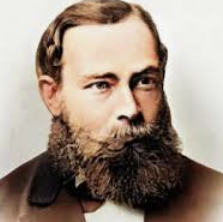
I hope I may claim in the present work to have made it probable that the laws of arithmetic are analytic judgments and consequently a priori. Arithmetic thus becomes simply a development of logic, and every proposition of arithmetic a law of logic, albeit a derivative one. To apply arithmetic in the physical sciences is to bring logic to bear on observed facts; calculation becomes deduction.
▼
Source
source
Gottlob Frege (1950 ). The Foundations of Arithmetic. p. 99.
4 months 1 week ago
Zeno: The many do not know that except by this devious passage through all things the mind cannot attain to the truth. Zeno: Most people are not aware that this roundabout progress through all things is the only way in which the mind can attain truth and wisdom.
2 months 1 week ago
Nothing is so wearing as the possession or abuse of liberty.
1 month 4 weeks ago
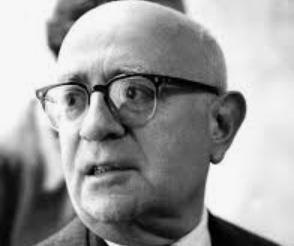
We are really no longer ourselves a part of nature at the moment when we notice, when we recognize, that we are a part of nature.
▼
Source
source
Probleme der Moralphilosophie (Frankfurt: Suhrkamp, 1996), p. 154; as quoted in Andrew Bowie, Adorno and the Ends of Philosophy (Cambridge: Polity, 2013), p. 94
2 months 1 week ago
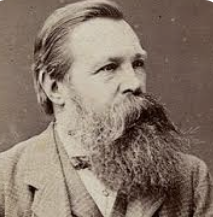
The manufacturing worker almost always lives in the countryside and in a more or less patriarchal relation to his landlord or employer; the proletarian lives, for the most part, in the city and his relation to his employer is purely a cash relation. The manufacturing worker is torn out of his patriarchal relation by big industry, loses whatever property he still has, and in this way becomes a proletarian.
CivilSimian.com created by AxiomaticPanic, CivilSimian, Kalokagathia