

3 months 2 weeks ago
The end of law is not to abolish or restrain, but to preserve and enlarge freedom. For in all the states of created beings, capable of laws, where there is no law there is no freedom.
▼
Source
source
Second Treatise of Government, Ch. VI, sec. 57
3 months 4 weeks ago
Let us rejoice and give thanks. Not only are we become Christians, but we are become Christ. My brothers, do you understand the grace of God that is given us? Wonder, rejoice, for we are made Christ! If He is the Head, and we the members, then together He and we are the whole man.... This would be foolish pride on our part, were it not a gift of his bounty. But this is what He promised by the mouth of the Apostle: You are the body of Christ, and severally His members.
▼
Source
source
(1 Cor. 12:27). p. 415
1 month 2 weeks ago
Whatever it may be, animals have always had, until our era, a divine or sacrificial nobility that all mythologies recount. Even murder by hunting is still a symbolic relation, as opposed to an experimental dissection. Even domestication is still a symbolic relation, as opposed to industrial breeding. One only has to look at the status of animals in peasant society. And the status of domestication, which presupposes land, a clan, a system of parentage of which the animals are a part, must not be confused with the status of the domestic pet-the only type of animals that are left to us outside reserves and breeding stations-dogs, cats, birds, hamsters, all packed together in the affection of their master. The trajectory animals have followed, from divine sacrifice to dog cemeteries with atmospheric music, from sacred defiance to ecological sentimentality, speaks loudly enough of the vulgarization of the status of man himself.
▼
Source
source
"The Animals: Territory and Metamorphoses," p. 134

2 months 1 week ago
"Do I look like someone who has something to do here on Earth?" - That's what I'd like to answer the busybodies who inquire into my activities.
2 months 3 days ago
Every living creature is happy when he fulfills his destiny, that is, when he realizes himself, when he is being that which in truth he is. For this reason, Schlegel, inverting the relationship between pleasure and destiny, said, "We have a genius for what we like." Genius, man's superlative gift for doing something, always carries a look of supreme pleasure.
▼
Source
source
pp. 16-17

1 month 1 week ago
The alphabet, when pushed to a high degree of abstract visual intensity, became typography. The printed word with its specialist intensity burst the bonds of medieval corporate guilds and monasteries, created extreme individualist patterns of enterprise and monopoly.
▼
Source
source
(p. 23)

3 months 2 weeks ago
I find that the best virtue I have has in it some tincture of vice.
▼
Source
source
Book II, Ch. 20. That we taste nothing pure

1 month 3 weeks ago
Because the book became a freak 'bestseller', because I found myself bracketed with the 'Angry Young Men' of the period, I found myself carried to 'fame' on a wave of publicity -- only to discover that this kind of fame is one of the subtlest forms of obscurity. Everybody knew who I was, and nobody knew what I stood for. The public image meant that nobody was interested in what I had to say, for everyone was convinced that they already knew. I could talk until I was blue in the face about my attempt to revise the pessimistic existentialism of Heidegger, Camus and Sartre; as far as most people were concerned, I was an autodidact who was angry about something or other.
▼
Source
source
p. 188, George Bernard Shaw: A personal view
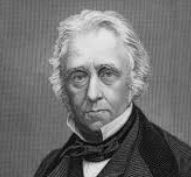
1 month 1 day ago
And why were those haughty [French] nobles destroyed with that utter destruction? Why were they scattered over the face of the earth, their titles abolished, their escutcheons defaced, their parks wasted, their palaces dismantled, their heritage given to strangers? Because they had no sympathy with the people, no discernment of the signs of their time; because, in the pride and narrowness of their hearts, they called those whose warnings might have saved them theorists and speculators; because they refused all concession till the time had arrived when no concession would avail.
▼
Source
source
Speech in the House of Commons on the Reform Bill (20 September 1831), quoted in Speeches of the Right Honourable T. B. Macaulay, M.P. (1854), p. 50
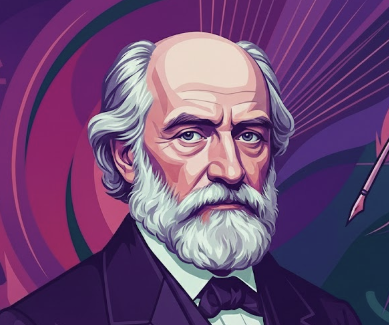
3 months 2 weeks ago
So that it will be found that the fundamental fault in the character of women is that they have no "sense of justice ." This arises from their deficiency in the power of reasoning already referred to, and reflection, but is also partly due to the fact that Nature has not destined them, as the weaker sex, to be dependent on strength but on cunning; this is why they are instinctively crafty, and have an ineradicable tendency to lie.
▼
Source
source
On Women
3 months 2 weeks ago
In youth it is the outward aspect of things that most engages us; while in age, thought or reflection is the predominating quality of the mind. Hence, youth is the time for poetry, and age is more inclined to philosophy. In practical affairs it is the same: a man shapes his resolutions in youth more by the impression that the outward world makes upon him; whereas, when he is old, it is thought that determines his actions.

3 months 1 week ago
It is because we are predominantly purposeful beings that we are perpetually correcting our immediate sensations. But men are free not to be utilitarianly purposeful. They can sometime be artists, for example. In which case they may like to accept the immediate sensation uncorrected, because it happens to be beautiful.
▼
Source
source
"One and Many," p. 11

3 months 1 week ago
Capitals accumulate faster than the population; thus wages; thus population; thus grain prices; thus the difficulty of production and hence the exchange values.
▼
Source
source
Notebook III, The Chapter on Capital, p. 271.
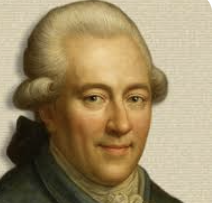
1 month 3 weeks ago
A clever child brought up with a foolish one can itself become foolish. Man is so perfectable and corruptible he can become a fool through good sense.
▼
Source
source
F 69
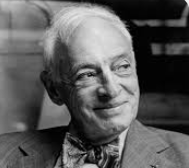
1 month 6 days ago
Everybody knows there is no fineness or accuracy of suppression; if you hold down one thing, you hold down the adjoining.
▼
Source
source
Ch. 1

3 months 3 weeks ago
There are also Idols formed by the intercourse and association of men with each other, which I call Idols of the Market Place, on account of the commerce and consort of men there. For it is by discourse that men associate, and words are imposed according to the apprehension of the vulgar. And therefore the ill and unfit choice of words wonderfully obstructs the understanding. Nor do the definitions or explanations wherewith in some things learned men are wont to guard and defend themselves, by any means set the matter right. But words plainly force and overrule the understanding, and throw all into confusion, and lead men away into numberless empty controversies and idle fancies.
▼
Source
source
Aphorism 43

2 weeks 6 days ago
Cheating ageing by a low-calorie diet, uploading one's mind into a super-computer, migrating into outer space ... Longing for everlasting life, humans show that they remain the death-defined animal.
▼
Source
source
Sweet Morality (p. 235)
1 month 3 weeks ago
I have always noticed that deeply and truly religious persons are fond of a joke, and I am suspicious of those who aren't.
▼
Source
source
As quoted in Church and Home, Vol. 1 (1964) by United Methodist Church, and Evangelical United Brethren Church, p. 21.
3 months 2 weeks ago
This is that which I think great readers are apt to be mistaken in; those who have read of everything, are thought to understand everything too; but it is not always so. Reading furnishes the mind only with materials of knowledge; it is thinking that makes what we read ours. We are of the ruminating kind, and it is not enough to cram ourselves with a great load of collections ; unless we chew them over again, they will not give us strength and nourishment.
▼
Source
source
As quoted in "Hand Book : Caution and Counsels" in The Common School Journal Vol. 5, No. 24 (15 December 1843) by Horace Mann, p. 371

4 weeks ago
Rousseau's writings are so admirably adapted to touch both these classes that the effect they produced, especially in France, is easily intelligible.
▼
Source
source
"On The Natural Inequality of Men"
3 months 3 weeks ago
Mother love is stronger than the filth and scabbiness on a child, and so the love of God toward us is stronger than the dirt that clings to us.
▼
Source
source
94
1 month 4 weeks ago
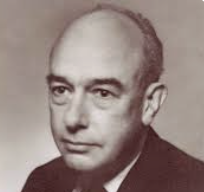
As an empiricist I continue to think of the conceptual scheme of science as a tool, ultimately, for predicting future experience in the light of past experience. Physical objects are conceptually imported into the situation as convenient intermediaries-not by definition in terms of experience, but simply as irreducible posits comparable, epistemologically, to the gods of Homer. For my part I do, qua lay physicist, believe in physical objects and not in Homer's gods; and I consider it a scientific error to believe otherwise. But in point of epistemological footing the physical objects and the gods differ only in degree and not in kind. Both sorts of entities enter our conception only as cultural posits. The myth of physical objects is epistemologically superior to most in that it has proved more efficacious than other myths as a device for working a manageable structure into the flux of experience.
▼
Source
source
"Two Dogmas of Empiricism"
2 months 5 days ago
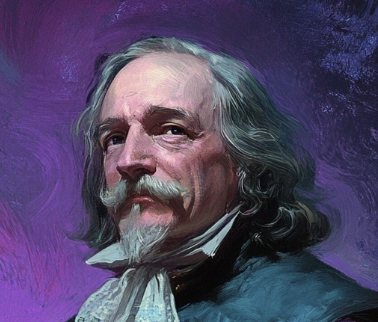
I know not how the world will receive it, nor how it may reflect on those that shall seem to favor it. For in a way beset with those that contend, on one side for too great Liberty, and on the other side for too much Authority, 'tis hard to passe between the points of both unwounded.
▼
Source
source
The Epistle Dedicatory, Paris, April 15-25, 1651

4 days ago
A Parliament speaking through reporters to Buncombe and the twenty-seven millions, mostly fools.
▼
Source
source
Latter Day Pamphlets, No. 6.
4 weeks ago
Scientific men get an awkward habit - no, I won't call it that, for it is a valuable habit - of believing nothing unless there is evidence for it; and they have a way of looking upon belief which is not based upon evidence, not only as illogical, but as immoral.
▼
Source
source
Thomas Henry Huxley. "Lectures on Evolution Title: This is Essay# 3 from" Science and Hebrew Tradition." (1882); as cited in: William Trufant Foster, (1908) Argumentation and debating, p. 55

3 months 2 weeks ago
Music is a hidden arithmetic exercise of the soul, which does not know that it is counting.
▼
Source
source
Letter to Christian Goldbach, April 17, 1712.

3 months 1 week ago
"Fare well!" "A whole world of pain is contained in these words." How can it be contained in them? - It is bound up in them. The words are like an acorn from which an oak tree can grow.
▼
Source
source
p. 52e

1 month 4 weeks ago
When, as a result of what was called Enlightenment in the eighteenth century, the priests had in fact almost entirely lost this function of guidance. Their place was taken by writers and scientists. In both cases it is equally absurd. Mathematics, physics, and biology are as remote from spiritual guidance as the art of arranging words. When that function is usurped by literature and science it proves there is no longer any spiritual life.
▼
Source
source
"Morality and literature," pp. 164-165

3 months 2 weeks ago
Obscenity is whatever happens to shock some elderly and ignorant magistrate.
▼
Source
source
Quoted in Look (New York, 23 February 1954). Cf. Russell (1928), Sceptical Essays
1 month 3 weeks ago
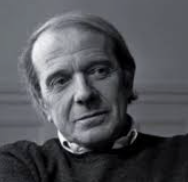
Second, we make no distinction between man and nature: the human essence of nature and the natural essence of man become one within nature in the form of production or industry, just as they do within the life of man as a species. Industry is then no longer considered from the extrinsic point of view of utility, but rather from the point of view of its fundamental identity with nature as production of man and by man.
▼
Source
source
The Desiring Machine
3 months 1 week ago
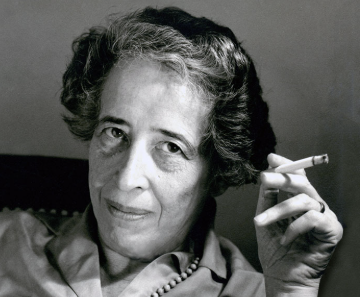
The sad truth of the matter is that most evil is done by people who never made up their minds to be or do either evil or good.
▼
Source
source
The Life of the Mind (1978), "Thinking"

3 months 2 weeks ago
We all look for happiness, but without knowing where to find it: like drunkards who look for their house, knowing dimly that they have one.
▼
Source
source
Notebooks (c.1735-c.1750)
3 months 1 week ago
A spider conducts operations that resemble those of a weaver, and a bee puts to shame many an architect in the construction of her cells. But what distinguishes the worst of architects from the best of bees is this, that the architect raises his structure in imagination before he erects it in reality.
▼
Source
source
Vol. I, Ch. 7, pg. 198.

2 months 1 week ago
Humiliate the reason and distort the soul...
▼
Source
source
Part 2, Chapter ?
3 months 2 weeks ago
Clever tyrants are never punished.
▼
Source
source
Mérope, act V, scene V, 1743
2 months 5 days ago
The world of immediate experience-the world in which we find ourselves living-must be comprehended, transformed, even subverted in order to become that which it really is.
▼
Source
source
p. 123
3 months 2 weeks ago
If there were in the world today any large number of people who desired their own happiness more than they desired the unhappiness of others, we could have a paradise in a few years.
▼
Source
source
As quoted in Think, Vol. 27 (1961), p. 32
3 weeks 4 days ago
One can never pay in gratitude; one can only pay "in kind" somewhere else in life.
▼
Source
source
North to the Orient (1935) Ch. 19
3 months 1 week ago
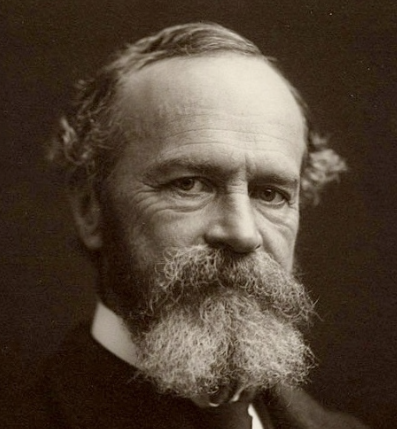
We are all ready to be savage in some cause. The difference between a good man and a bad one is the choice of the cause.
▼
Source
source
Letter to E.L. Godkin, 24 December 1895
1 month 2 weeks ago
Yet sometimes vegetables and animals are, by certain epithets or circumstances, extended to other significations; as a Tree, when called the tree of life or of knowledge; and a Beast, when called the old serpent, or worshiped. When a Beast or Man is put for a kingdom, his parts and qualities are put for the analogous parts and qualities of the kingdom; as the head of a Beast, for the great men who precede and govern; the tail for the inferior people, who follow and are governed; the heads, if more than one, for the number of capital parts, or dynasties, or dominions in the kingdom, whether collateral or successive, with respect to the civil government; the horns on any head, for the number of kingdoms in that head, with respect to military power...
▼
Source
source
Vol. I, Ch. 2: Of the Prophetic Language

2 months ago
Like monarchy, monotheism had a martial origin. "It is only on the march and it time of war," says Robertson Smith in The Prophets of Israel, "that a nomad people feels any urgent need of a central authority, and so it came about that in the first beginnings of national organization, centering in the sanctuary of the ark, Israel was thought of mainly as a host of Jehovah. the very name of Israel is martial, and means 'God (El) fighteth,' and Jehovah in the Old Testament is Iahwé Cebāôth - the Jehovah of the armies of Israel. It was on the battlefield that Jehovah's presence was most clearly realized; but in primitive nations the leader in time of war is also the natural judge in time of peace."

3 months 3 weeks ago
Again and again our foe, religion, has given birth to deeds sinful and unholy.
▼
Source
source
Book I, lines 82-83 (tr. C. Bailey)
1 month 1 week ago
God looks at the clean hands, not the full ones.
▼
Source
source
Maxim 715
4 days ago
Under all speech that is good for anything there lies a silence that is better.
▼
Source
source
Silence is deep as Eternity; speech is shallow as Time.
3 months 2 weeks ago
All religions promise a reward for excellences of the will or heart, but none for excellences of the head or understanding.
▼
Source
source
E. Payne, trans., vol. 2, p. 230
3 weeks 1 day ago
Hype is the awkward and desperate attempt to convince journalists that what you've made is worth the misery of having to review it.
▼
Source
source
"Hype"

1 month 1 week ago
Whatever you can lose, you should reckon of no account.
▼
Source
source
Maxim 191
CivilSimian.com created by AxiomaticPanic, CivilSimian, Kalokagathia