


1 week 1 day ago
We are by no means opposed to the globalization of relationships as such-in fact, as we said, the strongest forces of Leftist internationalism have effectively led this process. The enemy, rather, is a specific regime of global relations that we call Empire.
▼
Source
source
45-46


2 months 2 weeks ago
As for me, I am deeply a democrat; this is why I am in no way a socialist. Democracy and socialism cannot go together. You can't have it both ways.
▼
Source
source
Notes for a Speech on Socialism (1848).

3 months 1 week ago
The silent organ loudest chants The master's requiem.
▼
Source
source
Dirge, st. 13

2 months 1 week ago
Anyone can escape into sleep, we are all geniuses when we dream, the butcher's the poet's equal there.
3 months 1 week ago
The value of a principle is the number of things it will explain; and there is no good theory of disease which does not at once suggest a cure.
▼
Source
source
p. 212
2 months 1 week ago
Love of the absolute engenders a predilection for self-destruction. Hence the passion for monasteries and brothels. Cells and women, in both cases. Weariness with life fares well in the shadow of whores and saintly women.
3 months 1 week ago
People seem not to see that their opinion of the world is also a confession of character.
▼
Source
source
Worship

2 months 5 days ago
The absolute idea is the subject in its final form, thought. The otherness and negation is the object, being. The absolute idea now has to be interpreted as objective being. Hegel's Logic thus ends where it began, with the category of being. This, however is a different being that can no longer be explained thought he concepts applied in the analysis that opened the Logic. For being now is understood in its notion that is, as a concrete totality wherein all particular forms subsist as the essential distinctions and relations of on comprehensive principle. Thus comprehended, being is nature, and dialectical thought passes on to the Philosophy of Nature.
▼
Source
source
P. 165-166
2 months 3 days ago
Meditation on any theme, if positive and honest, inevitably separates him who does the meditating from the opinion prevailing around him, from that which ... can be called "public" or "popular" opinion.
▼
Source
source
p. 15

3 months 2 weeks ago
If, while hurrying ostensibly to the temple of truth, we hand the reins over to our personal interests which look aside at very different guiding stars, for instance at the tastes and foibles of our contemporaries, at the established religion, but in particular at the hints and suggestions of those at the head of affairs, then how shall we ever reach the high, precipitous, bare rock whereon stands the temple of truth?
▼
Source
source
E. Payne, trans. (1974) Vol. 1, pp. 22-23

4 months 1 week ago
When you are reading God's Word, it is not the obscure passages that bind you but what you understand, and with that you comply at once. If you understood only one single passage in all of Holy Scripture, well, then you must do that first of all, but you do not first have to sit down and ponder the obscure passages.

3 months 2 weeks ago
Malice sucks up the greatest part of its own venom, and poisons itself.
▼
Source
source
Of Repentance, Book III, Ch. 2
3 months 1 week ago
Nature magically suits the man to his fortunes, by making these the fruit of his character.
▼
Source
source
Fate

3 months 1 week ago
Technological progress has merely provided us with more efficient means for going backwards.
▼
Source
source
Ch. 1, p. 9 [2012 reprint]. Also in "Tomorrow and Tomorrow and Tomorrow" in Adonis and the Alphabet (1956); later in Collected Essays (1959), p. 293
2 months 5 days ago
The radical empiricist onslaught ... provides the methodological justification for the debunking of the mind by the intellectuals-a positivism which, in its denial of the transcending elements of Reason, forms the academic counterpart of the socially required behavior.
▼
Source
source
p. 13
2 months 5 days ago
The real field of knowledge is not the given fact about things as they are, but the critical evaluation of them as a prelude to passing beyond their given form. Knowledge deals with appearances in order to get beyond them. .... The concept of reality has thus turned into the concept of possibility. The real is not yet 'actual,' but is at first only the possibility of an actual.
▼
Source
source
P. 145
1 month 3 weeks ago
Chronic boredom - compensated or uncompensated - constitutes one of the major psychopathological phenomena in contemporary technotronic society, although it is only recently that it has found some recognition.
▼
Source
source
p. 273

4 months 1 week ago
In the world of today can there be peace anywhere until there is peace everywhere?
2 months 1 week ago
The world must be romanticized. In this way the originary meaning may be found again.
▼
Source
source
As quoted in The Experience of the Foreign : Culture and Translation in Romantic Germany (1992) by Antoine Berman Variant translation: Romanticize the world.
3 months 1 week ago
It is because the method of physics does not satisfy the comprehension that we have to go on further.
3 months 1 week ago
And suddenly I had an inkling of what it must feel like to be mad.

1 month 3 weeks ago
Fertilisation of the soul is the reason for the necessity of art.
▼
Source
source
Ch. 13: "Requisites for Social Progress", p. 283

4 months 1 week ago
Now the mass of mankind are plainly... choosing a life like that of brute animals...

1 month 4 weeks ago
Religion is better described than defined and better felt than described. But if there is any one definition that latterly has obtained acceptance, it is that of Schleiermacher, to the effect that religion consists in the simple feeling of a relationship of dependence upon something above us and a desire to establish relations with this mysterious power.
1 month 1 day ago
Time, and reflection, and discussion, have produced their natural effect on minds eminently intelligent and candid. No intermediate shades of opinion are now left. There is no twilight. The light has been divided from the darkness. Two parties are ranged in battle array against each other. There is the standard of monopoly. Here is the standard of free trade; and by the standard of free trade I pledge myself to stand firmly.
▼
Source
source
Speech in Edinburgh (2 December 1845), quoted in Speeches of the Right Honourable T. B. Macaulay, M.P. (1854), p. 423

2 months 3 weeks ago
He is worst of all, that is malicious against his friends.
2 months 1 week ago
An aphorism? Fire without flames. Understandable that no one tries to warm himself at it.

3 months 1 week ago
The utilitarian morality does recognise in human beings the power of sacrificing their own greatest good for the good of others. It only refuses to admit that the sacrifice is itself a good. A sacrifice which does not increase, or tend to increase, the sum total of happiness, it considers as wasted. The only self-renunciation which it applauds, is devotion to the happiness, or to some of the means of happiness, of others; either of mankind collectively, or of individuals within the limits imposed by the collective interests of mankind.
▼
Source
source
Ch. 2

3 months 3 weeks ago
War is sweet to them that know it not.
▼
Source
source
Though Erasmus quoted this proverb in Latin at the start of his essay Bellum [War], and it is sometimes attributed to him, it originates with the Greek poet Pindar

3 months 1 week ago
The need of a constantly expanding market for its products chases the bourgeoisie over the whole surface of the globe. It must nestle everywhere, settle everywhere, establish connections everywhere.
▼
Source
source
Section 1, paragraph 19

3 months 1 week ago
William James used to preach the "will-to-believe." For my part, I should wish to preach the "will-to-doubt." None of our beliefs are quite true; all at least have a penumbra of vagueness and error. What is wanted is not the will to believe, but the will to find out, which is the exact opposite.
▼
Source
source
Ch. 12: Free Thought and Official Propaganda

3 days ago
No solitary miscreant, scarcely any solitary maniac, would venture on such actions and imaginations, as large communities of sane men have, in such circumstances, entertained as sound wisdom.
5 days ago
As for one-party rule, it was questioned neither by the Left Opposition nor by the Right [wing of the Communist party]. All were prisoners of their own doctrine and their own past: all had worked with a will to create the apparatus of violence that crushed them. Bukharin's hopeless attempt to form a league with Kamenev was no more than a pitiful epilogue to his career. In November 1929 the deviationists performed a public act of penance, but even this did not save them. Stalin's victory was complete; the collapse of the Bukharinite opposition meant the triumph of autocracy in the party and in the country. In December 1929 Stalin's fiftieth birthday was celebrated as a major historical event, and from this point we may date the "cult of personality". Trotsky's prophecy of 1903 had come true: party rule had become Central Committee rule, and this in turn had becorne the personal tyranny of a dictator.
▼
Source
source
(pp. 42-3)
1 month 4 weeks ago
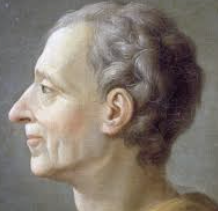
Of all kind of authors there are none I despise more than compilers, who search every where for shreds of other men's works, which they join to their own, like so many pieces of green turf in a garden: they are not at all superior to compositors in a printing house, who range the types, which, collected together, make a book, towards which they contribute nothing but the labours of the hand. I would have original writers respected, and it seems to me a kind of profanation to take those pieces from the sanctuary in which they reside, and to expose them to a contempt they do not deserve. When a man hath nothing new to say, why does not he hold his tongue? What business have we with this double employment?"
▼
Source
source
No. 66.
3 months 2 weeks ago
Nothing is so firmly believed as what we least know.
▼
Source
source
Ch. 31. Of Divine Ordinances, tr. Cotton, rev. W. Hazlitt, 1842

3 months 1 week ago
He [the devil] always sends errors into the world in pairs-pairs of opposites. And he always encourages us to spend a lot of time thinking which is the worse. You see why, of course? He relies on your extra dislike of the one error to draw you gradually into the opposite one. But do not let us be fooled. We have to keep our eyes on the goal and go straight through between both errors. We have no other concern than that with either of them.
▼
Source
source
Book IV, chapter 6, "Two Notes"
3 months 3 weeks ago
The most disadvantageous peace is better than the most just war.
▼
Source
source
Adagia, 1508
4 months 1 week ago
But the greatest thing by far is to have a command of metaphor. This alone cannot be imparted by another; it is the mark of genius, for to make good metaphors implies an eye for resemblances.

3 months 2 weeks ago
If a workman can conveniently spare those three halfpence, he buys a pot of porter. If he cannot, he contents himself with a pint, and, as a penny saved is a penny got, he thus gains a farthing by his temperance.
▼
Source
source
Chapter II, Part II, Article IV, p. 951.
3 months 1 week ago
And every man, in love or pride, Of his fate is ever wide.
▼
Source
source
Nemesis
2 months 3 days ago
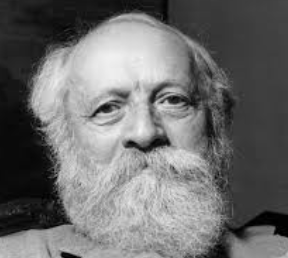
The realer religion is, so much the more it means its own overcoming. It wills to cease to be the special domain "Religion" and wills to become life. It is concerned in the end not with specific religious acts, but with redemption from all that is specific.
▼
Source
source
p. 34
2 months 1 week ago
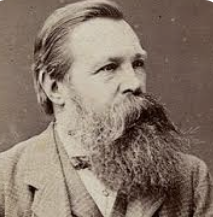
What do you say to the elections in the factory districts? Once again the proletariat has discredited itself terribly... [I]t cannot be denied that the increase of working-class voters has brought the Tories more than their mere additional percentage and has improved their relative position.
▼
Source
source
Letter to Karl Marx (18 November 1868), quoted in Karl Marx and Frederick Engels: Selected Correspondence, 1846-1895 (1942), pp. 253-254

2 months 2 weeks ago
Half our days we pass in the shadow of the earth; and the brother of death exacteth a third part of our lives.
3 months 1 week ago
As the variable capital always stays in the hands of the capitalist in some form or other, it cannot be claimed in any way that it converts itself into revenue for anyone.
▼
Source
source
Vol. II, Ch. XX, p. 452.

3 months 1 week ago
Uttering a word is like striking a note on the keyboard of the imagination.
▼
Source
source
§ 6
3 months 2 weeks ago
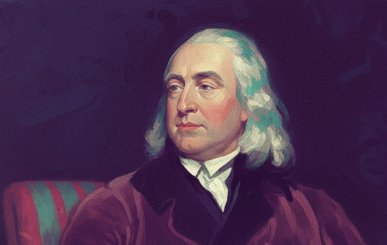
Liberty therefore not being more fit than other words in some of the instances in which it has been used, and not so fit in others, the less the use that is made of it the better. I would no more use the word liberty in my conversation when I could get another that would answer the purpose, than I would brandy in my diet, if my physician did not order me: both cloud the understanding and inflame the passions.
▼
Source
source
Jeremy Bentham, quoted in P. J. Kelly, Utilitarianism and Distributive Justice: Jeremy Bentham and the Civil Law, Oxford, 1990, p. 96

3 months 2 days ago
'Tis well to restrain the wicked, and in any case not to join him in his wrong-doing.
1 week 2 days ago
There can be no liberty for a community which lacks the information by which to detect lies.
▼
Source
source
What Modern Liberty Means, p. 64
CivilSimian.com created by AxiomaticPanic, CivilSimian, Kalokagathia