


3 days ago
Yet with every allowance, one feels it difficult to see how any mortal ever could consider this Koran as a Book written in Heaven, too good for the Earth; as a well-written book, or indeed as a book at all; and not a bewildered rhapsody; written, so far as writing goes, as badly as almost any book ever was!
1 month 3 weeks ago
In all philosophic theory there is an ultimate which is actual in virtue of its accidents. It is only then capable of characterization through its accidental embodiments, and apart from these accidents is devoid of actuality. In the philosophy of organism this ultimate is termed creativity; and [[God] is its primordial, non-temporal accident. In monistic philosophies, Spinoza's or absolute idealism, this ultimate is God, who is also equivalently termed The Absolute. In such monistic schemes, the ultimate is illegitimately allowed a final, eminent reality, beyond that ascribed to any of its accidents. In this general position the philosophy of organism seems to approximate more to some strains of Indian, or Chinese, thought, than to western Asiatic, or European, thought. One side makes process ultimate; the other side makes fact ultimate.
▼
Source
source
Pt. I, ch. 1, sec. 2.
3 months 2 weeks ago
Create all the happiness you are able to create: remove all the misery you are able to remove. Every day will allow you to add something to the pleasure of others, or to diminish something of their pains. And for every grain of enjoyment you sow in the bosom of another, you shall find a harvest in your own bosom; while every sorrow which you pluck out from the thoughts and feelings of a fellow creature shall be replaced by beautiful peace and joy in the sanctuary of your soul.
▼
Source
source
Advice to a young girl, 22 June 1830
2 weeks 2 days ago
Utopia is a meta-utopia: the environment in which Utopian experiments may be tried out; the environment in which people are free to do their own thing; the environment which must, to a great extent, be realized first if more particular Utopian visions are to be realized stably.
▼
Source
source
Ch. 10 : A Framework for Utopia; The Framework, p. 312
1 month 2 weeks ago
Photography and cinema contributed in large part to the secularization of history, to fixing it in its visible, "objective" form at the expense of the myths that once traversed it. Today cinema can place all its talent, all its technology in the service of reanimating what it itself contributed to liquidating. It only resurrects ghosts, and it itself is lost therein.
▼
Source
source
"History: A Retro Scenario," p. 48

2 months 1 week ago
Where are my sensations? They have melted into... me, and what is this me, this self, but the sum of these evaporated sensations?

3 months 1 week ago
There is no need to worry about mere size. We do not necessarily respect a fat man more than a thin man. Sir Isaac Newton was very much smaller than a hippopotamus, but we do not on that account value him less.
▼
Source
source
"The Expanding Mental Universe", Saturday Evening Post, 7/1/1959

2 months 1 week ago
I would rather sleep in the southern corner of a little country churchyard, than in the tombs of the Capulets.
▼
Source
source
Letter to Matthew Smith
2 months 1 week ago
Prejudice is of ready application in the emergency; it previously engages the mind in a steady course of wisdom and virtue and does not leave the man hesitating in the moment of decision sceptical, puzzled, and unresolved. Prejudice renders a man's virtue his habit, and not a series of unconnected acts. Through just prejudice, his duty becomes a part of his nature.
3 months ago
When Darius offered him ten thousand talents, and to divide Asia equally with him, "I would accept it," said Parmenio, "were I Alexander." "And so truly would I," said Alexander, "if I were Parmenio." But he answered Darius that the earth could not bear two suns, nor Asia two kings.
▼
Source
source
42 Alexander
3 months 2 weeks ago
If, while hurrying ostensibly to the temple of truth, we hand the reins over to our personal interests which look aside at very different guiding stars, for instance at the tastes and foibles of our contemporaries, at the established religion, but in particular at the hints and suggestions of those at the head of affairs, then how shall we ever reach the high, precipitous, bare rock whereon stands the temple of truth?
▼
Source
source
E. Payne, trans. (1974) Vol. 1, pp. 22-23

4 months 2 days ago
In archery we have something like the way of the superior man. When the archer misses the center of the target, he turns round and seeks for the cause of his failure in himself.
1 month 3 weeks ago
Like Fichte, Brentano had one simple and powerful insight. He declared: there is a basic difference between a mental and physical act. if I slip on the snow and fall flat on my back, that is an unintentional physical act. But there is no such thing as an unintentional mental act. When I think, I have to think about something; I have to focus my mind on it. You could compare all mental acts (thinking, willing, loving, trying to remember something) to a searchlight beam stabbing into the darkness. There is an element of will, of 'intentionality,' in all mental activity. So it is quite inaccurate to compare mental activity to chemistry, or to a kind of drifting, like leaves on a stream. It flows purposefully or not at all.
▼
Source
source
p. 35


3 months 2 weeks ago
No man is exempt from saying silly things; the mischief is to say them deliberately.
▼
Source
source
Book III, Ch. 1

4 months 2 weeks ago
We still do not yet know where the drive for truth comes from. For so far we have heard only of the duty which society imposes in order to exist: to be truthful means to employ the usual metaphors. Thus, to express it morally, this is the duty to lie according to a fixed convention, to lie with the herd and in a manner binding upon everyone. Now man of course forgets that this is the way things stand for him. Thus he lies in the manner indicated, unconsciously and in accordance with habits which are centuries' old; and precisely by means of this unconsciousness and forgetfulness he arrives at his sense of truth.
1 month 3 weeks ago
It was the normal working of the antisuccess mechanism. In our overcrowded modern world a hit record, a best-selling book, a successful film, can reach more people in a week than Shakespeare or Beethoven reached in a whole lifetime. And so fame has become the most romantic, the most desirable of all commodities, the dream for which a modern Faust might sell his soul to the Devil. Once attained, fame is never as easy to hold on to as some people believe. The people who achieve fame by some accident of fashion are usually forgotten within a week; the ones who remain on top have to work to stay there. But few people understand this. The result is that anyone who achieves sudden notoriety arouses envy and hostility. The greater the success, the greater the reaction.
▼
Source
source
p. 28
2 months 5 days ago
Now I am about to take my last voyage, a great leap in the dark.
▼
Source
source
Last words
2 months 3 weeks ago
Do not ask who started it.
▼
Source
source
Finish it A Dictionary of Thoughts (1908) by Tryon Edwards, p. 234

3 months 1 week ago
Manufacture was all the time sheltered by protective duties in the hoe market, by monopolies in the colonial market, and broad as much as possible by differential duties.
▼
Source
source
ibid, pp. 183

3 months 2 weeks ago
The value of money is in proportion to the quantity of the necessaries of life which it will purchase.
▼
Source
source
Chapter II, Part II, Article IV.
2 months 1 week ago
If now I...say "Stealing money is wrong," I produce a sentence which has no factual meaning - that is, expresses no proposition which can be either true or false. It is as if I had written "Stealing money!!" - where the shape and thickness of the exclamation marks show, by a suitable convention, that a special sort of moral disapproval is the feeling which is being expressed.
▼
Source
source
p. 107.
1 month 3 weeks ago
The chief danger to philosophy is narrowness in the selection of evidence.
▼
Source
source
Pt. V, ch. 1, sec. 1.

3 months 3 weeks ago
Men are eager to tread underfoot what they have once too much feared.
▼
Source
source
Book V, line 1140 (tr. Rouse)

3 months 1 week ago
The really important facts were that spatial relationships had ceased to matter very much and that my mind was perceiving the world in terms of other than spatial categories. At ordinary times the eye concerns itself with such problems as where? - how far? - how situated in relation to what? In the mescaline experience the implied questions to which the eye responds are of another order. Place and distance cease to be of much interest. The mind does its perceiving in terms of intensity of existence, profundity of significance, relationships within a pattern."
2 months 1 week ago
Man needs difficulties; they are necessary for health.
▼
Source
source
The Transcendent Function ("Die Transzendente Funktion") (1916) Volume 8: Structure & Dynamics of the Psyche, The Collected Works of C. G. Jung
3 months 1 week ago
Is there any knowledge in the world which is so certain that no reasonable man could doubt it?
3 weeks 4 days ago
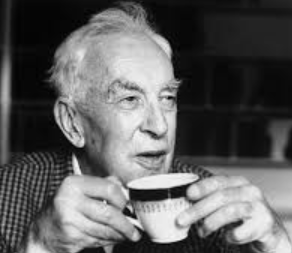
When I was a child, the institution of war, which, by then, had been in existence for perhaps about five thousand years, was still being taken for granted by most people in the World as a normal and acceptable fact of life. One small religious community, the Society of Friends, was at that time singular in condemning war as immoral and in consequently refusing to have any part or lot in war-making.
▼
Source
source
Experiences (New York: Oxford UP, 1969) pt. 2, sect. 4
3 months 1 week ago
The pursuit of knowledge is, I think, mainly actuated by love of power. And so are all advances in scientific technique. In politics, also, a reformer may have just as strong a love of power as a despot. It would be a complete mistake to decry love of power altogether as a motive. Whether you will be led by this motive to actions which are useful, or to actions which are pernicious, depends upon the social system, and upon your capacities.

2 months 2 weeks ago
To a body of infinite size there can be ascribed neither centre nor boundary... Thus the Earth no more than any other world is at the centre.
3 days ago
And wonderful it is to see how the Ideal or Soul, place it in what ugliest Body you may, will irradiate said Body with its own nobleness; will gradually, incessantly, mould, modify, new-form or reform said ugliest Body, and make it at last beautiful, and to a certain degree divine!
1 month 3 weeks ago
The Outsider's case against society is very clear. All men and women have these dangerous, unnamable impulses, yet they keep up a pretense, to themselves, to others; their respectability, their philosophy, their religion, are all attempts to gloss over, to make civilized and rational something that is savage, unorganized, irrational. He is an Outsider because he stands for truth.
▼
Source
source
Chapter one, The Country of the Blind
2 months 1 week ago
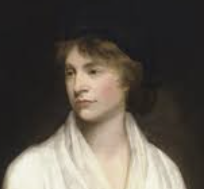
It appears to me impossible that I should cease to exist, or that this active, restless spirit, equally alive to joy and sorrow, should only be organised dust - ready to fly abroad the moment the spring snaps, or the spark goes out which kept it together. Surely something resides in this heart that is not perishable, and life is more than a dream.

1 month 1 week ago
Non-literate societies cannot see films or photos without much training.
▼
Source
source
(p. 41)
2 months 1 week ago
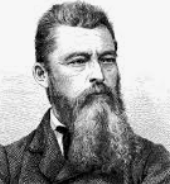
The secret of Hegel's dialectic lies ultimately in this alone, that it negates theology through philosophy in order then to negate philosophy through theology. Both the beginning and the end are constituted by theology; philosophy stands in the middle as the negation of the first positedness, but the negation of the negation is again theology. At first everything is overthrown, but then everything is reinstated in its old place, as in Descartes. The Hegelian philosophy is the last grand attempt to restore a lost and defunct Christianity through philosophy, and, of course, as is characteristic of the modern era, by identifying the negation of Christianity with Christianity itself.
▼
Source
source
Part II, Section 21
1 month 4 weeks ago
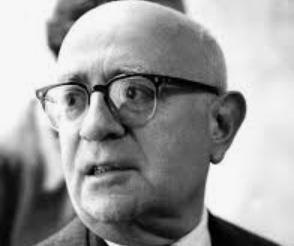
Music for entertainment ... seems to complement the reduction of people to silence, the dying out of speech as expression, the inability to communicate at all. It inhabits the pockets of silence that develop between people molded by anxiety, work and undemanding docility.
▼
Source
source
p. 271
1 month 3 weeks ago
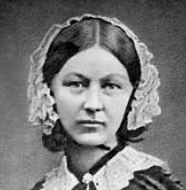
Nothing can well be imagined more painful than the present position of woman, unless, on the one hand, she renounces all outward activity and keeps herself within the magic sphere, the bubble of her dreams; or, on the other, surrendering all aspiration, she gives herself to her real life, soul and body. For those to whom it is possible, the latter is best; for out of activity may come thought, out of mere aspiration can come nothing.
2 months 3 days ago
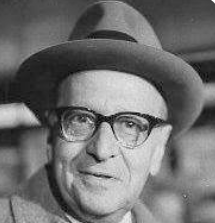
Men have been released from [concentration] camps who have taken over the jargon of their jailers and with cold reason and mad consent (the price, as it were, of their survival) tell their story as if it could not have been otherwise than it was, contending that they have not been treated so badly after all.
▼
Source
source
p. 45.

3 months 1 week ago
In the course of instruction which I have partially retraced, the point most superficially apparent is the great effort to give, during the years of childhood an amount of knowledge in what are considered the higher branches of education, which is seldom acquired (if acquired at all) until the age of manhood.
▼
Source
source
(p. 30)

1 week ago
Any American ally will welcome Biden as president, will be happy that he was elected, but will be a little... distrustful because the Republicans could make a come-back in 2022. They could win the presidency again in 2024. ...There's is still a good third of the American public that remain very strong Trump voters. They're very angry and... are not going to go away... Therefore the ability of the United States to resume its role as the chief defender of the liberal order... is going to be contested, both domestically and... by American friends. If this leads to more self-reliance on their part, that may not be the worst thing in the world, but it is going to mean a very different kind of world order than the one I grew up arguing with Owen Harries about.
▼
Source
source
30:41:00
1 month 4 weeks ago
The blessing that the market does not ask about birth is paid for in the exchange society by the fact that the possibilities conferred by birth are molded to fit the production of goods that can be bought on the market.
▼
Source
source
E. Jephcott, trans., p. 9

3 months 2 weeks ago
I have said more than once, that I hold space to be something purely relative, as time; an order of coexistences, as time is an order of successions.
▼
Source
source
Third letter to Samuel Clarke, February 25, 1716
3 months 2 weeks ago
China has been long one of the richest, that is, one of the most fertile, best cultivated, most industrious, and most populous countries in the world. It seems, however, to have been long stationary. Marco Polo, who visited it more than five hundred years ago, describes its cultivation, industry, and populousness, almost in the same terms in which they are described by travellers in the present times.
▼
Source
source
Chapter VIII, p. 86.


3 months 1 week ago
"Say what you like," we shall be told, "the apocalyptic beliefs of the first Christians have been proved to be false. It is clear from the New Testament that they all expected the Second Coming in their own lifetime. And, worse still, they had a reason, and one which you will find very embarrassing. Their Master had told them so. He shared, and indeed created, their delusion. He said in so many words, 'this generation shall not pass till all these things be done.' And he was wrong. He clearly knew no more about the end of the world than anyone else." It is certainly the most embarrassing verse in the Bible.

3 months 2 weeks ago
Faith consists in believing what reason cannot.
▼
Source
source
"The Flood", 1764

3 months 1 week ago
Poetry is the mysticism of mankind.

3 months 2 weeks ago
The life of man is of no greater importance to the universe than that of an oyster.
▼
Source
source
On Suicide
1 month 3 weeks ago
The Outsider may be an artist, but the artist is not necessarily an Outsider.
▼
Source
source
Chapter one, The Country of the Blind
2 months 1 week ago
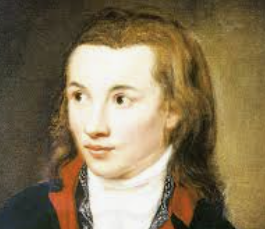
Imagination places the future world for us either above or below or in reincarnation. We dream of travels throughout the universe: is not the universe within us? We do not know the depths of our spirit. The mysterious path leads within. In us, or nowhere, lies eternity with its worlds, the past and the future. Fragment No. 16 Variant translations: We dream of a journey through the universe. But is the universe then not in us? We do not know the depths of our spirit. Inward goes the secret path. Eternity with its worlds, the past and the future, is in us or nowhere.
▼
Source
source
As translated in "Bildung in Early German Romanticism" by Frederick C. Beiser, in Philosophers on Education : Historical Perspectives (1998) by Amélie Rorty, p. 294
CivilSimian.com created by AxiomaticPanic, CivilSimian, Kalokagathia