

2 months 1 week ago
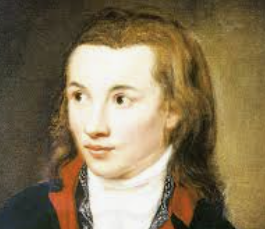
The division of Philosopher and Poet is only apparent, and to the disadvantage of both. It is a sign of disease, and of a sickly constitution.

3 months 1 day ago
We know nothing accurately in reality, but [only] as it changes according to the bodily condition, and the constitution of those things that flow upon [the body] and impinge upon it.
▼
Source
source
Freeman (1948), p. 142

3 months 1 week ago
Aeschylus had a clear eye for the commonest things. His genius was only an enlarged common sense. He adverts with chaste severity to all natural facts. His sublimity is Greek sincerity and simpleness, naked wonder which mythology had not helped to explain... Whatever the common eye sees at all and expresses as best it may, he sees uncommonly and describes with rare completeness. The multitude that thronged the theatre could no doubt go along with him to the end... The social condition of genius is the same in all ages. Aeschylus was undoubtedly alone and without sympathy in his simple reverence for the mystery of the universe.
▼
Source
source
January 29, 1840
3 months 1 week ago
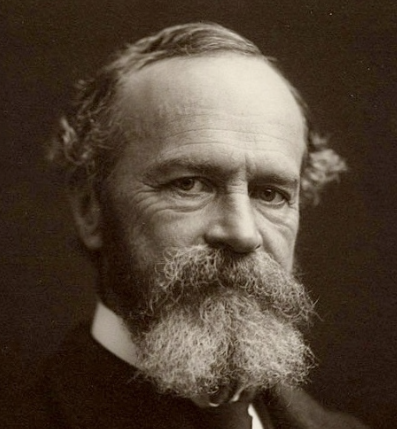
Pragmatism, on the other hand, asks its usual question. "Grant an idea or belief to be true," it says, "what concrete difference will its being true make in anyone's actual life? How will the truth be realized? What experiences will be different from those which would obtain if the belief were false? What, in short, is the truth's cash-value in experiential terms?"
▼
Source
source
Lecture VI, Pragmatism's Conception of Truth
4 months 1 day ago
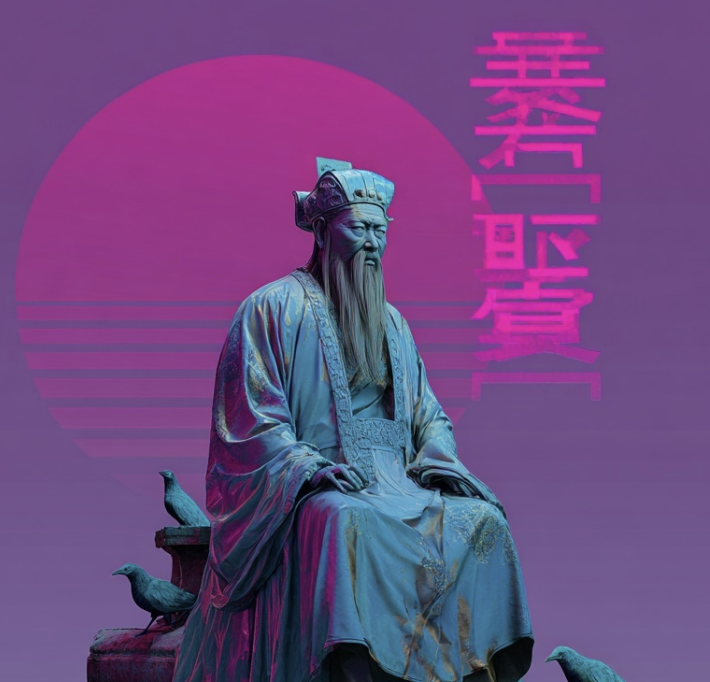
If a man has no humaneness what can his propriety be like? If a man has no humaneness what can his happiness be like?

2 months 2 weeks ago
Heroic love is the property of those superior natures who are called insane not because they do not know, but because they over-know.
▼
Source
source
As quoted in The Tragic Sense of Life (1913), by Miguel de Unamuno, as translated by J. E. Crawford
2 months 4 days ago
In solitude it is possible to love mankind; in the world, for one who knows the world, there can be nothing but secret or open war.

1 month 5 days ago
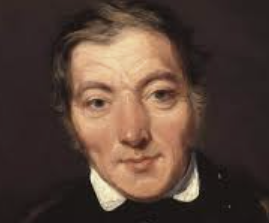
The lowest stage of humanity is experienced when the individual must labour for a small pittance of wages from others.
▼
Source
source
Paper Dedicated to the Governments of Great Britain, Austria, Russia, France, Prussia and the United States of America
3 months 1 week ago
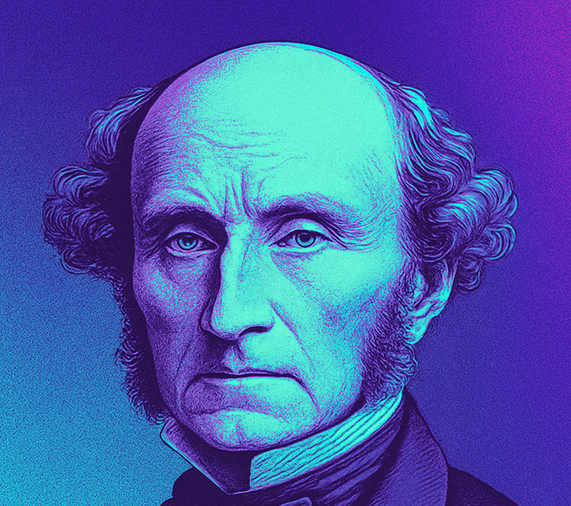
What we principally thought of, was to alter people's opinions; to make them believe according to evidence, and know what was their real interest, which when they once knew, they would, we thought, by the instrument of opinion, enforce a regard to it upon one another. While fully recognizing the superior excellence of unselfish benevolence and love of justice, we did not expect the regeneration of mankind from any direct action on those sentiments, but from the effect of educated intellect, enlightening the selfish feelings. Although this last is prodigiously important as a means of improvement in the hands of those who are themselves impelled by nobler principles of action, I do not believe that any one of the survivors of the Benthamites or Utilitarians of that day, now relies mainly upon it for the general amendment of human conduct.
▼
Source
source
(pp. 111-112)
3 weeks 6 days ago
From the point of view of the moralist the animal world is on about the same level as a gladiator's show. The creatures are fairly well treated, and set to fight-whereby the strongest, the swiftest and the cunningest live to fight another day. The spectator has no need to turn his thumbs down, as no quarter is given.
▼
Source
source
(February 1888) "The Struggle for Existence: A Programme". The Nineteenth Century 23: 161-180. (quote from p. 163)

2 days ago
He that has a secret should not only hide it, but hide that he has it to hide.
▼
Source
source
Pt. II, Bk. I, ch. 7.
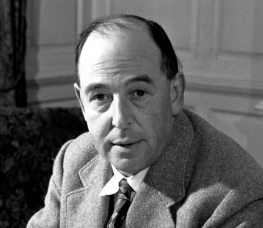
3 months 1 week ago
The safest road to Hell is the gradual one - the gentle slope, soft underfoot, without sudden turnings, without milestones, without signposts.
▼
Source
source
Letter XII
2 months 4 days ago
His master was angry, and delivered him to the torturers until he should pay all that was due to him. "So My heavenly Father also will do to you if each of you, from his heart, does not forgive his brother his trespasses."
▼
Source
source
18:34-35

3 months 1 week ago
What strikes one here above all is the crudely empirical conception of profit derived from the outlook of the ordinary capitalist, which wholly contradicts the better esoteric understanding of Adam Smith.
▼
Source
source
Vol. II, Ch. X, p. 202.
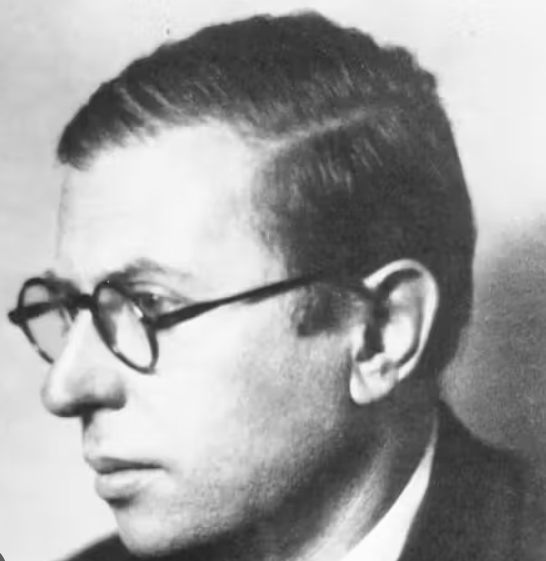
3 months 1 week ago
If literature isn't everything, it's not worth a single hour of someone's trouble.
▼
Source
source
Interview (1960), Quoted in Susan Sontag's introduction to Barthes: Selected Writings, "Writing Itself: On Roland Barthes,"
3 months 3 weeks ago
If thou shouldst say, 'It is enough, I have reached perfection,' all is lost. For it is the function of perfection to make one know one's imperfection.
▼
Source
source
Quoted by Aldous Huxley, in The Perennial Philosophy (1945)
2 months 1 week ago
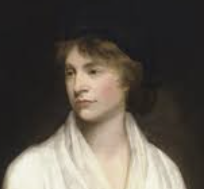
How many women thus waste life away the prey of discontent, who might have practised as physicians, regulated a farm, managed a shop, and stood erect, supported by their own industry, instead of hanging their heads surcharged with the dew of sensibility, that consumes the beauty to which it at first gave lustre.
▼
Source
source
Ch. 9
3 months 2 weeks ago
Religion should be .... successively freed from all statutes based on history, and one purely moral religion rule over all, in order that God might be all in all. The veil must fall. The leading-string of sacred tradition with all its appendices becomes by degrees useless, and at last a fetter ... The humiliating difference between laymen and clergymen must disappear, and equality spring from true liberty. All this, however, must not be expected from an exterior revolution, which acts violently, and depends upon fortune In the principle of pure moral religion, which is a sort of divine revelation constantly taking place in the soul of man, must be sought the ground for a passage to the new order of things, which will be accomplished by slow and successive reforms.
▼
Source
source
As quoted in German Thought, From The Seven Years' War To Goethe's Death : Six Lectures (1880) by Karl Hillebrand, p. 208

2 months 1 week ago
This world was created from God's fear of solitude. In other words, us, the creatures, have no other meaning but to distract the Creator. Poor clowns of the absolute, we forget that we live dramas for the boredom of a spectator, whose claps have never reached the ears of a mortal.

1 month 1 week ago
In spite the mountains of books written about art, no precise definition of art has been constructed. And the reason for this is that the conception of art has been based on the conception of beauty.

3 months 1 week ago
Frazer is much more savage than most of his savages, for they are not as far removed from the understanding of spiritual matter as a twentieth-century Englishman. His explanations of primitive practices are much cruder than the meaning of these practices themselves.
▼
Source
source
Ch. 7 : Remarks on Frazer's Golden Bough, p. 131

1 month 4 weeks ago
We never know, believe me, when we have succeeded best.
▼
Source
source
Essays and Soliloquies
1 month 1 week ago
I don't want to sound callous. I mean, even if I have nothing to offer, that doesn't matter, because that still doesn't mean that what anybody else has to offer therefore has to be true.
1 day ago
It might have been supposed that the building of 30,000 miles of railways would have brought a measure of prosperity to India. But these railways were built not for India but for England; not for the benefit of the Hindu, but for the purposes of the British army and British trade... The railroads are entirely in European hands, and the Government refuse to appoint even one Hindu to the Railway Board. The railways lose money year after year, and are helped by the Government out of the revenues of the people. All the loses are borne by the people, all the gains are gathered by the trader.
2 months 3 days ago
I daresay anything can be made holy by being sincerely worshipped.
▼
Source
source
The Message to the Planet (1989) p. 322.
4 months 1 day ago
It is not truth that makes man great, but man that makes truth great.

3 months 1 week ago
A mind does not receive truth as a chest receives jewels that are put into it, but as the stomach takes up food into the system. It is no longer food, but flesh, and is assimilated. The appetite and the power of digestion measure our right to knowledge. He has it who can use it. As soon as our accumulation overruns our invention or power to use, the evils of intellectual gluttony begin,- congestion of the brain, apoplexy, and strangulation.
▼
Source
source
"The Natural History of Intellect", p. 30
1 month 1 week ago
Science fiction is like other writing. It is just novels and short stories with machines.
2 months 1 week ago
Feeling which has not yet emerged into immediate consciousness is already affectible and already affected. In fact, this is habit, by virtue of which an idea is brought up into the present consciousness by a bond that has already been established between it and another idea while it was still in futuro.

3 months 1 week ago
It must not be supposed that this conflict is, on the part of the Teuton, aggressive in substance, whatever it may be in form. In substance it is defensive, the attempt to preserve Central Europe for a type of civilisation indubitably higher and of more value to mankind than that of any Slav State. The existence of the Russian menace on the Eastern border is, quite legitimately, a nightmare to Germany.
▼
Source
source
War: The Offspring of Fear (1914), quoted in Ray Monk, Bertrand Russell: The Spirit of Solitude, 1872-1921 (1996), p. 373

1 month 3 weeks ago
And in a flash I understood the meaning of sex. It is a craving for the mingling of consciousness, whose symbol is the mingling of bodies. Every time a man and a woman slake their thirst in the strange waters of the other's identity, they glimpse the immensity of their freedom.
▼
Source
source
p. 252
1 month 3 weeks ago
I believe that the unity of man as opposed to other living things derives from the fact that man is the conscious life of himself. Man is conscious of himself, of his future, which is death, of his smallness, of his impotence; he is aware of others as others; man is in nature, subject to its laws even if he transcends it with his thought.

3 months 6 days ago
At the end of the Middle Ages, leprosy disappeared from the Western world. In the margins of the community, at the gates of cities, there stretched wastelands which sickness had ceased to haunt but had left sterile and long uninhabitable. For centuries, these reaches would belong to the non-human. From the fourteenth to the seventeenth century, they would wait, soliciting with strange incantations a new incarnation of disease, another grimace of terror, renewed rites of purification and exclusion.
▼
Source
source
Part One: 1. Stultifera Navis
1 day ago
It is a mistake to think that the past is dead. Nothing that has ever happened is quite without influence at this moment. The present is merely the past rolled up and concentrated in this second of time. You, too, are your past; often your face is your autobiography; you are what you are because of what you have been; because of your heredity stretching back into forgotten generations; because of every element of environment that has affected you, every man or woman that has met you, every book that you have read, every experience that you have had; all these are accumulated in your memory, your body, your character, your soul. So with a city, a country, and a race; it is its past, and cannot be understood without it.
▼
Source
source
As quoted in "The Gentle Philosopher" (2006) by John Little at the Will Durant Foundation
2 months 1 week ago
Blood will stream over Europe until the nations become aware of the frightful madness which drives them in circles. And then, struck by celestial music and made gentle, they approach their former altars all together, hear about the works of peace, and hold a great celebration of peace with fervent tears before the smoking altars.
▼
Source
source
As quoted in the Fourth Leaflet of the White Rose
3 months 1 week ago
No congress, nor mob, nor guillotine, nor fire, nor all together, can avail, to cut out, burn, or destroy the offense of superiority in persons. The superiority in him is inferiority in me.
▼
Source
source
p. 65
1 month 3 weeks ago
When I made my theoretical model, I could not have guessed that people would try to realise it with Molotov cocktails.
▼
Source
source
As quoted in The Dialectical Imagination : A History of the Frankfurt School and the Institute of Social Research (1973) by M Jay, p. 279.
1 month 1 week ago
No longer able to believe in the Church religion, whose falsehood they had detected, and incapable of accepting true Christian teaching, which denounced their whole manner of life, these rich and powerful people, stranded without any religious conception of life, involuntarily returned to that pagan view of things which places life's meaning in personal enjoyment. And then among the upper classes what is called the "Renaissance of science and art" took place, which was really not only a denial of every religion, but also an assertion that religion was unnecessary.
1 month 1 week ago
As soon as men live entirely in accord with the law of love natural to their hearts and now revealed to them, which excludes all resistance by violence, and therefore hold aloof from all participation in violence - as soon as this happens, not only will hundreds be unable to enslave millions, but not even millions will be able to enslave a single individual.
▼
Source
source
V
1 month 1 week ago
Language is a form of organized stutter.
▼
Source
source
Interview with John Lennon, December 1969, CBS Television
3 months 1 week ago
Hence money may be dirt, although dirt is not money.
▼
Source
source
Vol. I, Ch. 3, Section 2, pg. 123.
2 days ago
The seeing eye! It is this that discloses the inner harmony of things; what Nature meant, what musical idea Nature has wrapped up in these often rough embodiments. Something she did mean. To the seeing eye that something were discernible. Are they base, miserable things? You can laugh over them, you can weep over them; you can in some way or other genially relate yourself to them; - you can, at lowest, hold your peace about them, turn away your own and others' face from them, till the hour come for practically exterminating and extinguishing them!
3 months 2 days ago
My principal motive is the belief that we can still make admirable sense of our lives even if we cease to have ... "an ambition of transcendence."
▼
Source
source
Introduction to Objectivity, Relativism, and Truth: Philosophical Papers, Volume I (1991).
4 months 1 week ago
It is the duty of the human understanding to understand that there are things which it cannot understand, and what those things are. Human understanding has vulgarly occupied itself with nothing but understanding, but if it would only take the trouble to understand itself at the same time it would simply have to posit the paradox.
4 months 1 week ago
Zeus, the god of gods, who rules according to law, and is able to see into such things, perceiving that an honourable race was in a woeful plight, and wanting to inflict punishment on them, that they might be chastened and improve, collected all the gods into their most holy habitation, which, being placed in the centre of the world, beholds all created things.

1 month 3 weeks ago
Mysticism: to dwell on the unseen, to withdraw ourselves from the things of sense into communion with God - to endeavour to partake of the Divine nature; that is, of Holiness. When we ask ourselves only what is right, or what is the will of God (the same question), then we may truly be said to live in His light.
1 month 2 weeks ago
Now, moral philosophers generally prefer to talk about virtues, or about (specific) duties, rights, and so on, rather than about moral images of the world. There are obvious reasons for this; nevertheless, I think that it is a mistake, and that Kant is profoundly right. What we require in moral philosophy is, first and foremost, a moral image of the world, or rather--since, here again, I am more of a pluralist than Kant--a number of complementary moral images of the world.
▼
Source
source
Lecture III: Equality and Our Moral Image of the World
CivilSimian.com created by AxiomaticPanic, CivilSimian, Kalokagathia