

1 month 4 days ago
A great deal of intelligence can be invested in ignorance when the need for illusion is deep. To Jerusalem and Back: A Personal Account (1976), p. 127 Compare: It's a point so blindingly obvious that only an extraordinarily clever and sophisticated person could fail to grasp it.
▼
Source
source
John Bercow, 2016.

3 months 2 weeks ago
Any question of philosophy ... which is so obscure and uncertain, that human reason can reach no fixed determination with regard to it; if it should be treated at all; seems to lead us naturally into the style of dialogue and conversation.
▼
Source
source
Pamphilus to Hermippus, Prologue
3 months 1 week ago
If beings are grasped as will to power, the "should" which is supposed to hang suspended over them, against which they might be measured, becomes superfluous. If life itself is will to power, it is itself the ground, principium, of valuation. Then a "should" does not determine being. Being determines a "should." "When we talk of values we are speaking under the inspiration or optics of life: life itself compels us to set up values; life itself values through us whenever we posit values."
▼
Source
source
(VIII, 89) p. 32
3 days ago
The way of learning is none other than finding the lost mind.
▼
Source
source
6A:11, as translated by Wing-tsit Chan in A Source Book in Chinese Philosophy (1963), p. 58

3 months 1 week ago
First, what do we mean by anguish? The existentialist frankly states that man is in anguish. His meaning is as follows-When a man commits himself to anything, fully realizing that he is not only choosing what he will be, but is thereby at the same time a legislator deciding for the whole of mankind-in such a moment a man cannot escape from the sense of complete and profound responsibility.
▼
Source
source
p. 30

3 months 1 week ago
An irrational fear should never be simply let alone, but should be gradually overcome by familiarity with its fainter forms.
▼
Source
source
On Education, Especially in Early Childhood (1926), Ch. 4: Fear
3 weeks 6 days ago
The mediaeval university looked backwards: it professed to be a storehouse of old knowledge... The modern university looks forward: it is a factory of new knowledge.
▼
Source
source
Letter to E. Ray Lankester (11 April 1892) Huxley Papers, Imperial College: 30.448
3 months 1 week ago
In former days, men sold themselves to the Devil to acquire magical powers. Nowadays they acquire those powers from science, and find themselves compelled to become devils. There is no hope for the world unless power can be tamed, and brought into the service, not of this or that group of fanatical tyrants, but of the whole human race, white and yellow and black, fascist and communist and democrat; for science has made it inevitable that all must live or all must die.
▼
Source
source
Ch. 2: Leaders and Followers

2 months 1 week ago
They made and recorded a sort of institute and digest of anarchy, called the rights of man, in such a pedantic abuse of elementary principles as would have disgraced boys at school; but this declaration of rights was worse than trifling and pedantic in them; as by their name and authority they systematically destroyed every hold of authority by opinion, religious or civil, on the minds of the people. By this mad declaration they subverted the state; and brought on such calamities as no country, without a long war, has ever been known to suffer, and which may in the end produce such a war, and perhaps, many such.
▼
Source
source
Speech in the House of Commons (9 February 1790), quoted in The Parliamentary History of England, From the Earliest Period to the Year 1803, Vol. XXVIII (1816), column 358

1 month 3 weeks ago
I have been taught that the land should belong to those who till the soil. With all of his deep-seated sympathies with the Arabs, our comrade cannot possibly deny that the Jews in Palestine have tilled the soil. Tens of thousands of them, young and deeply devout idealists, have flocked to Palestine, there to till the soil under the most trying pioneer conditions. They have reclaimed wastelands and have turned them into fertile fields and blooming gardens. Now I do not say that therefore Jews are entitled to more rights than the Arabs, but for an ardent socialist to say that the Jews have no business in Palestine seems to me rather a strange kind of socialism.
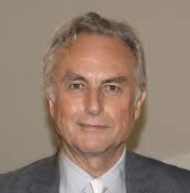
1 month 1 week ago
Nature is not cruel, only pitilessly indifferent. This is one of the hardest lessons for humans to learn. We cannot admit that things might be neither good nor evil, neither cruel nor kind, but simply callous - indifferent to all suffering, lacking all purpose.

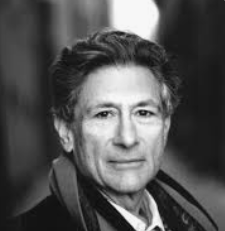
2 months 4 days ago
The tangible source of exploitation disappears behind the façade of objective rationality.
▼
Source
source
p. 32
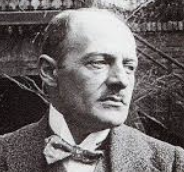
1 month 3 weeks ago
The history of other cultures is non-existent until it erupts in confrontation with the United States.
▼
Source
source
Chap 4, Sect 2
2 months 2 days ago
Even after his conversion, the true 'apostate' is not primarily committed to the positive contents of his new belief and to the realization of its aims. He is motivated by the struggle against the old belief and lives on for its negation. The apostate does not affirm his new convictions for their own sake; he is engaged in a continuous chain of acts of revenge against his own spiritual past. In reality he remains a captive of this past, and the new faith is merely a handy frame of reference for negating and rejecting the old. As a religious type, the apostate is therefore at the opposite pole from the 'resurrected,' whose life is transformed by a new faith which is full of intrinsic meaning and value.
▼
Source
source
L. Coser, trans. (1973), pp. 66-67
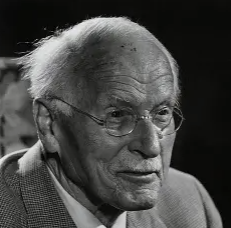
2 months 1 week ago
The secret is that only that which can destroy itself is truly alive.
▼
Source
source
Psychology and Alchemy

3 months 1 week ago
Where knowledge is a duty, ignorance is a crime.
▼
Source
source
Public Good, Philadelphia: John Dunlap, 1780

1 month 3 weeks ago
No matter how honest scientists think they are, they are still influenced by various unconscious assumptions that prevent them from attaining true objectivity. Expressed in a sentence, Fort's principle goes something like this: People with a psychological need to believe in marvels are no more prejudiced and gullible than people with a psychological need not to believe in marvels.
▼
Source
source
p. 125

3 months 2 days ago
In forming a store of good works thou shouldst be diligent, so that it may come to thy assistance among the spirits.
3 months 2 weeks ago
Christianity possesses the great advantage over Judaism of being represented as coming from the mouth of the first Teacher not as a statutory but as a moral religion, and as thus entering into the closest relation with reason so that, through reason, it was able of itself, without historical learning, to be spread at all times and among all peoples with the greatest trustworthiness.
▼
Source
source
Book IV, Part 1, Section 1, "The Christian religion as a learned religion"
1 month 3 weeks ago
There continue to be complex debates about what Nietzsche understood truth to be. Quite certainly, he did not think, in pragmatist spirit, that beliefs are true if they serve our interests or welfare: we have just seen some of his repeated denials of this idea. The more recently fashionable view is that he was the first of the deniers, thinking that there is no such thing as truth, or that truth is what anyone thinks it is, or that it is a boring category that we can do without. This is also wrong, and more deeply so. Nietzsche did not think that the ideal of truthfulness went into retirement when its metaphysical origins were discovered, and he did not suppose, either, that truthfulness could be detached from a concern for the truth. Truthfulness as an ideal retains its power, and so far from his seeing truth as dispensable or malleable, his main question is how it can be made bearable.
▼
Source
source
p. 16

3 months 1 week ago
If you are describing any occurrence... make two or more distinct reports at different times... We discriminate at first only a few features, and we need to reconsider our experience from many points of view and in various moods in order to perceive the whole.
▼
Source
source
March 24, 1857
3 months 1 week ago
Capacity for the nobler feelings is in most natures a very tender plant, easily killed, not only by hostile influences, but by the mere want of sustenance; and in the majority of young persons it speedily dies away if the occupations to which their position in life has devoted them, and the society into which it has thrown them, are not favourable to keeping that higher capacity in existence.
▼
Source
source
Ch. 2
3 months 1 week ago
With what consistency, or decency they complain so loudly of attempts to enslave them, while they hold so many hundred thousands in slavery; and annually enslave many thousands more, without any pretence of authority, or claim upon them?
2 months 1 week ago
People crushed by law, have no hopes but from power. If laws are their enemies, they will be enemies to laws; and those who have much to hope and nothing to lose, will always be dangerous.
▼
Source
source
Letter to Charles James Fox

2 months 1 week ago
To think is to submit to the whims and commands of an uncertain health.
2 months 1 week ago
The power of perpetuating our property in our families is one of the most valuable and interesting circumstances belonging to it, and that which tends most to the perpetuation of society itself. It makes our weakness subservient to our virtue; it grafts benevolence even upon avarice. The possession of family wealth and of the distinction which attends hereditary possessions (as most concerned in it,) are the natural securities for this transmission.
3 months 2 weeks ago
The history of mankind can be seen, in the large, as the realization of Nature's secret plan to bring forth a perfectly constituted state as the only condition in which the capacities of mankind can be fully developed, and also bring forth that external relation among states which is perfectly adequate to this end.
▼
Source
source
Eighth Thesis

1 month 4 weeks ago
Hegel made famous his aphorism that all the rational is real and all the real rational; but there are many of us who, unconvinced by Hegel, continue to believe that the real, the really real, is irrational, that reason builds upon irrationalities. Hegel, a great framer of definitions, attempted with definitions to reconstruct the universe, like that artillery sergeant who said that cannon were made by taking a hole and enclosing it with steel.
2 months 1 week ago
Every archetype is capable of endless development and differentiation. It is therefore possible for it to be more developed or less. In an outward form of religion where all the emphasis is on the outward figure (hence where we are dealing with a more or less complete projection) the archetype is identical with externalized ideas but remains unconscious as a psychic factor. When an unconscious content is replaced by a projected image to that extent, it is cut off from all participation in an influence on the conscious mind. Hence it largely forfeits its own life, because prevented from exerting the formative influence on consciousness natural to it; what is more, it remains in its original form - unchanged, for nothing changes in the unconscious.
2 months 4 weeks ago
Authority and place demonstrate and try the tempers of men, by moving every passion and discovering every frailty.
▼
Source
source
Comparison of Demosthenes and Cicero 3 (Tr. Dryden and Clough)
1 month ago
What an incalculable debt do we owe to that little speck of land, Greece.-The principles of taste, the finest models of composition, the doctrines and the glorious examples to which we owe political freedom, the arts, the sciences, architecture, sculpture, every thing that is great and splendid in literature and politics, must be considered as ultimately derived from that little peninsula.
▼
Source
source
Letter to Zachary Macaulay (8 September 1821), quoted in The Letters of Thomas Babington Macaulay, Volume I: 1807-February 1831, ed. Thomas Pinney (1974), p. 163
2 months 1 week ago
Just as man as a social being, cannot in the long run exist without a tie to the community, so the individual will never find the real justification for his existence, and his own spiritual and moral autonomy, anywhere except in an extramundane principle capable of relativizing the overpowering influence of external factors.
▼
Source
source
p 23


2 days ago
There is no heroic poem in the world but is at bottom a biography, the life of a man; also, it may be said, there is no life of a man, faithfully recorded, but is a heroic poem of its sort, rhymed or unrhymed.
2 months 1 week ago
When you have understood that nothing is, that things do not even deserve the status of appearances, you no longer need to be saved, you are saved, and miserable forever.

4 months 1 week ago
A fate is not a punishment.
3 months 1 week ago
Since he is unable to be the beloved, he will become the lover.
▼
Source
source
p. 90
4 months ago
Knowledge is the conformity of the object and the intellect.

3 months 1 week ago
Let any one try, I will not say to arrest, but to notice or attend to, the present moment of time. One of the most baffling experiences occurs. Where is it, this present? It has melted in our grasp, fled ere we could touch it, gone in the instant of becoming.
▼
Source
source
Ch. 15

3 months 1 week ago
For the Supernatural, entering a human soul, opens to it new possibilities both of good and evil. From that point the road branches: one way to sanctity, love, humility, the other to spiritual pride, self-righteousness, persecuting zeal. And no way back to the mere humdrum virtues and vices of the unawakened soul. If the Divine call does not make us better, it will make us very much worse. Of all bad men religious bad men are the worst. Of all created beings the wickedest is one who originally stood in the immediate presence of God.
▼
Source
source
Reflections on the Psalms (1958), p. 32
1 month 3 weeks ago
There's no need to fear or hope, but only to look for new weapons.
▼
Source
source
from Postscript on the Societies of Control
2 months 2 days ago
It is necessary to insist upon this extraordinary but undeniable fact: experimental science has progressed thanks in great part to the work of men astoundingly mediocre, and even less than mediocre. That is to say, modern science, the root and symbol of our actual civilization, finds a place for the intellectually commonplace man and allows him to work therein with success.
▼
Source
source
Chapter XII: The Barbarism Of "Specialisation"
2 months 1 week ago
To make our position clearer, we may formulate it in another way. Let us call a proposition which records an actual or possible observation an experiential proposition. Then we may say that it is the mark of a genuine factual proposition, not that it should be equivalent to an experiential proposition, or any finite number of experiential propositions, but simply that some experiential propositions can be deduced from it in conjunction with certain other premises without being deducible from those other premises alone.
▼
Source
source
p. 20.
3 months 1 week ago
If human nature were unchangeable, as ignorant people still suppose it to be, the situation would indeed be hopeless.
▼
Source
source
Ch. 17: Some Prospects: Cheerful and Otherwise
3 months 1 week ago
The wisest man preaches no doctrines; he has no scheme; he sees no rafter, not even a cobweb, against the heavens. It is clear sky. If I ever see more clearly at one time than at another, the medium through which I see is clearer.

3 months 1 week ago
The gods sell anything to everybody at a fair price.
▼
Source
source
Quotation and Originality

4 months 1 week ago
The fall of Empire, gentlemen, is a massive thing, however, and not easily fought. It is dictated by a rising bureaucracy, a receding initiative, a freezing of caste, a damming of curiosity, a hundred other factors. It has been going on, as I have said, for centuries, and it is too majestic and massive a movement to stop.
4 months 1 week ago
It is important to remember that the viciousness and wrongs of life stick out very plainly but that even at the worst times there is a great deal of goodness, kindness, and day-to-day decency that goes unnoticed and makes no headlines.

3 months 1 week ago
Logic takes care of itself; all we have to do is to look and see how it does it.
▼
Source
source
Journal entry (13 October 1914), also in Tractatus Logico-Philosophicus (§ 5.47)
2 months 1 week ago
There is, properly speaking, no Misfortune in the world. Happiness and Misfortune stand in continual balance. Every Misfortune is, as it were, the obstruction of a stream, which, after overcoming this obstruction, but bursts through with the greater force.
CivilSimian.com created by AxiomaticPanic, CivilSimian, Kalokagathia