

2 weeks 2 days ago
Dean Swift's rule is as good for women as for men - never to talk above a half minute without pausing, and giving others an opportunity to strike in.
▼
Source
source
Parisian Morals and Manners, published in The Edinburgh Review (1843)
2 weeks 3 days ago
The characteristic mark of this age of dictators, wars and revolutions is its anti-capitalistic bias. Most governments and political parties are eager to restrict the sphere of private initiative and free enterprise. It is an almost unchallenged dogma that capitalism is done for and that the coming of all-round regimentation of economic activities is both inescapable and highly desirable.

3 months 1 week ago
Thus is man that great and true Amphibium, whose nature is disposed to live not only like other creatures in diverse elements, but in divided and distinguished worlds.
▼
Source
source
Section 34

3 months 2 days ago
Yes! We believe in a higher principle than your virtue and the kind of morality you speak of so paltrily and without much conviction. We believe that there is no imperative or reward for virtue for the soul because it simply acts according to the necessity of its inherent nature. The moral imperative expresses itself in an ought and presupposes the concept of an evil next to that of good.
▼
Source
source
P. 43
1 month 3 weeks ago
Conservatism is itself a modernism, and in this lies the secret of its success.
▼
Source
source
"Eliot and Conservatism" (p. 194)

1 month 1 week ago
The negative utilitarian might reply that this formulation of the problem is misleading. We do not live in a notional world where only a pinprick, minor pains, or even just "mild" suffering exists. In the real world, frightful horrors as well as humdrum malaise occur every day. The intensity of suffering is sometimes so dreadful that its victims are prepared to destroy themselves to bring their torment to an end. Each year, some 800,000 people across the planet kill themselves while in the grip of suicidal despair. Tens of millions of people are severely depressed or suffer chronic neuropathic pain. By way of contrast, the genteel conventions of an ethics seminar in academic philosophy, or the scholarly technicalities of a journal article, simply fail to come to terms with the enormity of what's at stake. To talk of a "pinprick" is to trivialise the NU ethical stance.
▼
Source
source
"The Pinprick Argument", BLTC Research, 2005

4 months 4 weeks ago
Moreover, there is a victory and defeat, the first and best of victories, the lowest and worst of defeat, which each man gains or sustains at the hands, not of another, but of himself; this shows that there is a war against ourselves going on within every one of us. Book I Sometimes paraphrased as "The first and best victory is to conquer self".
2 months 2 weeks ago
What most people in our culture mean by being lovable is essentially a mixture between being popular and having sex appeal.
▼
Source
source
Ch. 1

2 months 1 week ago
We can see nothing whatever of the soul unless it is visible in the expression of the countenance; one might call the faces at a large assembly of people a history of the human soul written in a kind of Chinese ideograms.
▼
Source
source
B 11
1 week 5 days ago
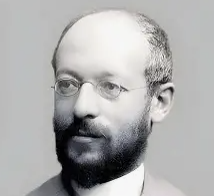
Modern mind has become more and more calculating. The calculative exactness of practical life which the money economy has brought about corresponds to the ideal of natural science: to transform the world into an arithmetic problem, to fix every part of the world by mathematical formulas. Only money economy has filled the days of so many people with weighing, calculating, with numerical determinations, with a reduction of qualitative values to quantitative ones.
▼
Source
source
p. 414

2 days ago
Let the eye of vigilance never be closed.
▼
Source
source
Letter to Spencer Roane, 9 March 1821
2 months 4 weeks ago
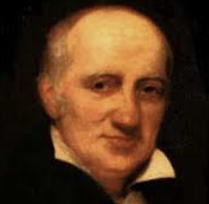
Government was intended to suppress injustice, but it offers new occasions and temptations for the commission of it.
▼
Source
source
"Summary of Principles" 2.4
4 weeks ago
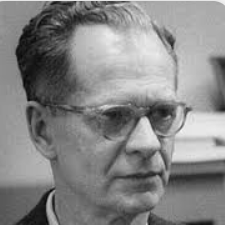
I do not admire myself as a person. My successes do not override my shortcomings.
▼
Source
source
Journal of Humanistic Psychology (Spring 1991) Vol. 31 No. 2, p. 112

2 months 1 day ago
All state obligations are against the conscience of a Christian: the oath of allegiance, taxes, law proceedings and military service.
▼
Source
source
Chapter VII, Significance of Compulsory Service
2 months 1 day ago
The error arises from the learned jurists deceiving themselves and others, by asserting that government is not what it really is, one set of men banded together to oppress another set of men, but, as shown by science, is the representation of the citizens in their collective capacity.
▼
Source
source
Chapter VI, Attitude of Men of the Present Day to War Variant translation: Government is an association of men who do violence to the rest of us.

3 weeks 2 days ago
All this of Liberty and Equality, Electoral suffrages, Independence and so forth, we will take, therefore, to be a temporary phenomenon, by no means a final one. Though likely to last a long time, with sad enough embroilments for us all, we must welcome it, as the penalty of sins that are past, the pledge of inestimable benefits that are coming.

4 months 3 days ago
There is only one inborn erroneous notion ... that we exist in order to be happy ... So long as we persist in this inborn error ... the world seems to us full of contradictions. For at every step, in great things and small, we are bound to experience that the world and life are certainly not arranged for the purpose of maintaining a happy existence ... hence the countenances of almost all elderly persons wear the expression of ... disappointment.
▼
Source
source
Vol II "On the Road to Salvation"

5 months 2 days ago
.... In a word, acts of any kind produce habits or characters of the same kind. Hence we ought to make sure that our acts are of a certain kind; for the resulting character varies as they vary. It makes no small difference, therefore, whether a man be trained in his youth up in this way or that, but a great difference, or rather all the difference.

1 month 3 weeks ago
A good conscience is eight parts of courage.
▼
Source
source
Catriona, ch. XI (1893).

4 months 3 weeks ago
Being in humaneness is good. If we select other goodness and thus are far apart from humaneness, how can we be the wise? The opening phrase of this chapter after which the chapter is named in Chinese.

4 months 4 weeks ago
To be happy, we must not be too concerned with others.

5 months 3 days ago
Every human being is tried this way in the active service of expectancy. Now comes the fulfillment and relieves him, but soon he is again placed on reconnaissance for expectancy; then he is again relieved, but as long as there is any future for him, he has not yet finished his service. And while human life goes on this way in very diverse expectancy, expecting very different things according to different times and occasions and in different frames of mind, all life is again one nightwatch of expectancy.

3 months 3 weeks ago
Philosophy's position with regard to science, which at one time could be designated with the name "theory of knowledge," has been undermined by the movement of philosophical thought itself. Philosophy was dislodged from this position by philosophy.
▼
Source
source
p. 4

1 month 1 week ago
No amount of happiness enjoyed by some organisms can notionally justify the indescribable horrors of Auschwitz. [...] Nor can the fun and games outweigh the sporadic frightfulness of pain and despair that occurs every second of every day. For there's nothing inherently wrong with non-sentience or [...] non-existence; whereas there is something frightfully and self-intimatingly wrong with suffering.
▼
Source
source
2.7 Why Be Negative?

4 months 2 days ago
How can he [today's writer] be honored, when he does not honor himself; when he loses himself in the crowd; when he is no longer the lawgiver, but the sycophant, ducking to the giddy opinion of a reckless public.
▼
Source
source
Goethe; or, The Writer
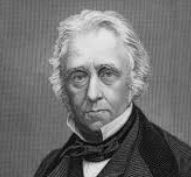
1 month 2 weeks ago
The object of oratory alone is not truth, but persuasion.
▼
Source
source
'On the Athenian Orators', Knight's Quarterly Magazine (August 1824), quoted in The Miscellaneous Writings of Lord Macaulay, Vol. I (1860), p. 135
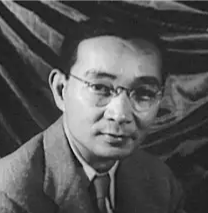
1 week 3 days ago
It is important that man dreams, but it is perhaps equally important that he can laugh at his own dreams.
▼
Source
source
Ch. I : The Awakening, pp. 4-5

3 months 3 weeks ago
May we be those who shall heal this world.
▼
Source
source
Yasna 30,9
4 months 3 days ago
How very paltry and limited the normal human intellect is, and how little lucidity there is in the human consciousness, may be judged from the fact that, despite the ephemeral brevity of human life, the uncertainty of our existence and the countless enigmas which press upon us from all sides, everyone does not continually and ceaselessly philosophize, but that only the rarest of exceptions do.
▼
Source
source
Vol. 2, Ch. 3, § 39

2 months 4 weeks ago
The discussion of the sexual problem is only a somewhat crude prelude to a far deeper question, and that is the question of the psychological relationship between the sexes. In comparison with this the other pales into insignificance, and with it we enter the real domain of woman. Woman's psychology is founded on the principle of Eros, the great binder and loosener, whereas from ancient times the ruling principle ascribed to man is Logos.
▼
Source
source
P.254

4 months 5 days ago
Tis from the resemblance of the external actions of animals to those we ourselves perform, that we judge their internal likewise to resemble ours; and the same principle of reasoning, carry'd one step farther, will make us conclude that since our internal actions resemble each other, the causes, from which they are deriv'd, must also be resembling.
▼
Source
source
Part 3, Section 16
4 months 4 weeks ago
The papers were always talking about the debt owed to society. According to them, it had to be paid. But that doesn't speak to the imagination. What really counted was the possibility of escape, a leap to freedom, out of the implacable ritual, a wild run for it that would give whatever chance for hope there was. Of course, hope meant being cut down on some street corner, as you ran like mad, by a random bullet. But when I really thought it through, nothing was going to allow me such a luxury. Everything was against it; I would just be caught up in the machinery again.
2 days ago
The principle of rotation... in the body of [bank] directors... breaks in upon the esprit de corps so apt to prevail in permanent bodies; it gives a chance for the public eye penetrating into the sanctuary of those proceedings and practices, which the avarice of the directors may introduce for their personal emolument, and which the resentments of excluded directors, or the honesty of those duly admitted, might betray to the public; and it gives an opportunity at the end of the year, or at other periods, of correcting a choice, which on trial, proves to have been unfortunate.
▼
Source
source
Letter to Albert Gallatin, 1803. ME 10:437
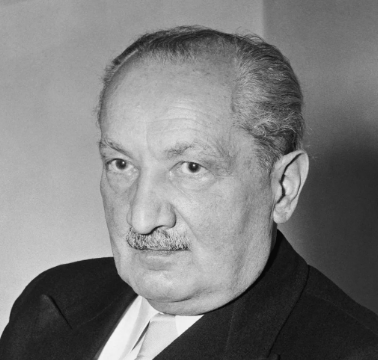
3 months 3 weeks ago
The human body is essentially something other than an animal organism.
▼
Source
source
Letter on Humanism
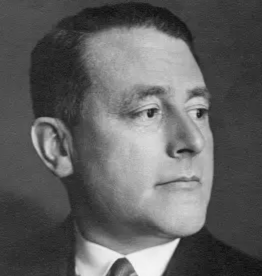
1 day ago
The specific political distinction to which political actions and motives can be reduced is that between friend and enemy.

4 months 3 days ago
Formerly, it was held by philosophers and mathematicians alike that the proofs in Geometry depended on the figure; nowadays, this is known to be false. In the best books there are no figures at all. The reasoning proceeds by the strict rules of formal logic from a set of axioms laid down to begin with.
▼
Source
source
Ch. 5: Mathematics and the Metaphysicians
4 months 3 days ago
There was once a millionaire who bought an infinite number of pairs of shoes and, whenever he bought a pair of shoes, he also bought a pair of socks. We can make a selection choosing one out of each pair of shoes, because we can choose always the right shoe or always the left shoe. Thus, so far as the shoes are concerned, selections exist. But, as regards the socks, where there is no distinction of right and left, we cannot use this rule of selection.
▼
Source
source
pp. 93-93
2 months 3 weeks ago
Religion in its humility restores man to his only dignity, the courage to live by grace.
▼
Source
source
Ch. 4
2 months 1 day ago
Giving alms is only a virtuous deed when you give money that you yourself worked to get.
▼
Source
source
p. 83

2 months 4 weeks ago
By all evidence we are in the world to do nothing.
5 months 3 days ago
When one merely states that one has many subscribers and keeps on saying it, then one gets many; just as when one sheep goes to water, the next one also goes, and when it is continually said of a large flock of sheep that they go hither and yon to water, then the rest must also go, so people believe that it must be the demand of the times, that for the sake of use and custom, they must also subscribe.

2 weeks 3 days ago
Accept in an unruffled spirit that which is inevitable.
2 months 4 weeks ago
My mission is to suffer for all those who suffer without knowing it. I must pay for them, expiate their unconsciousness, their luck to be ignorant of how unhappy they are.
3 months 3 weeks ago
This book is intended as a correlative history of the modern soul and of a new power to judge; a genealogy of the present scientifico-legal complex from which the power to punish derives its bases, justifications and rules, from which it extends its effects and by which it extends its effects and by which it masks its exorbitant singularity.
▼
Source
source
Chapter One, The Spectacle of the Scaffold, pp.42
1 week 3 days ago
Every valuable human being must be a radical and a rebel, for what he must aim at is to make things better than they are.
▼
Source
source
As quoted in The World of the Atom (1966) by Henry Abraham Boorse and Lloyd Motz, p. 741
2 months 5 days ago
Idolatry is a more dangerous crime because it is apt by the authority of Kings & under very specious pretenses to insinuate it self into mankind. Kings being apt to enjoyn the honour of their dead ancestors: & it seeming very plausible to honour the souls of Heroes & Saints & to believe that they can heare us & help us & are mediators between God & man & reside & act principally in the temples & statues dedicated to their honour & memory? And yet this being against the principal part of religion is in scripture condemned & detested above all other crimes. The sin consists first in omitting the service of the true God.
▼
Source
source
Of Idolatry
3 weeks 2 days ago
The pious soul,-which, if you reflect, will mean the ingenuous and ingenious, the gifted, intelligent and nobly-aspiring soul,-such a soul, in whatever rank of life it were born, had one path inviting it; a generous career, whereon, by human worth and valor, all earthly heights and Heaven itself were attainable. In the lowest stratum of social thraldom, nowhere was the noble soul doomed quite to choke, and die ignobly.
2 months 2 weeks ago
Full of gods means full of meaning, full of narration. The world becomes readable, like a picture.

4 months 2 days ago
How can great minds be produced in a country where the test of a great mind is agreeing in the opinions of small minds?
▼
Source
source
As quoted in Egoists: A Book of Supermen (1909) by James Huneker, p. 367
CivilSimian.com created by AxiomaticPanic, CivilSimian, Kalokagathia