


3 weeks 1 day ago
The uttered part of a man's life, let us always repeat, bears to the unuttered, unconscious part a small unknown proportion. He himself never knows it, much less do others.
1 month 3 weeks ago
Scientific and technological progress themselves are value-neutral. They are just very good at doing what they do. If you want to do selfish, greedy, intolerant and violent things, scientific technology will provide you with by far the most efficient way of doing so. But if you want to do good, to solve the world's problems, to progress in the best value-laden sense, once again, there is no better means to those ends than the scientific way.

1 day ago
We are disposed, somewhat by culture and somewhat by nature, to solve our problems by violence, and even to enjoy doing so. And yet by now all of us must at least have suspected that our right to live, to be free, and to be at peace is not guaranteed by any act of violence. It can be guaranteed only by our willingness that all other persons should live, be free, and be at peace - and by our willingness to use or give our own lives to make that possible.
4 months 1 day ago
Be not afraid of life. Believe that life is worth living, and your belief will help create the fact.
▼
Source
source
"Is Life Worth Living?"
1 month 1 week ago
By far my greatest dread in life [...] is that (some variant of) the Everett interpretation of Quantum Mechanics is true. Dave's Diary, BLTC Research, May 1996

4 months 1 week ago
As far as physicians go, chance is more valuable than knowledge.
▼
Source
source
Ch. 37

2 months 3 weeks ago
I have compassion on the multitude, because they continue with me now three days, and have nothing to eat: and I will not send them away fasting, lest they faint in the way.
▼
Source
source
15:32 (KJV)

3 months 1 week ago
There is the world for you. Beauty, true beauty, is intangible. It is in the eye of the beholder. Something that we can lose at any moment, and the more you examine it, the more illusive it becomes. True happiness is virtue, and virtue is predicated on knowledge and righteous conduct.
▼
Source
source
The Alchemy of Happiness

4 months 3 days ago
He that knows anything, knows this, in the first place, that he need not seek long for instances of his ignorance.
▼
Source
source
Book IV, Ch. 3, sec. 22

4 months 2 weeks ago
I have read in Plato and Cicero sayings that are very wise and very beautiful; but I never read in either of them, "Come unto me, all ye that labor and are heavy laden."
▼
Source
source
p. 62

2 months 3 weeks ago
Existing is plagiarism.
2 months 1 week ago
Only the person who has faith in himself is able to be faithful to others.
▼
Source
source
Ch. 4

4 months 2 days ago
A house sold by A to B does not wander from one place to another, although it circulates as a commodity.
▼
Source
source
Vol. II, Ch. VI, p. 152.
4 months 1 week ago
No proceeding is better than that which you have concealed from the enemy until the time you have executed it. To know how to recognize an opportunity in war, and take it, benefits you more than anything else. Nature creates few men brave, industry and training makes many. Discipline in war counts more than fury.
▼
Source
source
Book 7
1 month 3 weeks ago
Scientific beliefs are supported by evidence, and they get results. Myths and faiths are not and do not.
1 month 2 weeks ago
The man of science who commits himself to even one statement which turns out to be devoid of good foundation loses somewhat of his reputation among his fellows, and if he be guilty of the same error often he loses not only his intellectual, but his moral standing among them. For it is justly felt that errors of this kind have their root rather in the moral than in the intellectual nature.
▼
Source
source
The Evidence of the Miracle of the Resurrection
2 months 2 weeks ago
If the passion for truthfulness is merely controlled and stilled without being satisfied, it will kill the activities it is supposed to support. This may be one of the reasons why, at the present time, the study of the humanities runs a risk of sliding from professional seriousness, through professionalization, to a finally disenchanted careerism.
▼
Source
source
p. 3
4 months 3 days ago
The good King of France desires only that you would take his word and let him be quiet till he has got the West Indies into his hands and his grandson well established in Spain, and then you may be sure you shall be as safe as he will let you be in your religion, property and trade, to all which who can be such an infidel as not to believe him a great friend?
▼
Source
source
Letter to Peter King (5 April 1701), quoted in Maurice Cranston, John Locke: A Biography (1957; 1985), p. 452
4 months 3 days ago
If there is anything in the world that can really be called a man's property, it is surely that which is the result of his mental activity.
▼
Source
source
Unverified attribution noted in Respectfully Quoted: A Dictionary of Quotations (1993), ed. Suzy Platt, Library of Congress, p. 227
4 months 1 day ago
Pragmatism, on the other hand, asks its usual question. "Grant an idea or belief to be true," it says, "what concrete difference will its being true make in anyone's actual life? How will the truth be realized? What experiences will be different from those which would obtain if the belief were false? What, in short, is the truth's cash-value in experiential terms?"
▼
Source
source
Lecture VI, Pragmatism's Conception of Truth
2 months 3 weeks ago
Why callest thou me good? there is none good but one, that is, God: but if thou wilt enter into life, keep the commandments.
▼
Source
source
19:17 (KJV)

4 months 5 days ago
Human infirmity in moderating and checking the emotions I name bondage: for, when a man is a prey to his emotions, he is not his own master, but lies at the mercy of fortune: so much so, that he is often compelled, while seeing that which is better for him, to follow that which is worse.
▼
Source
source
Part IV, Preface; translation by R. H. M. Elwes
4 months 2 weeks ago
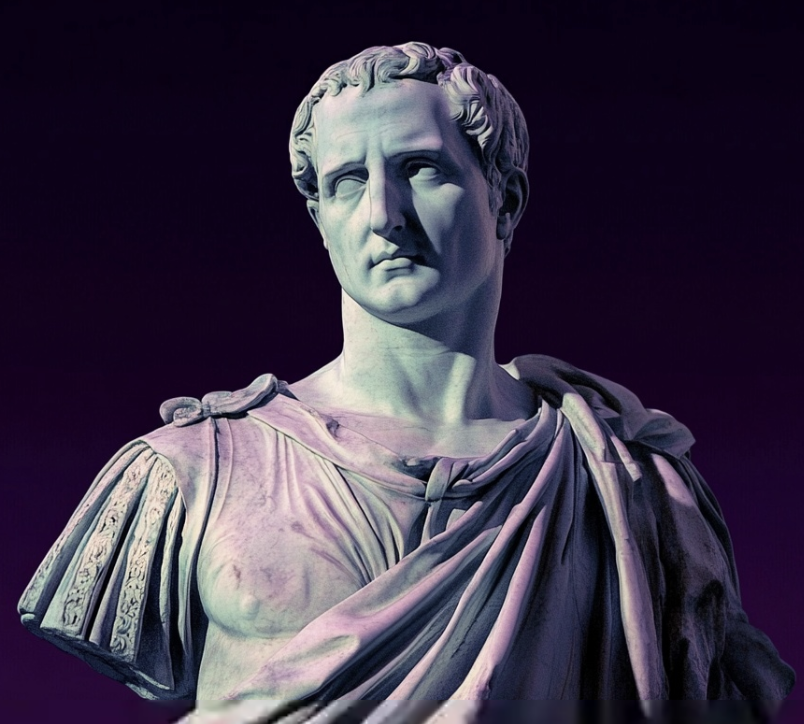
I have always been of the opinion that infamy earned by doing what is right is not infamy at all, but glory.
▼
Source
source
Speech I

4 months 3 weeks ago
Against the diseases of the mind, philosophy provides sufficient antidotes. The instruments which it employs for this purpose are the virtues; the root of which, whence all the rest proceed, is prudence. This virtue comprehends the whole art of living discreetly, justly, and honorably, and is, in fact, the same thing with wisdom. It instructs men to free their understandings from the clouds of prejudice; to exercise temperance and fortitude in the government of themselves: and to practice justice towards others. Although pleasure, or happiness, which is the end of living, be superior to virtue, which is only the means, it is every one's interest to practice all the virtues; for in a happy life, pleasure can never be separated from virtue.

1 month 2 weeks ago
Simplicity and nonviolence are the basis of an economy of wellbeing, and such an economy must be localised.
4 months 2 weeks ago
(On the Trinitarian indwelling personally experienced by Saint Augustine) But what is it that I love in loving You? Not corporeal beauty, nor the splendour of time, nor the radiance of the light, so pleasant to our eyes, nor the sweet melodies of songs of all kinds, nor the fragrant smell of flowers, and ointments, and spices, not manna and honey, not limbs pleasant to the embracements of flesh. I love not these things when I love my God; and yet I love a certain kind of light, and sound, and fragrance, and food, and embracement in loving my God, who is the light, sound, fragrance, food, and embracement of my inner man — where that light shines unto my soul which no place can contain, where that sounds which time snatches not away, where there is a fragrance which no breeze disperses, where there is a food which no eating can diminish, and where that clings which no satiety can sunder. This is what I love, when I love my God.
▼
Source
source
X, 6, 8
2 months 3 weeks ago
The poor maidservant who used to say that she only believed in God when she had a toothache puts all theologians to shame.
3 months 6 days ago
It is not human nature we should accuse but the despicable conventions that pervert it.

3 months 3 weeks ago
In... "The Education of Children"... Plutarch gives an anecdote of Theocritus, a sophist, as an example of athuroglossos... he is... "a giant in impudence"... strong not because of his reason, or his rhetorical ability... or his ability to pronounce the truth, but only because he is arrogant. ...His fourth trait is... "putting his confidence in bluster." He is confident in thorubos... the noise made by a strong voice, by a scream, a clamor, or uproar. ...The final characteristic ...his confidence in ..."ignorant outspokenness..." ... it lacks mathesis ...-learning or wisdom.
▼
Source
source
Ref: Plutarch, "The Education of Children", Moralia (1927) Vol. 1, Tr. Frank Cole Babbit, p. 4, The Loeb Classical Library, Harvard University Press.
2 months 2 weeks ago
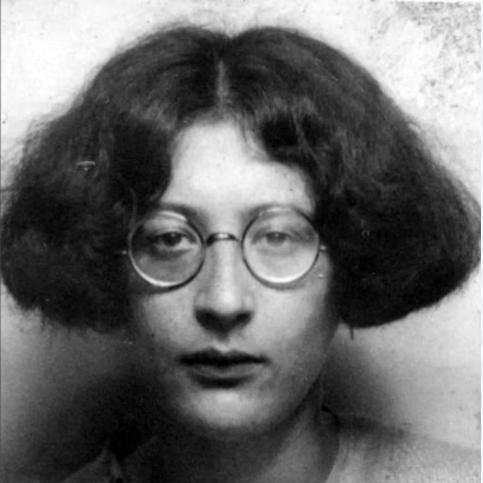
In a general way, the literature of the twentieth century is essentially psychological; and psychology consists of describing states of the soul by displaying them all on the same plane, without any discrimination of value, as though good and evil were external to them, as though the effort toward the good could be absent at any moment from the thought of any man.
▼
Source
source
"The responsibility of writers," p. 168



1 month 4 weeks ago
Acoustic space is totally discontinuous, like touch. It is a sphere without centers or margins.
4 months ago
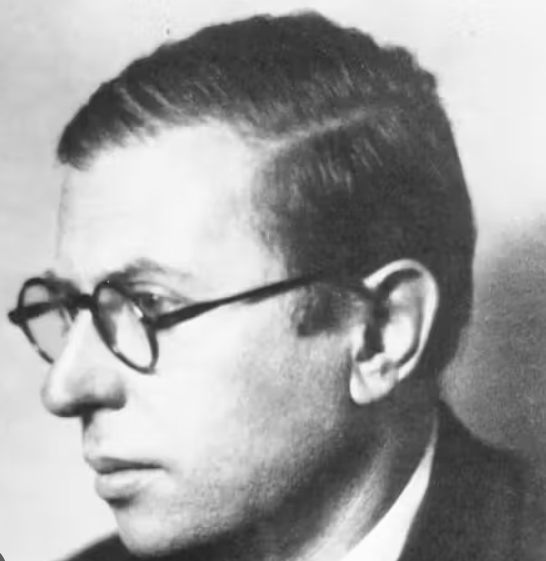
Since he is unable to be the beloved, he will become the lover.
▼
Source
source
p. 90
4 months 1 week ago
It is the part of cowardice, not of courage, to go and crouch in a hole under a massive tomb, to avoid the blows of fortune.
▼
Source
source
Ch. 3. A Usage of the Island of Cea, tr. George B. Ives, 1925

3 months 2 days ago
For my part for one, though I make no doubt of preferring the antient Course, or almost any other to this vile chimera, and sick mans dream of Government yet I could not actively, or with a good heart, and clear conscience, go to the establishment of a monarchical despotism in the place of this system of Anarchy.
▼
Source
source
Letter to Richard Burke (26 September 1791), quoted in Alfred Cobban and Robert A. Smith (eds.), The Correspondence of Edmund Burke, Volume VI: July 1789-December 1791 (1967), p. 414
2 months 3 weeks ago
The philosopher ... subjects experience to his critical judgment, and this contains a value judgment - namely, that freedom from toil is preferable to toil, and an intelligent life is preferable to a stupid life. It so happened that philosophy was born with these values. Scientific thought had to break this union of value judgment and analysis, for it became increasingly clear that the philosophic values did not guide the organisation of society.
▼
Source
source
p. 126

2 months 1 day ago
When I started life Hegelianism was the basis of everything: it was in the air, found expression in magazine and newspaper articles, in novels and essays, in art, in histories, in sermons, and in conversation. A man unacquainted with Hegel had no right to speak: he who wished to know the truth studied Hegel. Everything rested on him; and suddenly forty years have gone by and there is nothing left of him, he is not even mentioned - as though he had never existed. And what is most remarkable is that, like pseudo-Christianity, Hegelianism fell not because anyone refuted it, but because it suddenly became evident that neither the one nor the other was needed by our learned, educated world.
▼
Source
source
Chapter XXIX

4 months 1 day ago
I think no virtue goes with size; The reason of all cowardice Is, that men are overgrown, And, to be valiant, must come down To the titmouse dimension.
▼
Source
source
The Titmouse, st. 5
2 months 3 weeks ago
Life creates itself in delirium and is undone in ennui.
4 months 3 days ago
Money is human happiness in the abstract: he, then, who is no longer capable of enjoying human happiness in the concrete devotes his heart entirely to money.
▼
Source
source
Vol. 2, Ch. 26, § 320
2 months 3 weeks ago
But yet they that have no Science, are in better, and nobler condition with their naturall Prudence; than men, that by their mis-reasoning, or by trusting them that reason wrong, fall upon false and absurd generall rules.
▼
Source
source
The First Part, Chapter 5, p. 21

4 months 4 weeks ago
In my fiction I am careful to make everything probable and to tie up all loose ends. Real life is not hampered by such considerations.
4 months ago
To whomever gives a kiss or a blowRender a kiss or blow, but to whomever gives when you are unable to return, offer all the hatred in your hear, for you were slaves and he enslaves you.
▼
Source
source
Acts 8 & 9
1 day ago
What one has to say to begin with is that, as humans, we are limited in intelligence and we really have no reliable foresight. So none of us will come up with answers to the whole great problem. What we can do is judge our behavior, our history, and our present situation by a better standard than "efficiency" or "profit," or those measures that we're still using to determine economic decisions.
1 month 4 weeks ago
The press is a group confessional form that provides communal participation. The book is a private confessional form that provides a "point of view."
▼
Source
source
(p. 204)

1 month 4 weeks ago
In this book we turn to the study of new patterns of energy arising from man's physical and psychic artifacts and social organizations. The only method for perceiving process and pattern is by inventory of effects obtained by the comparison and contrast of developing situations.
▼
Source
source
(p. 8)
2 months 3 weeks ago
Why do you lack the strength to escape the obligation to breathe?
2 months 3 weeks ago
The passion of laughter is nothing else but a sudden glory arising from sudden conception of some eminency in ourselves, by comparison with the infirmities of others, or with our own formerly...
▼
Source
source
The Elements of Law, Natural and Politic Pt. I Human Nature (1640) Ch. 9
2 months 3 weeks ago
Ye have heard that it hath been said, Thou shalt love thy neighbour, and hate thine enemy. But I say unto you, Love your enemies, bless them that curse you, do good to them that hate you, and pray for them which despitefully use you, and persecute you; That ye may be the children of your Father which is in heaven: for he maketh his sun to rise on the evil and on the good, and sendeth rain on the just and on the unjust.
▼
Source
source
Matthew 5:43-45 (KJV)
CivilSimian.com created by AxiomaticPanic, CivilSimian, Kalokagathia