


3 months ago
We must all obey the great law of change. It is the most powerful law of nature, and the means perhaps of its conservation.
▼
Source
source
Letter to Sir Hercules Langrishe

3 months 4 weeks ago
I have no faith in precision: ...simplicity and clarity are values in themselves, but not... [of] precision or exactness...

4 months 3 weeks ago
Well, it was healthy to miss once in a while. It kept self-confidence balanced at a point safely short of arrogance.
2 months 3 weeks ago
Resignation' is a keynote in Comte's writings, deriving directly from assent to invariable social laws. 'True resignation, that is, a disposition to endure necessary evils steadfastly and without any hope of compensation therefore, can result only from a profound feeling for the invariable laws that govern the variety of natural phenomena.
▼
Source
source
P. 345

3 months 3 weeks ago
As medium for reaching understanding, speech acts serve: a) to establish and renew interpersonal relations, whereby the speaker takes up a relation to something in the world of legitimate social orders; b) to represent states and events, whereby the speaker takes up a relation to something in the world of existing states of affairs; c) to manifest experiences that is, to represent oneself- whereby the speaker takes up a relation to something in the subjective world to which he has privileged access.
▼
Source
source
p. 308
2 months 3 weeks ago
No man must encroach upon my province nor I upon his. He may advise me, moderately and without perniciousness, but he must not expect to dictate to me. He may censure me freely and without reserve but he should remember that I am to act by my deliberation and not his. He may exercise a republican boldness in judging, but he must not be peremptory and imperious in prescribing. Force may never be resorted to but, in the most extraordinary and imperious emergency.
▼
Source
source
Book II, "Of Rights"
2 months 2 weeks ago
Life cannot wait until the sciences may have explained the universe scientifically. We cannot put off living until we are ready. The most salient characteristic of life is its coerciveness: it is always urgent, "here and now" without any possible postponement. Life is fired at us point-blank. And culture, which is but its interpretation, cannot wait any more than can life itself.
▼
Source
source
Mission of the University [Misión de la Universidad (PDF)] (1930; translation © 1944, first published 1946), p. 73 [p. 15 in Spanish PDF], translated by Howard Lee Nostrand. ISBN 978-1-56000-560-5
1 month 2 weeks ago
No doubt a tumult caused by local and temporary irritation ought to be suppressed with promptitude and vigour. Such disturbances, for example, as those which Lord George Gordon raised in 1780, should be instantly put down with the strong hand. But woe to the Government which cannot distinguish between a nation and a mob! Woe to the Government which thinks that a great, a steady, a long continued movement of the public mind is to be stopped like a street riot! This error has been twice fatal to the great House of Bourbon. God be praised, our rulers have been wiser. The golden opportunity which, if once suffered to escape, might never have been retrieved, has been seized. Nothing, I firmly believe, can now prevent the passing of this noble law, this second Bill of Rights.
▼
Source
source
Speech in the House of Commons on the Reform Bill (5 July 1831), quoted in Speeches of the Right Honourable T. B. Macaulay, M.P. (1854), pp. 34-35

4 months 1 week ago
I live from day to day, and content myself with having enough to meet my present and ordinary needs; for the extraordinary, all the provision in the world could not suffice.
▼
Source
source
Ch. 14

1 month 3 weeks ago
When we invent a new technology, we become cannibals. We eat ourselves alive since these technologies are merely extensions of ourselves. The new environment shaped by electric technology is a cannibalistic one that eats people. To survive one must study the habits of cannibals.
▼
Source
source
(p. 261)
2 months 3 weeks ago
An autonomous electorate, free because it is free from indoctrination and manipulation, would indeed be on a "level of articulate opinion and ideology" which is not likely to be found. Therefore, the concept has to be rejected as "unrealistic"-has to be if one accepts the factually prevailing level of opinion and ideology as prescribing the valid criteria for sociological analysis. And-if indoctrination and manipulation have reached the stage where the prevailing level of opinion has become a level of falsehood, where the actual state of affairs is no longer recognized as that which it is, then an analysis which is methodologically committed to reject transitive concepts commits itself to a false consciousness. Its very empiricism is ideological.
▼
Source
source
p. 117

3 months ago
Every man has some reminiscences which he would not tell to everyone, but only to his friends. He has others which he would not reveal even to his friends, but only to himself, and that in secret. But finally there are still others which a man is even afraid to tell himself, and every decent man has a considerable number of such things stored away. That is, one can even say that the more decent he is, the greater the number of such things in his mind.
▼
Source
source
Part 1, Chapter 11


2 months 3 weeks ago
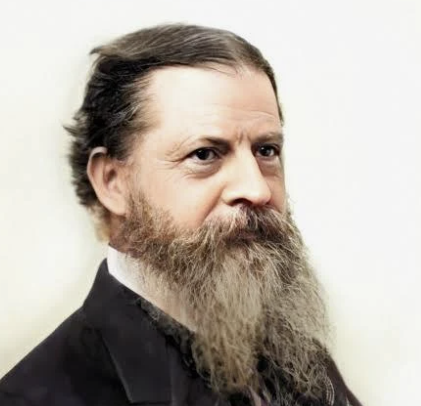
Consciousness must essentially cover an interval of time; for if it did not, we could gain no knowledge of time, and not merely no veracious cognition of it, but no conception whatever. We are therefore, forced to say that we are immediately conscious through an infinitesimal interval of time.

3 months 1 week ago
A bad feeling is a commotion of the mind repugnant to reason, and against nature.
▼
Source
source
As quoted in Tusculanae Quaestiones by Cicero, iv. 6.
2 months 3 weeks ago
A child educated only at school is an uneducated child.
▼
Source
source
"Why I Am Not a Marxist" "Modern Monthly: Volume: 9″ (April 1935); Page: 77-79.
3 months ago
To live classically and to realize antiquity practically within oneself is the summit and goal of philology.
▼
Source
source
Philosophical Fragments, P. Firchow, trans. (1991) § 147

3 months 4 weeks ago
The economic concept of value does not occur in antiquity.
▼
Source
source
Notebook VII, The Chapter on Capital, p. 696.

3 months 4 weeks ago
The live dead-man is dead as a producer and alive insofar as he consumes.
▼
Source
source
p. 139
1 week ago
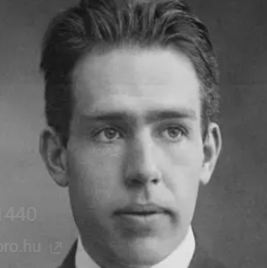
Truth and clarity are complementary.
▼
Source
source
As quoted in Quantum Theory and the Flight from Realism : Philosophical Responses to Quantum Mechanics (2000) by Christopher Norris, p. 234
5 months ago
The male has more teeth than the female in mankind, and sheep, and goats, and swine. This has not been observed in other animals.

2 months 2 weeks ago
We have seen that language is something precious because it allows us to express ourselves; but it is fatal when one allows oneself to be completely led astray by it, because then it prevents one from expressing oneself. Language is the source of the prejudices and haste which Descartes thought of as the sources of error.
▼
Source
source
p. 76

3 months 4 weeks ago
You will hear every day the maxims of a low prudence. You will hear, that the first duty is to get land and money, place and name. "What is this Truth you seek? What is this Beauty?" men will ask, with derision. If, nevertheless, God have called any of you to explore truth and beauty, be bold, be firm, be true. When you shall say, "As others do, so will I. I renounce, I am sorry for it, my early visions; I must eat the good of the land, and let learning and romantic expectations go, until a more convenient season." - then dies the man in you; then once more perish the buds of art, and poetry, and science, as they have died already in a thousand thousand men. The hour of that choice is the crisis of your history; and see that you hold yourself fast by the intellect. ... Bend to the persuasion which is flowing to you from every object in Nature, to be its tongue to the heart of man, and to show the besotted world how passing fair is wisdom.
2 months 2 weeks ago
The important thing is not the planning of an Index Verborum Prohibitorum of current noble nouns, but rather the examination of their linguistic function.
▼
Source
source
p. 6
2 months 3 weeks ago
Some propose mere welfare measures - while others come forward with grandiose systems of reform which, under the pretense of re-organizing society, are in fact intended to preserve the foundations, and hence the life, of existing society. Communists must unremittingly struggle against these bourgeois socialists because they work for the enemies of communists and protect the society which communists aim to overthrow.
1 week 3 days ago
The mistake made by all previous systems of ethics has been the failure to recognize that life as such is the mysterious value with which they have to deal. All spiritual life meets us within natural life. Reverence for life, therefore, is applied to natural life and spiritual life alike. In the parable of Jesus, the shepherd saves not merely the soul of the lost sheep but the whole animal. The stronger the reverence for natural life, the stronger grows also that for spiritual life.
▼
Source
source
p. 264
2 months 2 weeks ago
Whoever desires to live among men has to obey their laws-this is what the secular morality of Western civilization comes down to. ... Rationality in the form of such obedience swallows up everything, even the freedom to think.
▼
Source
source
p. 29.

3 months 3 weeks ago
Philosophers often behave like little children who scribble some marks on a piece of paper at random and then ask the grown-up "What's that?" - It happened like this: the grown-up had drawn pictures for the child several times and said "this is a man," "this is a house," etc. And then the child makes some marks too and asks: what's this then?
▼
Source
source
p. 17e
8 months 5 days ago
Think about the strangeness of today's situation. Thirty, forty years ago, we were still debating about what the future will be: communist, fascist, capitalist, whatever. Today, nobody even debates these issues. We all silently accept global capitalism is here to stay. On the other hand, we are obsessed with cosmic catastrophes: the whole life on earth disintegrating, because of some virus, because of an asteroid hitting the earth, and so on. So the paradox is, that it's much easier to imagine the end of all life on earth than a much more modest radical change in capitalism.
3 months 2 weeks ago
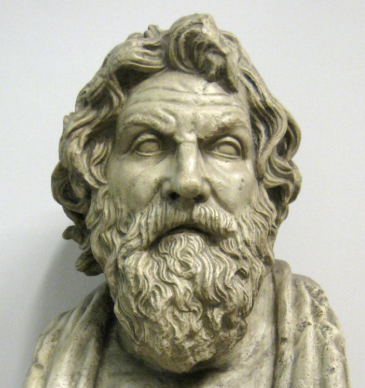
Antisthenes ... said once to a youth from Pontus who was on the point of coming to him to be his pupil, and was asking him what things he wanted, "You want a new book, and a new pen, and a new tablet;"
▼
Source
source
meaning a new mind. § 4
1 month 3 weeks ago
Even the constantly reiterated insistence that we are miserable offenders, born in sin, is a kind of inverted arrogance: such vanity, to presume that our moral conduct has some sort of cosmic significance, as though the Creator of the Universe wouldn't have better things to do than tot up our black marks and our brownie points. The universe is all concerned with me. Is that not the arrogance that passeth all understanding? The Intellectual and Moral Courage of Atheism
▼
Source
source
Originally from 2007; quotes are from the slightly revised 2019 version on the website

3 months 4 weeks ago
What point of morals, of manners, of economy, of philosophy, of religion, of taste, of the conduct of life, has he not settled? What mystery has he not signified his knowledge of? What office, or function, or district of man's work, has he not remembered? What king has he not taught state, as Talma taught Napoleon? What maiden has not found him finer than her delicacy? What lover has he not outloved? What sage has he not outseen? What gentleman has he not instructed in the rudeness of his behavior?
▼
Source
source
Shakespeare; or, The Poet
2 months 2 days ago
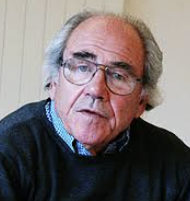
Picturing others and everything which brings you closer to them is futile from the instant that 'communication' can make their presence immediate.
▼
Source
source
(p. 42)

2 weeks 6 days ago
A million blockheads looking authoritatively into one man of what you call genius, or noble sense, will make nothing but nonsense out of him and his qualities, and his virtues and defects, if they look till the end of time. He understands them, sees what they are; but that they should understand him, and see with rounded outline what his limits are,-this, which would mean that they are bigger than he, is forever denied them. Their one good understanding of him is that they at last should loyally say, "We do not quite understand thee; we perceive thee to be nobler and wiser and bigger than we, and will loyally follow thee."

2 months 1 week ago
Emptiness is not a denial of the proper but an affirmation of it.
1 month 3 weeks ago
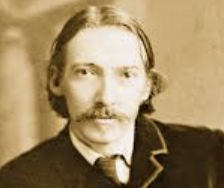
Sanity itself is a kind of convention.
▼
Source
source
The Hunter's Family
3 months ago
The unbought grace of life, the cheap defence of nations, the nurse of manly sentiment and heroic enterprise, is gone!
▼
Source
source
Volume iii, p. 331
3 months 4 weeks ago
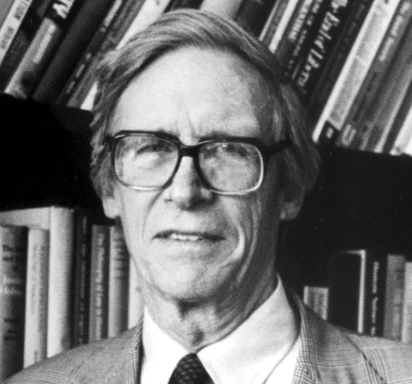
I have tried to set forth a theory that enables us to understand and to assess these feelings about the primacy of justice. Justice as fairness is the outcome: it articulates these opinions and supports their general tendency.
▼
Source
source
Chapter IX, Section 87, p. 586

4 months 2 weeks ago
Now, justification in this life is given to us according to these three things: first by the laver of regeneration by which all sins are forgiven; then, by a struggle with the faults from whose guilt we have been absolved; the third, when our prayer is heard, in which we say: Forgive us our debts, because however bravely we fight against our faults, we are men; but the grace of God so aids as we fight in this corruptible body that there is reason for His hearing us as we ask forgiveness.
▼
Source
source
Against Julian, Book II, ch. 8, 22. In The Fathers of the Church, Matthew A. Schumacher, tr., 1957, ISBN 0813214009 ISBN 9780813214009 pp. 83-84.
4 months 1 week ago
I know God only as he became human, so shall I have him in no other way.
▼
Source
source
Das Marburger religionsgesprach 1529: Versuch einer Rekonstruction (Leipzig, 1929), p. 27; also LW 38, 3-90
4 months 2 days ago
For it is extremely absurd to expect to be enlightened by reason, and yet to prescribe to her beforehand on which side she must incline.
▼
Source
source
A 747, B 775; as translated by F. Max Mueller

1 week ago
Suppose we try to locate the cause of disorder, we shall find it lies in the want of mutual love.
▼
Source
source
Book 4; Universal Love I
1 month 2 weeks ago
He had a head which statuaries loved to copy, and a foot the deformity of which the beggars in the streets mimicked.
▼
Source
source
p. 313
3 months 4 weeks ago
What will happen once the authentic mass man takes over, we do not know yet, although it may be a fair guess that he will have more in common with the meticulous, calculated correctness of Himmler than with the hysterical fanaticism of Hitler, will more resemble the stubborn dullness of Molotov than the sensual vindictive cruelty of Stalin.
▼
Source
source
Part 3, Ch. 10, § 2

2 months 3 weeks ago
Are not five sparrows sold for two farthings, and not one of them is forgotten before God? But even the very hairs of your head are all numbered. Fear not therefore: ye are of more value than many sparrows.
▼
Source
source
12:6-7

3 months 2 weeks ago
To a wise man, the whole earth is open; for the native land of a good soul is the whole earth.
▼
Source
source
Freeman (1948), p. 166 \
2 weeks 6 days ago
All work, even cotton spinning, is noble; work is alone noble ... A life of ease is not for any man, nor for any god.
▼
Source
source
Bk. III, ch. 4.
1 week 3 days ago
Violence, less and less embarrassed by the limits imposed by centuries of lawfulness, is brazenly and victoriously striding across the whole world, unconcerned that its infertility has been demonstrated and proved many times in history. What is more, it is not simply crude power that triumphs abroad, but its exultant justification. The world is being inundated by the brazen conviction that power can do anything, justice nothing.
3 months 4 weeks ago
Every natural fact is a symbol of some spiritual fact.
▼
Source
source
Language
CivilSimian.com created by AxiomaticPanic, CivilSimian, Kalokagathia