

1 month 2 weeks ago
We mustn't forget how quickly the visions of genius become the canned goods of intellectuals.
▼
Source
source
Herzog (1964) [Penguin Classics, 2003, ISBN 0-142-43729-8], p. 82

3 months 3 weeks ago
A sect or party is an elegant incognito devised to save a man from the vexation of thinking.
▼
Source
source
June 20, 1831
5 days ago
It is a cliché that the modern scientific vision has desacralized the world, and the world desacralized by scientific knowledge has become one of the existential elements that make up modern man, all the more so to the degree that he is "civilized." Ever since he has been subject to compulsory education, his mind has been stuffed with "positive" scientific notions; he cannot avoid seeing in a soulless light everything that surrounds him, and therefore acts destructively. What, for example, could the symbol of the sunset of a dynasty, like the Japanese, mean to him when he knows scientifically what the sun is: merely a star, at which one can even fire missiles.
▼
Source
source
p. 138

1 week 5 days ago
Just as an enemy is more dangerous to a retreating army, so every trouble that fortune brings attacks us all the harder if we yield and turn our backs.
2 months 3 weeks ago
Everywhere we seek the Absolute, and always we find only things.
▼
Source
source
Fragment No. 1; Variant: We seek the absolute everywhere and only ever find things.
1 week ago
We cannot hope to give here a final clarification of the essence of fact, judgement, object, property; this task leads into metaphysical abysses; about these one has to seek advice from men whose name cannot be stated without earning a compassionate smile-e.g.
▼
Source
source
Fichte. Das Kontinuum. Kritische Untersuchungen uber die Grundlagen der Analysis (1918), as quoted/translated by Erhard Scholz, "Philosophy as a Cultural Resource and Medium of Reflection for Hermann Weyl"

4 months 4 weeks ago
Every art, and every system, and in like manner every action and purpose aims, it is thought, at some good; for which reason a common and by no means a bad description of the good is, that at which all things aim.

3 months 4 weeks ago
Philosophy, from the earliest times, has made greater claims, and achieved fewer results, than any other branch of learning.
▼
Source
source
Lecture I, Current Tendencies, p. 11, New American Library edition, 1960

1 month 3 weeks ago
Since Sputnik, the earth has been wrapped in a dome-like blanket or bubble. Nature ended.

3 months 3 days ago
But the Quincunx of Heaven runs low, and 'tis time to close the five ports of knowledge. We are unwilling to spin out our awaking thoughts into the phantasmes of sleep, which often continueth præcogitations; making Cables of Cobwebbes and Wildernesses of handsome Groves. Beside Hippocrates hath spoke so little and the Oneirocriticall Masters, have left such frigid Interpretations from plants, that there is little encouragement to dream of Paradise it self. Nor will the sweetest delight of Gardens afford much comfort in sleep; wherein the dulnesse of that sense shakes hands with delectable odours; and though in the Bed of Cleopatra, can hardly with any delight raise up the ghost of a Rose.
▼
Source
source
Ch. 5
1 week 5 days ago
Tis the first art of kings, the power to suffer hate.

1 month 3 weeks ago
People continued - regardless of all that leads man forward - to try to unite the incompatibles : the virtue of love, and what is opposed to love, namely, the restraining of evil by violence. And such a teaching, despite its inner contradiction, was so firmly established that the very people who recognize love as a virtue accept as lawful at the same time an order of life based on violence and allowing men not merely to torture but even to kill one another.
▼
Source
source
III

3 months 3 weeks ago
"Ah, Psyche," I said, "have I made you so little happy as that?"
▼
Source
source
Orual
4 months 1 week ago
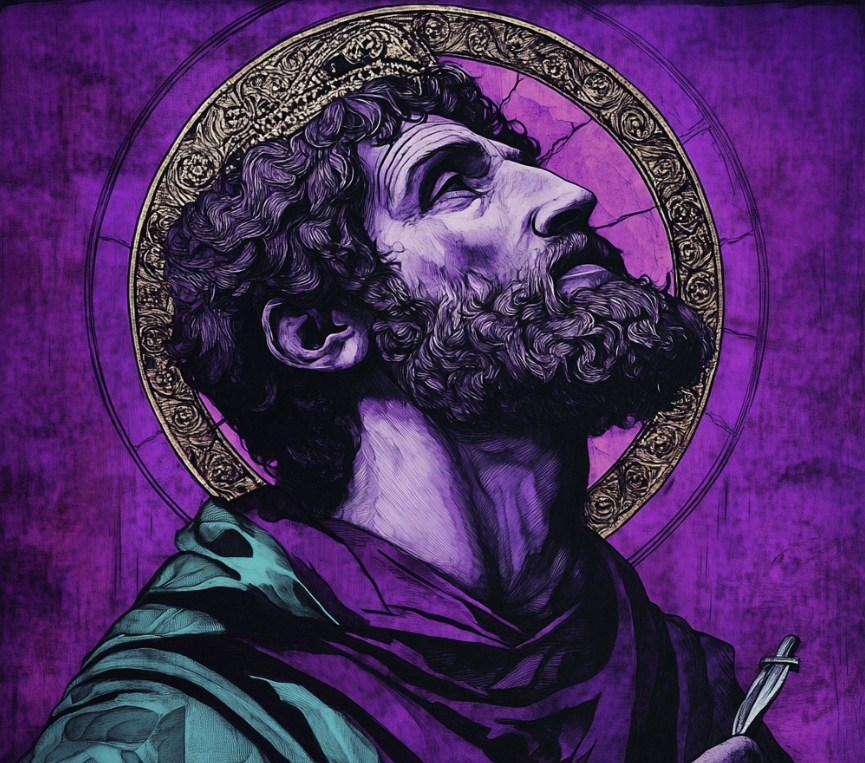
The Word takes to Himself one man, for He takes unity. He does not take schisms to Himself, nor does He take heresies. So it is one man who is taken, and his Head is Christ. This is that "blessed man who hath not walked in the council of the ungodly" (Ps. 1:1); this is he that is assumed. He is not outside of us. Let us be in Him, and we shall be assumed; let us be in Him, and we shall be chosen. Therefore this one man that is taken to become the temple of God, is at once many and one.
▼
Source
source
p.430

4 months 1 day ago
The value of money is in proportion to the quantity of the necessaries of life which it will purchase.
▼
Source
source
Chapter II, Part II, Article IV.

3 months 4 weeks ago
I had obtained some distinction, and felt myself of some importance, before the desire of distinction and of importance had grown into a passion: and little as it was which I had attained, yet having been attained too early, like all pleasures enjoyed too soon, it had made me blasé and indifferent to the pursuit. Thus neither selfish nor unselfish pleasures were pleasures to me. And there seemed no power in nature sufficient to begin the formation of my character anew, and create in a mind now irretrievably analytic, fresh associations of pleasure with any of the objects of human desire.
▼
Source
source
(p. 139)
4 months 4 weeks ago
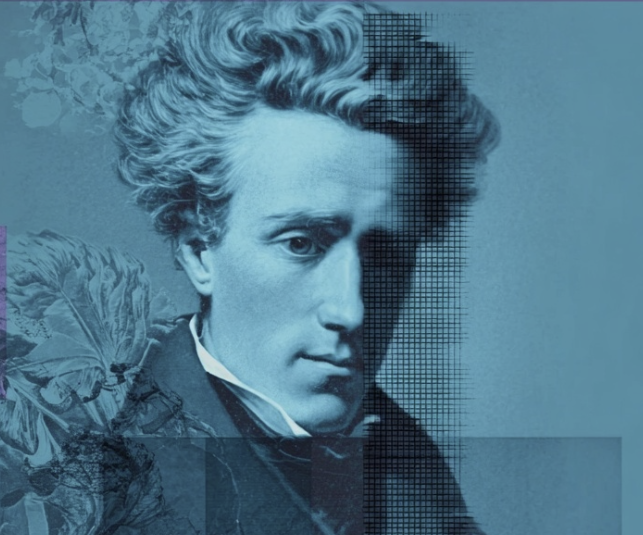
Since my earliest childhood a barb of sorrow has lodged in my heart. As long as it stays I am ironic - if it is pulled out I shall die.
2 months 3 weeks ago
A common mortal periodically selected by his fellow-citizens to watch over their own interests, can never be supposed to possess this stupendous virtue.
▼
Source
source
Book III, Chapter 9
2 months 3 weeks ago
This whole creation is essentially subjective, and the dream is the theater where the dreamer is at once scene, actor, prompter, stage manager, author, audience, and critic.
▼
Source
source
General Aspects of Dream Psychology
2 months 1 week ago
Ethics occupies a central place in philosophy because it is concerned with sin, with the origin of good and evil and with moral valuations. And since these problems have a universal significance, the sphere of ethics is wider than is generally supposed. It deals with meaning and value and its province is the world in which the distinction between good and evil is drawn, evaluations are made and meaning is sought.
▼
Source
source
The Destiny of Man (1931), p. 15
3 months 2 days ago
The most dangerous madmen are those created by religion, and ... people whose aim is to disrupt society always know how to make good use of them on occasion.

2 months 1 week ago
It is the first step in sociological wisdom, to recognize that the major advances in civilization are processes which all but wreck the societies in which they occur:-like unto an arrow in the hand of a child. The art of free society consists first in the maintenance of the symbolic code; and secondly in fearlessness of revision, to secure that the code serves those purposes which satisfy an enlightened reason. Those societies which cannot combine reverence to their symbols with freedom of revision, must ultimately decay either from anarchy, or from the slow atrophy of a life stifled by useless shadows.
▼
Source
source
Symbolism: Its Meaning and Effect (1927), chapter 3, p. 88; final paragraph of the book.
2 months 1 week ago
The prestige which constitutes three-fourths of might is first of all made up of that superb indifference which the powerful have for the weak, an indifference so contagious that it is communicated even to those who are its object.
▼
Source
source
in The Simone Weil Reader, p. 168

2 months 4 weeks ago
Nothing less will content me, than whole America.

4 months 2 weeks ago
Follow the seasons of Ha,Ride in the state carriage of Yau,Wear the ceremonial cap of Chan,Let the music be the Shiu with its pantomimes.
1 month 2 weeks ago
I am an American, Chicago born - Chicago, that somber city - and go at things as I have taught myself, free-style, and will make the record in my own way: first to knock, first admitted; sometimes an innocent knock, sometimes a not so innocent.
▼
Source
source
Ch. 1 (opening line)

2 months 1 week ago
The self-surmounter can never put up with the man who has ceased to be dissatisfied with himself.
▼
Source
source
p. 139
2 months 4 weeks ago
Their principles always go to the extreme. They who go with the principles of the ancient Whigs, which are those contained in Mr. Burke's book, never can go too far. ... The opinions maintained in that book never can lead to an extreme, because their foundation is laid in an opposition to extremes.
▼
Source
source
p. 470
1 month 1 week ago
I adopt Mr. Darwin's hypothesis, therefore, subject to the production of proof that physiological species may be produced by selective breeding; just as a physical philosopher may accept the undulatory theory of light, subject to the proof of the existence of the hypothetical ether; or as the chemist adopts the atomic theory, subject to the proof of the existence of atoms; and for exactly the same reasons, namely, that it has an immense amount of primâ facie probability: that it is the only means at present within reach of reducing the chaos of observed facts to order; and lastly, that it is the most powerful instrument of investigation which has been presented to naturalists since the invention of the natural system of classification and the commencement of the systematic study of embryology.
▼
Source
source
Ch.2, p. 128
1 month 3 weeks ago
Ivan Ilych saw that he was dying, and he was in continual despair. In the depth of his heart he knew he was dying, but not only was he not accustomed to the thought, he simply did not and could not grasp it. The syllogism he had learnt from Kiesewetter's Logic: "Caius is a man, men are mortal, therefore Caius is mortal," had always seemed to him correct as applied to Caius, but certainly not as applied to himself. That Caius - man in the abstract - was mortal, was perfectly correct, but he was not Caius, not an abstract man, but a creature quite, quite separate from all others.
▼
Source
source
Ch. VI

2 months 3 days ago
There are two kinds of people, killers, and everybody else.

4 months 5 days ago
He who should teach men to die would at the same time teach them to live.
▼
Source
source
Ch. 18. That Men are not to judge of our Happiness till after Death, tr. Cotton, rev. W. Hazlitt, 1842

3 months 1 week ago
When the wise man opens his mouth, the beauties of his soul present themselves to the view, like the statues in a temple.
▼
Source
source
Pythagorean Ethical Sentences From Stobæus


2 months 3 weeks ago
No position is so false as having understood and still remaining alive.
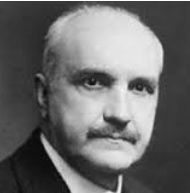
2 months 2 weeks ago
Beauty as we feel it is something indescribable: what it is or what it means can never be said.
▼
Source
source
Pt. IV, Expression; § 67: "Conclusion.", p. 267
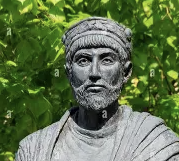
6 days ago
A very weighty argument is this - namely, that neither does the light which descends from thence, chiefly upon the world, mix itself with anything, nor admit of dirtiness or pollution, but remains entirely, and in all things that are, free from defilement, admixture, and suffering. Besides, we must pay attention to the other kinds of phenomena, both to the Intelligible, and yet more to the Sensible - whatever are connected with matter, or will manifest themselves in relation to our subject.
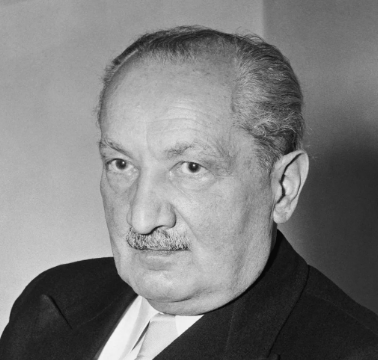
3 months 3 weeks ago
Our elucidations of the preliminary concept of phenomenology show that its essential character does not consist in its actuality as a philosophical "movement." Higher than actuality stands possibility. We can understand phenomenology solely by seizing upon it as a possibility.
▼
Source
source
Introduction: The Exposition of the Question of the Meaning of Being (Stambaugh translation)
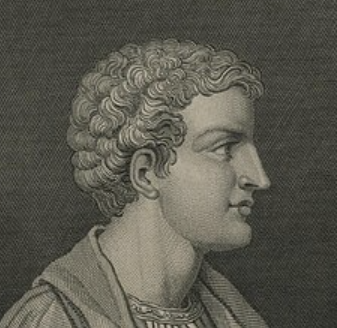
3 months 2 weeks ago
He who has begun has half done. Dare to be wise; begin!
▼
Source
source
Book I, epistle ii, lines 40-41

4 months 3 weeks ago
The undramatic fact is that I just think and think and think until I have something [for a story], and there is nothing marvelous or artistic about the phenomenon.

4 months 2 weeks ago
Gentleness, as opposed to an irascible temper, greatly contributes to the tranquility and happiness of life, by preserving the mind from perturbation, and arming it against the assaults of calumny and malice.
2 months 3 weeks ago
We had nothing to say to one another, and while I was manufacturing my phrases I felt that earth was falling through space and that I was falling with it at a speed that made me dizzy.
1 month 3 weeks ago
The ways of thinking implanted by electronic culture are very different from those fostered by print culture. Since the Renaissance most methods and procedures have strongly tended towards stress on the visual organization of knowledge.

3 months 4 weeks ago
We see in tragedy the noblest men, after a long conflict and suffering, finally renounce forever all the pleasure of life and the aims till then pursued so keenly, or cheerfully and willingly give up life itself.
▼
Source
source
Book 1
2 months 3 weeks ago
The conscious mind allows itself to be trained like a parrot, but the unconscious does not - which is why St. Augustine thanked God for not making him responsible for his dreams.
▼
Source
source
par. 51 p.46
1 month 2 weeks ago
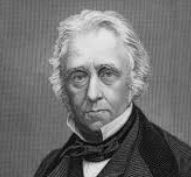
I shall not be satisfied unless I produce something which shall for a few days supersede the last fashionable novel on the tables of young ladies.
▼
Source
source
Letter to Macvey Napier
3 months 3 weeks ago
For what comes is Judgment: happy are those whom it finds labouring in their vocations, whether they were merely going out to feed the pigs or laying good plans to deliver humanity a hundred years hence from some great evil. The curtain has indeed now fallen. Those pigs will never in fact be fed, the great campaign against White Slavery or Governmental Tyranny will never in fact proceed to victory. No matter; you were at your post when the Inspection came.
3 months 1 week ago
There are men and gods, and beings like Pythagoras.
▼
Source
source
Of himself, as quoted in A History of Western Philosophy (1945) by Bertrand Russell
2 months 2 weeks ago
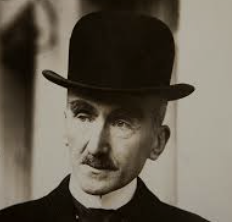
The remembrance of forbidden fruit is the earliest thing in the memory of each of us, as it is in that of mankind.
▼
Source
source
Chapter I: Moral Obligation
1 week 1 day ago
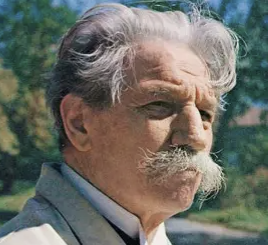
The restoration of our world-view can come only as a result of inexorably truth-loving and recklessly courageous thought. Such thinking alone is mature enough to learn by experience how the rational, when it thinks itself out to a conclusion, passes necessarily over into the non-rational. World- and life-affirmation and ethics are non-rational. They are not justified by any corresponding knowledge of the nature of the world, but are the disposition in which, through the inner compulsion of our will-to-live, we determine our relation to the world. What the activity of this disposition of ours means in the evolution of the world, we do not know. Nor can we regulate this activity from outside; we must leave entirely to each individual its shaping and its extension. From every point of view, then, world- and life-affirmation and ethics are non-rational, and we must have the courage to admit it.
CivilSimian.com created by AxiomaticPanic, CivilSimian, Kalokagathia