

1 week ago
The belly is an ungrateful wretch, it never remembers past favors, it always wants more tomorrow.

4 months ago
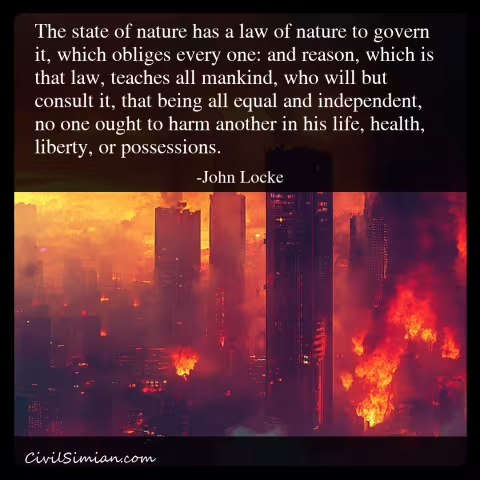
In the state of nature, wrong-doing is impossible ; or, if anyone does wrong, it is to himself, not to another. For no one by the law of nature is bound to please another, unless he chooses, nor to hold anything to be good or evil, but what he himself, according to his own temperament, pronounces to be so ; and, to speak generally, nothing is forbidden by the law of nature, except what is beyond everyone's power.
▼
Source
source
Ch. 2, Of Natural Right

3 months 3 days ago
Heroic love is the property of those superior natures who are called insane not because they do not know, but because they over-know.
▼
Source
source
As quoted in The Tragic Sense of Life (1913), by Miguel de Unamuno, as translated by J. E. Crawford
2 months 1 week ago
Psychoanalysis is essentially a theory of unconscious strivings, of resistance, of falsification of reality according to one's subjective needs and expectations.
▼
Source
source
p. 109


2 months 2 weeks ago
Moses because of the hardness of your hearts suffered you to put away your wives: but from the beginning it was not so. And I say unto you, Whosoever shall put away his wife, except it be for fornication, and shall marry another, committeth adultery: and whoso marrieth her which is put away doth commit adultery.
▼
Source
source
19:8-9 (KJV)

3 months 3 weeks ago
I am thus one of the very few examples, in this country, of one who has, not thrown off religious belief, but never had it...
▼
Source
source
(p. 43)

4 months 3 weeks ago
Wit is cultured insolence.
3 months 3 weeks ago
Kant [...] stated that he had "found it necessary to deny knowledge [...] to make room for faith," but all he had "denied" was knowledge of things that are unknowable, and he had not made room for faith but for thought.
▼
Source
source
p. 63

2 months 3 weeks ago
History proves nothing because it contains everything.

1 month 3 weeks ago
In the upper, rich, more educated classes of European society doubt arose as to the truth of that understanding of life which was expressed by Church Christianity. When, after the Crusades and the maximum development of papal power and its abuses, people of the rich classes became acquainted with the wisdom of the classics and saw, on the one hand, the reasonable lucidity of the teachings of the ancient sages, and on the other hand, the incompatibility of the Church doctrine with the teaching of Christ, they found it impossible to continue to believe the Church teaching.
2 months 3 weeks ago
To read is to let someone else work for you - the most delicate form of exploitation.

2 months 3 weeks ago
It is vain to expect virtue from women till they are in some degree independent of men; nay, it is vain to expect that strength of natural affection which would make them good wives and mothers. Whilst they are absolutely dependent on their husbands they will be cunning, mean, and selfish.
▼
Source
source
Ch. 9

2 weeks 3 days ago
Do nothing, only keep agitating, debating; and things will destroy themselves.
▼
Source
source
Pt. I, Bk. VI, ch. 3.

4 months 4 days ago
To which we may add this other Aristotelian consideration, that he who confers a benefit on any one loves him better than he is beloved by him again.
▼
Source
source
Book II, Ch. 8. Of the Affections of Fathers

3 months 1 week ago
Concern should drive us into action and not into a depression.
▼
Source
source
The Collected Works of Karen Horney (1957) by Karen Horney, p. 154: "We may feel genuinely concerned about world conditions, though such a concern should drive us into action and not into a depression."

2 months 1 week ago
The effects of mescalin or LSD can be, in some respects, far more satisfying than those of alcohol. To begin with, they last longer; they also leave behind no hangover, and leave the mental faculties clear and unimpaired. They stimulate the faculties and produce the ideal ground for a peak experience.
▼
Source
source
p. 88
2 months 1 week ago
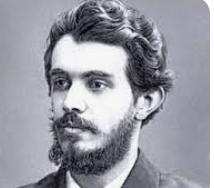
Morally, it is wrong to suppose the source of evil is outside oneself, that one is a vessel of holiness running over with virtue. Such a disposition is the best soil for a hateful and cruel fanaticism. It is as wrong to impute every wickedness to Jews, Freemasons, "intellectuals," as it is to blame all crimes on the bourgeoisie, the nobility, and the powers that were. No; the root of evil is in me as well, and I must take my share of the responsibility and the blame. That was true before the revolution and it is true still.
▼
Source
source
p. 128
3 months 2 weeks ago
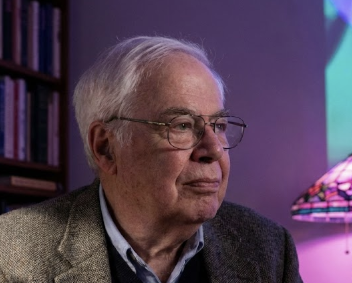
To abjure the notion of the "truly human" is to abjure the attempt to divinize the self as a replacement for a divinized world.
▼
Source
source
Contingency, Irony, and Solidarity (1989), p. 35
2 weeks 5 days ago
Far from secularization inexorably leading to the death of religion, it has instead given birth to the search for new forms of religious life. The imminent victory of the Kingdom of Reason has never materialized. As a whole, mankind can never get rid of the need for religious self-identification: who am I, where did I come from, where do I fit in, why am I responsible, what does my life mean, how will I face death? Religion is a paramount aspect of human culture. Religious need cannot be excommunicated from culture by rationalist incantation. Man does not live by reason alone.
▼
Source
source
Interview with Nathan Gardels

3 months 3 weeks ago
The limits of my language mean the limits of my world. (5.6) Variant translations: The limits of my language stand for the limits of my world. The limits of my language are the limits of my mind. All I know is what I have words for.
▼
Source
source
Original German: Die Grenzen meiner Sprache bedeuten die Grenzen meiner Welt.

3 months 1 week ago
The Platonic doctrine of Ideas has been, in all ages, the derision of the vulgar, and the admiration of the wife. Indeed, if we consider that ideas are the most sublime objects of speculation, and that their nature is no less bright in itself, than difficult to investigate, this opposition in the conduct of mankind will be natural and necessary; for, from our connection with a material nature, our intellectual eye, previous to the irradiations of science, is as ill adapted to objects the most splendid of all, "as the eyes of bats to the light of day.
▼
Source
source
A Dissertation on the Doctrine of Ideas, &c." Footnote: see second book of Aristotle's Metaphysics.
5 days ago
I feel awe of the gods, I love, I revere, I venerate them, and in short have precisely the same feelings towards them as one would have towards kind masters or teachers or fathers or guardians or any beings of that sort.
▼
Source
source
Oration to the Cynic Heracleios

2 months 3 weeks ago
We are so captivated by and entangled in our subjective consciousness that we have forgotten the age-old fact that God speaks chiefly through dreams and visions.
▼
Source
source
The Symbolic Life (1953); also in Man and His Symbols
2 months 2 weeks ago
The kingdom of heaven can be compared to a king who wanted to settle accounts with his slaves.
▼
Source
source
18:23

3 months 1 day ago
The Indian knew how to live without wants, to suffer without complaint, and to die singing.
▼
Source
source
Chapter I.

1 month 3 days ago
Today those who peer into the future want only relief from anxiety. Unable to face the prospect that the cycles of war will continue, they are desperate to find a pattern of improvement in history. It is only natural that believers in reason, lacking any deeper faith and too feeble to tolerate doubt, should turn to the sorcery of numbers. Happily there are some who are ready to assist them. Just as the Elizabethan magus transcribed tables shown to him by angels, the modern scientific scryer deciphers numerical auguries of angels hidden in ourselves.
▼
Source
source
In the Puppet Theatre: Dark mirrors, Hidden Angels and an Algorithmic Prayer-Wheel (p. 99)

3 months 3 weeks ago
The baby, assailed by eyes, ears, nose, skin, and entrails at once, feels it all as one great blooming, buzzing confusion; and to the very end of life, our location of all things in one space is due to the fact that the original extents or bignesses of all the sensations which came to our notice at once, coalesced together into one and the same space.
▼
Source
source
Ch. 13

3 months 3 weeks ago
The observer, when he seems to himself to be observing a stone, is really, if physics is to be believed, observing the effects of the stone upon himself.
▼
Source
source
An Inquiry into Meaning and Truth (1940), Introduction, p. 15
1 month 2 weeks ago
In 1970s Britain, conservative philosophy was the preoccupation of a few half-mad recluses.
▼
Source
source
"Why I became a conservative," The New Criterion
2 months 3 weeks ago
You can take away a man's gods, but only to give him others in return.
▼
Source
source
p 63
2 weeks 3 days ago
Adversity is sometimes hard upon a man; but for one man who can stand prosperity, there are a hundred that will stand adversity. (Often shortened to "can't stand prosperity" as an unknown quote).

1 month 4 weeks ago
There is probably no more abused a term in the history of philosophy than "representation," and my use of this term differs both from its use in traditional philosophy and from its use in contemporary cognitive psychology and artificial intelligence.... The sense of "representation" in question is meant to be entirely exhausted by the analogy with speech acts: the sense of "represent" in which a belief represents its conditions of satisfaction is the same sense in which a statement represents its conditions of satisfaction. To say that a belief is a representation is simply to say that it has a propositional content and a psychological mode.
▼
Source
source
P. 12.
3 months 3 weeks ago
In Nietzsche's view nihilism is not a Weltanschauung that occurs at some time and place or another; it is rather the basic character of what happens in Occidental history.
▼
Source
source
p. 26

1 month 3 weeks ago
Whenever a system of communication evolves, there is always the danger that some will exploit the system for their own ends.
▼
Source
source
Ch. 4. The Gene machine
2 months 3 weeks ago
Government was intended to suppress injustice, but it offers new occasions and temptations for the commission of it.
▼
Source
source
"Summary of Principles" 2.4
4 days ago
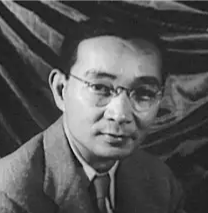
While in the West, the insane are so many that they are put in an asylum, in China the insane are so unusual that we worship them, as anybody who has a knowledge of Chinese literature will testify.
▼
Source
source
Ch. I : The Awakening, p. 3

3 months 3 weeks ago
I hate victims who respect their executioners.
▼
Source
source
Loser Wins (Les Séquestrés d'Altona: A Play in Five Acts)

4 months 3 weeks ago
An unpleasant nest of nasty, materialistic and aggressive people, careless of the rights of others, imperfectly democratic at home though quick to see the minor slaveries of others, and greedy without end.
4 months 4 days ago
I moreover affirm that our wisdom itself, and wisest consultations, for the most part commit themselves to the conduct of chance.
▼
Source
source
Book III, Ch. 8. Of the Art of Conversation
3 months 1 day ago
In countries where associations are free, secret societies are unknown. In America there are factions, but no conspiracies.
▼
Source
source
Chapter XII.
2 weeks 3 days ago
A Parliament speaking through reporters to Buncombe and the twenty-seven millions, mostly fools.
▼
Source
source
Latter Day Pamphlets, No. 6.
4 days ago
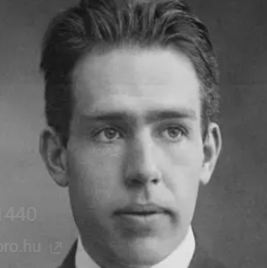
Every valuable human being must be a radical and a rebel, for what he must aim at is to make things better than they are.
▼
Source
source
As quoted in The World of the Atom (1966) by Henry Abraham Boorse and Lloyd Motz, p. 741

2 months 3 weeks ago
The poverty of the incapable, the distresses that come upon the imprudent, the starvation of the idle, and those shoulderings aside of the weak by the strong, which leave so many "in shallows and in miseries," are the decrees of a large, far-seeing benevolence.
▼
Source
source
Pt. III, Ch. 25 : Poor-Laws
1 week ago
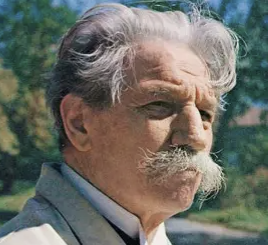
Reverence for life, veneratio vitæ, is the most direct and at the same time the profoundest achievement of my will-to-live. In reverence for life my knowledge passes into experience. The simple world- and life-affirmation which is within me just because I am will-to-live has, therefore, no need to enter into controversy with itself, if my will-to-live learns to think and yet does not understand the meaning of the world. In spite of the negative results of knowledge, I have to hold fast to world- and life-affirmation and deepen it. My life carries its own meaning in itself. This meaning lies in my living out the highest idea which shows itself in my will-to-live, the idea of reverence for life. With that for a starting-point I give value to my own life and to all the will-to-live which surrounds me, I persevere in activity, and I produce values.

3 months 3 weeks ago
Nothing more strikingly betrays the credulity of mankind than medicine. Quackery is a thing universal, and universally successful. In this case it becomes literally true that no imposition is too great for the credulity of men.
▼
Source
source
Pearls of Thought (1881) p. 218
1 week 5 days ago
The habit of the religious way of thinking has biased our mind so grievously that we are - terrified at ourselves in our nakedness and naturalness; it has degraded us so that we deem ourselves depraved by nature, born devils.
▼
Source
source
Dover 2005, p. 162

3 months 3 weeks ago
The man described for us, whom we are invited to free, is already in himself the effect of a subjection much more profound than himself. A 'soul' inhabits him and brings him to existence...the soul is the effect and instrument of political anatomy; the soul is the prison of the body.
CivilSimian.com created by AxiomaticPanic, CivilSimian, Kalokagathia