


1 month 3 weeks ago
The reader is the content of any poem or of the language he employs, and in order to use any of these forms, he must put them on.
▼
Source
source
"Roles, Masks, and Performances", New Literary History, Vol. 2, No. 3, Performances in Drama, the Arts, and Society (Spring, 1971), p. 520

3 months ago
The hatred that men bear to privilege increases in proportion as privileges become fewer and less considerable, so that democratic passions would seem to burn most fiercely just when they have least fuel. I have already given the reason for this phenomenon. [all conditions are unequal, no inequality is so great as to offend the eye, whereas the slightest dissimilarity is odious in the midst of general uniformity; the more complete this uniformity is, the more insupportable the sight of such a difference becomes.] Hence it is natural that the love of equality should constantly increase together with equality itself, and that it should grow by what it feeds on.
▼
Source
source
Chapter III.

2 months 5 days ago
One might call habit a moral friction: something that prevents the mind from gliding over things but connects it with them and makes it hard for it to free itself from them.
▼
Source
source
A 10

1 month 3 weeks ago
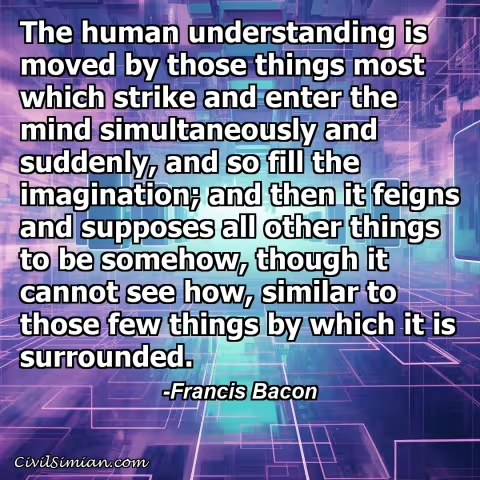
The images of mankind have become the most basic thing about them. And they're all software, and disembodied.
▼
Source
source
(p. 346)
2 months 2 weeks ago
If the task of philosophy is to break the domination of words over the human mind, then my concept notation, being developed for these purposes, can be a useful instrument for philosophers. I believe the cause of logic has been advanced already by the invention of this concept notation.
▼
Source
source
Begriffsschrift (1879) Preface to the Begriffsschrift
2 months 3 weeks ago
How can a rational being be ennobled by anything that is not obtained by its own exertions?
▼
Source
source
Ch. 3
4 months 3 days ago
There can be no doubt that the Virgin Mary is in heaven. How it happened we do not know.
▼
Source
source
Weimar edition of Martin Luther's Works (Translation by William J. Cole) Vol. 10, p. 268

2 months 3 weeks ago
One of the biggest paradoxes of our world: memories vanish when we want to remember, but fix themselves permanently in the mind when we want to forget.

1 month 3 weeks ago
If there may be doubts for men and for a childless woman as to the way to, fulfil the will of God, for a mother that path is firmly and clearly defined, and if she fulfils it humbly with a simple heart she stands on the highest point of perfection a human being can attain, and becomes for all a model of that complete performance of God's will which all desire. Only a mother can before her death tranquilly say to Him who sent her into this world, and Whom she has served by bearing and bringing up children whom she has loved more than herself - only she having served Him in the way appointed to her can say with tranquillity, Now lettest Thou Thy servant depart in peace. And that is the highest perfection to which, as to the highest good, men aspire.
2 months 4 days ago
The first task of administrative theory is to develop a set of concepts that will permit the description, in terms relevant to the theory, of administrative situations. These concepts, to be scientifically useful, must be operational; that is, their meanings must correspond to empirically observable facts or situations.
▼
Source
source
p. 43.

3 months 2 days ago
If it is not true, it is a good story.
▼
Source
source
as quoted in A Book of Quotations, Proverbs and Household Words (1907) edited by Sir William Gurney Benham
3 months 2 weeks ago
Poverty is a virtue which one can teach oneself.
▼
Source
source
Stobaeus, iv. 32a. 19
1 month 3 weeks ago
Casting my perils before swains.

3 months 3 weeks ago
The blazing evidence of immortality is our dissatisfaction with any other solution.
▼
Source
source
July 1855
1 month 3 weeks ago
The invention of printing did away with anonymity, fostering ideas of literary fame and the habit of considering intellectual effort as private property.
▼
Source
source
(p. 122)
3 months 2 weeks ago
Often must you turn your pencil to erase, if you hope to write something worth a second reading.
▼
Source
source
Book I, satire i, lines 72-3,
3 months 3 weeks ago
A poem is one undivided unimpeded expression fallen ripe into literature, and it is undividedly and unimpededly received by those for whom it was matured.

4 months 2 weeks ago
To become like God is the ultimate end of all.

2 weeks 3 days ago
The battling Reformer too is, from time to time, a needful and inevitable phenomenon. Obstructions are never wanting: the very things that were once indispensable furtherances become obstructions; and need to be shaken off, and left behind us,-a business often of enormous difficulty.

3 months 4 weeks ago
The wise and virtuous man is at all times willing that his own private interests should be sacrificed to the public interest of his own particular society--that the interests of this order of society be sacrificed to the greater interest of the state. He should therefore he equally willing that all those inferior interests should be sacrificed to the greater society of all sensible and intelligent beings.
▼
Source
source
Section II, Chap. III; cited by Reinhold Niebuhr, The Children of Light and the Children of Darkness, New York: Charles Scribner's Sons, 1941, 24-25.
3 months 4 weeks ago
Now the maximum of perfection is called ideal, by Plato, Idea - for instance, his Idea of a Republic - and is the principle of all that is contained under the general notion of any perfection, inasmuch as the lesser grades are not thought determinable but by limiting the maximum. But God, the Ideal of perfection, and hence the principle of cognition, is also, as existing really, the principle of the creation of all perfection.

4 months 3 days ago
How many we know who have fled the sweetness of a tranquil life in their homes, among their friends, to seek the horror of uninhabitable deserts; who have flung themselves into humiliation, degradation, and the contempt of the world, and have enjoyed these and even sought them out.
▼
Source
source
Ch. 14 (tr. Donald M. Frame)
4 months 5 days ago
Books must follow sciences, and not sciences books.
▼
Source
source
Proposition touching Amendment of Laws
3 months 2 weeks ago
In Plato... or Xenophon... we never see Socrates requiring... examination of conscience or... confession of sins. [A]n account of your life, your bios, is... not to give... the historical events... but... to demonstrate whether you are able to show... a relation between the rational discourse, the logos, you... use, and the way... you live. Socrates is inquiring into the way that logos gives form to a person's style of life... whether there is a harmonic relation between the two... the degree of accord between a person's life and its principle of intelligibility or logos... [and] the true nature of the relation between the logos and bios.

3 months 3 weeks ago
Let any one try, I will not say to arrest, but to notice or attend to, the present moment of time. One of the most baffling experiences occurs. Where is it, this present? It has melted in our grasp, fled ere we could touch it, gone in the instant of becoming.
▼
Source
source
Ch. 15
1 month 3 weeks ago
The percept takes priority of the concept.
▼
Source
source
Letter to Edward T. Hall, 1971, Letters of Marshall McLuhan, p. 397
3 months ago
In America, more than anywhere else in the world, care has been taken constantly to trace clearly distinct spheres of action for the two sexes, and both are required to keep in step, but along paths that are never the same.
▼
Source
source
Book Three, Chapter XII.
3 months 2 weeks ago
Nietzsche was the first to release the desire to know from the sovereignty of knowledge itself: to re-establish the distance and exteriority that Aristotle cancelled.
▼
Source
source
p. 5
1 month 3 weeks ago
It will be said, "Patriotism has welded mankind into states, and maintains the unity of states." But men are now united in states; that work is done; why now maintain exclusive devotion to one's own state, when this produces terrible evils for all states and nations? For this same patriotism which welded mankind into states is now destroying those same states. If there were but one patriotism say of the English only then it were possible to regard that as conciliatory, or beneficent. But when, as now, there is American patriotism, English, German, French, Russian, all opposed to one another, in this event, patriotism no longer unites, but disunites.
▼
Source
source
Patriotism and Government

3 months 3 weeks ago
Liberty, as we all know, cannot flourish in a country that is permanently on a war footing, or even a near war footing. Permanent crisis justifies permanent control of everybody and everything by the agencies of central government.
▼
Source
source
Chapter 1 (p. 14)
2 months 1 week ago
Poetry and imagination begin life. A child will fall on its knees on the gravel walk at the sight of a pink hawthorn in full flower, when it is by itself, to praise God for it.
1 week 4 days ago
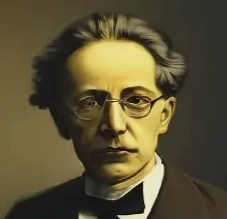
He who is infatuated with Man leaves persons out of account so far as that infatuation extends, and floats in an ideal, sacred interest. Man, you see, is not a person, but an ideal, a spook.
▼
Source
source
Dover 2005, p. 79

3 months 3 weeks ago
But when they have realized that it [society] rejects them forever, they themselves assume the ostracism of which they are victims so as not to leave the initiative to their oppressors.
▼
Source
source
p. 65-6
1 month 2 weeks ago
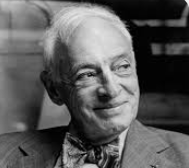
Death is the dark backing that a mirror needs if we are to see anything.
▼
Source
source
Humboldt's Gift (1975), p. 265

2 months 2 weeks ago
The kingdom of heaven can be compared to a king who wanted to settle accounts with his slaves.
▼
Source
source
18:23
1 month 3 weeks ago
Humanity unceasingly strives forward from a lower, more partial and obscure understanding of life to one more general and more lucid. And in this, as in every movement, there are leaders - those who have understood the meaning of life more clearly than others - and of those advanced men there is always one who has in his words and life, manifested this meaning more clearly, accessibly, and strongly than others. This man's expression ... with those superstitions, traditions, and ceremonies which usually form around the memory of such a man, is what is called a religion. Religions are the exponents of the highest comprehension of life ... within a given age in a given society ... a basis for evaluating human sentiments. If feelings bring people nearer to the religion's ideal ... they are good, if these estrange them from it, and oppose it, they are bad.

4 months 3 weeks ago
Knowing that certain nights whose sweetness lingers will keep returning to the earth and sea after we are gone, yes, this helps us to die.
4 months 3 weeks ago
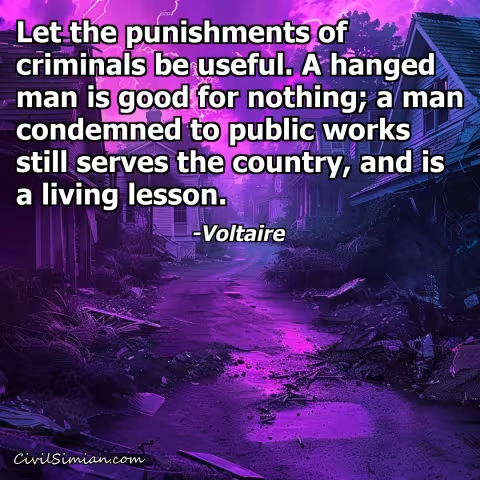
What will be left of the power of example if it is proved that capital punishment has another power, and a very real one, which degrades men to the point of shame, madness, and murder?
3 months 3 weeks ago
The hell to be endured hereafter, of which theology tells, is no worse than the hell we make for ourselves in this world by habitually fashioning our characters in the wrong way.
▼
Source
source
Ch. 4

2 months 1 week ago
The Reformation was a popular uprising, and for a century and a half drenched Europe in blood. The beginnings of the Scientific movement were confined to a minority among the intellectual elite.... The worst that happened to men of science was that Galileo suffered an honorable detention and a mild reproof, before dying peacefully in his bed. The way in which the persecution of Galileo has been remembered is a tribute to the quiet commencement of the most intimate change in outlook which the human race had yet encountered. Since a babe was born in a manger, it may be doubted whether so great a thing has happened with so little stir.
▼
Source
source
Ch. 1: "The Origins of Modern Science", pp. 2-3
3 months 2 days ago
I pray you, magnificent Sir, do not trouble yourself to return to us, but await our coming to you.
▼
Source
source
Third Dialogue
2 months 2 weeks ago
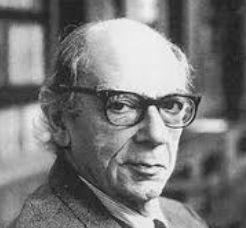
What has been shown by Machiavelli, who is often (like Nietzsche) congratulated for tearing off hypocritical masks, brutally revealing the truth, and so on, is not that men profess one thing and do another (although no doubt he shows this too) but that when they assume that the two ideals are compatible, or perhaps are even one and the same ideal, and do not allow this assumption to be questioned, they are guilty of bad faith (as the existentialists call it, or of "false consciousness," to use a Marxist formula) which their actual behavior exhibits. Machiavelli calls the bluff not just of official morality-the hypocrisies of ordinary life-but of one of the foundations of the central Western philosophical tradition, the belief in the ultimate compatibility of all genuine values. His own withers are unwrung. He has made his choice. He seems wholly unworried by, indeed scarcely aware of, parting company with traditional Western morality.
4 months 1 week ago
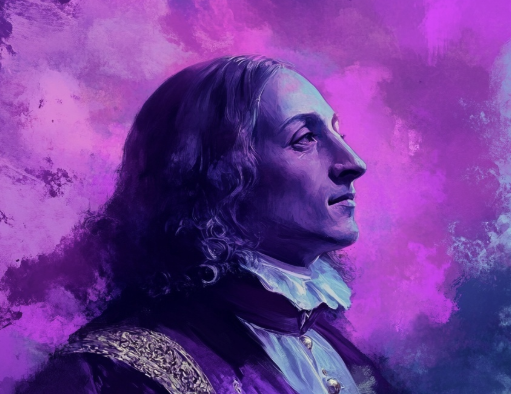
All who say the same things do not possess them in the same manner; and hence the incomparable author of the Art of Conversation pauses with so much care to make it understood that we must not judge of the capacity of a man by the excellence of a happy remark that we heard him make. ...let us penetrate, says he, the mind from which it proceeds... it will oftenest be seen that he will be made to disavow it on the spot, and will be drawn very far from this better thought in which he does not believe, to plunge himself into another, quite base and ridiculous.
▼
Source
source
Montaigne, Essais, liv. III, chap. viii.-Faugère

3 months 1 day ago
I could never divide myself from any man upon the difference of an opinion, or be angry with his judgement for not agreeing with me in that, from which perhaps within a few days I should dissent myself.
▼
Source
source
Section 6

3 months 3 weeks ago
I do not believe in what is often called... 'exact terminology'... [or] in definitions... [they] do not... add to exactness... I especially dislike pretentious terminology and... pseudo-exactness concerned with it.
3 months ago
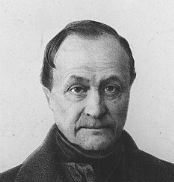
Reorganisation, irrespectively of God or king, by the worship of Humanity, systematically adopted. Man's only right is to do his duty. The Intellect should always be the servant of the Heart, and should never be its slave.
▼
Source
source
Title Page
1 month 3 weeks ago
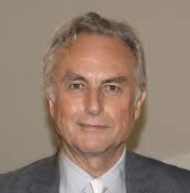
Most of what we strive for in our modern life uses the apparatus of goal seeking that was originally set up to seek goals in the state of nature.
CivilSimian.com created by AxiomaticPanic, CivilSimian, Kalokagathia