


2 months 3 weeks ago
The science of government being, therefore, so practical in itself, and intended for such practical purposes, a matter which requires experience, and even more experience than any person can gain in his whole life, however sagacious and observing he may be, it is with infinite caution that any man ought to venture upon pulling down an edifice which has answered in any tolerable degree for ages the common purposes of society, or on building it up again without having models and patterns of approved utility before his eyes.

4 months 2 days ago
He that I am reading seems always to have the most force.
▼
Source
source
Book II, Ch. 12. Apology for Raimond Sebond

2 months 6 days ago
Women crave for being loved, not for loving. They scream out at you for sympathy all day long, they are incapable of giving any in return, for they cannot remember your affairs long enough to do so... They cannot state a fact accurately to another, nor can that other attend to it accurately enough for it to become information. Now is not all this the result of want of sympathy?... I am sick with indignation at what wives and mothers will do of the most egregious selfishness. And people call it all maternal or conjugal affection, and think it pretty to say so. No, no, let each person tell the truth from their own experience.
▼
Source
source
Letter to Mary Clarke Mohl (13 Dec 1861), published in Florence Nightingale on Women, Medicine, Midwifery and Prostitution: Collected Works of Florence Nightingale (2005), Volume 8, edited by Lynn McDonald, p. 84

4 months 3 weeks ago
It was a purely Christian satisfaction to me that if ordinarily there was no one else there was one who in action tried a little to do the doctrine about loving the neighbor, alas, one who precisely by his act also received a frightful into what an illusion Christendom is and indeed, particularly later, also into how the common people let themselves be seduced by wretched journalists, whose striving and fighting for equality can only lead, if it leads to anything, since it is in the service of the lie, to making the elite, in self-defense, proud of their aloofness from the common man, and the common man brazen in his rudeness.

4 months 1 week ago
But if we discard this definition of a people, and, assuming another, say that a people is an assemblage of reasonable beings bound together by a common agreement as to the objects of their love, then, in order to discover the character of any people, we have only to observe what they love. Yet whatever it loves, if only it is an assemblage of reasonable beings and not of beasts, and is bound together by an agreement as to the objects of love, it is reasonably called a people; and it will be a superior people in proportion as it is bound together by higher interests, inferior in proportion as it is bound together by lower.
▼
Source
source
XIX, 24

3 months 2 weeks ago
Seek after the good, and with much toil shall ye find it; the evil turns up of itself without your seeking it.

2 months 1 week ago
Cézanne's painting is strictly painting, and its value is immense; but Van Gogh's painting has the Outsider's characteristic: it is a laboratory refuse of a man who treated his own life as an experiment in living; it faithfully records moods and developments of vision on the manner of a Bildungsroman.
▼
Source
source
p. 103

2 months 2 weeks ago
The absolute idea is the subject in its final form, thought. The otherness and negation is the object, being. The absolute idea now has to be interpreted as objective being. Hegel's Logic thus ends where it began, with the category of being. This, however is a different being that can no longer be explained thought he concepts applied in the analysis that opened the Logic. For being now is understood in its notion that is, as a concrete totality wherein all particular forms subsist as the essential distinctions and relations of on comprehensive principle. Thus comprehended, being is nature, and dialectical thought passes on to the Philosophy of Nature.
▼
Source
source
P. 165-166
2 months 3 weeks ago
When he entered into the Whig party, he did not conceive that they pretended to any discoveries. They did not affect to be better Whigs, than those were who lived in the days in which principle was put to the test. Some of the Whigs of those days were then living. They were what the Whigs had been at the Revolution; what they had been during the reign of queen Anne; what they had been at the accession of the present royal family.
▼
Source
source
p. 409

2 months 3 weeks ago
I am a sick man... I am a wicked man. An unattractive man.
▼
Source
source
Part 1, Chapter 1

2 weeks 1 day ago
It is truly a lordly spectacle how this great soul takes in all kinds of men and objects, a Falstaff, an Othello, a Juliet, a Coriolanus; sets them all forth to us in their round completeness; loving, just, the equal brother of all. Novum Organum, and all the intellect you will find in Bacon, is of a quite secondary order; earthy, material, poor in comparison with this. Among modern men, one finds, in strictness, almost nothing of the same rank. Goethe alone, since the days of Shakspeare, reminds me of it. Of him too you say that he saw the object; you may say what he himself says of Shakspeare: 'His characters are like watches with dial-plates of transparent crystal; they show you the hour like others, and the inward mechanism also is all visible.'.

3 months 3 weeks ago
The defiance of established authority, religious and secular, social and political, as a world-wide phenomenon may well one day be accounted the outstanding event of the last decade.
▼
Source
source
"Civil Disobedience"
2 weeks 1 day ago
We must now ask how changes of this sort can come about, considering first discoveries, or novelties of fact, and then inventions, or novelties of theory. That distinction between discovery and invention or between fact and theory will, however, immediately prove to be exceedingly artificial.
▼
Source
source
p. 52

2 months 2 weeks ago
There are no arguments. Can anyone who has reached the limit bother with arguments, causes, effects, moral considerations, and so forth? Of course not. For such a person there are only unmotivated motives for living. On the heights of despair, the passion for the absurd is the only thing that can still throw a demonic light on chaos. When all the current reasons - moral, esthetic, religious, social, and so on - no longer guide one's life, how can one sustain life without succumbing to nothingness? Only by a connection with the absurd, by love of absolute uselessness, loving something which does not have substance but which simulates an illusion of life. I live because the mountains do not laugh and the worms do not sing.
3 months 3 weeks ago
"...the church of England, when she baptizes any one, makes him not a Christian [...] the church of England is mistaken, and makes none but socinians Christians"
▼
Source
source
279

2 months 1 week ago
When at the beginning of the so-called modern age, at the Renaissance, the pagan sense of religion came to life again, it took the concrete form in the knightly ideal with its codes of conduct of love and honor. But it was a paganism Christianized, baptized. "Woman - la donna - was the divinity enshrined within those savage breasts. Whosoever will investigate the memorials of primitive times will find this ideal of woman in its full force and purity; the Universe is woman.
2 months 2 weeks ago
Understanding being nothing else, but conception caused by Speech.
▼
Source
source
The First Part, Chapter 4, p. 17
1 month 2 weeks ago
The argument of this book is that we, and all other animals, are machines created by our genes.
▼
Source
source
Ch. 1. Why Are People?
3 months 3 weeks ago
Opinion considers the opposition of what is true and false quite rigid, and, confronted with a philosophical system, it expects agreement or contradiction. And in an explanation of such a system, opinion still expects to find one or the other.
▼
Source
source
Preface, § 2

2 months 1 week ago
Without doubt, if we are to go back to that ultimate, integral experience, unwarped by the sophistications of theory, that experience whose elucidation is the final aim of philosophy, the flux of things is one ultimate generalization around which we must weave our philosophical system.
▼
Source
source
Pt. II, ch. 10, sec. 1.
2 months 1 week ago
And if the immortality of the soul had been unable to find vindication in rational empiricism, neither is it satisfied with pantheism. To say that everything is God, and that when we die, we return to God, or more accurately, continue in Him, avails our longing nothing; for if this indeed be so, then we were in God before we were born, and if we die we return to where we were before being born, then the human soul, the individual consciousness, is perishable. And since we know very well that God, the personal and conscious God of Christian monotheism, is simply the provider, and above all the guarantor, of our immortality, pantheism is said, and rightly said to be merely atheism disguised; and in my opinion, undisguised.

4 months 2 days ago
Let all the 'free-will' in the world do all it can with all its strength; it will never give rise to a single instance of ability to avoid being hardened if God does not give the Spirit, or of meriting mercy if it is left to its own strength.
▼
Source
source
p. 202
2 months 2 weeks ago
Not content with real sufferings, the anxious man imposes imaginary ones on himself; he is a being for whom unreality exists, must exist; otherwise where would he obtain the ration of torment his nature demands?
3 months 2 weeks ago
I think of the course of human history as a long, swelling, increasingly polyphonic poem - a poem that leads up to nothing save itself. When the species is extinct, "human nature's total message" will not be a set of propositions, but a set of vocabularies - the more, and the more various, the better.
▼
Source
source
Response to Hartshorne in 'Rorty and Pragmatism, The Philosopher Responds to his Critics', p. 33
2 months 2 weeks ago
When anything is present to the mind, what is the very first and simplest character to be noted in it, in every case, no matter how little elevated the object may be? Certainly, it is its presentness.
▼
Source
source
Lecture II : The Universal Categories, § 1 : Presentness, CP 5.44
4 months 3 weeks ago
A son is a mirror in which the father sees himself reflected, and the father is a mirror in which the son sees himself as he will be in the future.

2 months 1 week ago
To counter the fixation on a rhetoric of victimhood, black folks must engage in a discourse of self-determination.

4 months 3 weeks ago
There are many aspects of the universe that still cannot be explained satisfactorily by science; but ignorance only implies ignorance that may someday be conquered. To surrender to ignorance and call it God has always been premature, and it remains premature today.

3 months 3 weeks ago
How much good it would do if one could exterminate the human race.
▼
Source
source
A characteristic saying of Russell, reported by Aldous Huxley in a letter to Lady Ottoline Morrell dated 8 October 1917, as quoted in Bibliography of Bertrand Russell, Routledge, 2013
4 months 3 weeks ago
A fire eater must eat fire even if he has to kindle it himself.
1 month 1 week ago
It cannot be doubted, I think, that Mr. Darwin has satisfactorily proved that what he terms selection, or selective modification, must occur, and does occur, in nature; and he has also proved to superfluity that such selection is competent to produce forms as distinct, structurally, as some genera even are. If the animated world presented us with none but structural differences, I should have no hesitation in saying that Mr. Darwin has demonstrated the existence of a true physical cause, amply competent to account for the origin of living species, and of man among the rest.
▼
Source
source
Ch.2, p. 126
2 months 3 weeks ago
Here then is what we understand by these words: "the equalization of the classes." It would perhaps have been better to say suppression of the classes, the unification of society by the abolition of economic and social inequality. But we have also demanded the equalization of the individuals, and it is there especially that we attract all the thunderbolts of outraged eloquence from our adversaries. One has made use of that part of our proposition to prove in a conclusive manner that we are nothing but communists.
2 months 3 weeks ago
Of escape there are but three methods - two chimerical and a third real. The first two are the dram-shop and the church, debauchery of the body or debauchery of the mind; the third is social revolution.

1 week 2 days ago
Growth is slow but collapse is rapid.
▼
Source
source
Ugo Bardi (2017) . "The Seneca Effect: Why growth is slow but collapse is rapid". ISSN 1612-3018. DOI:10.1007/978-3-319-57207-9.
3 months 3 weeks ago
Though you give no countenance to the complaints of the querulous, yet take care to curb the insolence and ill nature of the injurious. When you observe it yourself, reprove it before the injur'd party: but if the complaint be of something really worth your notice, and prevention another time, then reprove the offender by himself alone, out of sight of him who complain'd and make him go and ask pardon, and make reparation; which ooming thus, as it were from himself, will be the more cheerfully performed, and more kindly receiv'd, the love strenghten'd between them, and a custom of civility grow familiar amongst your children.
▼
Source
source
Sec. 109

2 months 1 week ago
There are two atheisms of which one is a purification of the notion of God.
▼
Source
source
As quoted in The New Christianity (1967) edited by William Robert Miller

4 months 1 week ago
When you do anything from a clear judgment that it ought to be done, never shun the being seen to do it, even though the world should make a wrong supposition about it; for, if you don't act right, shun the action itself; but, if you do, why are you afraid of those who censure you wrongly?
▼
Source
source
(35).

4 months 3 weeks ago
This is the mistake which I seem to make eternally, that I imagine the sufferings of others as far greater than they really are. Ever since my childhood, the proposition, my greatest dangers lie in pity, has been confirmed again and again.
4 months 1 week ago
The members of Christ, many though they be, are bound to one another by the ties of charity and peace under the one Head, who is our Saviour Himself, and form one man. Often their voice is heard in the Psalms as the voice of one man; the cry of one is as the cry of all, for all are one in One.
▼
Source
source
p.430
5 days ago
It is the fate of every truth to be an object of ridicule when it is first acclaimed. It was once considered foolish to suppose that black men were really human beings and ought to be treated as such. What was once foolish has now become a recognized truth. Today it is considered as exaggeration to proclaim constant respect for every form of life as being the serious demand of a rational ethic. But the time is coming when people will be amazed that the human race existed so long before it recognized that thoughtless injury to life is incompatible with real ethics. Ethics is in its unqualified form extended responsibility to everything that has life.
2 months 3 weeks ago
Man has many wishes that he does not really wish to fulfil, and it would be a misunderstanding to suppose the contrary. He wants them to remain wishes, they have value only in his imagination; their fulfilment would be a bitter disappointment to him. Such a desire is the desire for eternal life. If it were fulfilled, man would become thoroughly sick of living eternally, and yearn for death. In reality man wishes merely to avoid a premature, violent or gruesome death. Everything has its measure, says a pagan philosopher; in the end we weary of everything, even of life; a time comes when man desires death. Consequently there is nothing frightening about a normal, natural death, the death of a man who has fulfilled himself and lived out his life.
▼
Source
source
Lecture XXX, Atheism alone a Positive View

2 months 4 weeks ago
I cannot help fearing that men may reach a point where they look on every new theory as a danger, every innovation as a toilsome trouble, every social advance as a first step toward revolution, and that they may absolutely refuse to move at all.
▼
Source
source
Book Three, Chapter XXI.
1 month 1 week ago
Compared with the life-span of a human being the time-span of a civilization is so vast that a human observer cannot hope to take the measure of its curve unless he is in a position to view it in a distant perspective; and he can only obtain this perspective vis-a-vis some society that is extinct. He can never stand back sufficiently far from the history of the society in which he himself lives and moves and has his being. In other words, to assert of any living society, at any moment in its life, that it is the consummation of human history is to hazard a guess which is intrinsically unsusceptible of immediate verification. When we find that a majority of the members of all societies at all times make this assertion about their own civilizations, it becomes evident that their guesses have really nothing to do with any objective calculation of probabilities but are pure expressions of the egocentric illusion.
▼
Source
source
Vol. 1
4 months 2 days ago
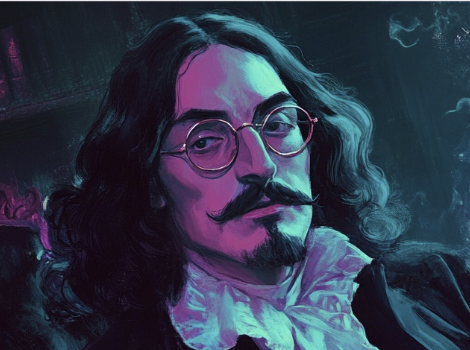
Good sense is, of all things among men, the most equally distributed; for every one thinks himself so abundantly provided with it, that those even who are the most difficult to satisfy in everything else, do not usually desire a larger measure of this quality than they already possess.

3 months 3 weeks ago
I believe that the early success and reputation of Carlyle's French Revolution, were considerably accelerated by what I wrote about it in the Review. Immediately on its publication, and before the commonplace critics, all whose rules and modes of judgment it set at defiance, had time to preoccupy the public with their disapproval of it, I wrote and published a review of the book, hailing it as one of those productions of genius which are above all rules, and are a law to themselves.
▼
Source
source
(p. 217)
1 week 2 days ago
It would be some consolation for the feebleness of ourselves and our works, if all things should perish as slowly as they come into being; but as it is, increases are of sluggish growth, but the way to ruin is rapid.
▼
Source
source
Letters to Lucilius, letter 91, page 294.

3 months 3 weeks ago
I die adoring God, loving my friends, not hating my enemies, and detesting superstition.
▼
Source
source
Déclaration de Voltaire, note to his secretary, Jean-Louis Wagnière, 28 February 1778
2 months 3 weeks ago
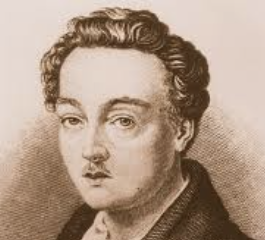
That is a long word: forever!
▼
Source
source
Act I.
2 months 2 weeks ago
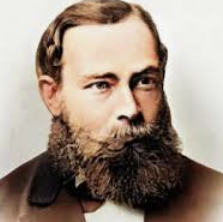
The ideal of strictly scientific method in mathematics which I have tried to realise here, and which perhaps might be named after Euclid I should like to describe in the following way... The novelty of this book does not lie in the content of the theorems but in the development of the proofs and the foundations on which they are based... With this book I accomplish an object which I had in view in my Begriffsschrift of 1879 and which I announced in my Grundlagen der Arithmetik. I am here trying to prove the opinion on the concept of number that I expressed in the book last mentioned.
▼
Source
source
Vol. 1. pp. 137-140, as cited in: Ralph H. Johnson (2012), Manifest Rationality: A Pragmatic Theory of Argument, p. 87

3 months 4 weeks ago
Corn is a necessary, silver is only a superfluity.
▼
Source
source
Chapter XI, Part III, (First Period) p. 223.
CivilSimian.com created by AxiomaticPanic, CivilSimian, Kalokagathia