

2 weeks 5 days ago
There was very little that prevented the vandalism of 1793 from suddenly producing a second revolution as marvelous as the first was horrible. The whole human race was approaching its release; the civilized, barbarian, and savage order would have disappeared forever if the Convention, which trampled down all prejudices, had not bowed down before the only one that had to be destroyed, the institution of marriage.
▼
Source
source
Charles Fourier: The Visionary and His World, J. Beecher (1986), p. 304-5

1 month 2 weeks ago
Human vanity cherishes the absurd notion that our species is the final goal of evolution.
▼
Source
source
Chapter 3 "Accumulating Small Change" (p. 50)

3 months 2 weeks ago
There are two godheads: the world and my independent I. I am either happy or unhappy, that is all. It can be said: good or evil do not exist. A man who is happy must have no fear. Not even in the face of death. Only a man who lives not in time but in the present is happy.
▼
Source
source
Journal entry (8 July 1916), p. 74e
1 week 2 days ago
One is not worthy to have what one, through weakness, lets be taken from him; one is not worthy of it because one is not capable of it.

3 months 3 weeks ago
The homosexual never thinks of himself when someone is branded in his presence with the name homosexual. ...His sexual tastes will doubtless lead him to enter into relationships with this suspect category, but he would like to make use of them without being likened to them. Here, too, the ban that is cast on certain men by society has destroyed all possibility of reciprocity among them. Shame isolates.
2 months 6 days ago
Motherhood in the true sense should embrace all children. Because so few realize this truth, child life is so empty of warmth, of love, of color, and beauty. A home-what is it to-day but a cage from which most of its inhabitants wish to escape? No, I should never have found happiness in such a place. My ideals, the struggle for them, and whatever hardships and suffering they have brought, far from wasting my life, have enriched it a thousandfold. To me it has been a grand adventure which I should not have missed for all the wealth in the world.
2 months 1 week ago
When television screens had only rare images of black folks, black people were more critically vigilant about these representations. Even when blackness was represented 'positiviely,' as it was in early black television shows like Julia, which focused on the life of a black nurse, the beauty standard was a reflection of white supremacist aesthetics.

2 months 1 week ago
And killing time is perhaps the essence of comedy, just as the essence of tragedy is killing eternity.
2 weeks ago
Few people who are not actually practitioners of a mature science realize how much mop-up work of this sort a paradigm leaves to be done or quite how fascinating such work can prove in the execution.
▼
Source
source
p. 24

4 months 1 day ago
Saying is one thing, doing another.
▼
Source
source
Book II, Ch. 31. Of Anger
4 days ago
The startling truth is that our best efforts for civil rights, international peace, population control, conservation of natural resources, and assistance to the starving of the earth-urgent as they are-will destroy rather than help if made in the [current] spirit. For, as things stand, we have nothing to give. If our own riches and our own way of life are not enjoyed here, they will not be enjoyed anywhere else. Certainly they will supply the immediate jolt of energy and hope that methedrine, and similar drugs, give in extreme fatigue. But peace can be made only by those who are peaceful, and love can be shown only by those who love. No work of love will flourish out of guilt, fear, or hollowness of heart, just as no valid plans for the future can be made by those who have no capacity for living now.
▼
Source
source
p. 83

3 months 3 weeks ago
I am almost inclined to set it up as a canon that a children's story which is enjoyed only by children is a bad children's story. The good ones last. A waltz which you can like only when you are waltzing is a bad waltz.
▼
Source
source
"On Three Ways of Writing for Children" (1952) - in Of Other Worlds: Essays and Stories (1967), p. 24

3 months 3 weeks ago
It is the natural effect of improvement, however, to diminish gradually the real price of almost all manufactures.
▼
Source
source
Chapter XI, Part III, (Conclusion..) p. 282.
2 months 3 days ago
There are people who believe everything is sane and sensible that is done with a solemn face. ... It is no great art to say something briefly when, like Tacitus, one has something to say; when one has nothing to say, however, and none the less writes a whole book and makes truth ... into a liar - that I call an achievement.
▼
Source
source
E 59 Variant translation: There are people who think that everything one does with a serious face is sensible…

3 months ago
All things are in all.
▼
Source
source
V 9; as translated by Dorothea Waley Singer

4 months 2 days ago
Do not be guilty of possessing a library of learned books while lacking learning yourself.
▼
Source
source
Letter to Christian Northoff (1497), as translated in Collected Works of Erasmus (1974), p. 115
2 months 1 week ago
History is full of religious wars; but, we must take care to observe, it was not the multiplicity of religions that produced these wars, it was the intolerating spirit which animated that one which thought she had the power of governing.
▼
Source
source
No. 65. (Usbek writing to his wives)

1 month 2 days ago
Today, status quo bias runs deep. Conservation biology is an ideology masquerading as a science. Many researchers seek to extend the tenets of conservation biology to humans. By contrast, a benevolent superintelligence might view Darwinian life on Earth as an infestation of biological malware and act accordingly. The amount of suffering caused by Homo sapiens is hard to quantify. But the suffering is immense and growing daily with the spread of industrialised animal abuse. Reply to "Why would someone want to end humanity?"
▼
Source
source
, Quora, 10 Mar. 2018
1 month 3 weeks ago
Particularly in the case of all professional of press-images which testify of the real events. In making reality, even the most violent, emerge to the visible, it makes the real substance disappear. It is like the Myth of Eurydice : when Orpheus turns around to look at her, she vanishes and returns to hell. That is why, the more exponential the marketing of images is growing the more fantastically grows the indifference towards the real world. Finally, the real world becomes a useless function, a collection of phantom shapes and ghost events. We are not far from the silhouettes on the walls of the cave of Plato.

3 months 3 weeks ago
The Quaestor turned back the pages until he found himself among the Pensées. "We are not satisfied," he read, "with the life we have in ourselves and our own being; we want to live an imaginary life in other people's idea of us. Hence all our efforts are directed to seeming what we are not. We labor incessantly to preserve and embellish this imaginary being, and neglect that which is really ours." The Quaestor put down the book, ... and ruefully reflected that all his own troubles had arisen from this desire to seem what in fact he was not. To seem a man of action, when in fact he was a contemplative; to seem a politician, when nature had made him an introspective psychologist; to seem a wit, which God had intended him for a sage.
▼
Source
source
"Variations on a Philosopher" in Themes and Variations (1943), p. 2

2 months 3 weeks ago
The essential trait in the moral consciousness, is the control of some feeling or feelings by some other feeling or feelings.
▼
Source
source
Ch. 7, The Psychological View
3 months 1 week ago
For joys fall not to the rich alone, nor has he lived ill, who from birth to death has passed unknown.
▼
Source
source
Book I, epistle xvii, line 9
1 month 2 weeks ago
A millennial belief in a Holy God may have the effect of deepening the soul, but it is also obviously archaic, and modern influences would presently bring me up to date and reveal how antiquated my origins were. To turn away from those origins, however, has always seemed to me an utter impossibility. It would be a treason to my first consciousness to un-Jew myself.
▼
Source
source
Part I, p. 26

4 months 2 days ago
The world's a bubble, and the life of man Less than a span.
2 months 3 weeks ago
I did not hate the author of my misfortunes - truth and justice acquit me of that; I rather pitied the hard destiny to which he seemed condemned. But I thought with unspeakable loathing of those errors, in consequence of which every man is fated to be, more or less, the tyrant or the slave. I was astonished at the folly of my species, that they did not rise up as one man, and shake off chains so ignominious, and misery so insupportable. So far as related to myself, I resolved - and this resolution has never been entirety forgotten by me - to hold myself disengaged from this odious scene, and never fill the part either of the oppressor or the sufferer.
2 weeks 3 days ago
We should like to represent... the... universe, and... feel... we understood it. We... never can attain this representation: our weakness is too great. But... we desire... to conceive an infinite intelligence... which should see all, and... classify all in its time, as we classify, in our time, the little we see. ...This supreme intelligence would be only a demigod; infinite in one sense... limited in another, since it would have... imperfect recollection of the past... otherwise all recollections would be equally present... and for it there would be no time.
2 months 5 days ago
In the dominant Western religious system, the love of God is essentially the same as the belief in God, in God's existence, God's justice, God's love. The love of God is essentially a thought experience. In the Eastern religions and in mysticism, the love of God is an intense feeling experience of oneness, inseparably linked with the expression of this love in every act of living.
▼
Source
source
Ch. 2
3 months 3 weeks ago
The more powerful and original a mind, the more it will incline towards the religion of solitude.
4 days ago
But what we've got going wrong is we've got a kind of bifurcation [in cultural development]:You take your classified telephone directory, and open up "Churches", and have a ruler in your hand. And you will find that the longest space is occupied by authoritarian, Bible-banging churches. And these people are barbarians, who take the written word of the Bible literally. Because they need terribly, they have a personal need, for something to depend on. ... The government realizes that there is a very large number of people like that; and therefore, to keep their votes, they have to pander to those kind of people. And these are the boys who never grew up; they always need Papa. ... The trouble is that the boys who need Papa, are violent. They have the guns. And they are the types of people who like to be soldiers, policemen-tough guys. And therefore they have a great deal of power.
▼
Source
source
Interviewed on Les Hixon's show "In The Spirit" on WBAI New York
3 months 3 weeks ago
If good music has charms to soothe the savage breast, bad music has no less powerful spells for filling the mildest breast with rage, the happiest with horror and disgust. Oh, those mammy songs, those love longings, those loud hilarities! How was it possible that human emotions intrinsically decent could be so ignobly parodied.
▼
Source
source
"Silence is Golden," p. 59
2 months 3 weeks ago
Government in reality, as has abundantly appeared, is a question of force, and not of consent. It is desirable that a government should be made as agreeable as possible to the ideas and inclinations of its subjects and that they should be consulted, as extensively as may be, respecting its construction and regulations. But, at last, the best constituted government that can be formed particularly for a large community, will contain many provisions that, far from having obtained the consent of all its members, encounter even in their outset a strenuous, thought ineffectual opposition.
▼
Source
source
Book III, "Of Obedience"
4 months 6 days ago
What is it, in your opinion, to be a great nobleman? It is to be master of several objects that men covet, and thus to be able to satisfy the wants and the desires of many. It is these wants and these desires that attract them towards you, and that make them submit to you: were it not for these, they would not even look at you; but they hope, by these services... to obtain from you some part of the good which they desire, and of which they see that you have the disposal.
3 months 2 weeks ago
Certainly it is correct to say: Conscience is the voice of God.
▼
Source
source
p. 75
3 months 3 weeks ago
Hitler never intended to defend 'the West' against Bolshevism but always remained ready to join 'the Reds' for the destruction of the West, even in the middle of the struggle against Soviet Russia.
▼
Source
source
Part 3, Ch. 10
3 months 3 weeks ago
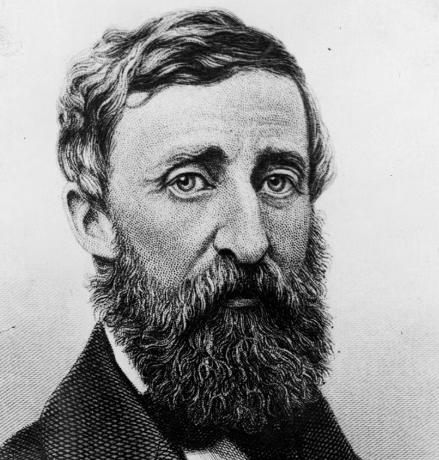
In some lyceums they tell me that they have voted to exclude the subject of religion. But how do I know what their religion is, and when I am near to or far from it? I have walked into such an arena and done my best to make a clean breast of what religion I have experienced, and the audience never suspected what I was about.
▼
Source
source
p. 490

2 months 6 days ago
Architecture is a way for power to achieve eloquence through form.
1 week 2 days ago
Now, on the contrary, when every one is to cultivate himself into man, condemning a man to machine-like labor amounts to the same thing as slavery. If a factory-worker must tire himself to death twelve hours and more, he is cut off from becoming man. Every labor is to have the intent that the man be satisfied. His labor is nothing taken by itself, has no object in itself, is nothing complete in itself; he labors only into another's hands, and is used (exploited) by this other.
▼
Source
source
Cambridge 1995, p. 108
2 months 4 weeks ago
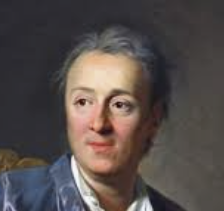
If there is one realm in which it is essential to be sublime, it is in wickedness. You spit on a petty thief, but you can't deny a kind of respect for the great criminal.

1 month 3 weeks ago
Another theme of the Wake that helps in the understanding of the paradoxical shift from cliché to archetype is "pastimes are past times". The dominant technologies of one age become the games and pastimes of a later age. In the twentieth century the number of past times that are simultaneously available is so vast as to create cultural anarchy. When all the cultures of the world are simultaneously present, the work of the artist in the elucidation of form takes on new scope and new urgency. Most men are pushed into the artist role. The artist cannot dispense with the principle of doubleness and interplay since this kind of hendiadys-dialogue is essential to the very structure of consciousness, awareness, and autonomy.
▼
Source
source
(p.99)

2 weeks 5 days ago
The possibility of democracy on a global scale is emerging today for the very first time.
▼
Source
source
(xi)

3 months 3 weeks ago
Can anybody remember when the times were not hard and money not scarce?
▼
Source
source
Works and Days
2 months 3 weeks ago
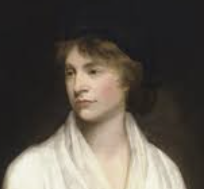
In the present state of society it appears necessary to go back to first principles in search of the most simple truths, and to dispute with some prevailing prejudice every inch of ground. To clear my way, I must be allowed to ask some plain questions, and the answers will probably appear as unequivocal as the axioms on which reasoning is built; though, when entangled with various motives of action, they are formally contradicted either by the words or conduct of men.
▼
Source
source
Ch. 1, opening
2 months 1 week ago
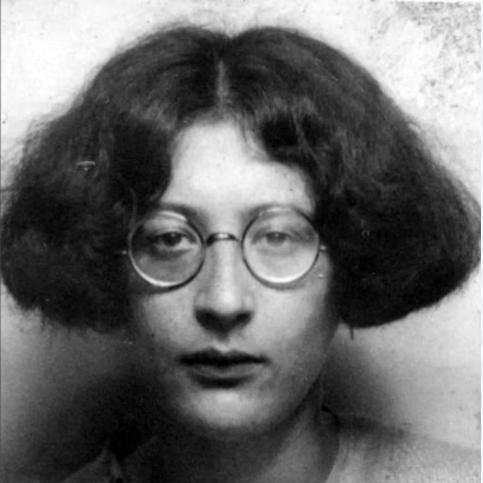
Men ... ask nothing better, it would seem, than to leave their destiny, their life, and all their thoughts in the hands of a few men with a gift for the exclusive manipulation of this or that technique.
▼
Source
source
"Wave Mechanics," p. 75
1 month 2 weeks ago
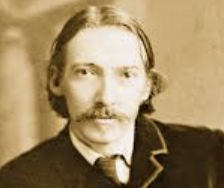
The devil, depend upon it, can sometimes do a very gentlemanly thing.
▼
Source
source
The Suicide Club, Story of the Young Man with the Cream Tarts.
4 months 1 week ago
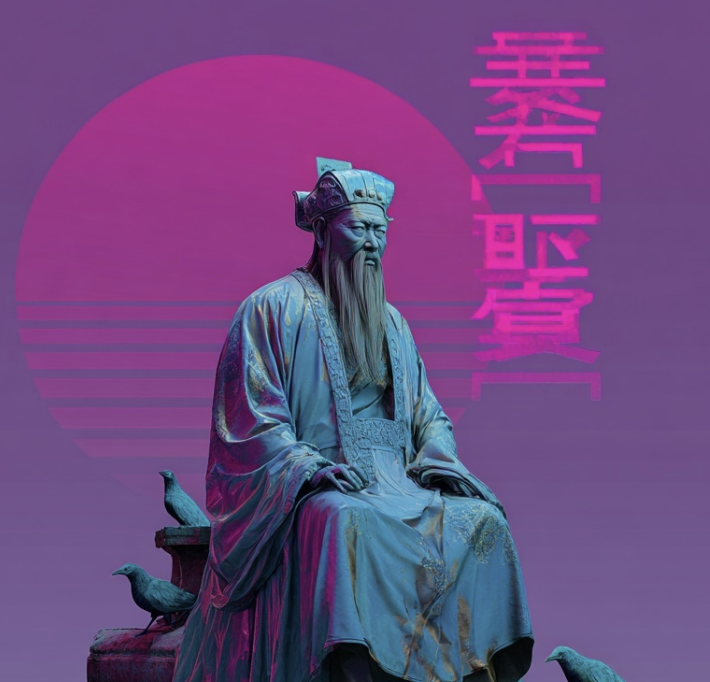
How great is the path proper to the Sage! Like overflowing water, it sends forth and nourishes all things, and rises up to the height of heaven. All-complete is its greatness! It embraces the three hundred rules of ceremony, and the three thousand rules of demeanor. It waits for the proper man, and then it is trodden. Hence it is said, "Only by perfect virtue can the perfect path, in all its courses, be made a fact."
3 months 3 weeks ago
Great geniuses have the shortest biographies.
▼
Source
source
Plato; or, The Philosopher
3 months 2 weeks ago
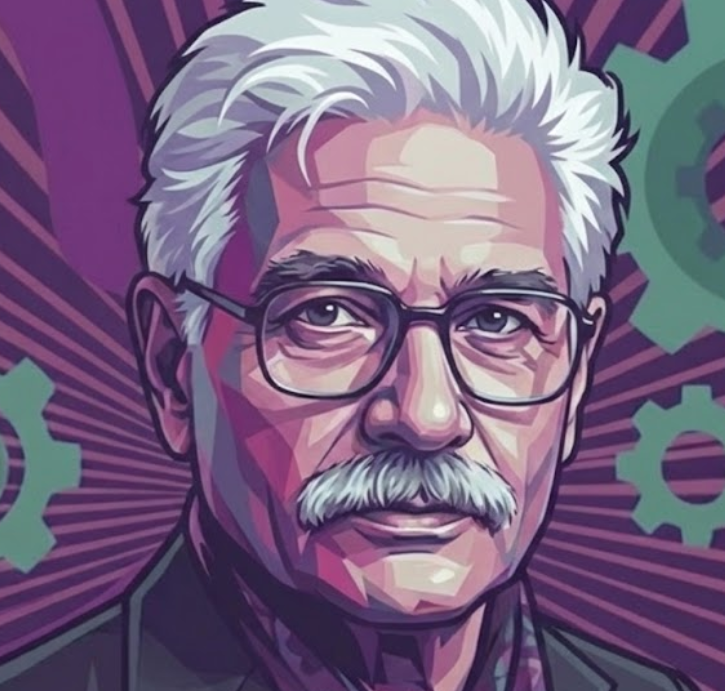
It is also the becoming-space of the spoken chain - which has been called temporal or linear; a becoming-space which makes possible both writing and every correspondence between speech and writing, every passage from one to the other.The activity or productivity connoted by the a of différance refers to the generative movement in the play of differences. The latter are neither fallen from the sky nor inscribed once and for all in a closed system, a static structure that a synchronic and taxonomic operation could exhaust. Differences are the effects of transformations, and from this vantage the theme of différance is incompatible with the static, synchronic, taxonomic, ahistoric motifs in the concept of structure.
▼
Source
source
p. 28
3 months 3 weeks ago
Shallow men believe in luck.
▼
Source
source
Worship
1 week 2 days ago
Do I write out of love to men? No, I write because I want to procure for my thoughts an existence in the world; and, even if I foresaw that these thoughts would deprive you of your rest and your peace, even if I saw the bloodiest wars and the fall of many generations springing up from this seed of thought - I would nevertheless scatter it. Do with it what you will and can, that is your affair and does not trouble me.
▼
Source
source
Cambridge 1995, p. 262, 263
2 months 5 days ago
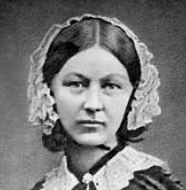
Asceticism is the trifling of an enthusiast with his power, a puerile coquetting with his selfishness or his vanity, in the absence of any sufficiently great object to employ the first or overcome the last.
▼
Source
source
Letter (5 September 1857), quoted in The Life of Florence Nightingale (1913) by Edward Tyas Cook, p. 369
CivilSimian.com created by AxiomaticPanic, CivilSimian, Kalokagathia