


2 months 2 weeks ago
I find in myself as much evil as in anyone, but detesting action - mother of all vices - I am the cause of no one's suffering.
2 months 2 weeks ago
Each time I fail to think about death, I have the impression of cheating, of deceiving someone in me.

2 months 4 weeks ago
Poetry must have something in it that is barbaric, vast and wild.
2 months 2 days ago
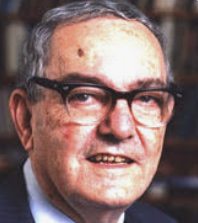
The fact that goals may be dependent for their force on other more distant ends leads to the arrangement of these goals in a hierarchy - each level to be considered as an end relative to the levels below it and as a mean to the levels above it.
▼
Source
source
p. 62.

3 months 3 weeks ago
The presence of a thought is like the presence of a lover.

4 months 1 week ago
Come the Day of Judgment, some believe that the body will be different from our present body. This is only transient, that will be eternal. For this also there are religious arguments.
3 months 2 weeks ago
It is now generally accepted that the roots of our ethics lie in patterns of behavior that evolved among our pre-human ancestors, the social mammals and that we retain within our biological nature elements of these evolved responses. We have learned considerably more about these responses, and we are beginning to to understand how they interact with our capacity to reason.
▼
Source
source
Preface To The 2011 edition, p. xi

4 months 1 day ago
They who have compared our lives to a dream were, perhaps, more in the right than they were aware of. When we dream, the soul lives, works, and exercises all its faculties, neither more nor less than when awake; but more largely and obscurely, yet not so much, neither, that the difference should be as great as betwixt night and the meridian brightness of the sun, but as betwixt night and shade; there she sleeps, here she slumbers; but, whether more or less, 'tis still dark, and Cimmerian darkness. We wake sleeping, and sleep waking.
▼
Source
source
tr. Cotton, rev. W. Carew Hazlitt, 1877
2 months 2 weeks ago
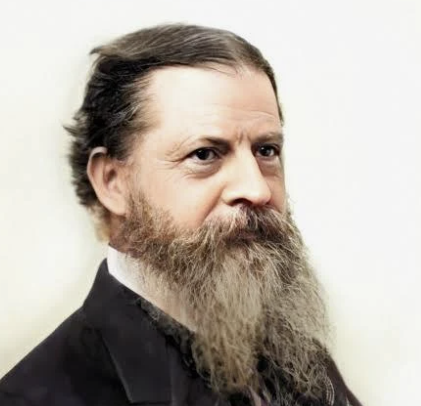
But the extraordinary insight which some persons are able to gain of others from indications so slight that it is difficult to ascertain what they are, is certainly rendered more comprehensible by the view here taken.
1 month 2 weeks ago
There is but one art, to omit.
▼
Source
source
As cited in The Harper Book of Quotations, Revised Edition (1993), Ed. R. Fitzhenry, HarperCollins, p. 498 : ISBN 0062732137, 9780062732132
2 months 5 days ago
The same polarity of the male and female principle exists in nature; not only, as is obvious in animals and plants, but in the polarity of the two fundamental functions, that of receiving and penetrating. It is the polarity of earth and rain, of the river and the ocean, of night and day, of darkness and light, of matter and spirit.
▼
Source
source
Ch. 2

3 months 3 weeks ago
I remembered the way out suggested by a great princess when told that the peasants had no bread: "Well, let them eat cake".
▼
Source
source
This passage contains a statement Qu'ils mangent de la brioche that has usually come to be attributed to Marie Antoinette; this was written in 1766, when Marie Antoinette was 10

2 months 3 days ago
Even truth needs to be clad in new garments if it is to appeal to a new age.
▼
Source
source
C 33

3 months 3 weeks ago
A living dog is better than a dead lion. Shall a man go and hang himself because he belongs to the race of pygmies, and not be the biggest pygmy that he can? Let every one mind his own business, and endeavor to be what he was made. Why should we be in such desperate haste to succeed, and in such desperate enterprises? If a man does not keep pace with his companions, perhaps it is because he hears a different drummer. Let him step to the music which he hears, however measured or far away.
▼
Source
source
pp. 366-67
2 months 2 weeks ago
The real struggle is not between East and West, or capitalism and communism, but between education and propaganda.
▼
Source
source
As quoted in Encounter with Martin Buber (1972) by Aubrey Hodes, p. 135

2 months 6 days ago
The evolutionary urge drives man to seek for intenser forms of fulfillment, since his basic urge is for more life, more consciousness, and this contentment has an air of stagnation that the healthy mind rejects. (This recognition lies at the centre of my own 'outsider theory': that there are human beings to whom comfort means nothing, but whose happiness consists in following an obscure inner-drive, an 'appetite for reality'.)
▼
Source
source
p. 32
1 week 1 day ago
My idea of heaven is, eating pâté de foie gras to the sound of trumpets.
▼
Source
source
View ascribed by Smith to his friend Henry Luttrell; reported in Hesketh Pearson, The Smith of Smiths (London: Hamish Hamilton, 1934), p. 236

2 weeks 4 days ago
Do not imagine that there is any bird more easily caught by decoy, nor any fish sooner fixed on the hook by wormy bait, than are all these poor fools neatly tricked into servitude by the slightest feather passed, so to speak, before their mouths. Truly it is a marvelous thing that they let themselves be caught so quickly at the slightest tickling of their fancy. Plays, farces, spectacles, gladiators, strange beasts, medals, pictures, and other such opiates, these were for ancient peoples the bait toward slavery, the price of their liberty, the instruments of tyranny. By these practices and enticements the ancient dictators so successfully lulled their subjects under the yoke, that the stupefied peoples, fascinated by the pastimes and vain pleasures flashed before their eyes, learned subservience as naïvely, but not so creditably, as little children learn to read by looking at bright picture books.
▼
Source
source
Part 2
2 months 1 week ago
Nietzsche ... did not settle for a demure civic conversation in the style of Richard Rorty's ironist, or saunter off with the smug nod that registers a deconstructive job neatly done. He was aware that his own criticisms and exposures owed both their motivation and their effect to the spirit of truthfulness. His aim was to see how far the values of truth could be revalued, how they might be understood in a perspective quite different from the Platonic and Christian metaphysics which had provided their principal source in the West up to now.
▼
Source
source
p. 18
2 months 2 weeks ago
The more we try to wrest ourselves from our ego, the deeper we sink into it.

3 months 3 weeks ago
When I found myself regarded as respectable, I began to wonder what sins I had committed. I must be very wicked, I thought. I began to engage in the most uncomfortable introspection. Interview with Irwin Ross, September 1957;If there were a God, I think it very unlikely that he would have such an uneasy vanity as to be offended by those who doubt his existence.
▼
Source
source
Collected Papers of Bertrand Russell (2005), p. 385
2 months 2 weeks ago
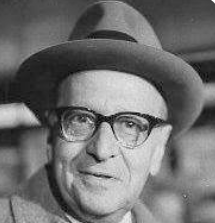
Spinoza, for example, thought that insight into the essence of reality, into the harmonious structure of the eternal universe, necessarily awakens love for this universe. For him, ethical conduct is entirely determined by such insight into nature, just as our devotion to a person may be determined by insight into his greatness or genius. Fears and petty passions, alien to the great love of the universe, which is logos itself, will vanish, according to Spinoza, once our understanding of reality is deep enough.
▼
Source
source
p. 14.

3 months 3 weeks ago
A person who already displays ... cruelty to animals is also no less hardened towards men. We can already know the human heart, even in regard to animals.
▼
Source
source
Part II, p. 212

2 months 1 week ago
The essential characteristic of the first half of the twentieth century is the growing weakness, and almost the disappearance, of the idea of value.
▼
Source
source
"The responsibility of writers," p. 167

1 week 1 day ago
No man has ever been so far advanced by Fortune that she did not threaten him as greatly as she had previously indulged him.

3 months 3 weeks ago
Whether, then, all ought not immediately to discontinue and renounce it, with grief and abhorrence? Should not every society bear testimony against it, and account obstinate persisters in it bad men, enemies to their country, and exclude them from fellowship; as they often do for much lesser faults?

3 months 3 weeks ago
The object before us, to begin with, material production.
▼
Source
source
Introduction, p. 3, first text page, first line.
3 months 3 weeks ago
The product of labour is labour which has been congealed in an object, which has become material: it is the objectification of labour. Labour's realization is its objectification.
▼
Source
source
p. 71, The Marx-Engels Reader

2 months 6 days ago
It has been said of old, all roads lead to Rome. In paraphrased application to the tendencies of our day, it may truly be said that all roads lead to the great social reconstruction. The economic awakening of the workingman, and his realization of the necessity for concerted industrial action; the tendencies of modern education, especially in their application to the free development of the child; the spirit of growing unrest expressed through, and cultivated by, art and literature, all pave the way to the Open Road.

4 months 2 weeks ago
At that moment he knew what his mother was thinking, and that she loved him. But he knew, too, that to love someone means relatively little; or, rather, that love is never wrong enough to find the word befitting it.

2 months 3 weeks ago
The true Christian knows no Covenant or Mediation with God, but only the Old, Eternal, and Unchangeable Relation, that in Him we live, and move, and have our being; and he asks not who has said this, but only what has been said;-even the book wherein this may be written is nothing to him as a proof, but only as a means of culture; he bears the proof in his own breast. This is my view of the matter...
▼
Source
source
p. 105

2 months 4 weeks ago
Times before you, when even the living men were Antiquities; when the living might exceed the dead, and to depart this world, could not be properly said, to go unto the greater number. Dedication

3 months 3 weeks ago
No fixed capital can yield any revenue but by means of a circulating capital.
▼
Source
source
Chapter I, p. 311.
2 months 2 weeks ago
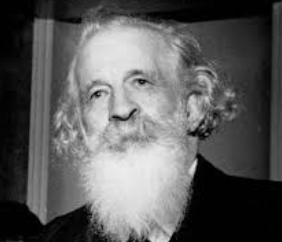
To disappear into deep water or to disappear toward a far horizon, to become part of depth of infinity, such is the destiny of man that finds its image in the destiny of water.
▼
Source
source
Introduction
1 month 2 weeks ago
A woman loves to be obeyed at first, although afterwards she finds her pleasure in obeying.
▼
Source
source
The Suicide Club, Story of the Physician and the Saratoga Trunk.
2 months 3 weeks ago
No nation which has sunk into this state of dependence can raise itself out of it by the means which have usually been adopted hitherto. Since resistance was useless to it when it was still in possession of all its powers, what can such resistance avail now that it has been deprived of the greater part of them?
▼
Source
source
Introduction p. 9-10
2 months 2 weeks ago
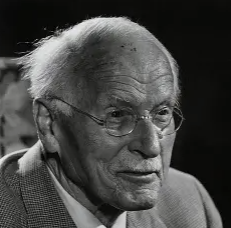
The deep critical thinker has become the misfit of the world. This is not a coincidence. To maintain order and control you must isolate the intellectual, the sage, the philosopher, the savant before their ideas awaken people.
2 months 1 week ago
School children and students who love God should never say: "For my part I like mathematics"; "I like French"; "I like Greek." They should learn to like all these subjects, because all of them develop that faculty of attention which, directed toward God, is the very substance of prayer.

2 weeks 6 days ago
A questioner asks: If human nature is evil, then where do ritual and rightness come from? I reply: ritual and rightness are always created by the conscious activity of the sages.
▼
Source
source
Sources of Chinese Tradition (1999), vol. 1, p. 180
3 months 3 weeks ago
Human freedom is realised in the adoption of humanity as an end in itself, for the one thing that no-one can be compelled to do by another is to adopt a particular end.
▼
Source
source
Part Two : Metaphysical Principles of Virtue

3 months 3 weeks ago
Obey the voice at eve obeyed at prime.
▼
Source
source
Terminus
2 days ago
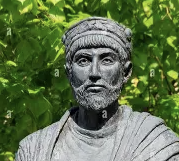
A very weighty argument is this - namely, that neither does the light which descends from thence, chiefly upon the world, mix itself with anything, nor admit of dirtiness or pollution, but remains entirely, and in all things that are, free from defilement, admixture, and suffering. Besides, we must pay attention to the other kinds of phenomena, both to the Intelligible, and yet more to the Sensible - whatever are connected with matter, or will manifest themselves in relation to our subject.

3 months 3 weeks ago
Every story of conversion is the story of a blessed defeat.
▼
Source
source
Foreword to Joy Davidman's Smoke on the Mountain, 1954

2 months 1 week ago
I acknowledge that history is full of religious wars: but we must distinguish; it is not the multiplicity of religions which has produced wars; it is the intolerant spirit animating that which believed itself in the ascendant.
▼
Source
source
No. 86. (Usbek writing to Mirza)
2 months 2 weeks ago
The historical approach, with its aim of detecting how things began and arriving from these origins at a knowledge of their nature, is certainly perfectly legitimate; but it also has its limitations. If everything were in continual flux, and nothing maintained itself fixed for all time, there would no longer be any possibility of getting to know about the world, and everything would be plunged into confusion.
▼
Source
source
Translation J. L. Austin (Oxford, 1950) as quoted by Stephen Toulmin, Human Understanding: The Collective Use and Evolution of Concepts (1972) Vol. 1, p. 55.

3 months 3 weeks ago
Genius, in truth, means little more than the faculty of perceiving in an unhabitual way.
▼
Source
source
Ch. 19

3 months 3 weeks ago
Virtuous men alone possess friends.
▼
Source
source
"Friendship", 1764



2 months 2 weeks ago
The next day as they were leaving Bethany, Jesus was hungry. Seeing in the distance a fig tree in leaf, he went to find out if it had any fruit. When he reached it, he found nothing but leaves, because it was not the season for figs. Then he said to the tree, “May no one ever eat fruit from you again.” And his disciples heard him say it. The next day when they came out from Bethany, He was hungry. After seeing in the distance a fig tree with leaves, He went to find out if there was anything on it. When He came to it, He found nothing but leaves, because it was not the season for figs. He said to it, "May no one ever eat fruit from you again!"
▼
Source
source
Mark 11:12-14 11:12-14
3 months 3 weeks ago
If anything extraordinary seems to have happened, we can always say that we have been the victims of an illusion. If we hold a philosophy which excludes the supernatural, this is what we always shall say.
▼
Source
source
Ch. 1: "The Scope of this Book"
CivilSimian.com created by AxiomaticPanic, CivilSimian, Kalokagathia