

3 months 4 weeks ago
Our stubbornness is right, because we want to preserve the liberty which we have in Christ. Only by preserving our liberty shall we be able to retain the truth of the Gospel inviolate.
▼
Source
source
Chapter 2
1 month 2 weeks ago
Age may have one side, but assuredly Youth has the other. There is nothing more certain than that both are right, except perhaps that both are wrong. Let them agree to differ; for who knows but what agreeing to differ may not be a form of agreement rather than a form of difference?
▼
Source
source
Crabbed Age and Youth.
2 days ago
From time immemorial man has been made in such a way that his vision of the world, so long as it has not been instilled under hypnosis, his motivations and scale of values, his actions and intentions are determined by his personal and group experience of life.
2 weeks 4 days ago
Where all think alike, no one thinks very much.
▼
Source
source
Ch. IV: "The Line of Least Resistance", p. 51

2 months 1 week ago
Little can be hoped for from a ruler... who has not at some time or other been preoccupied, even if only confusedly, with the first beginning and ultimate end of all things, and above all of man, with the "why" of his origin and the "wherefore" of his destiny.

1 week 5 days ago
In that strange island Iceland,-burst up, the geologists say, by fire from the bottom of the sea; a wild land of barrenness and lava; swallowed many months of every year in black tempests, yet with a wild gleaming beauty in summertime; towering up there, stern and grim, in the North Ocean with its snow jokuls, roaring geysers, sulphur-pools and horrid volcanic chasms, like the waste chaotic battle-field of Frost and Fire;-where of all places we least looked for Literature or written memorials, the record of these things was written down.
1 month 4 days ago
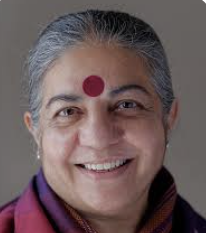
Just like Chief Seattle talked about being in the web of life, in India we talk about vasudhaiva kutumbkam, which means the earth family. Indian cosmology has never separated the human from the non-human-we are a continuum.

3 months 3 weeks ago
The truth remains that, after adolescence has begun, "words, words, words," must constitute a large part, and an always larger part as life advances, of what the human being has to learn.
▼
Source
source
"The Acquisition of Ideas"
3 months 3 weeks ago
Democracy is still upon its trial. The civic genius of our people is its only bulwark.
▼
Source
source
Robert Gould Shaw: Oration upon the Unveiling of the Shaw Monument
1 month ago
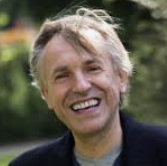
It is easy to romanticise, say, tigers or lions and cats. We admire their magnificent beauty, strength and agility. But we would regard their notional human counterparts as wanton psychopaths of the worst kind.
▼
Source
source
1.10 On the Misguided Romanticisation of Feline Psychopaths
2 months 4 days ago
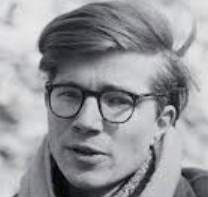
This is the Outsider's extremity. He does not prefer not to believe; he doesn't like feeling that futility gets the last word in the universe; his human nature would like to find something it can answer to with complete assent. But honesty prevents his accepting a solution that he cannot reason about.
▼
Source
source
Chapter Five, The Pain Threshold
1 month 1 week ago
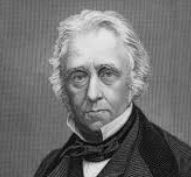
We know of no great revolution which might not have been prevented by compromise early and graciously made... [I]n all movements of the human mind which tend to great revolutions there is a crisis at which moderate concession may amend, conciliate, and preserve.
▼
Source
source
'Hallam', The Edinburgh Review (September 1828), quoted in T. B. Macaulay, Critical and Historical Essays Contributed to The Edinburgh Review, Vol. I (1843), p. 216

2 months 5 days ago
A race preserves its vigour so long as it harbours a real contrast between what has been and what may be, and so long as it is nerved by the vigour to adventure beyond the safeties of the past. Without adventure, civilization is in full decay.
▼
Source
source
p. 360.

3 months 3 weeks ago
The experiences of this period had two very marked effects on my opinions and character. In the first place, they led me to adopt a theory of life, very unlike that on which I had before acted, and having much in common with what at that time I certainly had never heard of, the anti-self-consciousness theory of Carlyle.
▼
Source
source
(pp. 141-142)

1 month 2 weeks ago
The artist is the person who invents the means to bridge biological inheritance and the environments created by technological innovation.
▼
Source
source
p. 98

2 months 3 weeks ago
Custom reconciles us to every thing.
▼
Source
source
Part IV Section XVIII

2 months 4 weeks ago
It is then unnecessary to investigate whether there be beyond the heaven Space, Void or Time. For there is a single general space, a single vast immensity which we may freely call Void; in it are innumerable globes like this one on which we live and grow. This space we declare to be infinite, since neither reason, convenience, possibility, sense-perception nor nature assign to it a limit. In it are an infinity of worlds of the same kind as our own.

2 months 2 weeks ago
Opinions, yes; convictions, no. That is the point of departure for an intellectual pride.
6 days ago
It is a fact that Mussolini entered the scene of world politics as an ally of the democracies, while Lenin entered it as a virtual ally of imperial Germany.

3 months 3 weeks ago
Who could believe in prophecies of Daniel or of Miller that the world would end this summer, while one milkweed with faith matured its seeds?
1 month 3 weeks ago
Yet there is a certain solitude like no other - that of the man preparing his meal in public on a wall, or on the hood of his car, or along a fence, alone. You see that all the time here. It is the saddest sight in the world. Sadder than destitution, sadder than the beggar is the man who eats alone in public. Nothing more contradicts the laws of man or beast, for animals always do each other the honour of sharing or disputing each other's food. He who eats alone is dead (but not he who drinks alone. Why is this?).
▼
Source
source
New York (p. 15)

3 months 3 weeks ago
I am looking forward very much to getting back to Cambridge, and being able to say what I think and not to mean what I say: two things which at home are impossible. Cambridge is one of the few places where one can talk unlimited nonsense and generalities without anyone pulling one up or confronting one with them when one says just the opposite the next day.
▼
Source
source
Letter to Alys Pearsall Smith (1893); published in The Selected Letters of Bertrand Russell, Volume 1: The Private Years (1884-1914), edited by Nicholas Griffin

3 months 3 weeks ago
A house sold by A to B does not wander from one place to another, although it circulates as a commodity.
▼
Source
source
Vol. II, Ch. VI, p. 152.
3 months 3 weeks ago
My life is like a stroll upon the beach, As near the ocean's edge as I can go.
▼
Source
source
"The Fisher's Boy", in Edmund Clarence Stedman (ed.) An American Anthology, 1787-1900, Boston and New York: Houghton, Mifflin and Co., 1900
2 months 2 weeks ago
In the hours without sleep, each moment is so full and so vacant that it suggests itself as a rival of Time.
4 months 2 weeks ago
This is the end of the web of the statesman activity: the direct interweaving of the characters of restrained and courageous men, when the kingly science has drawn them together by friendship and community of sentiment into a common life, and having perfected the most glorious and the best of all textures, clothes with it all the inhabitants of the state, both slaves and freemen, holds them together by this fabric, and omitting nothing which ought to belong to a happy state, rules and watches over them.
2 months 1 day ago
Nothing makes one old so quickly as the ever-present thought that one is growing older.
▼
Source
source
K 13
2 months 1 week ago
Everything in me that conspires to break the unity and continuity of my life conspires to destroy me and consequently to destroy itself. Every individual in a people who conspires to break the spiritual unity and continuity of that people tends to destroy it and to destroy himself as a part of that people.

3 months 4 weeks ago
T is so much to be a king, that he only is so by being so. The strange lustre that surrounds him conceals and shrouds him from us; our sight is there broken and dissipated, being stopped and filled by the prevailing light.
▼
Source
source
Book III, Ch. 7. Of the Inconveniences of Greatness

1 month 3 weeks ago
The peculiar and amusing nature of those answers stems from the fact that modern history is like a deaf person who is in the habit of answering questions that no one has put to them. If the purpose of history be to give a description of the movement of humanity and of the peoples, the first question - in the absence of a reply to which all the rest will be incomprehensible - is: what is the power that moves peoples? To this, modern history laboriously replies either that Napoleon was a great genius, or that Louis XIV was very proud, or that certain writers wrote certain books. All that may be so and mankind is ready to agree with it, but it is not what was asked.
▼
Source
source
Vol 2, pt 5, p 236 - Selected Works, Moscow, 1869
2 months 1 week ago
The ground of democratic ideas and practices is faith in the potentialities of individuals, faith in the capacity for positive developments if proper conditions are provided. The weakness of the philosophy originally advanced to justify the democratic movement was that it took individuality to be something given ready-made, that is, in abstraction from time, instead of as a power to develop.
4 months 3 weeks ago
We may assume the superiority ceteris paribus [all things being equal] of the demonstration which derives from fewer postulates or hypotheses—in short from fewer premisses; for... given that all these are equally well known, where they are fewer knowledge will be more speedily acquired, and that is a desideratum. The argument implied in our contention that demonstration from fewer assumptions is superior may be set out in universal form...

4 months ago
Lucid intervals and happy pauses.
▼
Source
source
History of King Henry VII, III
1 week 6 days ago
In the past you rivalled the Achaians and the Macedonians, peoples of your own race, and Philip, their commander, for the hegemony and glory, but now that the freedom of the Hellenes is at stake at a war against an alien people (Romans), ...And does it worth to ally with the barbarians, to take the field with them against the Epeirotans, the Achaians, the Akarnanians, the Boiotians, the Thessalians, in fact with almost all the Hellenes with the exception of the Aitolians who are a wicked nation... ...So Lakedaimonians it is good to remember your ancestors,... be afraid of the Romans... and do ally yourselves with the Achaians and Macedonians. But if some the most powerful citizens are opposed to this policy at least stay neutral and do not side with the unjust.
▼
Source
source
Histories, IX, 37:7-39:7 (Loeb)
2 months 3 weeks ago
A state without the means of some change is without the means of its conservation.

2 months 3 days ago
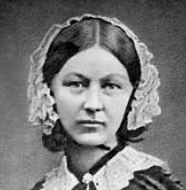
At present we live to impede each other's satisfactions; competition, domestic life, society, what is it all but this? We go somewhere where we are not wanted and where we don't want to go. What else is conventional life? Passivity when we want to be active. So many hours spent every day in passively doing what conventional life tells us, when we would so gladly be at work. And is it a wonder that all individual life is extinguished?

2 months 1 week ago
The prestige which constitutes three-fourths of might is first of all made up of that superb indifference which the powerful have for the weak, an indifference so contagious that it is communicated even to those who are its object.
▼
Source
source
in The Simone Weil Reader, p. 168

3 months 3 weeks ago
Virtuous men alone possess friends.
▼
Source
source
"Friendship", 1764
2 months 4 days ago
Maslow explained that, some time in the late thirties, he had been struck by the thought that modern psychology is based on the study of sick people. But since there are more healthy people around than sick people, how can this psychology give a fair idea of the workings of the human mind? It struck him that it might be worthwhile to devote some time to the study of healthy people.
▼
Source
source
p. 15
4 months 1 week ago
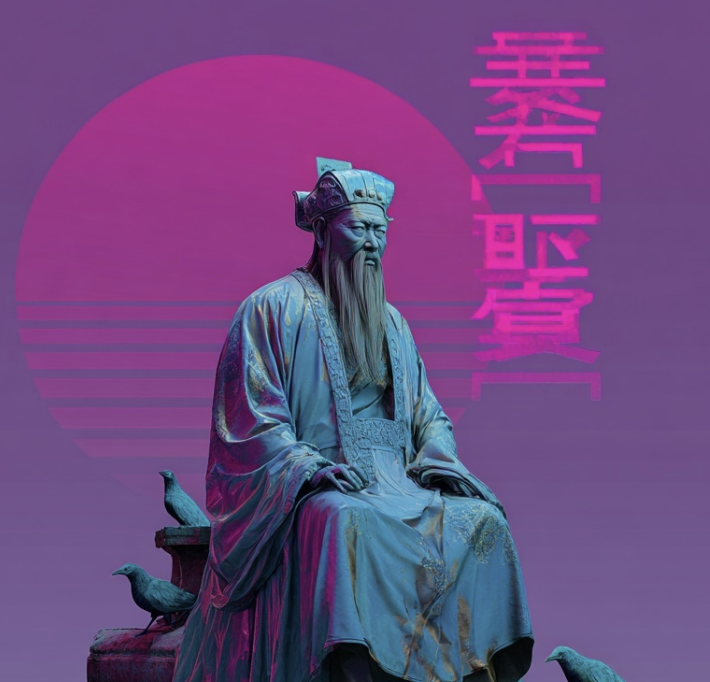
Before you embark on a journey of revenge, dig two graves.
2 months 2 weeks ago
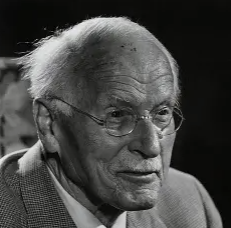
Man needs difficulties; they are necessary for health.
▼
Source
source
The Transcendent Function ("Die Transzendente Funktion") (1916) Volume 8: Structure & Dynamics of the Psyche, The Collected Works of C. G. Jung

6 days ago
Thus they are deceived by the likeness of blows, and are appeased by the pretended tears of those who deprecate their wrath, and thus an unreal grief is healed by an unreal revenge.
2 months 1 day ago
He was always smoothing and polishing himself, and in the end he became blunt before he was sharp.
▼
Source
source
L 70
1 week 5 days ago
Alas! the fearful Unbelief is unbelief in yourself.
▼
Source
source
Bk. II, ch. 7.

1 week 5 days ago
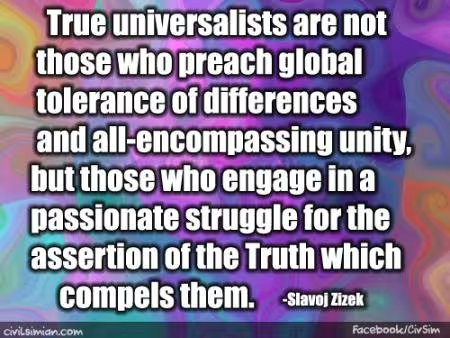
Why not? What is to hinder this Samson from governing? There is in him what far transcends all apprenticeships; in the man himself there exists a model of governing, something to govern by! There exists in him a heart-abhorrence of whatever is incoherent, pusillanimous, unveracious,-that is to say, chaotic, _un_governed; of the Devil, not of God. A man of this kind cannot help governing! He has the living ideal of a governor in him; and the incessant necessity of struggling to unfold the same out of him.
1 month 2 weeks ago
As men, we are all equal in the presence of death.
▼
Source
source
Maxim 1
2 months 3 weeks ago
Prejudice is of ready application in the emergency; it previously engages the mind in a steady course of wisdom and virtue and does not leave the man hesitating in the moment of decision sceptical, puzzled, and unresolved. Prejudice renders a man's virtue his habit, and not a series of unconnected acts. Through just prejudice, his duty becomes a part of his nature.
CivilSimian.com created by AxiomaticPanic, CivilSimian, Kalokagathia