

3 months 2 weeks ago
The ideal subject of totalitarian rule is not the convinced Nazi or the convinced Communist, but people for whom the distinction between fact and fiction (i.e., the reality of experience) and the distinction between true and false (i.e., the standards of thought) no longer exist.
▼
Source
source
Part 3, Ch. 13, § 3

3 months 3 weeks ago
Two men who differ as to the ends of life cannot hope to agree about education.
▼
Source
source
Ch. 12: Education and Discipline
3 months 1 week ago
The mind is not a vessel that needs filling, but wood that needs igniting.
▼
Source
source
On Listening to Lectures (Tr. Waterfield)

3 months 4 weeks ago
There must then be something that is better, and that must be God. When you see a stately and stupendous edifice, though you do not know who is the owner of it, you would yet conclude it was not built for rats. And this divine structure, that we behold of the celestial palace, have we not reason to believe that it is the residence of some possessor, who is much greater than we?
▼
Source
source
Ch. 12, tr. Cotton, rev. W. Carew Hazlitt, 1877

2 months 2 weeks ago
We can never legitimately cut loose from our archetypal foundations unless we are prepared to pay the price of a neurosis, any more than we can rid ourselves of our body and its organs without committing suicide.
▼
Source
source
J.B. Priestley, Times Literary Supplement, London

Just now
To ascend to the origin of things and speculate on the creation, is not the business of the natural philosopher. An humbler field is sufficient for him in the endeavor to discover, as far as our faculties will permit; what are these primary qualities impressed on matter, and to discover the spirit of the laws of nature
2 months 3 weeks ago
Morals are in all countries the result of legislation and government; they are not African or Asian or European: they are good or bad.

2 months 2 weeks ago
Someone arrived there - who lifted the veil of the goddess, at Sais. - But what did he see? He saw - wonder of wonders - himself. Novalis here alludes to Plutarch's account of the shrine of the goddess Minerva, identified with Isis, at Sais, which he reports had the inscription "I am all that hath been, and is, and shall be; and my veil no mortal has hitherto raised."

4 months 3 weeks ago
He who humbleth himself wants to be exalted.
2 weeks 3 days ago
A person who has been punished is not thereby simply less inclined to behave in a given way; at best, he learns how to avoid punishment.
▼
Source
source
Beyond Freedom and Dignity
2 months 1 week ago
No criticism can be brought against a branch of technical science from outside; no thought fitted out with the knowledge of a period and setting its course by definite historical aims could have anything to say to the specialist. Such thought and the critical, dialectical element it communicates to the process of cognition, thereby maintaining conscious connection between that process and historical life, do not exist for empiricism; nor do the associated categories, such as the distinction between essence and appearance, identity in change, and rationality of ends, indeed, the concept of man, of personality, even of society and class taken in the sense that presupposes specific viewpoints and directions of interest.
▼
Source
source
p. 145.

3 months 3 weeks ago
The guardians who have kindly undertaken the supervision will see to it that by far the largest part of mankind, including the entire "beautiful sex," should consider the step into maturity, not only as difficult but as very dangerous. After having made their domestic animals dumb and having carefully prevented these quiet creatures from daring to take any step beyond the lead-strings to which they have fastened them, these guardians then show them the danger which threatens them, should they attempt to walk alone.

3 weeks 6 days ago
With other beliefs crumbling, many seek to return to what they piously describe as "Enlightenment values". But these values were not as unambiguously benign as is nowadays commonly supposed.
▼
Source
source
2015
4 months 3 weeks ago
Style ought to prove that one believes in an idea; not only that one thinks it but also feels it.

3 months 3 weeks ago
In England women are still occasionally used instead of horses for hauling canal boats, because the labour required to produce horses and machines is an accurately known quantity, while that required to maintain the women of the surplus population is below all calculation.
▼
Source
source
Vol. I, Ch. 15, Section 2, pg. 430.

3 months 3 weeks ago
A great stock, though with small profits, generally increases faster than a small stock with great profits. Money, says the proverb, makes money. When you have a little, it is often easier to get more. The great difficulty is to get that little.
▼
Source
source
Chapter IX, p. 111.
3 months 3 weeks ago
...an intellectual concept abstracts from everything sensuous, it is not abstracted from sensuous things, and perhaps would be more correctly called abstracting than abstract. Intellectual concepts it is more cautious, therefore, to call pure ideas, and concepts given only empirically, abstract ideas.
2 months 1 week ago
When we rise out of [the night] into the new life and there begin to receive the signs, what can we know of that which - of him who gives them to us? Only what we experience from time to time from the signs themselves. If we name the speaker of this speech God, then it is always the God of a moment, a moment God.
▼
Source
source
p. 15

6 days ago
But the wise man is fortified against all inroads; he is alert; he will not retreat before the attack of poverty, or of sorrow, or of disgrace, or of pain. He will walk undaunted both against them and among them.
Just now
Of the splendid constellation of great names... we admire the living and revere dead far too warmly and too deeply to suffer us sit in judgment on their respective claims to in this or that particular discovery; to balance mathematical skill of one against the experimental dexterity of another, or the philosophical acumen a third. So long as "one star differs from another in glory," - so long as there shall exist varieties, or even incompatibilities of excellence, - so long will the admiration of mankind be found sufficient for all who merit it.
▼
Source
source
On the Theory of Light (1828) p.494

2 months 4 days ago
The characteristic of the really great writer is the ability of his mind to to suddenly leap beyond his ordinary human values, into sudden perception of universal values.
▼
Source
source
p. 33

2 months 3 weeks ago
By adverting to the dignity of this high calling our ancestors have turned a savage wilderness into a glorious empire: and have made the most extensive, and the only honorable conquests, not by destroying, but by promoting the wealth, the number, the happiness of the human race.



3 months 3 weeks ago
From the fundamental nature of the Philistine, it follows that, in regard to others, as he has no intellectual but only physical needs, he will seek those who are capable of satisfying the latter not the former. And so of all the demands he makes of others the very smallest will be that of any outstanding intellectual abilities. On the contrary, when he comes across these they will excite his antipathy and even hatred. For here he has a hateful feeling of inferiority and also a dull secret envy which he most carefully attempts to conceal even from himself; but in this way it grows sometimes into a feeling of secret rage and rancour. Therefore it will never occur to him to assess his own esteem and respect in accordance with such qualities, but they will remain exclusively reserved for rank and wealth, power and influence, as being in his eyes the only real advantages to excel in which is also his desire.
▼
Source
source
E. Payne, trans. (1974) Vol. 1, pp. 344-345

3 months 4 weeks ago
Holy Christendom has, in my judgment, no better teacher after the apostles than St. Augustine.
▼
Source
source
Luther's Works, American Ed., Robert H. Fischer, Helmut T. Lehman, eds., Concordia Publishing House/Fortress Press, 1959, ISBN 0800603370 (Word and Sacrament III), vol. 37:107

3 months 3 weeks ago
No particular results then, so far, but only an attitude of orientation, is what the pragmatic method means. The attitude of looking away from first things, principles, 'categories,' supposed necessities; and of looking towards last things, fruits, consequences, facts.
▼
Source
source
Lecture II, What Pragmatism Means
2 months 2 weeks ago
We do not know whether Hitler is going to found a new Islam. (He is already on the way; he is like Mohammed. The emotion in Germany is Islamic; warlike and Islamic. They are all drunk with a wild god.)
▼
Source
source
The Symbolic Life - in The Collected Works: The Symbolic Life. Miscellaneous Writings (1977), p. 281

2 months 3 weeks ago
"No human laws are of any validity if contrary to the law of nature; and such of them as are valid derive all their force and all their authority mediately or immediately from this original." Thus writes Blackstone, to whom let all honour be given for having so far outseen the ideas of his time; and, indeed, we may say of our time. A good antidote, this, for those political superstitions which so widely prevail. A good check upon that sentiment of power-worship which still misleads us by magnifying the prerogatives of constitutional governments as it once did those of monarchs. Let men learn that a legislature is not "our God upon earth," though, by the authority they ascribe to it, and the things they expect from it, they would seem to think it is. Let them learn rather that it is an institution serving a purely temporary purpose, whose power, when not stolen, is at the best borrowed.
▼
Source
source
Pt. III, Ch. 19 : The Right to Ignore the State, § 2
2 weeks 3 days ago
Whether or not birth control is eugenic, hygienic, and economic, it is the most revolutionary practice in the history of sexual morals.
▼
Source
source
Ch. XIV: "Love in the Great Society", §4, p. 291
1 month 2 weeks ago
Goodness is achieved not in a vacuum, but in the company of other men, attended by love.
▼
Source
source
Dangling Man (1944) [Penguin Classics, 1996, ISBN 0-140-18935-1], p. 84
2 months 3 weeks ago
The zealous never fail to draw political inferences from religious tenets, by which they interest the magistrate in the dispute; and then to the heat of a religious fervour is added the fury of a party zeal. All intercourse is cut off between the parties. They lose all knowledge of each other, tho' countrymen and neighbours, and are therefore easily imposed upon with the most absurd stories concerning each other's opinions and practices. They judge of the hatred of the adverse side by their own. Then fear is added to their hatred; and preventive injuries arise from their fear. The remembrance of the past, the dread of the future, the present ill, will join together to urge them forward to the most violent courses.Such is the manner of proceeding of religious parties towards each other.
▼
Source
source
Volume II, p. 147
3 months 3 weeks ago
In reality, the labourer belongs to capital before he has sold himself to capital.
▼
Source
source
Vol. I, Ch. 23, pg. 633.

2 months 5 days ago
As more and more women acquired prestige, fame, or money from feminist writings or from gains from feminist movement for equality in the workforce, individual opportunism undermined appeals for collective struggle. Women who were not opposed to patriarchy, capitalism, classism, or racism labeled themselves "feminist." Their expectations were varied. Privileged women wanted social equality with men of their class; some women wanted equal pay for equal work; others wanted an alternative lifestyle. Many of these legitimate concerns were easily co-opted by the ruling capitalist patriarchy.
▼
Source
source
p. 7.

3 months 3 weeks ago
From the comparison of theism and idolatry, we may form some other observations, which will also confirm the vulgar observation that the corruption of the best things gives rise to the worst.
▼
Source
source
Part X - With regard to courage or abasement

3 months 2 weeks ago
One age misunderstands another; and a petty age misunderstands all the others in its own ugly way.
▼
Source
source
p. 98e

2 weeks 3 days ago
The legacy of modernity is a legacy of fratricidal wars, devastating "development," cruel "civilization," and previously unimagined violence. Erich Auerbach once wrote that tragedy is the only genre that can properly claim realism in Western literature, and perhaps this is true precisely because of the tragedy Western modernity has imposed on the world.
▼
Source
source
46
3 weeks 6 days ago
In thinking of history in this [progressive & eschatological] way Islam shares common ground with Christianity and with the secular creeds of the modern West. It is misleading to represent Islam and 'the West' as forming civilisations that have nothing in common. Christianity and Islam are integral parts of western monotheism, and as such they share a view of history that marks them off from the rest of the world. Both are militant faiths that seek to convert all humankind. Other religions have been implicated in twentieth-century violence-the state cult of Shintō in Japan during the militarist period and Hindu nationalism in contemporary India, for example. But only Christianity and Islam have engendered movements that are committed to the systematic use of force to achieve universal goals.
▼
Source
source
Enlightenment and Terror in the Twentieth Century: Terror and the Western Tradition

3 months 2 weeks ago
The second doctrine of the Perennial Philosophy - that it is possible to know the Divine Ground by a direct intuition higher than discursive reasoning - is to be found in all the great religions of the world. A philosopher who is content merely to know about the ultimate Reality - theoretically and by hearsay - is compared by Buddha to a herdsman of other men's cows. Mohammed uses an even homelier barnyard metaphor. For him the philosopher who has not realized his metaphysics is just an ass bearing a load of books. Christian, Hindu, Taoist teachers wrote no less emphatically about the absurd pretensions of mere learning and analytic reasoning.

4 months 3 weeks ago
There must have been many who had a relationship to Jesus similar to that of Barabbas (his name was Jesus Barrabas). The Danish "Barrabas" is about the same as "N.N." [Mr. X or John Doe], filius patris, his father's son. - It is too bad, however, that we do not know anything more about Barrabas; it seems to me that in many ways he could have become a counterpart to the Wandering Jew. The rest of his life must have taken a singular turn. God knows whether or not he became a Christian. - It would be a poetic motif to have him, gripped by Christ's divine power, step forward and witness for him.
3 months 4 weeks ago
The middle sort of historians (of which the most part are) spoil all; they will chew our meat for us.
▼
Source
source
Book II, Ch. 10. Of Books
4 months 3 weeks ago
In the external, patience is some third element that must be added, and, humanly speaking, it would be better if it were not needed; some days it is needed more, some days less, all according to fortune, whose debtor a person becomes, even though he gained ever so little, because only when he wants to gain patience does he become one's debtor.
2 months 2 weeks ago
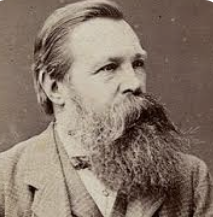
Once the first radical attack on private property has been launched, the proletariat will find itself forced to go ever further, to concentrate increasingly in the hands of the state all capital, all agriculture, all transport, all trade. All the foregoing measures are directed to this end; and they will become practicable and feasible, capable of producing their centralizing effects to precisely the degree that the proletariat, through its labor, multiplies the country's productive forces.

2 months 4 days ago
Those who devote themselves to rituals must ignore themselves. Rituals produce a distance from the self, a self-transcendence.

2 months 6 days ago
Respectable scientists like de Broglie himself accept wave mechanics because it confers coherence and unity upon the experimental findings of contemporary science, and in spite of the astonishing changes it implies in connection with ideas of causality, time, and space, but it is because of these changes that it wins favor with the public. The great popular success of Einstein was the same thing. The public drinks in and swallows eagerly everything that tends to dispossess the intelligence in favor of some technique; it can hardly wait to abdicate from intelligence and reason and from everything that makes man responsible for his destiny.
▼
Source
source
"Wave Mechanics," p. 75

1 month 2 weeks ago
War is not a courtesy but the most horrible thing in life; and we ought to understand that, and not play at war. We ought to accept this terrible necessity sternly and seriously. It all lies in that: get rid of falsehood and let war be war and not a game. As it is now, war is the favourite pastime of the idle and frivolous.
▼
Source
source
Bk. X, ch. 25

1 month 2 weeks ago
You could give Aristotle a tutorial. And you could thrill him to the core of his being. Aristotle was an encyclopedic polymath, an all time intellect. Yet not only can you know more than him about the world, you also can have a deeper understanding of how everything works. Such is the privilege of living after Newton, Darwin, Einstein, Planck, Watson, Crick and their colleagues.

3 months 3 weeks ago
Solvency is maintained by means of the national debt, on the principle, "If you will not lend me the money, how can I pay you?"
▼
Source
source
Ability

4 months 2 weeks ago
If the love of money is the root of all evil, the need of money is most certainly the root of all despair.
2 months 2 weeks ago
Aging people should know that their lives are not mounting and unfolding but that an inexorable inner process forces the contraction of life. For a young person it is almost a sin - and certainly a danger - to be too much occupied with himself; but for the aging person it is a duty and a necessity to give serious attention to himself.
▼
Source
source
p. 125
3 months 3 weeks ago
And every man, in love or pride, Of his fate is ever wide.
▼
Source
source
Nemesis
CivilSimian.com created by AxiomaticPanic, CivilSimian, Kalokagathia