

3 weeks 2 days ago
There is no social entity with a good that undergoes some sacrifice for its own good. There are only individual people, different individual people, with their own individual lives. Using one of these people for the benefit of others, uses him and benefits the others. Nothing more.
▼
Source
source
Ch. 3 : Moral Constraints and the State; Why Side Constraints?, p. 32

2 months 2 days ago
The chief impression left by a study of Crowley's life and works is that he wasted an immense amount of time and energy trying to shock everyone he came into contact with, and his dislike of orthodoxy turned him into an unconsciously comic figure, like Don Quixote.
▼
Source
source
pp. 153-154

2 months 2 days ago
Those who devote themselves to rituals must ignore themselves. Rituals produce a distance from the self, a self-transcendence.

4 months 2 weeks ago
As soon as the discourse is about a holy spirit, about believing in the holy spirit, how many do you think believe in that? Or when the discourse is about an evil spirit that should be renounced: how many do you think believe in such a thing? How can this be? Is it perhaps because the subject becomes too earnest when it is the holy spirit? For I can talk about, believe in, the spirit of the age, the spirit of the world, and the like and do not thereby need to think of anything specific. It is a kind of spirit, but I am not absolutely bound by what I say. And not being bound by what one says is highly prized.

3 months 2 weeks ago
Certainly it is correct to say: Conscience is the voice of God.
▼
Source
source
p. 75
2 months 1 week ago
Because rhythm is a universal scheme of existence, underlying all realization of order in change, it pervades all the arts, literary, musical, plastic and architectural, as well as the dance. Since man succeeds only as he adapts his behavior to the order of nature, his achievements and victories, as they ensue upon resistance and struggle, become the matrix of all esthetic subject-matter; in some sense they constitute the common pattern of art, the ultimate conditions of form. Their cumulative orders of succession become without express intent the means by which man commemorates and celebrates the most intense and full moments of his experience. Underneath the rhythm of every art and every work of art there lies, as a substratum in the depths of the subconsciousness, the basic pattern of the relations of the live creature to his environment.
▼
Source
source
p. 156


3 months 4 weeks ago
As to the people; in all these countries the greater part of the people certainly detest war, and most devoutly wish for peace. A very few of them, indeed, whose unnatural happiness depends upon the public misery, may wish for war; but be it yours to decide, whether it is equitable or not, that the unprincipled selfishness of such wretches should have more weight than the anxious wishes of all good men united.

2 weeks 1 day ago
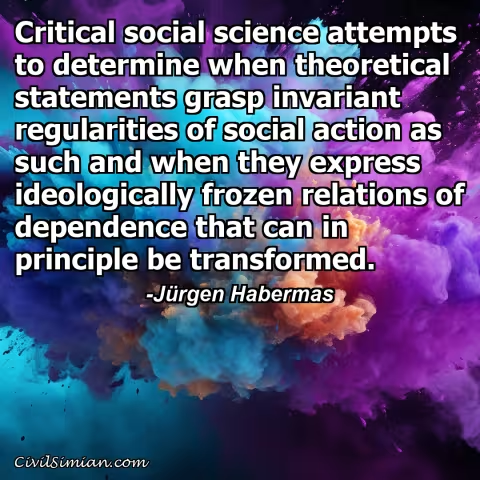
No effective blueprint [of a political alternative to Empire] will ever arise from a theoretical articulation such as ours.
▼
Source
source
206

3 months 2 weeks ago
When He died in the Wounded World He died not for men, but for each man. If each man had been the only man made, He would have done no less. Each thing, from the single grain of Dust to the strongest eldil, is the end and the final cause of all creation and the mirror in which the beam of His brightness comes to rest and so returns to Him. Blessed be He!

2 months 1 day ago
I use the word nursing for want of a better. It has been limited to signify little more than the administration of medicines and the application of poultices. It ought to signify the proper use of fresh air, light, warmth, cleanliness, quiet, and the proper selection and administration of diet - all at the least expense of vital power to the patient.
▼
Source
source
Notes on Nursing
Just now
In ignoring the important fundamental contribution of the followers of Marx, and by insisting exclusively on the phenomenon of superficial adaptation and variation, Sorel passed in silence over all that was healthy, live and fruitful in the Marxist doctrine.
▼
Source
source
Lucien Laurat, Marxism and Democracy, 1940, published by the Left Book Club, Victor Gollancz Ltd, London; translated by Edward Fitzgerald. Text online at the Marxists Internet Archive.
2 months 2 days ago
Could it be that sexual perversion and romanticism sprang from the same longing for distant horizons?
▼
Source
source
p. 17
3 months 1 week ago
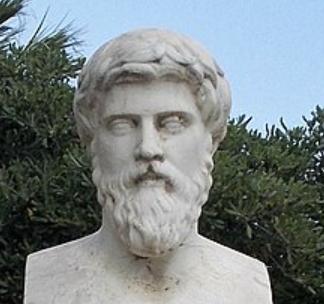
Phocion compared the speeches of Leosthenes to cypress-trees. "They are tall," said he, "and comely, but bear no fruit."
▼
Source
source
56 Phocion

2 months 1 week ago
Have ye not read, that he which made them at the beginning made them male and female, And said, For this cause shall a man leave father and mother, and shall cleave to his wife: and they twain shall be one flesh? Wherefore they are no more twain, but one flesh. What therefore God hath joined together, let not man put asunder.
▼
Source
source
19:4-6 (KJV)

4 months 2 weeks ago
It's funny the respectable names you can give to superstition.
2 months 5 days ago
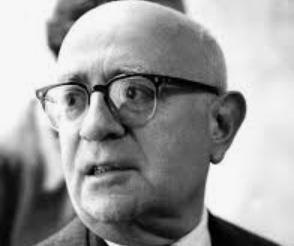
Marriage as a community of interests unfailingly means the degradation of the interested parties, and it is the perfidy of the world's arrangements that no one, even if aware of it, can escape such degradation. The idea might therefore be entertained that marriage without ignominy is a possibility reserved for those spared the pursuit of interests, for the rich. But the possibility is purely formal, for the privileged are precisely those in whom the pursuit of interests has become second-nature-they would not otherwise uphold privilege.
▼
Source
source
E. Jephcott, trans. (1974), § 10

3 months 2 weeks ago
The immediate aim of the Communists is the same as that of all the other proletarian parties: Formation of the proletariat into a class, overthrow of the bourgeois supremacy, conquest of political power by the proletariat.
▼
Source
source
Section 2 paragraph 7.

3 months 2 weeks ago
I think all the great religions of the world - Buddhism, Hinduism, Christianity, Islam, and Communism - both untrue and harmful. It is evident as a matter of logic that, since they disagree, not more than one of them can be true. With very few exception, the religions which a man accepts is that of the community in which he lives, which makes it obvious that the influence of environment is what has led him to accept the religion in question.
▼
Source
source
Preface, 1957

2 months 2 weeks ago
It is the love of the people; it is their attachment to their government, from the sense of the deep stake they have in such a glorious institution, which gives you both your army and your navy, and infuses into both that liberal obedience, without which your army would be a base rabble, and your navy nothing but rotten timber.
4 months 1 week ago
Those who deny the first principle should be flogged or burned until they admit that it is not the same thing to be burned and not burned, or whipped and not whipped.

2 months 5 days ago
The first thing that we know about ourselves is our imperfection.

3 months 2 weeks ago
For the moment, the jazz is playing; there is no melody, just notes, a myriad of tiny tremors. The notes know no rest, an inflexible order gives birth to them then destroys them, without ever leaving them the chance to recuperate and exist for themselves.... I would like to hold them back, but I know that, if I succeeded in stopping one, there would only remain in my hand a corrupt and languishing sound. I must accept their death; I must even want that death: I know of few more bitter or intense impressions.
2 months 2 weeks ago
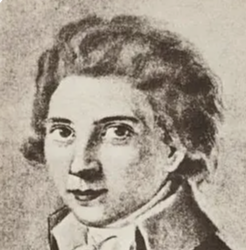
Life is writing. The sole purpose of mankind is to engrave the thoughts of divinity onto the tablets of nature.
▼
Source
source
"On Philosophy: To Dorothea," in Theory as Practice (1997), p. 420

4 months 3 weeks ago
This is the mistake which I seem to make eternally, that I imagine the sufferings of others as far greater than they really are. Ever since my childhood, the proposition, my greatest dangers lie in pity, has been confirmed again and again.
2 months 1 week ago
I am Alpha and Omega, the beginning and the end, the first and the last.
▼
Source
source
Revelation 22:13
Just now
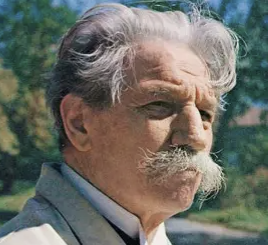
Awakening of Western thought will not be complete until that thought steps outside itself and comes to an understanding with the search for a world-view as this manifests itself in the thought of mankind as a whole. We have too long been occupied with the developing series of our own philosophical systems, and have taken no notice of the fact that there is a world-philosophy of which our Western philosophy is only a part. If, however, one conceives philosophy as being a struggle to reach a view of the world as a whole, and seeks out the elementary convictions which are to deepen it and give it a sure foundation, one cannot avoid setting our own thought face to face with that of the Hindus, and of the Chinese in the Far East. ... Our Western philosophy, if judged by its own latest pronouncements, is much naiver than we admit to ourselves, and we fail to perceive this only because we have acquired the art of expressing what is simple in a pedantic way.

2 months 2 weeks ago
Nothing in the world is harder than speaking the truth and nothing easier than flattery. If there's the hundredth part of a false note in speaking the truth, it leads to a discord, and that leads to trouble. But if all, to the last note, is false in flattery, it is just as agreeable, and is heard not without satisfaction. It may be a coarse satisfaction, but still a satisfaction. And however coarse the flattery, at least half will be sure to seem true. That's so for all stages of development and classes of society.
4 months 4 days ago
Be bold to look towards God and say, "Use me henceforward for whatever you want; I am of one mind with you; I am yours; I refuse nothing that seems good to you; lead me where you will; wrap me in what clothes you will."
▼
Source
source
Book II, ch. 16, 42
1 month 2 weeks ago
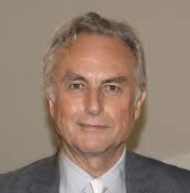
Orb webs in real life do their business largely in two dimensions. If the mesh is too coarse, flies pass straight through. If the mesh is too fine, rival spiders will achieve nearly the same result at less cost in silk, and will therefore leave behind more progeny to carry on their economically more prudent genes. Natural selection finds the efficient compromise.
▼
Source
source
Chapter 2, "Silken Fetters" (p. 58)
2 months 1 week ago
Freedom of thought and of expression are not mere rights to be claimed. They have their roots deep in the existence of individuals as developing careers in time. Their denial and abrogation is an abdication of individuality and a virtual rejection of time as opportunity.

3 months 3 weeks ago
Thus it may be said that not only the soul, the mirror of an indestructible universe, is indestructible, but also the animal itself, though its mechanism may often perish in part and take off or put on an organic slough.
▼
Source
source
La monadologie (77). Sometimes paraphrased as: The soul is the mirror of an indestructible universe.
2 months 1 week ago
There is no substitute for the comfort supplied by the utterly taken-for-granted relationship.
▼
Source
source
A Severed Head (1961); 1976, p. 181.
5 days ago
Just as the schoolmen philosophized only inside the belief of the church, ... without ever throwing a doubt upon this belief; as authors fill whole folios on the State without calling in question the fixed idea of the State itself; as our newspapers are crammed with politics because they are conjured into the fancy that man was created to be a zoon politicon,-so also subjects vegetate in subjection, virtuous people in virtue, liberals in humanity, etc., without ever putting to these fixed ideas of theirs the searching knife of criticism. Undislodgeable, like a madman's delusion, those thoughts stand on a firm footing, and he who doubts them-lays hands on the sacred!
▼
Source
source
Cambridge 1995, p. 44

3 months 2 weeks ago
Every genuine work of art has as much reason for being as the earth and the sun.
▼
Source
source
Art

2 months 3 weeks ago
The French are ... the most brilliant and the most dangerous nation of Europe, and the one that is surest to inspire admiration, hatred, terror, or pity, but never indifference.
▼
Source
source
p. 245
2 months 1 week ago
To-day the Enlightenment ideal has been changed into a reality; not only in legislation, which is the mere framework of public life, but in the heart of every individual, whatever his ideas may be, and even if he be a reactionary in his ideas, that is to say, even when he attacks and castigates institutions by which those rights are sanctioned.... The sovereignty of the unqualified individual, of the human being as such, generically, has now passed from being a juridical idea or ideal to be a psychological state inherent in the average man. And note this, that when what was before an ideal becomes a component part of reality, it inevitably ceases to be an ideal. The prestige and the magic that are attributes of the ideal are volatilised.
▼
Source
source
Chap.II: The Rise Of The Historic Level

1 month 2 weeks ago
Armies are necessary, before all things, for the defense of governments from their own oppressed and enslaved subjects.
▼
Source
source
Chapter VII, Significance of Compulsory Service
2 months 2 weeks ago
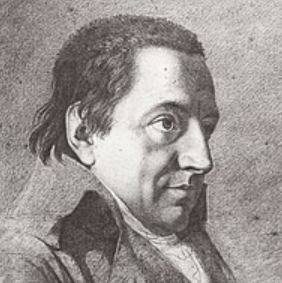
While all these are disturbed and divided by the multifarious objects to which their thoughts must be applied, the Philosopher pursues, in solitary silence and in unbroken concentration of mind, his single and undeviating course towards the Good, the Beautiful, and the True; and that is his daily labour, to which others can only resort at times for rest and refreshment after toil.
▼
Source
source
P. 17

4 months 2 weeks ago
Then we may begin by assuming that there are three classes of men—lovers of wisdom, lovers of honor, lovers of gain?
2 months 5 days ago
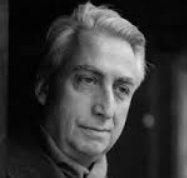
When I was a student I was assigned "Mythologies" and "A Lover's Discourse," by Roland Barthes, and felt at once that something momentous had happened to me, that I had met a writer who had changed my course in life somehow; and looking back now, I think he did.
▼
Source
source
Zadie Smith Interview

3 months 3 weeks ago
The interest of the dealers, however, in any particular branch of trade or manufactures, is always in some respects different from, and even opposite to, that of the public. To widen the market and to narrow the competition, is always the interest of the dealers.
▼
Source
source
Chapter XI, Part III, Conclusion of the Chapter, p. 292.
1 month 3 weeks ago
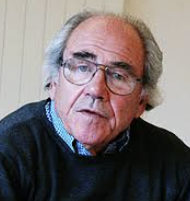
Picturing others and everything which brings you closer to them is futile from the instant that 'communication' can make their presence immediate.
▼
Source
source
(p. 42)
3 months 2 weeks ago
A fundamental economic reconstruction, bringing with it very far-reaching changes in ways of thinking and feeling, in philosophy and art and private relations, seems absolutely necessary if industrialism is to become the servant of man instead of his master. In all this, I am at one with the Bolsheviks; politically, I criticize them only when their methods seem to involve a departure from their own ideals.
▼
Source
source
Preface
2 months 4 days ago
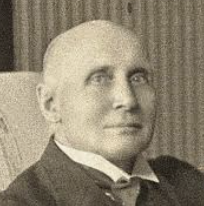
You cannot think without abstractions; accordingly, it is of the utmost importance to be vigilant in critically revising your modes of abstraction. It is here that philosophy finds its niche as essential to the healthy progress of society. It is the critic of abstractions. A civilisation which cannot burst through its current abstractions is doomed to sterility.
▼
Source
source
Ch. 4: "The Eighteenth Century", pp. 82-83
4 months 1 week ago
Greater fates gain greater rewards.
1 week 6 days ago
It is often said that experiments should be made without preconceived ideas. That is impossible. Not only would it make every experiment fruitless, but even if we wished to do so, it could not be done. Every man has his own conception of the world, and this he cannot so easily lay aside. We must, for example, use language, and our language is necessarily steeped in preconceived ideas.
▼
Source
source
Ch. IX: Hypotheses in Physics, Tr. George Bruce Halsted
CivilSimian.com created by AxiomaticPanic, CivilSimian, Kalokagathia