


3 months 2 weeks ago
It is sad that often, to be a good patriot, one must be the enemy of the rest of mankind.
▼
Source
source
"Country"
2 months 1 week ago
Men looke not at the greatnesse of the evill past, but the greatnesse of the good to follow.
▼
Source
source
The First Part, Chapter 15, p. 76 (Italics as per text)
1 month 2 weeks ago
Guilt has to be understood not only as a way of checking one's own destructiveness, but as a mechanism for safeguarding the life of the other, one that emerges from our own need and dependency, from a sense that this life is not a life without another life. Indeed, when it turns into a safeguarding action, I am not sure it should still be called "guilt." If we do still use that term, we could conclude that "guilt" is strangely generative or that its productive form is reparation.
▼
Source
source
p. 93
1 month 4 days ago
The great end of life is not knowledge but action.
▼
Source
source
"Technical Education"

3 months 2 weeks ago
It is the slowest pulsation which is the most vital. The hero will then know how to wait, as well as to make haste. All good abides with him who waiteth wisely.
▼
Source
source
Pearls of Thought (1881) p. 273

1 month 2 weeks ago
If you want to be happy, be.
▼
Source
source
Attributed in Wisdom for the Soul : Five Millennia of Prescriptions for Spiritual Healing (2006) by Larry Chang, p. 352

3 months 2 weeks ago
It appears... that a work similar in its object and general conception to that of Adam Smith, but adapted to the more extended knowledge and improved ideas of the present age, is the kind of contribution which Political Economy at present requires. The Wealth of Nations is in many parts obsolete, and in all, imperfect. Political Economy... has grown up almost from infancy since the time of Adam Smith; and the philosophy of society... has advanced many steps beyond the point at which he left it.
▼
Source
source
Preface, 1848
3 months 6 days ago
Be ruled by time, the wisest counsellor of all.
▼
Source
source
Pericles (Tr. Dryden and Clough)

3 months 2 weeks ago
Nothing is so difficult as not deceiving oneself.
▼
Source
source
p. 39e

2 months 3 weeks ago
Obstinacy in a bad cause, is but constancy in a good.
▼
Source
source
Section 25
4 months 1 week ago
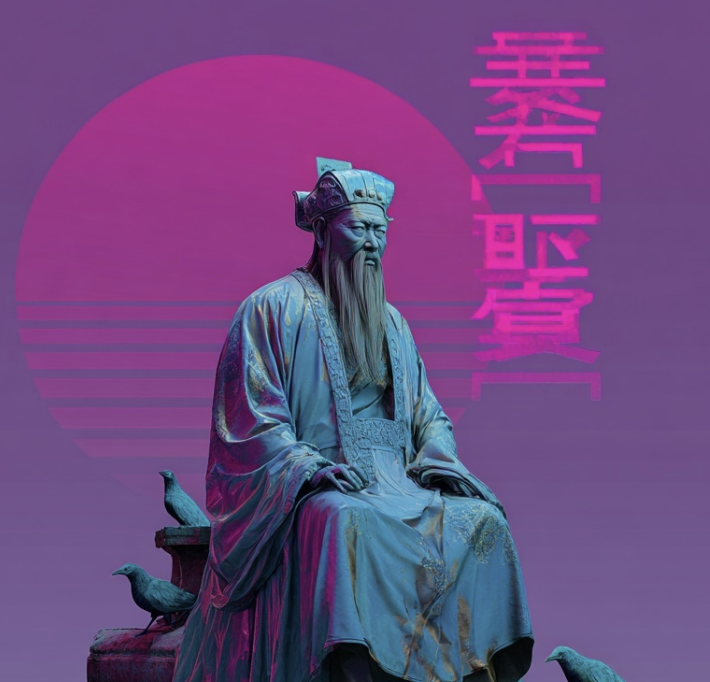
The administration of government lies in getting proper men. Such men are to be got by means of the ruler's own character. That character is to be cultivated by his treading in the ways of duty. And the treading those ways of duty is to be cultivated by the cherishing of benevolence.
1 month 3 weeks ago
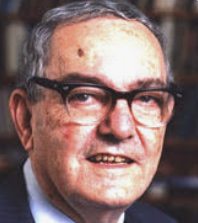
In an information-rich world, the wealth of information means a dearth of something else: a scarcity of whatever it is that information consumes. What information consumes is rather obvious: it consumes the attention of its recipients. Hence a wealth of information creates a poverty of attention and a need to allocate that attention efficiently among the overabundance of information sources that might consume it.
▼
Source
source
Simon, H. A. (1971) "Designing Organizations for an Information-Rich World" in: Martin Greenberger, Computers, Communication, and the Public Interest, Baltimore. MD: The Johns Hopkins Press. pp. 40-41.
3 months 2 weeks ago
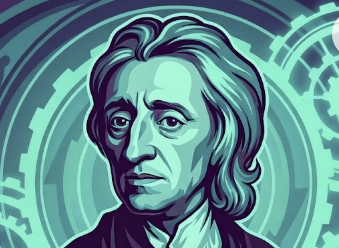
Another thing wherein they shew their love of dominion, is, their desire to have things to be theirs: They would have propriety and possession, pleasing themselves with the power which that seems to give, and the right that they thereby have, to dispose of them as they please. He that has not observ's these two humours working very betimes in children, has taken little notice of their actions: And he who thinks that these two roots of almost all the injustice and contention that so disturb human life, are not early to be weeded out, and contrary habits introduc'd, neglects the proper season to lay the foundations of a good and worthy man.
▼
Source
source
Sec. 105
3 months 1 week ago
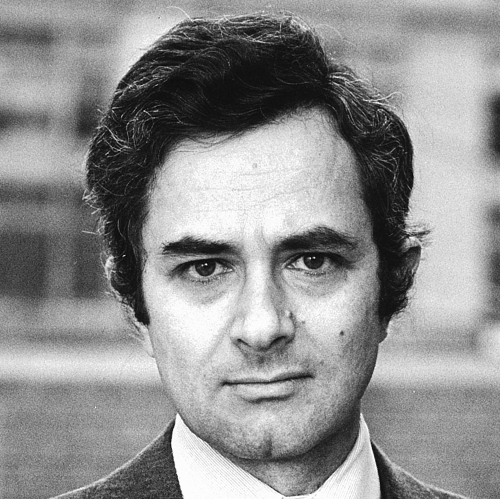
The distance between oneself and other persons and other species can fall anywhere on a continuum. Even for other persons the understanding of what it is like to be them is only partial, and when one moves to species very different from oneself, a lesser degree of partial understanding may still be available. The imagination is remarkably flexible. My point, however, is not that we cannot know what it is like to be a bat. I am not raising that epistemological problem. My point is rather that even to form a conception of what it is like to be a bat and a fortiori to know what it is like to be a bat, one must take up the bat's point of view.
▼
Source
source
p. 172, note 8.
4 months 3 days ago
For on these matters we should not trust the multitude who say that none ought to be educated but the free, but rather to philosophers, who say that the educated alone are free.
▼
Source
source
Book II, ch. 1, 22.

2 months 2 weeks ago
By what aberration has suicide, the only truly normal action, become the attribute of the flawed?


4 months 2 weeks ago
So when the universe was quickened with soul, God was well pleased; and he bethought him to make it yet more like its type. And whereas the type is eternal and nought that is created can be eternal, he devised for it a moving image of abiding eternity, which we call time. And he made days and months and years, which are portions of time; and past and future are forms of time, though we wrongly attribute them also to eternity. For of eternal Being we ought not to say 'it was', 'it shall be', but 'it is' alone: and in like manner we are wrong in saying 'it is' of sensible things which become and perish; for these are ever fleeting and changing, having their existence in time.
3 months 2 weeks ago
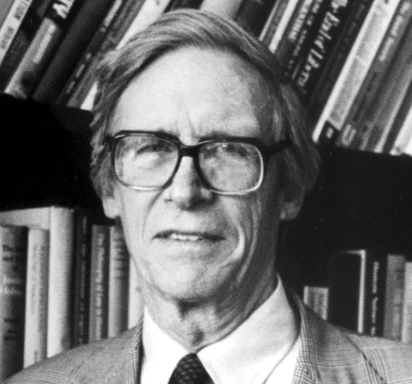
Properly understood, then, the desire to act justly derives in part from the desire to express most fully what we are or can be, namely free and equal rational beings with the liberty to choose.
▼
Source
source
Chapter IV, Section 40, p. 256

3 months 2 weeks ago
Philosophy is to be studied, not for the sake of any definite answers to its questions, since no definite answers can, as a rule, be known to be true, but rather for the sake of the questions themselves; because these questions enlarge our conception of what is possible, enrich our intellectual imagination and diminish the dogmatic assurance which closes the mind against speculation; but above all because, through the greatness of the universe which philosophy contemplates, the mind is also rendered great, and becomes capable of that union with the universe which constitutes its highest good.
1 month 4 weeks ago
We say that someone occupies an official position, whereas it is the official position that occupies him.
▼
Source
source
F 47
2 months ago
People do not go into the company of their fellow-creatures for what would seem a very sufficient reason, namely, that they have something to say to them, or something that they want to hear from them; but in the vague hope that they may find something to say.

3 months 2 weeks ago
Generosity is nothing else than a craze to possess. All which I abandon, all which I give, I enjoy in a higher manner through the fact that I give it away.... To give is to enjoy possessively the object which one gives.
▼
Source
source
Part 2

2 months 1 day ago
I must confess that my estimate of Lovecraft would not have pleased his most ardent admirers. The view I expressed in that book was that, while Lovecraft was distinctly a creative genius in his own way, his pessimism should not be taken too seriously; that it was the pessimism of a sick recluse, and had about it an element of rassentiment, a kind of desire to take revenge on the world that rejected him. In short, Lovecraft was a 19th century romantic, born in the wrong time. Most men of genius dislike their own age, but the really great ones impose their own vision on the age. The weak ones turn away into a world of gloomy fantasy.
▼
Source
source
p. 2

4 months 2 weeks ago
Idleness is only fatal to the mediocre.
2 months 2 weeks ago
The more I see of the world, the more I am convinced that civilisation is a blessing not sufficiently estimated by those who have not traced its progress; for it not only refines our enjoyments, but produces a variety which enables us to retain the primitive delicacy of our sensations. Without the aid of the imagination all the pleasures of the senses must sink into grossness, unless continual novelty serve as a substitute for the imagination, which, being impossible, it was to this weariness, I suppose, that Solomon alluded when he declared that there was nothing new under the sun!
▼
Source
source
Letter 2
1 month 3 weeks ago
Global rationality, the rationality of neoclassical theory, assumes that the decision maker has a comprehensive, consistent utility function, knows all the alternatives that are available for choice, can compute the expected value of utility associated with each alternative, and chooses the alternative that maximizes expected utility. Bounded rationality, a rationality that is consistent with our knowledge of actual human choice behavior, assumes that the decision maker must search for alternatives, has egregiously incomplete and inaccurate knowledge about the consequences of actions, and chooses actions that are expected to be satisfactory (attain targets while satisfying constraints).
▼
Source
source
Simon (1997, p. 17); As cited in: Gustavo Barros (2010, p. 460).
3 months ago
Place is the greatest thing, as it contains all things.
▼
Source
source
As quoted in Diogenes Laërtius, The Lives and Opinions of Eminent Philosophers, I, 35
2 months 1 day ago
The individual begins that long effort as an Outsider; he may finish it as a saint.
▼
Source
source
Chapter Nine, Breaking the Circuit, final sentence
3 months 2 weeks ago
I don't like the spirit of socialism - I think freedom is the basis of everything.
▼
Source
source
Letter to Constance Malleson (Colette), September 29, 1916
2 months 2 weeks ago
Unity is the great goal toward which humanity moves irresistibly. But it becomes fatal, destructive of the intelligence, the dignity, the well-being of individuals and peoples whenever it is formed without regard to liberty, either by violent means or under the authority of any theological, metaphysical, political, or even economic idea. That patriotism which tends toward unity without regard to liberty is an evil patriotism, always disastrous to the popular and real interests of the country it claims to exalt and serve. Often, without wishing to be so, it is a friend of reaction - an enemy of the revolution, i.e., the emancipation of nations and men.

2 months 5 days ago
The intellectual world is divided into two classes - dilettantes, on the one hand, and pedants, on the other.
2 months 3 weeks ago
I discuss with myself questions of politics, love, taste, or philosophy. I let my mind rove wantonly, give it free rein to follow any idea, wise or mad that may present itself. ... My ideas are my harlots.
3 months 3 weeks ago
Of corruption, the principal and direct use is, to engage the representatives of the people to betray their trust, and sell themselves and the people to the universal corrupter-the monarch, in his capacity of corrupter-general.
▼
Source
source
Constitutional Code (written between 1820 and 1832), quoted in The Works of Jeremy Bentham, Vol. XVII (1841), p. 76
2 months 1 week ago
Bereavement is a darkness impenetrable to the imagination of the unbereaved.
▼
Source
source
The Sacred and Profane Love Machine (1974) p. 37.
2 months 1 day ago
No matter how honest scientists think they are, they are still influenced by various unconscious assumptions that prevent them from attaining true objectivity. Expressed in a sentence, Fort's principle goes something like this: People with a psychological need to believe in marvels are no more prejudiced and gullible than people with a psychological need not to believe in marvels.
▼
Source
source
p. 125
2 weeks ago
When we see civilization elated with this declining and decrepit phase of its career, we are reminded of a faded belle who, boasting of her attractions in her fiftieth year, excites at once the remark that she was fairer at twenty-five. So it is with civilization, which, dreaming of perfection and progress, is constantly deteriorating, and which will find but too soon in its industrial achievements new sources of political oppression, crimes and commotions.
2 months 1 day ago
Rather, power is most powerful, most stable, where it creates a feeling of freedom and where it does not need to resort to violence.
4 months 1 day ago
Love and the gracious heart are a single thing...one can no more be without the otherthan the reasoning mind without its reason.
▼
Source
source
Chapter XVI (tr. Mark Musa)

3 days ago
But the wise man knows that all things are in store for him. Whatever happens, he says: "I knew it."
1 week 5 days ago
Copernicus never discusses matters of religion or faith, nor does he use argument that depend in any way upon the authority of sacred writings which he might have interpreted erroneously. ... He did not ignore the Bible, but he knew very well that if his doctrine were proved, then it could not contradict the Scriptures when they were rightly understood.
1 week 4 days ago
America, you have it better than our continent, the old one.
▼
Source
source
Wendts Musen-Almanach
3 months 2 days ago
So people should abstain from other animals just as they should from the human.
▼
Source
source
4, 9, 6
2 months 5 days ago
But it has been necessary, for the benefit of the social order, to convert religion into a kind of police system, and hence hell. Oriental or Greek Christianity is predominantly eschatological, Protestantism predominantly ethical, and Catholicism is a compromise between the two, although with the eschatological element predominating.

2 months 2 weeks ago
The primary use of knowledge is for such guidance of conduct under all circumstances as shall make living complete. All other uses of knowledge are secondary.
▼
Source
source
Vol. 3, Ch. XV, The Americans
3 days ago
"New friends, however, will not be the same." No, nor will you yourself remain the same; you change with every day and every hour.
2 months 2 weeks ago
At the present time a serious, strong state can have but one sound foundation - military and bureaucratic centralization. Between a monarchy and the most democratic republic there is only one essential difference: in the former, the world of officialdom oppresses and robs the people for the greater profit of the privileged and propertied classes, as well as to line its own pockets, in the name of the monarch; in the latter, it oppresses and robs the people in exactly the same way, for the benefit of the same classes and the same pockets, but in the name of the people's will. In a republic a fictitious people, the "legal nation" supposedly represented by the state, smothers the real, live people. But it will scarcely be any easier on the people if the cudgel with which they are beaten is called the people's cudgel.
2 months 1 day ago
Architecture is a way for power to achieve eloquence through form.
3 weeks 6 days ago
A few centuries from now, if involuntary suffering still exists in the world, the explanation for its persistence won't be that we've run out of computational resources to phase out its biological signature, but rather that rational agents - for reasons unknown - will have chosen to preserve it.
▼
Source
source
The Radical Plan to Phase out Earth's Predatory Species, io9, 30 Jul. 2014
2 months 2 weeks ago
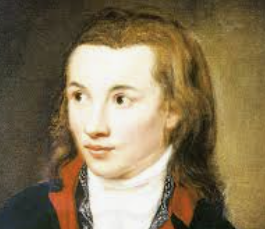
Someone arrived there - who lifted the veil of the goddess, at Sais. - But what did he see? He saw - wonder of wonders - himself. Novalis here alludes to Plutarch's account of the shrine of the goddess Minerva, identified with Isis, at Sais, which he reports had the inscription "I am all that hath been, and is, and shall be; and my veil no mortal has hitherto raised."
CivilSimian.com created by AxiomaticPanic, CivilSimian, Kalokagathia