


4 months 3 days ago
Never accept compliments or criticism from someone you wouldn't take advice from.

1 month 3 weeks ago
Actual aristocracy cannot be abolished by any law: all the law can do is decree how it is to be imparted and who is to acquire it.
▼
Source
source
L 44

2 months 3 weeks ago
That there is no such thing as what philosophers call material substance, I am seriously persuaded: but if I were made to see any thing absurd or skeptical in this, I should then have the same reason to renounce this, that I imagine I have now to reject the contrary opinion.
▼
Source
source
Philonous to Hylas
2 months 1 week ago
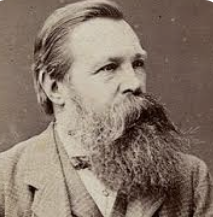
The introduction of free competition is thus public declaration that from now on the members of society are unequal only to the extent that their capitals are unequal, that capital is the decisive power, and that therefore the capitalists, the bourgeoisie, have become the first class in society. Free competition is necessary for the establishment of big industry, because it is the only condition of society in which big industry can make its way.
3 months 1 week ago
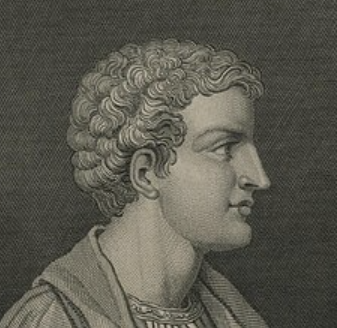
The mind enamored with deceptive things, declines things better.
▼
Source
source
Book II, satire ii, line 6
1 month 3 weeks ago
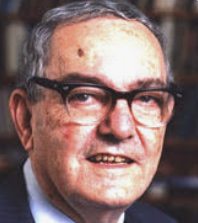
The function of knowledge in the decision-making process is to determine which consequences follow upon which of the alternative strategies.
▼
Source
source
p. 75
2 months 2 weeks ago
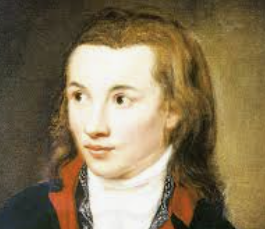
To become properly acquainted with a truth, we must first have disbelieved it, and disputed against it.
2 months 1 week ago
Labour is the source of all wealth, the political economists assert. And it really is the source -- next to nature, which supplies it with the material that it converts into wealth. But it is even infinitely more than this. It is the prime basic condition for all human existence, and this to such an extent that, in a sense, we have to say that labour created man himself.
▼
Source
source
The Part Played by Labour in the Transition from Ape to Man
4 months 3 days ago
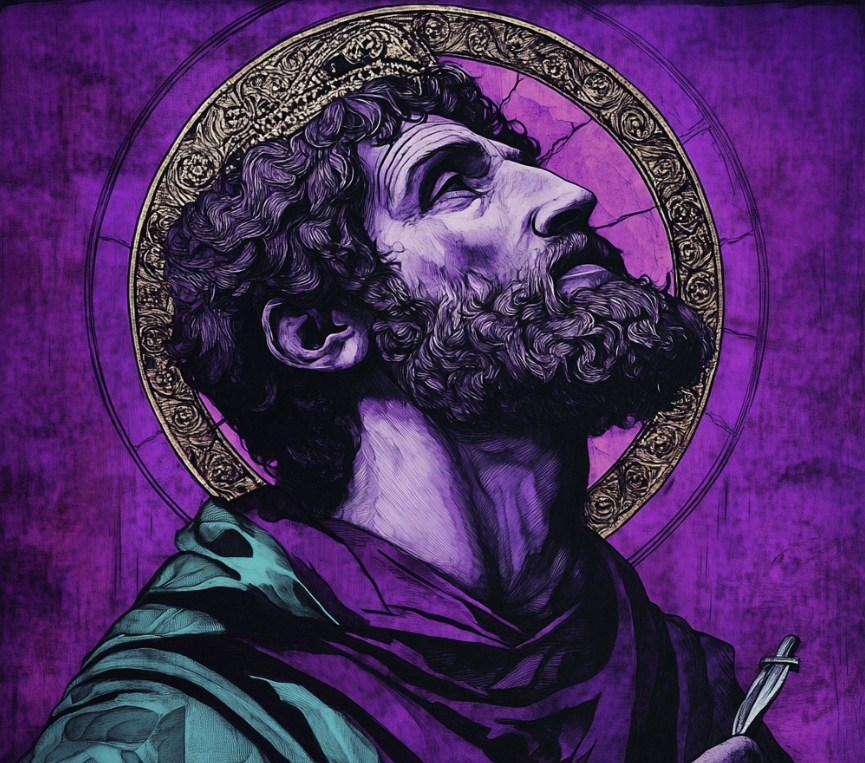
Thou hast made us for Thyself, and the heart never resteth till it findeth rest in Thee.
▼
Source
source
p. 515

2 months 4 weeks ago
Above and before all things, worship GOD!
▼
Source
source
As quoted in The Sayings of the Wise: Or, Food for Thought: A Book of Moral Wisdom, Gathered from the Ancient Philosophers (1555) by William Baldwin [1908 edition]

2 months 3 weeks ago
The people reign over the American political world as God rules over the universe. It is the cause and the end of all things; everything rises out of it and is absorbed back into it.
▼
Source
source
Chapter IV, Part I.
1 month 3 weeks ago
It is hardly to be believed how spiritual reflections when mixed with a little physics can hold people's attention and give them a livelier idea of God than do the often ill-applied examples of his wrath.
▼
Source
source
A 11
4 months 3 days ago
So the Church too, like Mary, enjoys perpetual virginity and uncorrupted fecundity.
▼
Source
source
195:2

2 months 1 week ago
The aphorism is cultivated only by those who have known fear in the midst of words, that fear of collapsing with all the words.

3 months 2 weeks ago
So monstrous is the making and keeping them slaves at all, abstracted from the barbarous usage they suffer, and the many evils attending the practice; as selling husbands away from wives, children from parents, and from each other, in violation of sacred and natural ties; and opening the way for adulteries, incests, and many shocking consequences, for all of which the guilty Masters must answer to the final Judge.

1 week 1 day ago
With what scientific stoicism he walks through the land of wonders, unwondering.

2 months 2 days ago
In a sense, all explanation must end in an ultimate arbitrariness.
▼
Source
source
Ch. 5: "The Romantic Reaction", p. 130

3 months 3 weeks ago
For all knowledge and wonder (which is the seed of knowledge) is an impression of pleasure in itself.
▼
Source
source
Book I, i, 3

2 months 2 weeks ago
A very great part of the mischiefs that vex the world arises from words.
▼
Source
source
Letter to Richard Burke post 19 February 1792 (1792), in R. B. McDowell and William B. Todd (eds), The Writings and Speeches of Edmund Burke, Vol. 9: I: The Revolutionary War, 1794-1797; II: Ireland. p. 647
3 months 3 weeks ago
But by far the greatest obstacle to the progress of science and to the undertaking of new tasks and provinces therein is found in this - that men despair and think things impossible.
▼
Source
source
Aphorism 92

1 month 4 weeks ago
The time is come when women must do something more than the "domestic hearth," which means nursing the infants, keeping a pretty house, having a good dinner and an entertaining party.
1 month 4 weeks ago
Immature love says: "I love you because I need you." Mature love says: "I need you because I love you."
▼
Source
source
Ch. 2
3 months 1 week ago
Think to yourself that every day is your last; the hour to which you do not look forward will come as a welcome surprise.
▼
Source
source
Book I, epistle iv, line 13-14

3 months 1 week ago
Language is a part of our organism and no less complicated than it.
▼
Source
source
Journal entry (14 May 1915), p. 48

3 months 2 weeks ago
The Calculus required continuity, and continuity was supposed to require the infinitely little; but nobody could discover what the infinitely little might be.
▼
Source
source
Ch. 5: Mathematics and the Metaphysicians

2 months ago
A farewell does not dilute the presence of the past; it may make an even deeper presence.

3 months 1 week ago
If any one hearken with understanding to these sayings of mine many a deed worthy of a good man shall he perform and many a foolish deed be spared.

3 months 2 weeks ago
"Say what you like," we shall be told, "the apocalyptic beliefs of the first Christians have been proved to be false. It is clear from the New Testament that they all expected the Second Coming in their own lifetime. And, worse still, they had a reason, and one which you will find very embarrassing. Their Master had told them so. He shared, and indeed created, their delusion. He said in so many words, 'this generation shall not pass till all these things be done.' And he was wrong. He clearly knew no more about the end of the world than anyone else." It is certainly the most embarrassing verse in the Bible.
3 days ago
The difficulty in our education up till now lies, for the most part, in the fact that knowledge did not refine itself into will, to application of itself, to pure practice. The realists felt the need and supplied it, though in a most miserable way, by cultivating idea-less and fettered "practical men." Most college students are living examples of this sad turn of events. Trained in the most excellent manner, they go on training; drilled they continue drilling.
▼
Source
source
p. 25

1 week 5 days ago
Jesus, in some respects, was an anarchist, for he had no idea of civil government. That government seems to him purely and simply an abuse.
▼
Source
source
Ch. 7.

3 days ago
What is not supposed to be my concern! First and foremost, the Good Cause, then God's cause, the cause of mankind, of truth, of freedom, of humanity, of justice; further, the cause of my people, my prince, my fatherland; finally, even the cause of Mind, and a thousand other causes. Only my cause is never to be my concern. "Shame on the egoist who thinks only of himself!"
▼
Source
source
Cambridge 1995, p. 5

2 months 2 weeks ago
Is it really not possible to touch the gaming table without being instantly infected by superstition?

3 months 1 week ago
Most of the texts... preserved from this period come from writers... either... affiliated with the aristocratic party, or... distrustful of democratic or radically democratic institutions.

2 months 1 week ago
The absolute idea is the subject in its final form, thought. The otherness and negation is the object, being. The absolute idea now has to be interpreted as objective being. Hegel's Logic thus ends where it began, with the category of being. This, however is a different being that can no longer be explained thought he concepts applied in the analysis that opened the Logic. For being now is understood in its notion that is, as a concrete totality wherein all particular forms subsist as the essential distinctions and relations of on comprehensive principle. Thus comprehended, being is nature, and dialectical thought passes on to the Philosophy of Nature.
▼
Source
source
P. 165-166
1 week 1 day ago
For is not a Symbol ever, to him who has eyes for it, some dimmer or clearer revelation of the God-like? B
▼
Source
source
k. III, ch. 3.

3 months 2 weeks ago
Words are good servants but bad masters.
▼
Source
source
As quoted by Laura Huxley, in conversation with Alan Watts about her memoir This Timeless Moment (1968), in Pacifica Archives #BB2037
3 months 2 weeks ago
Enjoin him to play so many hours every day, and look that he do it; and you shall see he will quickly be sick of it; and willing to leave it. By this means making the recreations you dislike a business to him, he will of himself with delight betake himself to those things you would have him do, especially if they be proposed as rewards for having performed the task in that play which is commanded of him.
▼
Source
source
Sec. 129
3 months 1 week ago
Disease of the home and of the life comes about in the same way as that of the body.
▼
Source
source
Freeman (1948), p. 170 Variant: Disease occurs in a household, or in a life, just as it does in a body.
3 months 2 weeks ago
A slight sound at evening lifts me up by the ears, and makes life seem inexpressibly serene and grand. It may be Uranus, or it may be in the shutter.
▼
Source
source
July 10-12, 1841
1 month 3 weeks ago
Nietzsche's break with Schopenhauer rests on precisely this point; it is a matter of knowing whether the will is unitary or multiple.
▼
Source
source
p. 7
2 months 3 weeks ago
Do you see this egg? With this you can topple every theological theory, every church or temple in the world. What is it, this egg, before the seed is introduced into it? An insentient mass. And after the seed has been introduced to into it? What is it then? An insentient mass. For what is the seed itself other than a crude and inanimate fluid? How is this mass to make a transition to a different structure, to sentience, to life? Through heat. And what will produce that heat in it? Motion. "Conversation Between D'Alembert and Diderot", as quoted in Selected Writings (1966) edited by Lester G. Crocker, and The Enlightenment and the Intellectual Foundations of Modern Culture (2004) by Louis K Dupré, p. 30 Variant translation: See this egg. It is with this that all the schools of theology and all the temples of the earth are to be overturned.
▼
Source
source
As quoted in Diderot, Reason and Resonance (1982) by Élisabeth de Fontenay, p. 217
1 month 1 week ago
Faith is the great cop-out, the great excuse to evade the need to think and evaluate evidence. Faith is belief in spite of, even perhaps because of, the lack of evidence.
▼
Source
source
From speech at the Edinburgh International Science Festival, 1992-04-15.

3 months 2 weeks ago
It is for the sake of order that I seduced Clytemnestra, for the sake of order that I killed my king. I wanted for order to rule and that it rule through me. I have lived without desire, without love, without hope: I made order. Oh! terrible and divine passion!
▼
Source
source
Aegistheus, Act 2
3 months 2 weeks ago
"They would say," he answered, "that you do not fail in obedience through lack of love, but have lost love because you never attempted obedience."
▼
Source
source
Ch. 7 : The Pendragon, section 2
2 months 1 week ago
When we desire to lead men to God, we must not simply overthrow their idols. In each of these images we must seek to discover what divine quality he who carved it sought.
▼
Source
source
p. 117
4 months 2 weeks ago
Perhaps then we must begin with such facts as are known to us from individual experience. It is necessary therefore that the person who is to study, with any tolerable chance of profit, the principles of nobleness and justice and politics generally, should have received a good moral training.

1 month 2 weeks ago
The hot radio medium used in cool or nonliterate cultures has a violent effect, quite unlike its effect, say in England or America, where radio is felt as entertainment.
▼
Source
source
(p. 30)

3 months 2 weeks ago
Anyone wanting a new house picks one from among those built on speculation or still in process of construction. The builder no longer works for his customers but for the market.
▼
Source
source
Vol. II, Ch. XII, p. 237.
CivilSimian.com created by AxiomaticPanic, CivilSimian, Kalokagathia