

3 months 2 weeks ago
All our knowledge falls with the bounds of experience.
▼
Source
source
A 146, B 185

2 months 3 weeks ago
Men that look upon my outside, perusing only my condition, and fortunes, do err in my altitude; for I am above Atlas his shoulders.
▼
Source
source
Section 11

2 months 4 weeks ago
All the good are friends of one another.
▼
Source
source
As quoted in Stromata, v. 14. by Clement of Alexandria
1 week 2 days ago
A certain degree of blindness as to the absoluteness of one's own values may be indispensable to extract the valuable qualities from the world, the qualities whose value is believed to be the highest. It is possible that in order to realize one's values one must have faith in their exclusive character.
▼
Source
source
Chapter Eight, Logical Empiricism, p. 202-203

3 months 2 weeks ago
The fundamental concept in social science is Power, in the same sense in which Energy is the fundamental concept in physics.
▼
Source
source
Ch. 1: The Impulse to Power

3 months 2 weeks ago
I... believe in the rationalist tradition of a commonwealth of learning, and in the urgent need to preserve this tradition.

2 days ago
And this is the vote which [Cato] casts concerning them both: "If Caesar wins, I slay myself; if Pompey, I go into exile." What was there for a man to fear who, whether in defeat or in victory, had assigned to himself a doom which might have been assigned to him by his enemies in their utmost rage? So he died by his own decision.

3 months 2 weeks ago
Religion...is a man's total reaction upon life.
▼
Source
source
Lecture II, "Circumscription of the Topic"
3 months 3 weeks ago
To turn one's eyes away from Jesus means to turn them to the Law.
▼
Source
source
Chapter 2
1 month 3 days ago
The saying that a little knowledge is a dangerous thing is, to my mind, a very dangerous adage. If knowledge is real and genuine, I do not believe that it is other than a very valuable possession, however infinitesimal its quantity may be. Indeed, if a little knowledge is dangerous, where is the man who has so much as to be out of danger?
▼
Source
source
"On Elementary Instruction in Physiology"

2 months 1 week ago
Were we to undertake an exhaustive self-scrutiny, disgust would paralyze us, we would be doomed to a thankless existence.

3 months 3 weeks ago
As we divided natural philosophy in general into the inquiry of causes, and productions of effects: so that part which concerneth the inquiry of causes we do subdivide according to the received and sound division of causes. The one part, which is physic, inquireth and handleth the material and efficient causes; and the other, which is metaphysic, handleth the formal and final causes.
▼
Source
source
Book VII, 3
4 months 1 day ago
Some of their faults people readily admit, but others not so readily.
▼
Source
source
Book II, ch. 21, 1

3 months 2 weeks ago
Even the death of Friends will inspire us as much as their lives. They will leave consolation to the mourners, as the rich leave money to defray the expenses of their funerals, and their memories will be incrusted over with sublime and pleasing thoughts, as monuments of other men are overgrown with moss; for our Friends have no place in the graveyard.
2 months 1 week ago
We do not rush toward death, we flee the catastrophe of birth, survivors struggling to forget it. Fear of death is merely the projection into the future of a fear which dates back to our first moment of life. We are reluctant, of course, to treat birth as a scourge: has it not been inculcated as the sovereign good - have we not been told that the worst came at the end, not at the outset of our lives? Yet evil, the real evil, is behind, not ahead of us. What escaped Jesus did not escape Buddha: "If three things did not exist in the world, O disciples, the Perfect One would not appear in the world. ..." And ahead of old age and death he places the fact of birth, source of every infirmity, every disaster.

2 months 3 weeks ago
Every central government worships uniformity: uniformity relieves it from inquiry into an infinity of details.
▼
Source
source
Book Four, Chapter III.
1 month 1 week ago
Though the coming of the day is still the most inspiriting, yet day's departure, also, and the return of night refresh, renew, and quiet us; and in the pastures of the dusk we stand, like cattle, exulting in the absence of the load.
▼
Source
source
Toils And Pleasures.

3 months 2 weeks ago
In the highest civilization, the book is still the highest delight. He who has once known its satisfactions is provided with a resource against calamity.
▼
Source
source
Quotation and Originality

1 month 2 weeks ago
The metropolis today is a classroom; the ads are its teachers. The traditional classroom is an obsolete detention home, a feudal dungeon.
▼
Source
source
(p. 12)

3 months 2 weeks ago
Night is falling: at dusk, you must have good eyesight to be able to tell the Good Lord from the Devil.
▼
Source
source
Act 10, sc. 2

3 months 3 weeks ago
The mariner of old said to Neptune in a great tempest, "O God! thou mayest save me if thou wilt, and if thou wilt thou mayest destroy me; but whether or no, I will steer my rudder true."
▼
Source
source
Book II, Ch. 16. Of Glory
3 months 3 weeks ago
A Christian has no need of any law in order to be saved, since through faith we are free from every law. Thus all the acts of a Christian are done spontaneously, out of a sense of pure liberty. As Christians we do not seek our own advantage or salvation because we are already fully satisfied and saved by God's grace through faith. Now our only motive is to do that which is pleasing to God.
▼
Source
source
pp. 75-76
2 days ago
To no creature besides man has been given wisdom, foresight, industry, and reflection.

3 months 2 weeks ago
I am not asking anyone to accept Christianity if his best reasoning tells him that the weight of the evidence is against it.
▼
Source
source
Book III, Chapter 11, "Faith"
3 months 3 weeks ago
All that is under heaven, says the sage, runs one law and one fortune.
▼
Source
source
Ch. 12, tr. Cotton, rev. W. Carew Hazlitt, 1877
3 months 2 weeks ago
When I was a child the atmosphere in the house was one of puritan piety and austerity. There were family prayers at eight o'clock every morning. Although there were eight servants, food was always of Spartan simplicity, and even what there was, if it was at all nice, was considered too good for children. For instance, if there was apple tart and rice pudding, I was only allowed the rice pudding. Cold baths all the year round were insisted upon, and I had to practice the piano from seven-thirty to eight every morning although the fires were not yet lit. My grandmother never allowed herself to sit in an armchair until the evening. Alcohol and tobacco were viewed with disfavor although stern convention compelled them to serve a little wine to guests. Only virtue was prized, virtue at the expense of intellect, health, happiness, and every mundane good.
▼
Source
source
p. 9
4 months 2 weeks ago
Then the case is the same in all the other arts for the orator and his rhetoric; there is no need to know the truth of the actual matters, but one merely needs to have discovered some device of persuasion which will make one appear to those who do not know to know better than those who know.
3 months 3 weeks ago
For man seeketh in society comfort, use, and protection: and they be three wisdoms of divers natures, which do often sever: wisdom of the behaviour, wisdom of business, and wisdom of state.
▼
Source
source
Book II, xxiii
3 months 2 weeks ago
We are born helpless. As soon as we are fully conscious we discover loneliness. We need others physically, emotionally, intellectually; we need them if we are to know anything, even ourselves. Introduction

3 months 2 weeks ago
In the days before machinery men and women who wanted to amuse themselves were compelled, in their humble way, to be artists. Now they sit still and permit professionals to entertain them by the aid of machinery. It is difficult to believe that general artistic culture can flourish in this atmosphere of passivity.
2 months 1 week ago
Fourth, this supreme law, which is celestial and living harmony, does not so much as demand that the special ideas shall surrender their peculiar arbitrariness and caprice entirely; for that would be self-destructive. It only requires that they influence and be influenced by one another.
3 months 2 weeks ago
We can pool information about experiences, but never the experiences themselves. From family to nation, every human group is a society of island universes.
▼
Source
source
Page 159

2 months 4 days ago
Uncertainty, doubt, perpetual wrestling with the mystery of our final destiny, mental despair, and the lack of any solid and stable foundation, may be the basis of an ethic.
2 months 1 week ago
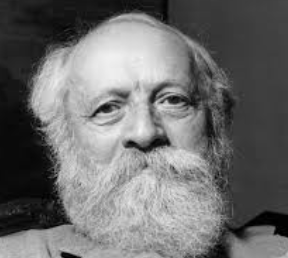
I do not accept any absolute formulas for living. No preconceived code can see ahead to everything that can happen in a man's life. As we live, we grow and our beliefs change. They must change. So I think we should live with this constant discovery. We should be open to this adventure in heightened awareness of living. We should stake our whole existence on our willingness to explore and experience.
▼
Source
source
As quoted in Martin Buber : An Intimate Portrait (1971), p. 56

3 months 3 weeks ago
By Natura naturans we must understand what is in itself and is conceived through itself, or such attributes of substance as express an eternal and infinite essence, that is ... God, insofar as he is considered as a free cause. But by Natura naturata I understand whatever follows from the necessity of God's nature, or from God's attributes, that is, all the modes of God's attributes insofar as they are considered as things which are in God, and can neither be nor be conceived without God.
▼
Source
source
Part I, Prop. XXIX, Scholium, trans: Edwin Curley, London: Penguin, 1996
2 months 1 week ago
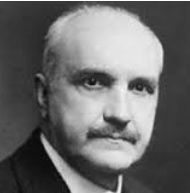
Animals are born and bred in litters. Solitude grows blessed and peaceful only in old age.
▼
Source
source
p. 61
3 months 3 weeks ago
Let us not flutter too high, but remain by the manger and the swaddling clothes of Christ, in whom dwelleth all the fulness of the Godhead bodily.
▼
Source
source
50
3 months 2 weeks ago
What seem our worst prayers may really be, in God's eyes, our best. Those, I mean, which are least supported by devotional feeling. For these may come from a deeper level than feeling. God sometimes seems to speak to us most intimately when he catches us, as it were, off our guard.

3 months 1 week ago
This remark provides the key to the problem, how much truth there is in solipsism. For what the solipsist means is quite correct; only it cannot be said, but makes itself manifest. The world is my world: this is manifest in the fact that the limits of language (of that language which alone I understand) mean the limits of my world.
▼
Source
source
-5.62
3 months 2 weeks ago
Good bye, proud world! I'm going home; Thou art not my friend; I am not thine.
▼
Source
source
Good-bye, st. 1
4 months 2 weeks ago
Then we may begin by assuming that there are three classes of men—lovers of wisdom, lovers of honor, lovers of gain?

2 months 2 weeks ago
If not reason, then the devil.
2 months ago
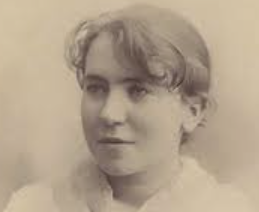
Has not authority from time immemorial stamped every step of progress as treasonable?
3 months 2 weeks ago
These effects of mescalin are the sort of effects you could expect to follow the administration of a drug having the power to impair the efficiency of the cerebral reducing valve. When the brain runs out of sugar, the undernourished ego grows weak, can't be bothered to undertake the necessary chores, and loses all interest in those spatial and temporal relationships which mean so much to an organism bent on getting on in the world. As Mind at Large seeps past the no longer watertight valve, all kinds of biologically useless things start to happen. ... Other persons discover a world of visionary beauty. To others again is revealed the glory, the infinite value and meaningfulness of naked existence, of the given, unconceptualized event.
▼
Source
source
describing his experiment with mescaline, p. 26
1 month 3 weeks ago
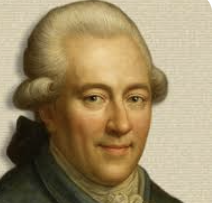
The greatest events occur without intention playing any part in them; chance makes good mistakes and undoes the most carefully planned undertaking. The world's greatest events are not produced, they happen.
▼
Source
source
K 68
3 months 2 weeks ago
I like mathematics because it is not human and has nothing particular to do with this planet or with the whole accidental universe - because, like Spinoza's God, it won't love us in return.
▼
Source
source
Letter to Lady Ottoline Morrell, March, 1912, as quoted in Gaither's Dictionary of Scientific Quotations (2012), p. 1318
2 months 1 week ago
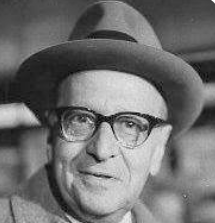
The more ideas have become automatic, instrumentalized, the less does anybody see in them thoughts with a meaning of their own. They are considered things, machines. Language has been reduced to just another tool in the gigantic apparatus of production in modern society.
▼
Source
source
pp. 21-22.
1 month 1 day ago
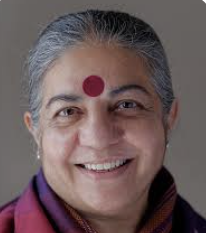
Principles of Earth Democracy, #10: Earth Democracy connects people in circles of care, cooperation, and compassion instead of dividing them through competition and conflict, fear and hatred. In the face of a world of greed, inequality, and overconsumption, Earth Democracy globalizes compassion, justice, and sustainability.
▼
Source
source
(p. 11)
3 months 2 weeks ago
Earth proudly wears the Parthenon As the best gem upon her zone.
▼
Source
source
The Problem, st. 3
3 months 2 weeks ago
"If a nation expects to be ignorant and free," said Jefferson, "it expects what never was and never will be."
▼
Source
source
Chapter 4 (p. 34)
CivilSimian.com created by AxiomaticPanic, CivilSimian, Kalokagathia