

3 months 2 weeks ago
That man should think of God as nothingness must at first sight seem astonishing, must appear to us a most peculiar idea. But, considered more closely, this determination means that God is absolutely nothing determined. He is the Undetermined; no determinateness of any kind pertains to God; He is the Infinite. This is equivalent to saying that God is the negation of all particularity.
▼
Source
source
Hegel, Georg Wilhelm Friedrich, Lectures on the philosophy of religion, together with a work on the proofs of the existence of God. Vol 2 Translated from the 2d German ed. 1895 Ebenezer Brown Speirs 1854-1900, and J Burdon Sanderson p. 51
1 month 3 weeks ago
A single observation that is inconsistent with some generalization points to the falsehood of the generalization, and thereby 'points to itself'.
▼
Source
source
Chapter 4, Evidence, p. 34.

3 months 1 week ago
You could attach prices to ideas. Some cost a lot some little. ... And how do you pay for ideas? I believe: with courage.
▼
Source
source
p. 60e

2 months 1 week ago
A harmonious being cannot believe in God. Saints, criminals, and paupers have launched him, making him available to all unhappy people.

3 months 2 weeks ago
Without effort and change, human life cannot remain good. It is not a finished Utopia that we ought to desire, but a world where imagination and hope are alive and active.

4 months 2 weeks ago
From the Christian point of view it stands firm that the truly Christian venturing requires probability.
2 months 1 week ago
For Warre, consisteth not in Battell onely, or the act of fighting; but in a tract of time, wherein the Will to contend by Battell is sufficiently known: and therefore the notion of Time, is to be considered in the nature of Warre; as it is in the nature of Weather.
▼
Source
source
The First Part, Chapter 13, p. 62


1 week ago
To such a one, already filled with intellectual substance, and possessing what we may call the practical gold-bullion of human culture, it was an obvious improvement that he should be taught to speak it out of him on occasion; that he should carry a spiritual banknote producible on demand for what of "gold-bullion" he had, not so negotiable otherwise, stored in the cellars of his mind. A man, with wisdom, insight and heroic worth already acquired for him, naturally demanded of the schoolmaster this one new faculty, the faculty of uttering in fit words what he had. A valuable superaddition of faculty:-and yet we are to remember it was scarcely a new faculty; it was but the tangible sign of what other faculties the man had in the silent state.
2 months 1 week ago
We say: he has no talent, only tone. But tone is precisely what cannot be invented - we're born with it. Tone is an inherited grace, the privilege some of us have of making our organic pulsations felt - tone is more than talent, it is its essence.

2 months 3 weeks ago
When we consider the being and substance of that universe in which we are immutably set, we shall discover that neither we ourselves nor any substance doth suffer death; for nothing is in fact diminished in its substance, but all things, wandering through infinite space, undergo change of aspect.
▼
Source
source
Introductory Epistle

3 months 2 weeks ago
Piecemeal social engineering resembles physical engineering in regarding the ends as beyond the province of technology. (All that technology may say about ends is whether they are compatible with each other or realizable.)
▼
Source
source
The Poverty of Historicism (1957) Ch. 22 The Unholy Alliance with Utopianism
1 month 1 week ago
All who have meant good work with their whole hearts, have done good work, although they may die before they have the time to sign it. Every heart that has beat strong and cheerfully has left a hopeful impulse behind it in the world, and bettered the tradition of mankind. And even if death catch people, like an open pitfall, and in mid-career, laying out vast projects, and planning monstrous foundations, flushed with hope, and their mouths full of boastful language, they should be at once tripped up and silenced: is there not something brave and spirited in such a termination? and does not life go down with a better grace, foaming in full body over a precipice, than miserably straggling to an end in sandy deltas?
▼
Source
source
316
3 months 2 weeks ago
Capacity for the nobler feelings is in most natures a very tender plant, easily killed, not only by hostile influences, but by the mere want of sustenance; and in the majority of young persons it speedily dies away if the occupations to which their position in life has devoted them, and the society into which it has thrown them, are not favourable to keeping that higher capacity in existence.
▼
Source
source
Ch. 2
1 month 2 weeks ago
It is more easy to get a favor from Fortune than to keep it.
▼
Source
source
Maxim 282

3 months 2 weeks ago
In a field of ripening corn I came to a place which had been trampled down by some ruthless foot; and as I glanced amongst the countless stalks, every one of them alike, standing there so erect and bearing the full weight of the ear, I saw a multitude of different flowers, red and blue and violet. How pretty they looked as they grew there so naturally with their little foliage! But, thought I, they are quite useless; they bear no fruit; they are mere weeds, suffered to remain only because there is no getting rid of them. And yet, but for these flowers, there would be nothing to charm the eye in that wilderness of stalks. They are emblematic of poetry and art, which, in civic life-so severe, but still useful and not without its fruit-play the same part as flowers in the corn.
▼
Source
source
"Similes, Parables and Fables" Parerga and Paralipomena, vol. 2, § 380A

4 months 2 weeks ago
You want to know whether I can make a long speech, such as you are in the habit of hearing; but that is not my way. Socrates speaking to Alcibiades
4 months 2 weeks ago
The greatest and noblest conceptions have no image wrought plainly for human vision, which he who wishes to satisfy the mind of the inquirer can apply to some one of his senses and by mere exhibition satisfy the mind. We must therefore endeavor by practice to acquire the power of giving and understanding a rational definition of each one of them; for immaterial things, which are the noblest and greatest, can be exhibited by reason only, and it is for their sake that all we are saying is said. But it is always easier to practice in small matters than in greater ones.

3 months 2 weeks ago
The boundaries of the species, whereby men sort them, are made by men.
▼
Source
source
Book III, Ch. 6, sec. 37
4 weeks 1 day ago
Now who are the individuals who are the greatest benefactors of the living generation of mankind? I should say: Confucius and Lao-Tse; the Buddha; the Prophets of Israel and Judah; Zoroaster, Jesus, Muhammad; and Socrates.
▼
Source
source
Ch. 8: Civilization on Trial
3 months 2 weeks ago
By 'arguing...' I mean... criticizing... inviting... criticism; and trying to learn from it.

3 months 2 weeks ago
Cure the drunkard, heal the insane, mollify the homicide, civilize the Pawnee, but what lessons can be devised for the debaucher of sentiment?
▼
Source
source
p. 236


4 months 2 weeks ago
If a man knows what it is right to do, he does not require a formal reason. And a person that has been thus trained, either possesses these first principles already, or can easily acquire them.

2 months 2 weeks ago
We are taught to believe that a desire of domineering over our countrymen is love to our country; and those who hate civil war abet rebellion, and that the amiable and conciliatory virtues of lenity, moderation, and tenderness to the privileges of those who depend on this kingdom are a sort of treason to the state. It is impossible that we should remain long in a situation, which breeds such notions and dispositions, without some great alteration in the national character.

1 week 4 days ago
Jesus, in some respects, was an anarchist, for he had no idea of civil government. That government seems to him purely and simply an abuse.
▼
Source
source
Ch. 7.

2 months 1 week ago
The judgment that human life is worth living, or rather can and ought to be made worth living, ... underlies all intellectual effort; it is the a priori of social theory, and its rejection (which is perfectly logical) rejects theory itself.
▼
Source
source
p. xliii
1 week ago
The Great Man here too, as always, is a Force of Nature. Whatsoever is truly great in him springs up from the inarticulate deeps.
2 months 2 weeks ago
Young man, there is America - which at this day serves for little more than to amuse you with stories of savage men and uncouth manners; yet shall, before you taste of death, show itself equal to the whole of that commerce which now attracts the envy of the world.
2 months 2 weeks ago
But as to our country and our race, as long as the well compacted structure of our church and state, the sanctuary, the holy of holies of that ancient law, defended by reverence, defended by power, a fortress at once and a temple, shall stand inviolate on the brow of the British Sion-as long as the British Monarchy, not more limited than fenced by the orders of the State, shall, like the proud Keep of Windsor, rising in the majesty of proportion, and girt with the double belt of its kindred and coeval towers, as long as this awful structure shall oversee and guard the subjected land-so long as the mounds and dykes of the low, fat, Bedford level will have nothing to fear from all the pickaxes of all the levellers of France.
▼
Source
source
pp. 52-53

3 months 1 week ago
Hearken with your ears to these best counsels,Reflect upon them with illumined judgment.Let each one choose his creed with that freedom of choice each must have at great events.
▼
Source
source
Ahunuvaiti Gatha; Yasna 30, 2.

3 months 3 weeks ago
Labour not after riches first, and think thou afterwards wilt enjoy them. He who neglecteth the present moment, throweth away all that he hath. As the arrow passeth through the heart, while the warrior knew not that it was coming; so shall his life be taken away before he knoweth that he hath it.

3 months 2 weeks ago
Ha! to forget. How childish! I feel you in my bones. Your silence screams in my ears. You may nail your mouth shut, you may cut out your tongue, can you keep yourself from existing? Will you stop your thoughts.
▼
Source
source
Inès reiterating to Garcin that they cannot ignore one another, Act 1, sc. 5

4 months 4 days ago
Anything done against faith or conscience is sinful.
▼
Source
source
Commentary on Romans, cap 14, I 3

1 day ago
So near at hand is freedom, and is anyone still a slave?
2 months 1 week ago
Often it is only after immense intellectual effort, which may have continued over centuries, that humanity at last succeeds in achieving knowledge of a concept in its pure form, by stripping off the irrelevant accretions which veil it from the eye of the mind.
▼
Source
source
Translation J. L. Austin (Oxford, 1950) as quoted by Stephen Toulmin, Human Understanding: The Collective Use and Evolution of Concepts (1972) Vol. 1, p. 56.
2 months 2 weeks ago
People will not look forward to posterity, who never look backward to their ancestors.
▼
Source
source
Volume iii, p. 274
3 months 2 weeks ago
I may as well say at once that I do not distinguish between inference and deduction. What is called induction appears to me to be either disguised deduction or a mere method of making plausible guesses.
▼
Source
source
Principles of Mathematics (1903), Ch. II: Symbolic Logic, p. 11

4 months 1 week ago
I do not have much liking for the too famous existential philosophy, and, to tell the truth, I think its conclusions false.
1 month 2 weeks ago
Speech is a mirror of the soul; as a man speaks, so is he.
▼
Source
source
Maxim 1073
3 months 6 days ago
Being asked where in Greece he saw good men, he replied, "Good men nowhere, but good boys at Sparta."
▼
Source
source
Diogenes Laërtius, vi. 27
4 months 2 weeks ago
Parnenides: When there is a number of things which seem to you to be great, you may think, as you look at them all, that there is one and the same idea in them, and hence you think the great is one. But if with your mind's eye you regard the absolute great and these many great things in the same way, will not another great appear beyond, by which all these must appear to be great?

2 months 3 weeks ago
Furthermore, when citizens are all almost equal, it becomes difficult for them to defend their independence against the aggressions of power.
▼
Source
source
Chapter III.
1 month 1 week ago
We do not merely study the past: we inherit it, and inheritance brings with it not only the rights of ownership, but the duties of trusteeship. Things fought for and died for should not be idly squandered. For they are the property of others, who are not yet born.
1 month 3 weeks ago
The great rule: If the little bit you have is nothing special in itself, at least find a way of saying it that is a little bit special.
▼
Source
source
E 55

1 month 2 weeks ago
Wealth is a great sin in the eyes of God. Poverty is a great sin in the eyes of man.
▼
Source
source
p. 86
2 months 1 week ago
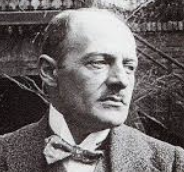
Instead of defining the word, let us briefly characterize or describe the phenomenon. Ressentiment is a self-poisoning of the mind which has quite definite causes and consequences. It is a lasting mental attitude, caused by the systematic repression of certain emotions and affects which, as such, are normal components of human nature. Their repression leads to the constant tendency to indulge in certain kinds of value delusions and corresponding value judgments. The emotions and affects primarily concerned are revenge, hatred, malice, envy, the impulse to detract, and spite.
3 months 2 weeks ago
In some places the metropolis makes do with paying a clique of feudal overlords; in others, it has fabricated a fake bourgeoisie of colonized subjects in a system of divide and rule; elsewhere, it has killed two birds with one stone: the colony is both settlement and exploitation.
▼
Source
source
p. xlvi

3 months 2 weeks ago
A man fits out a ship at a great expense and sends it to the West Indies with a crew of men and boys, and after six months or a year, it comes back with a load of pine-apples; now, if no more gets accomplished than the speculator commonly aims at, if it simply turns out what is called a successful venture, I am less interested in this expedition than in some child's first excursions a-huckleberrying, in which it is introduced into a new world, experiences a new development, though it brings home only a gill of berries in its basket.
CivilSimian.com created by AxiomaticPanic, CivilSimian, Kalokagathia