

1 week 2 days ago
But the philosophy that killed off truth proclaims unlimited tolerance for the "language games" (i.e., opinions, beliefs and doctrines) that people find useful. The outcome is expressed in the words of Karl Kraus: "Alles ist wahr und auch das Gegenteil." "Everything is true, and also its opposite."
▼
Source
source
"Our Merry Apocalypse" (1997), as quoted in Is God Happy? Selected Essays (Basic Books, 2013), p. 318

3 months 2 weeks ago
If we take a survey of ages and of countries, we shall find the women, almost - without exception - at all times and in all places, adored and oppressed. Man, who has never neglected an opportunity of exerting his power, in paying homage to their beauty, has always availed himself of their weakness He has been at once their tyrant and their slave.
1 month 1 week ago
McDonald: Now a lot of people find great comfort from religion. Not everybody is as you are - well-favored, handsome, wealthy, with a good job, happy family life. I mean, your life is good - not everybody's life is good, and religion brings them comfort.Dawkins: There are all sorts of things that would be comforting. I expect an injection of morphine would be comforting - it might be more comforting, for all I know. But to say that something is comforting is not to say that it's true.

2 months 1 week ago
Never to have occasion to take a position, to make up one's mind, or to define oneself - there is no wish I make more often.
3 months 6 days ago
For why do you hasten to remove things that hurt your eyes, but if anything gnaws your mind, defer the time of curing it from year to year?
▼
Source
source
Book I, epistle ii, lines 37-39; translation by C. Smart

3 months 2 weeks ago
Money is a crystal formed of necessity in the course of the exchanges, whereby different products of labour are practically equated to one another and thus by practice converted into commodities.
▼
Source
source
Vol. I, Ch. 2, pg. 99.

4 months 2 weeks ago
It is the nature of science that answers automatically pose new and more subtle questions.

3 months 2 weeks ago
It is sad that often, to be a good patriot, one must be the enemy of the rest of mankind.
▼
Source
source
"Country"

3 months 6 days ago
We ought to regard the interests of the state as of far greater moment than all else, in order that they may be administered well; and we ought not to engage in eager rivalry in despite of equity, nor arrogate to ourselves any power contrary to the common welfare. For a state well administered is our greatest safeguard. In this all is summed up: When the state is in a healthy condition all things prosper; when it is corrupt, all things go to ruin.

2 months 2 days ago
Attention is the rarest and purest form of generosity.
▼
Source
source
From an April 13, 1942 letter to poet Joë Bousquet, published in their collected correspondence

3 months 2 weeks ago
Spinoza says that if a stone which has been projected through the air, had consciousness, it would believe that it was moving of its own free will. I add this only, that the stone would be right. The impulse given it is for the stone what the motive is for me, and what in the case of the stone appears as cohesion, gravitation, rigidity, is in its inner nature the same as that which I recognise in myself as will, and what the stone also, if knowledge were given to it, would recognise as will.


4 months 1 day ago
Therefore death is nothing to us, it matters not one jot, since the nature of the mind is understood to be mortal.
▼
Source
source
Book III, lines 830-831 (tr. Rouse)

3 months 2 weeks ago
Next to enjoying ourselves, the next greatest pleasure consists in preventing others from enjoying themselves, or, more generally, in the acquisition of power.
▼
Source
source
Ch. 10: Recrudescence of Puritanism
1 week ago
History, if viewed as a repository for more than anecdote or chronology, could produce a decisive transformation in the image of science by which we are now possessed.
1 month 4 weeks ago
The same polarity of the male and female principle exists in nature; not only, as is obvious in animals and plants, but in the polarity of the two fundamental functions, that of receiving and penetrating. It is the polarity of earth and rain, of the river and the ocean, of night and day, of darkness and light, of matter and spirit.
▼
Source
source
Ch. 2

1 week ago
Cash Payment the sole nexus; and there are so many things which cash will not pay! Cash is a great miracle; yet it has not all power in Heaven, nor even on Earth. 'Supply and demand' we will honour also; and yet how many 'demands' are there, entirely indispensable, which have to go elsewhere than to the shops, and produce quite other than cash, before they can get their supply? On the whole, what astonishing payments does cash make in this world!
▼
Source
source
Ch. 7, Not Laissez-Faire.

3 months 2 weeks ago
Shallow men believe in luck, believe in circumstances...Strong men believe in cause and effect.
▼
Source
source
Worship
2 months 2 weeks ago
To be a good mother - a woman must have sense, and that independence of mind which few women possess who are taught to depend entirely on their husbands. Meek wives are, in general, foolish mothers; wanting their children to love them best, and take their part, in secret, against the father, who is held up as a scarecrow.
▼
Source
source
Ch. 10
2 months 3 days ago
Not to be loved is a misfortune, but it is an insult to be loved no longer.
▼
Source
source
No. 3. (Zachi writing to Usbek)
1 month 1 week ago
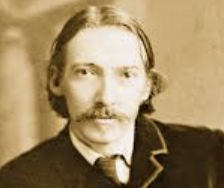
Nothing like a little judicious levity.
▼
Source
source
The Wrong Box, ch. 7 (1889).

4 months 2 weeks ago
The reason I cannot really say that I positively enjoy nature is that I do not quite realize what it is that I enjoy. A work of art, on the other hand, I can grasp. I can - if I may put it this way - find that Archimedian point, and as soon as I have found it, everything is readily clear for me. Then I am able to pursue this one main idea and see how all the details serve to illuminate it.
4 months 2 weeks ago
The vices respectively fall short of or exceed what is right in both passions and actions, while virtue both finds and chooses that which is intermediate.
3 months 2 weeks ago
Always put the best interpretation on a tenet. Why not on Christianity, wholesome, sweet, and poetic? It is the record of a pure and holy soul, humble, absolutely disinterested, a trutn-speaker, and bent on serving, teaching, and uplifting men. Christianity taught the capacity, the element, to Jove the All-perfect without a stingy bargain for personal happiness. It taught that to love him was happiness,-to love him in other's virtues.

1 month 4 weeks ago
Obviously, Anarchism, or any other social theory, making man a conscious social unit, will act as a leaven for rebellion.
3 months 2 weeks ago
Each of the parts of philosophy is a philosophical whole, a circle rounded and complete in itself. In each of these parts, however, the philosophical Idea is found in a particular specificality or medium. The single circle, because it is a real totality, bursts through the limits imposed by its special medium, and gives rise to a wider circle. The whole of philosophy in this way resembles a circle of circles. The Idea appears in each single circle, but, at the same time, the whole Idea is constituted by the system of these peculiar phases, and each is a necessary member of the organisation.
3 months 6 days ago
My enemy is not the man who wrongs me, but the man who means to wrong me.
3 months 2 weeks ago
Exchange value forms the substance of money, and exchange value is wealth.
▼
Source
source
Notebook II, The Chapter on Money, p. 141.
1 week ago
Can there be a more horrible object in existence than an eloquent man not speaking the truth?
▼
Source
source
Address as Lord Rector of Edinburgh University, (1866), reported in Bartlett's Familiar Quotations, 10th ed. (1919).
1 month 1 week ago
Sanity itself is a kind of convention.
▼
Source
source
The Hunter's Family

4 months 2 weeks ago
Is Wagner a human being at all? Is he not rather a disease? He contaminates everything he touches - he has made music sick.
3 months 2 weeks ago
The spurious axioms of the third kind from conditions proper to the subject whence they are transferred rashly to the object are plentiful, not, as in those of the Second Class, because the only way to the intellectual concept lies through the sensuous data, but because only by aid of the latter can the concept be applied to that which is given by experience, that is, can we know whether something is contained under a certain intellectual concept or not. To this class belongs the threadbare one of the schools: whatever exists contingently does at some time not exist. This spurious principle springs from the poverty of the intellect, having insight frequently into the nominal, rarely into the real, marks of contingency or necessity.
3 months 2 weeks ago
O tenderly the haughty day Fills his blue urn with fire; One morn is in the mighty heaven, And one in our desire.
▼
Source
source
Ode, st. 1
3 months 3 weeks ago
In Matthew 12:23 Christ says: "Either make the tree good, and its fruit good; or make the tree bad and its fruit bad," as if to say: "Let the one who wishes to have good fruit begin by planting a good tree." Therefore, let the person who wishes to do good works being not with the works but with the believing, for this alone makes a person good.
▼
Source
source
p. 76
2 months 1 week ago
Detachment from the world as an attachment to the ego... Who can realize the detachment in which you are as far away from yourself as you are from the world?
3 months 2 weeks ago
In youth it is the outward aspect of things that most engages us; while in age, thought or reflection is the predominating quality of the mind. Hence, youth is the time for poetry, and age is more inclined to philosophy. In practical affairs it is the same: a man shapes his resolutions in youth more by the impression that the outward world makes upon him; whereas, when he is old, it is thought that determines his actions.
3 months 1 week ago
I am not adverting here to the alleged privacy of experience to its possessor. The point of view in question is not one accessible only to a single individual. Rather it is a type. It is often possible to take up a point of view other than one's own, so the comprehension of such facts is not limited to one's own case. There is a sense in which phenomenological facts are perfectly objective: one person can know or say of another what the quality of the other's experience is. They are subjective, however, in the sense that even this objective ascription of experience is possible only for someone sufficiently similar to the object of ascription to be able to adopt his point of view - to understand the ascription in the first person as well as in the third, so to speak. The more different from oneself the other experiencer is, the less success one can expect with this enterprise.
▼
Source
source
pp. 171-172

1 month 4 weeks ago
It was not until the ant and Veig had passed each other that Niall realized that he had been reading the ant's mind. It was a sensation like actually being the ant, as if he had momentarily taken possession of its body. And while he had been inside the ant's body, he had also become aware of all the other ants in the nest. It was a bewildering feeling, as if his mind had shattered into thousands of fragments, yet each fragment remained a coherent part of the whole.
▼
Source
source
p. 57

3 months 2 weeks ago
I cannot read a sentence in the book of the Hindoos without being elevated as upon the table-land of the Ghauts. It has such a rhythm as the winds of the desert, such a tide as the Ganges, and seems as superior to criticism as the Himmaleh Mounts. Even at this late hour, unworn by time with a native and inherent dignity it wears the English dress as indifferently as the Sanscrit.
▼
Source
source
August 6, 1841
3 months 2 weeks ago
It is amusing to hear the modern Christian telling you how mild and rationalistic Christianity really is and ignoring the fact that all its mildness and rationalism is due to the teaching of men who in their own day were persecuted by all orthodox Christians.
▼
Source
source
"Sources of Intolerance"

3 months 1 week ago
The different pieces of evidence did not constitute so many neutral elements, until such time as they could be gathered together into a single body of evidence that would bring the final certainty of guilt. Each piece of evidence aroused a particular degree of abomination. Guilt did not begin when all the evidence was gathered together; piece by piece, it was constituted by each of the elements that made it possible to recognize a guilty person. Thus a semi-proof did not leave the suspect innocent until such time as it was completed; it made him semi-guilty; slight evidence of a serious crime marked someone as slightly criminal. In short, penal demonstration did not obey a dualistic system: true or false; but a principle of continuous gradation; a degree reached in the demonstration already formed a degree of guilt and consequently involved a degree of punishment.
▼
Source
source
Chapter One, The body of the condemned, pp.23
1 month 1 week ago
To spendthrifts money is so living and actual-it is such a thin veil between them and their pleasures! There is only one limit to their fortune-that of time; and a spendthrift with only a few crowns is the Emperor of Rome until they are spent. For such a person to lose his money is to suffer the most shocking reverse, and fall from heaven to hell, from all to nothing, in a breath.
▼
Source
source
A Lodging for the Night.
4 months 2 weeks ago
Wit is cultured insolence.
4 months 2 weeks ago
The two guides call out to a man early and late. And yet, no, for when remorse calls to a man it is always late. The call to find the way again by seeking out God in the confession of sins is always at the eleventh hour. Whether you are young or old, whether you have sinned much or little, whether you have offended much or neglected much, the guilt makes this call come at the eleventh hour. The inner agitation of the heart understands what remorse insists upon, that the eleventh hour has come. For in the sense of time, the old man's age is the eleventh hour; and the instant of death, the final moment in the eleventh hour. The indolent youth speaks of a long life that lies before him. The indolent old man hopes that his death is still a long way off. But repentance and remorse belong to the eternal in a man.
1 month 1 week ago
The end of government is to make the governed and the governors happy. That government then is thebest, which in practice produces the greatest happiness to the greatest number; including those who govern, and those who obey.
▼
Source
source
Essay Fourth, The Principles of the Former Essays Applied to Government
3 months 4 weeks ago
These five rules [above] form all that is necessary to render proofs convincing, immutable, and to say all, geometrical; and the eight rules together render them even more perfect.
1 month 1 week ago
I regard you with an indifference closely bordering on aversion.
▼
Source
source
The Rajah's Diamond, Story of the House with the Green Blinds.
1 month 1 week ago
Nationality is not the only kind of social membership, nor is it an exclusive tie. However, it is the only form of membership that has so far shown itself able to sustain a democratic process and a liberal rule of law.

3 months 2 weeks ago
What do I care about Jupiter? Justice is a human issue, and I do not need a god to teach it to me.
▼
Source
source
Orestes, Act 2
CivilSimian.com created by AxiomaticPanic, CivilSimian, Kalokagathia