

3 months 2 weeks ago
The individual, so far as he suffers from his wrongness and criticizes it, is to that extent consciously beyond it, and in at least possible touch with something higher, if anything higher exist. Along with the wrong part there is thus a better part of him, even though it may be but a most helpless germ. With which part he should identify his real being is by no means obvious at this stage; but when stage 2 (the stage of solution or salvation) arrives, the man identifies his real being with the germinal higher part of himself; and does so in the following way. He becomes conscious that this higher part is coterminous and continuous with a more of the same quality, which is operative in the universe outside of him, and which he can keep in working touch with, and in a fashion get on board of and save himself when all his lower being has gone to pieces in the wreck.
▼
Source
source
Lecture XX, "Conclusions"

3 months 2 weeks ago
I believe that the abolition of private ownership of land and capital is a necessary step toward any world in which the nations are to live at peace with one another.
▼
Source
source
Ch. VI: International relations, p. 99
1 month 1 week ago
But the more he is alone with nature, the greater man and his doings bulk in the consideration of his fellow-men.
▼
Source
source
Toils And Pleasures.

3 months 2 weeks ago
I do not give a damn about the dead. They died for the [Communist] Party and the Party can decide what it wants. I practice a live man's politics, for the living.
▼
Source
source
Act 5, sc. 3
3 months 2 weeks ago
But when they have realized that it [society] rejects them forever, they themselves assume the ostracism of which they are victims so as not to leave the initiative to their oppressors.
▼
Source
source
p. 65-6

2 months 2 weeks ago
A great profusion of things, which are splendid or valuable in themselves, is magnificent. The starry heaven, though it occurs so very frequently to our view, never fails to excite an idea of grandeur. This cannot be owing to the stars themselves, separately considered. The number is certainly the cause. The apparent disorder augments the grandeur, for the appearance of care is highly contrary to our idea of magnificence. Besides, the stars lie in such apparent confusion, as makes it impossible on ordinary occasions to reckon them. This gives them the advantage of a sort of infinity.
▼
Source
source
Part II Section XIII
2 months 1 day ago
With the sense of sight, the idea communicates the emotion, whereas, with sound, the emotion communicates the idea, which is more direct and therefore more powerful.
▼
Source
source
Ch. 29, June 10, 1943.
1 month 3 weeks ago
We need to augment and amend the existing body of classical and neoclassical economic theory to achieve a more realistic picture of economic process.
▼
Source
source
Herbert A. Simon (1986) in Preface to: Gilad & Kaish (eds.), Handbook of Behavioral Economics, p. xvi.

1 week ago
"A fair day's wages for a fair day's work": it is as just a demand as governed men ever made of governing. It is the everlasting right of man.
▼
Source
source
Bk. I, ch. 3.

3 weeks 2 days ago
The mass political movements of the 20th century were vehicles for myths inherited from religion, and it is no accident that religion is reviving now that these movements have collapsed.

3 months 2 weeks ago
A metaphysics of morals is therefore indispensably necessary, not merely because of a motive to speculation - for investigating the source of the practical basic principles that lie a priori in our reason - but also because morals themselves remain subject to all sorts of corruption as long as we are without that clue and supreme norm by which to appraise them correctly...

2 months 3 weeks ago
No man can justly censure or condemn another, because indeed no man truly knows another.
▼
Source
source
Section 4
1 month 3 weeks ago
Economic man deals with the "real world" in all its complexity. Administrative man recognizes that the world he perceives is a drastic simplified model... He makes his choices using a simple picture of the situation that takes into account just a few of the factors that he regards as most relevant and crucial.
▼
Source
source
p. xxix; As cited in: Jesper Simonsen (1994) Administrative Behavior: How Organizations can be Understood in Terms of Decision Processes. Roskilde Universitet.

1 month 1 week ago
4 ways: Agnosticism, Relativism, Amorality, Morality.
1) I don't know. 2) Everybody is different. 3) Do whatever you can. 4) Do what you should.
3 months 2 weeks ago
By a lie a man throws away and, as it were, annihilates his dignity as a man. A man who himself does not believe what he tells another ... has even less worth than if he were a mere thing. ... makes himself a mere deceptive appearance of man, not man himself.
▼
Source
source
Doctrine of Virtue as translated by Mary J. Gregor (1964), p. 93

3 months 2 weeks ago
Hitch your wagon to a star.
▼
Source
source
Civilization
2 months 1 week ago
Give an inch, he'll take an ell.
▼
Source
source
Liberty and Necessity (no. 111)
3 months 2 weeks ago
Truth never turns to rebuke falsehood; her own straightforwardness is the severest correction.
▼
Source
source
Pearls of Thought (1881) p. 264
3 months 2 weeks ago
The next good quality belonging to a gentleman, is good breeding [manners]. There are two sorts of ill-breeding: the one a sheepish bashfulness, and the other a mis-becoming negligence and disrespect in our carriage; both of which are avoided by duly observing this one rule, not to think meanly of ourselves, and not to think meanly of others.
▼
Source
source
Sec. 141

1 month 2 weeks ago
All violence consists in some people forcing others, under threat of suffering or death, to do what they do not want to do.
▼
Source
source
The Law of Love and the Law of Violence

2 months 3 weeks ago
In the United States a man builds a house to spend his latter years in it and he sells it before the roof is on. He plants a garden and lets it just as the trees are coming into bearing. He brings a field into tillage and leaves other men to gather the crops. He embraces a profession and gives it up. He settles in a place which he soon afterward leaves to carry his changeable longings elsewhere. If his private affairs leave him any leisure he instantly plunges into the vortex of politics and if at the end of a year of unremitting labour he finds he has a few days' vacation, his eager curiosity whirls him over the vast extent of the United States, and he will travel fifteen hundred miles in a few days to shake off his happiness.
▼
Source
source
Chapter XXIX.

4 months 2 weeks ago
There are degrees of justice, Elijah. When the lesser is incompatible with the greater, the lesser must give way.

1 month 4 weeks ago
Mysticism: to dwell on the unseen, to withdraw ourselves from the things of sense into communion with God - to endeavour to partake of the Divine nature; that is, of Holiness. When we ask ourselves only what is right, or what is the will of God (the same question), then we may truly be said to live in His light.
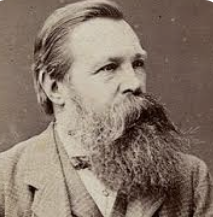
2 months 1 week ago
History has proved us, and all who thought like us, wrong. It has made it clear that the state of economic development on the Continent at that time was not, by a long way, ripe for the removal of capitalist production.
▼
Source
source
Introduction (1895) to Marx's The Class Struggles in France
3 months 2 weeks ago
Our colleges ought to have lit up in us a lasting relish for the better kind of man, a loss of appetite for mediocrities, and a disgust for cheapjacks. We ought to smell, as it were, the difference of quality in men and their proposals when we enter the world of affairs about us.
▼
Source
source
The Social Value of the College-Bred
3 weeks 2 days ago
To affirm that humans thrive in many different ways is not to deny that there are universal human values. Nor is it to reject the claim that there should be universal human rights. It is to deny that universal values can only be fully realized in a universal regime. Human rights can be respected in a variety of regimes, liberal and otherwise. Universal human rights are not an ideal constitution for a single regime throughout the world, but a set of minimum standards for peaceful coexistence among regimes that will always remain different.
▼
Source
source
Two Faces of Liberalism (New Press, 2000, ISBN 0-745-62259-3. 168 pages), ch. 1: Liberal Toleration (p. 21)
3 months 2 weeks ago
You take souls for vegetables.... The gardener can decide what will become of his carrots but no one can choose the good of others for them.
▼
Source
source
Heinrich, Act 5, sc. 3


3 months 3 weeks ago
He who establishes his argument by noise and command shows that his reason is weak.
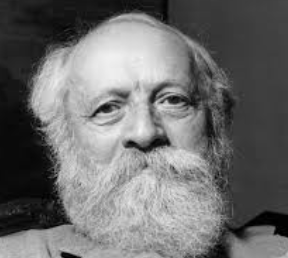
2 months 1 week ago
The basic word I-Thou can be spoken only with one's whole being. The concentration and fusion into a whole being can never be accomplished by me, can never be accomplished without me. I require a Thou to become; becoming I, I say Thou.

2 months 1 week ago
A man does not kill himself, as is commonly supposed, in a fit of madness but rather in a fit of unendurable lucidity, in a paroxysm which may, if so desired, be identified with madness; for an excessive perspicacity, carried to the limit and of which one longs to be rid at all costs, exceeds the context of reason.
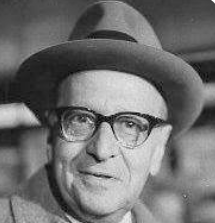
2 months 1 week ago
Spinoza, for example, thought that insight into the essence of reality, into the harmonious structure of the eternal universe, necessarily awakens love for this universe. For him, ethical conduct is entirely determined by such insight into nature, just as our devotion to a person may be determined by insight into his greatness or genius. Fears and petty passions, alien to the great love of the universe, which is logos itself, will vanish, according to Spinoza, once our understanding of reality is deep enough.
▼
Source
source
p. 14.
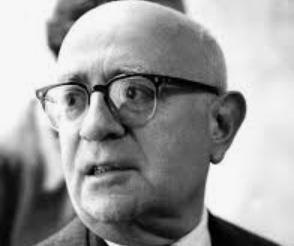
2 months 2 days ago
In a world that has been thoroughly permeated by the structures of the social order, a world that so overpowers every individual that scarcely any option remains but to accept it on its own terms, such naiveté reproduces itself incessantly and disastrously. What people have forced upon them by a boundless apparatus, which they themselves constitute and which they are locked into, virtually eliminates all natural elements and becomes "nature" to them.
▼
Source
source
p. 12
2 months 1 week ago
The bourgeoisie ... lets him have the appearance of acting from a free choice, of making a contract with free, unconstrained consent, as a responsible agent who has attained his majority. Fine freedom, where the proletarian has no other choice than that of either accepting the conditions which the bourgeoisie offers him, or of starving, of freezing to death, of sleeping naked among the beasts of the forests!
▼
Source
source
p. 112
2 months 2 weeks ago
Nothing less will content me, than whole America.

3 months 3 weeks ago
Animals destitute of reason live with their own kind in a state of social amity. Elephants herd together; sheep and swine feed in flocks; cranes and crows take their flight in troops; storks have their public meetings to consult previously to their emigration, and feed their parents when unable to feed themselves; dolphins defend each other by mutual assistance; and everybody knows, that both ants and bees have respectively established by general agreement, a little friendly community.
2 months 1 week ago
The Interpretation of the Laws of Nature in a Common-wealth, dependeth not on the books of Moral Philosophy. The Authority of writers, without the Authority of the Commonwealth, maketh not their opinions Law, be they never so true.
▼
Source
source
The Second Part, Chapter 26, p. 143
3 months 2 weeks ago
Nicias, do you think you can erase with good deeds the wrongs you committed against your mother? What good deed will ever reach her? Her soul is a scorching noon time, without a single breath of a breeze, nothing moves, nothing changes, nothing lives there; a great emaciated sun, an immobile sun eternally consumes her.
▼
Source
source
King Aegistheus, Act 2
3 months 2 weeks ago
Competition for power is of two sorts: between organizations, and between individuals for leadership within an organization.
▼
Source
source
p. 165
3 months 1 week ago
Exercise is the technique by which one imposes on the body tasks that are both repetitive and different, but always graduated. By bending behavior towards a terminal state, exercise makes possible a perpetual characterization of the individual...It thus assures, in the form of continuity and constraint, a growth, an observation, a qualification.
2 months ago
Males learn to lie as a way of obtaining power, and females not only do the same but they also lie to pretend powerlessness.
▼
Source
source
Chapter 3, pg. 59
4 months 2 weeks ago
Job endured everything - until his friends came to comfort him, then he grew impatient.
3 months 2 weeks ago
The fundament upon which all our knowledge and learning rests is the inexplicable.
▼
Source
source
Vol. 2, Ch. 1, § 1
4 months 6 days ago
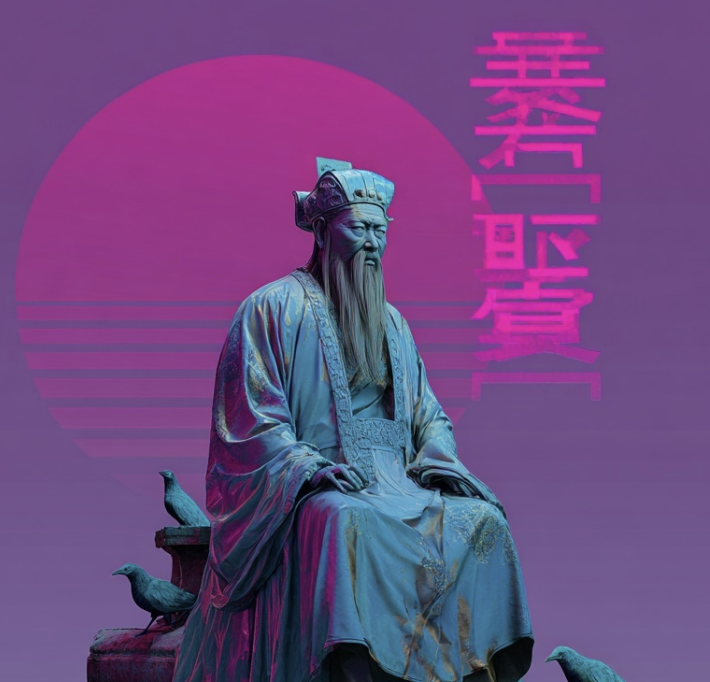
The superior man has neither anxiety nor fear. When internal examination discovers nothing wrong, what is there to be anxious about, what is there to fear?
1 month 4 weeks ago
I believe that man is the product of natural evolution that is born from the conflict of being a prisoner and separated from nature, and from the need to find unity and harmony with it.
2 months 1 week ago
Without consciousness there would, practically speaking, be no world, for the world exists as such only in so far as it is consciously reflected and considered by a psyche. Consciousness is a precondition of being.
▼
Source
source
p 48
2 months 1 week ago
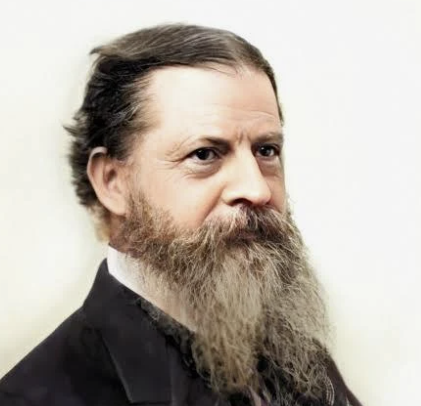
When anything is present to the mind, what is the very first and simplest character to be noted in it, in every case, no matter how little elevated the object may be? Certainly, it is its presentness.
▼
Source
source
Lecture II : The Universal Categories, § 1 : Presentness, CP 5.44

2 months 2 days ago
Alexander is to a peasant proprietor what Don Juan is to a happily married husband.
▼
Source
source
p. 78,
1 month 3 weeks ago
If we want a theory explaining how people play billiards, we do not want a theory of perfect billiard balls; we want a theory of what heuristics a human billiard player uses in order to plan and make a (often not quite accurate) shot. These heuristics and actions do not involve solving the differential equations of the billiard board; they involve rules of thumb and it is these practice guides to action we are trying to discover in order to explain the behavior.
▼
Source
source
An Empirically Based Microeconomics (1997), p. 173
CivilSimian.com created by AxiomaticPanic, CivilSimian, Kalokagathia