




1 month 1 week ago
We are to admit no more causes of natural things than such as are both true and sufficient to explain their appearances.
▼
Source
source
"Rules of Reasoning in Philosophy" : Rule I

3 months 1 week ago
The act of navigation is not favourable to foreign commerce, or to the growth of that opulence which can arise from it. ... As defence, however, is of much more importance than opulence, the act of navigation is, perhaps, the wisest of all the commercial regulations of England.
▼
Source
source
Chapter II

1 month 3 weeks ago
Although people seem to be unaware of it today, the development of the faculty of attention forms the real object and almost the sole interest of studies.

3 months 3 weeks ago
For creation is not a change, but that dependence of the created existence on the principle from which it is instituted, and thus is of the genus of relation; whence nothing prohibits it being in the created as in the subject. Creation is thus said to be a kind of change, according to the way of understanding, insofar as our intellect accepts one and the same thing as not existing before and afterwards existing.
▼
Source
source
II, 18, 2 (see also Summa Theologica I, q. 45, art. 3 ad 2)

Just now
They have their belief, these poor Thibet people, that Providence sends down always an Incarnation of Himself into every generation. At bottom some belief in a kind of Pope! At bottom still better, belief that there is a Greatest Man; that he is discoverable; that, once discovered, we ought to treat him with an obedience which knows no bounds! This is the truth of Grand Lamaism; the "discoverability" is the only error here.

3 months 1 week ago
As long as this deliberate refusal to understand things from above, even where such understanding is possible, continues, it is idle to talk of any final victory over materialism.

4 months 6 days ago
There is no mystery in humans creation. Will performs this miracle. But at least there is no true creation without a secret.

3 months 5 days ago
Nothing is so difficult as not deceiving oneself.
▼
Source
source
p. 34e

1 month 1 week ago
The electronic age is a world in which causes and effects become almost interchangeable, as in music structures.
▼
Source
source
(p. 99)

4 months 1 week ago
Milton Ashe is not the type to marry a head of hair and a pair of eyes.

2 months 4 weeks ago
The man who is fortunate in his choice of son-in-law gains a son; the man unfortunate in his choice loses his daughter also.
▼
Source
source
Freeman (1948), p. 169
2 months 2 weeks ago
Are we not madder than those first inhabitants of the plain of Sennar? We know that the distance separating the earth from the sky is infinite, and yet we do not stop building our tower.
▼
Source
source
No. 4
Just now
For love is ever the beginning of Knowledge, as fire is of light.
▼
Source
source
Carlyle, Essays, Death of Goethe. Quote reported in Hoyt's New Cyclopedia Of Practical Quotations (1922), p. 419-23.
1 month 2 weeks ago
It is almost everywhere the case that soon after it is begotten the greater part of human wisdom is laid to rest in repositories.
▼
Source
source
K 37

4 months 1 week ago
Those who purge the soul believe that the soul can receive no benefit from any teachings offered to it until someone by cross-questioning reduces him who is cross-questioned to an attitude of modesty, by removing the opinions that obstruct the teachings, and thus purges him and makes him think that he knows only what he knows, and no more.

3 months 1 week ago
Capitals accumulate faster than the population; thus wages; thus population; thus grain prices; thus the difficulty of production and hence the exchange values.
▼
Source
source
Notebook III, The Chapter on Capital, p. 271.
2 months 2 days ago
Fanaticism consists in redoubling your efforts when you have forgotten your aim.
3 months 2 weeks ago
If you only notice human proceedings, you may observe that all who attain great power and riches, make use of either force or fraud; and what they have acquired either by deceit or violence, in order to conceal the disgraceful methods of attainment, they endeavor to sanctify with the false title of honest gains. Those who either from imprudence or want of sagacity avoid doing so, are always overwhelmed with servitude and poverty; for faithful servants are always servants, and honest men are always poor; nor do any ever escape from servitude but the bold and faithless, or from poverty, but the rapacious and fraudulent. God and nature have thrown all human fortunes into the midst of mankind; and they are thus attainable rather by rapine than by industry, by wicked actions rather than by good. Hence it is that men feed upon each other, and those who cannot defend themselves must be worried.
▼
Source
source
Book III, Chapter 13

1 month 1 week ago
You worldly-minded people are most unfortunate! You are surrounded with sorrows and troubles overhead and underfoot and to the right and to the left, and you are enigmas even to yourselves.
▼
Source
source
p. 37
2 months 4 weeks ago
It is sweet and honorable to die for one's country.
▼
Source
source
Book III, ode ii, line 13

3 months 4 days ago
It was an important moment. The old partners of the spectacle of punishment, the body and the blood, gave way. A new character came of the scene, masked. It was the end of a certain kind of tragedy; comedy began, with shadow play, faceless voices, impalpable entities. The apparatus of punitive justice must now bite into this bodiless reality.
▼
Source
source
pp. 17

1 month 3 weeks ago
And yet this might not necessarily involve the conversion of the Trinity into a Quaternity. If... in Greek, spirit, instead of being neuter had been feminine, who can say that the Virgin Mary might not already have become an incarnation or humanization of the Holy Spirit? ...And thus a dogmatic evolution would have been effected parallel to that of the divinization of Jesus, the Son, and his identification with the Word.

3 months 1 week ago
I entered the [Communist] Party because its cause was just and I will leave it when it ceases to be just.
▼
Source
source
Hugo to Hoederer, Act 5, sc. 3

3 months 1 week ago
It is the nature and intention of a constitution to prevent governing by party, by establishing a common principle that shall limit and control the power and impulse of party, and that says to all parties, thus far shalt thou go and no further. But in the absence of a constitution, men look entirely to party; and instead of principle governing party, party governs principle.
1 month 3 weeks ago
Love is not consolation, it is light.
▼
Source
source
As quoted in Simone Weil (1954) by Eric Walter Frederick Tomlin, p. 47

3 months 1 week ago
Much more naturally than you do: because flight is a much more natural consequence of fear than of hate. He doesn't flee men because he hates them, but because he is afraid of them. He doesn't flee them in order to harm them, but to try o escape the harm they wish to do to him. They, on the contrary, don't seek him through friendship, but through hate. They seek him and he flees from them just as in the wilderness of Africa, where there are few men and many tigers, the men flee the tigers, the men flee the tigers, and the tigers seek the men.
▼
Source
source
Second Dialogue; translated by Judith R. Bush, Christopher Kelly, Roger D. Masters

3 months 3 weeks ago
Whatever you would make habitual, practice it; and if you would not make a thing habitual, do not practice it, but accustom yourself to something else.
▼
Source
source
Book II, ch. 18, 4.
3 months 1 week ago
Let us maintain inviolably equality in the sacred right of suffrage: public security can never have a basis more solid.
▼
Source
source
Author's Inscription: French Edition
4 months 1 week ago
The inexperienced in wisdom and virtue, ever occupied with feasting and such, are carried downward, and there, as is fitting, they wander their whole life long, neither ever looking upward to the truth above them nor rising toward it, nor tasting pure and lasting pleasures. Like cattle, always looking downward with their heads bent toward the ground and the banquet tables, they feed, fatten, and fornicate. In order to increase their possessions they kick and butt with horns and hoofs of steel and kill each other, insatiable as they are.

3 months 1 week ago
I quite understand the principle of confining employment as far as possible to the British without regard for efficiency. I think, however, that the Ministry is not applying the principle sufficiently widely. I know many Englishmen who have married foreigners, and many English potential wives who are out of a job. Would not a year be long enough to train an English wife to replace the existing foreign one in such cases?
▼
Source
source
Enclosed reply to the Ministry of Labour, in defense of A. S. Neill (who declined to send it), 27 January, 1931
2 months 3 weeks ago
When Philip had news brought him of divers and eminent successes in one day, "O Fortune!" said he, "for all these so great kindnesses do me some small mischief."
▼
Source
source
34 Philip

2 months 5 days ago
The more one has suffered, the less one demands. To protest is a sign one has traversed no hell.
3 months 1 week ago
In action, in desire, we must submit perpetually to the tyranny of outside forces; but in thought, in aspiration, we are free, free from our fellowmen, free from the petty planet on which our bodies impotently crawl, free even, while we live, from the tyranny of death.
3 months 5 days ago
Who is to determine what the perfect is? It could only be those who are themselves perfect and who therefore know what it means. Here yawns the abyss of that circularity in which the whole of human Dasein moves. What health is, only the healthy can say. Yet healthfulness is measured according to the essential starting point of health. What truth is, only one who is truthful can discern; but the one who is truthful is determined according to the essential starting point of truth.
▼
Source
source
p. 127
3 months 5 days ago
Why in the world shouldn't they have regarded with awe and reverence that act by which the human race is perpetuated. Not every religion has to have St. Augustine's attitude to sex. Why even in our culture marriages are celebrated in a church, everyone present knows what is going to happen that night, but that doesn't prevent it being a religious ceremony.
▼
Source
source
Intentionality, and Romanticism (1997) by Richard Thomas Eldridge, p. 130

4 days ago
There is in our souls some native seed of reason, which, if nourished by good counsel and training, flowers into virtue, but which, on the other hand, if unable to resist the vices surrounding it, is stifled and blighted.
▼
Source
source
Part 2
Just now
All the gifted souls, of every rank, who are born to you in this generation. These are appointed, by the true eternal "divine right" which will never become obsolete, to be your governors and administrators; and precisely as you employ them, or neglect to employ them, will your State be favored of Heaven or disfavored. This noble young soul, you can have him on either of two conditions; and on one of them, since he is here in the world, you must have him. As your ally and coadjutor; or failing that, as your natural enemy: which shall it be? I consider that every Government convicts itself of infatuation and futility, or absolves and justifies itself before God and man, according as it answers this question.
3 months 1 week ago
When Descartes said, "Conquer yourself rather than the world," what he meant was, at bottom, - the same - that we should act without hope. Marxists, to whom I have said thus have answered: "Your action is limited, obviously, by your death: but you can rely upon the help of others.
▼
Source
source
p. 39
1 week 6 days ago
Is there really someone who, searching for a group of wise and sensitive persons to regulate him for his own good, would choose that group of people that constitute the membership of both houses of Congress?
▼
Source
source
Ch. 2 : The State of Nature; Protective Associations, p. 14
2 months 1 week ago
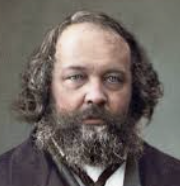
I bow before the authority of special men because it is imposed upon me by my own reason. I am conscious of my inability to grasp, in all its details and positive developments, any very large portion of human knowledge. The greatest intelligence would not be equal to a comprehension of the whole. Thence results, for science as well as for industry, the necessity of the division and association of labor. I receive and I give - such is human life. Each directs and is directed in his turn. Therefore there is no fixed and constant authority, but a continual exchange of mutual, temporary, and, above all, voluntary authority and subordination.
Just now
He has now a second far greater success to gain: to seek out his real superiors, whom not the Tailor but the Almighty God has made superior to him, and see a little what he will do with these! Rebel against these also? Pass by with minatory eagle-glance, with calm-sniffing mockery, or even without any mockery or sniff, when these present themselves? The lion-hearted will never dream of such a thing. Forever far be it from him! His minatory eagle-glance will veil itself in softness of the dove: his lion- heart will become a lamb's; all is just indignation changed into just reverence, dissolved in blessed floods of noble humble love, how much heavenlier than any pride, nay, if you will, how much prouder!

2 months 1 week ago
I must say, that the whole Scheme of the war is mistaken, (or appears to me to be so), for it ought to be, not for Dunkirk, or this or t'other Town-but to drive Jacobinism from the world.
▼
Source
source
Letter to Dr Charles Burney (14/15 September 1793), quoted in P. J. Marshall and John A. Woods (eds.)

3 months 4 weeks ago
On the whole, a man who denies the existence of the effects arranged according to the causes in the question of arts, or whose wisdom cannot understand it, then he has no knowledge of the art of its Maker.

1 month 3 weeks ago
Moral activity? There is scarcely such a thing possible! Everything is sketchy. The world does nothing but sketch.

3 months 1 week ago
That all men are equal is a proposition which at ordinary times no sane individual has ever given his assent.
▼
Source
source
"The Idea of Equality"
1 month 3 weeks ago
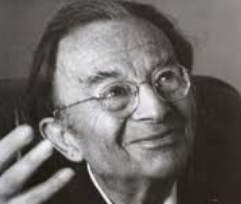
Chronic boredom - compensated or uncompensated - constitutes one of the major psychopathological phenomena in contemporary technotronic society, although it is only recently that it has found some recognition.
▼
Source
source
p. 273
1 month 2 weeks ago
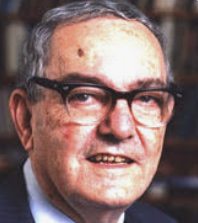
Before we can establish any immutable 'principles' of administration, we must be able to describe, in words, exactly how an administrative organization looks and exactly how it works.
▼
Source
source
p. xiv.
2 months 4 weeks ago
Good means not [merely] not to do wrong, but rather not to desire to do wrong.
1 month 1 week ago
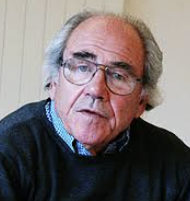
The need to speak, even if one has nothing to say, becomes more pressing when one has nothing to say, just as the will to live becomes more urgent when life has lost its meaning.
▼
Source
source
(p. 30)
CivilSimian.com created by AxiomaticPanic, CivilSimian, Kalokagathia