
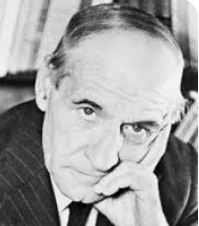
1 month 4 weeks ago
The nineteenth century, utilitarian throughout, set up a utilitarian interpretation of the phenomenon of life which has come down to us and may still be considered as the commonplace of everyday thinking. ... An innate blindness seems to have closed the eyes of this epoch to all but those facts which show life as a phenomenon of utility.
▼
Source
p. 16
1 month 4 weeks ago
The species with eyes appears suddenly, capriciously as it were, and it is this species which changes the environment by creating its visible aspect. The eye does not come into being because it is needed. Just the contrary; because the eye appears it can henceforth be applied as a serviceable instrument. Each species builds up its stock of useful habits by selecting among, and taking advantage of, the innumerable useless actions which a living being performs out of sheer exuberance.
▼
Source
p. 17
1 month 4 weeks ago
Man must not only make himself: the weightiest thing he has to do is to determine what he is going to be. He is causa sui to the second power.
▼
Source
As quoted in Existentialism from Dostoevsky to Sartre, p. 155
1 month 4 weeks ago
Man's being is made of such strange stuff as to be partly akin to nature and partly not, at once natural and extranatural, a kind of ontological centaur, half immersed in nature, half transcending it.
▼
Source
"Man has no nature"
1 month 4 weeks ago
Whether he be an original or a plagiarist, man is the novelist of himself.
▼
Source
"Man has no nature"
1 month 4 weeks ago
Be it well understood, I am free by compulsion, whether I wish to be or not. Freedom is not an activity pursued by an entity that, apart from and previous to such pursuit, is already possessed of a fixed being. To be free means to be lacking in constitutive identity, not to have subscribed to a determined being, to be able to be other than what one was, to be unable to install oneself once and for all in any given being. The only attribute of the fixed, stable being in the free being is this constitutive instability.
▼
Source
"Man has no nature"
1 month 4 weeks ago
Man is a substantial emigrant on a pilgrimage of being, and it is accordingly meaningless to set limits to what he is capable of being.
▼
Source
"Man has no nature"
1 month 4 weeks ago
In this initial illimitableness of possibilities that characterizes one who has no nature there stands out only one fixed, pre-established, and given line by which he may chart his course, only one limit: the past.
▼
Source
"Man has no nature"
1 month 4 weeks ago
No human acquisition is stable. Even what appears to us most completely won and consolidated can disappear in a few generations. This thing we call "civilization" - all these physical and moral comforts, all these conveniences, all these shelters, all these virtues and disciplines which have become habit now, on which we count, and which in effect constitute a repertory or system of securities which man made for himself like a raft in the initial shipwreck which living always is - all these securities are insecure securities which in the twinkling of an eye, at the least carelessness, escape from man's hands and vanish like phantoms.
▼
Source
p. 25
1 month 4 weeks ago
History tells us of innumerable retrogressions, of decadences and degenerations. But nothing tells us that there is no possibility of much more basic retrogressions than any so far known, including the most radical of all: the total disappearance of man as man and his silent return to the animal scale, to complete and definitive alteration. The fate of culture, the destiny of man, depends upon our maintaining this dramatic consciousness ever alive in our inmost being, and upon our being well aware, as of a murmuring counterpoint in our entrails, that we can only be sure of insecurity.
▼
Source
p. 26
1 month 4 weeks ago
Man does not exercise his thought because he finds it amusing, but because, obliged as he is to live immersed in the world and to force his way among things, he finds himself under the necessity of organizing his psychic activities, which are not very different from those of the anthropoid, in the form of thought - which is what the animal does not do.
▼
Source
p. 28
1 month 4 weeks ago
The demagogues, impresarios of alteracion, who have already caused the death of several civilizations, harass men so that they shall not reflect, see to it that they are kept herded together in crowds so that they cannot reconstruct their individuality in the one place where it can be reconstructed, which is in solitude.
▼
Source
p. 33
1 month 4 weeks ago
Torn in this way from its normal connection with contemplation, with being within one's self, pure action permits and produces only a chain of stupidities which we might better call "stupidity unchained." So we see today that an absurd attitude justifies the appearance of an opposing attitude no more reasonable; at least, reasonable enough, and so on indefinitely. Such is the extreme to which political affairs in the West have come!
▼
Source
p. 34
1 month 4 weeks ago
Without a strategic retreat into the self, without vigilant thought, human life is impossible. Call to mind all that mankind owes to certain great withdrawals into the self! It is no chance that all the great founders of religions preceded their apostolates by famous retreats. Buddha withdraws to the forest; Mahomet withdraws to his tent, and even there he withdraws from his tent by wrapping his head in his cloak; above all, Jesus goes apart into the desert for forty days.
▼
Source
p. 35
1 month 4 weeks ago
Meditation on any theme, if positive and honest, inevitably separates him who does the meditating from the opinion prevailing around him, from that which ... can be called "public" or "popular" opinion.
▼
Source
p. 15
1 month 4 weeks ago
Every intellectual effort sets us apart from the commonplace, and leads us by hidden and difficult paths to secluded spots where we find ourselves amid unaccustomed thoughts.
▼
Source
p. 15
1 month 4 weeks ago
Every living creature is happy when he fulfills his destiny, that is, when he realizes himself, when he is being that which in truth he is. For this reason, Schlegel, inverting the relationship between pleasure and destiny, said, "We have a genius for what we like." Genius, man's superlative gift for doing something, always carries a look of supreme pleasure.
▼
Source
pp. 16-17
1 month 4 weeks ago
I have always thought that clarity is a form of courtesy that the philosopher owes; moreover, this discipline of ours considers it more truly a matter of honor today than ever before to be open to all minds ... This is different from the individual sciences which increasingly [interpose] between the treasure of their discoveries and the curiosity of the profane the tremendous dragon of their closed terminology.
▼
Source
p. 19
1 month 4 weeks ago
I think that the philosopher must, for his own purposes, carry methodological strictness to an extreme when he is investigating and pursuing his truths, but when he is ready to enunciate them and give them out, he ought to avoid the cynical skill with which some scientists, like a Hercules at the fair, amuse themselves by displaying to the public the biceps of their technique.
▼
Source
pp. 19-20
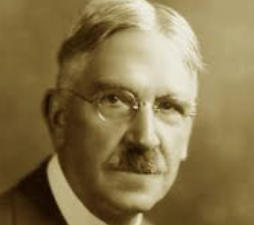
1 month 4 weeks ago
To regiment artists, to make them servants of some particular cause does violence to the very springs of artistic creation. But it does more than that. It betrays the very cause of a better future it would serve, for in its subjugation of the individuality of the artist it annihilates the source of that which is genuinely new. Where the regimentation is successful, it would cause the future to be but a rearrangement of the past.
1 month 4 weeks ago
The artist in realizing his own individuality reveals potentialities hitherto unrealized. The revelation is the inspiration of other individuals to make the potentialities real, for it is not sheer revolt against things as they are which stirs human endeavor to its depth, but vision of what might be and is not. Subordination of the artists to any special cause no matter how worthy does violence not only to the artist but to the living source of a new and better future.
1 month 4 weeks ago
Art is not the possession of the few who are recognized writers, painters, musicians; it is the authentic expression of any and all individuality. Those who have the gift of creative expression in unusually large measure disclose the meaning of the individuality of others to those others. In participating in the work of art, they become artists in their activity. They learn to know and honor individuality in whatever form it appears. The fountains of creative activity are discovered and released. The free individuality which is the source of art is also the final source of creative development in time.
1 month 4 weeks ago
It is no accident that all democracies have put a high estimate upon education; that schooling has been their first care and enduring charge. Only through education can equality of opportunity be anything more than a phrase. Accidental inequalities of birth, wealth, and learning are always tending to restrict the opportunities of some as compared with those of others. Only free and continued education can counteract those forces which are always at work to restore, in however changed a form, feudal oligarchy. Democracy has to be born anew every generation, and education is its midwife.
▼
Source
"The Need of an Industrial Education in an Industrial Democracy," Manual Training and Vocational Education17 (1916); also Middle Works 10: 137-143.
1 month 4 weeks ago
While they denounce as subversive anarchy signs of independent thought, of thinking for themselves on the part of others lest such thought disturb the conditions by which they profit, they think quite literally for themselves, that is of themselves.
▼
Source
Human Nature and Conduct (1921) Part 1 Section IV.
1 month 4 weeks ago
Every great advance in science has issued from a new audacity of imagination.
▼
Source
The Quest for Certainty (1929), Ch. XI
1 month 4 weeks ago
As long as politics is the shadow cast on society by big business, the attenuation of the shadow will not change the substance.
▼
Source
Quoted in John Dewey and American Democracy by Robert Westbrook (Ithaca: Cornell University Press, 1991), p. 440
1 month 4 weeks ago
Democracy means the belief that humanistic culture should prevail.
▼
Source
Democracy and Human Nature, Freedom and Culture
1 month 4 weeks ago
So we are always esthetically disappointed when the sensuous qualities and the intellectual properties of an object do not coalesce.
▼
Source
p. 7
1 month 4 weeks ago
Just because emotion is essential to that act of expression which produces a work of art, it is easy for inaccurate analysis to misconceive its mode of operation and conclude that the work of art has emotion for its significant content. One may cry out with joy or even weep upon seeing a friend from whom one has been long separated. The outcome is not an expressive object -- save to the onlooker. But if the emotion leads one to gather material that is affiliated to the mood which is aroused, a poem may result. In the direct outburst, an objective situation is the stimulus, the cause, of the emotion. In the poem, objective material becomes the content and matter of the emotion, not just its evocative occasion.
▼
Source
pp. 71-72
1 month 4 weeks ago
The determination of the mot juste, of the right incident in the right place, of exquisiteness of proportion, of the precise tone, hue, and shade that helps unify the whole while it defines a part, is accomplished by emotion. Not every emotion, however, can do this work, but only one informed by material that is grasped and gathered. Emotion is informed and carried forward when it is spent indirectly in search for material and in giving it order, not when it is directly expended.
▼
Source
p. 73
1 month 4 weeks ago
I do not think that the dancing and singing of even little children can be explained wholly on the basis of unlearned and unformed responses to then existing objective conditions. Clearly there must be something in the present to evoke happiness. But the act is expressive only a there is in it a unison of something stored from past experience, something therefore generalized, with present conditions. In the case of expressions of happy children the marriage of past values and present incidents takes place easily; there are few obstructions to be overcome, few wounds to heal, few conflicts to resolve. With maturer persons, the reverse is the case. Accordingly the achievement of complete unison is rare; but when it occurs it is so on a deeper level and with a fuller content of meaning. And then, even though after long incubation and after precedent pangs of labor, the final expression may issue with the spontaneity of the cadenced speech or rhythmic movement of happy childhood.
▼
Source
p. 74
1 month 4 weeks ago
There are in our minds in solution a vast number of emotional attitudes, feelings ready to be re-excited when the proper stimulus arrives, and more than anything else it is these forms, this residue of experience, which, fuller and richer than in the mind if the ordinary man, constitute the artist's capital. What is called the magic of the artist resides in his ability to transfer these values from one field of experience to another, to attach them to objects of our common life, and by his imaginative insight make these objects poignant and momentous. Not colors, not sense qualities as such, are either matter or form, but these qualities as thoroughly imbued, impregnated, with transferred value. And then they are either matter or form according to the direction of our interest.
▼
Source
p. 123
1 month 4 weeks ago
Even the eye that is artificially trained to see color as color, apart from things that colors qualify, cannot shut out the resonances and transfers of value.
▼
Source
p. 126
1 month 4 weeks ago
"Relation" in its idiomatic usage denotes something direct and active, something dynamic and energetic. It fixes attention upon the way things bear upon one another, their clashings and unitings, the way they fulfill and frustrate, promote and retard, excite and inhibit one another. Intellectual relations subsist in propositions; they state the connection of terms with one another. In art, as in nature and in life, relations are modes of interaction.
▼
Source
p. 139
1 month 4 weeks ago
Art expresses, it does not state; it is concerned with existences in their perceived qualities, not with conceptions symbolized in terms.
▼
Source
p. 139
1 month 4 weeks ago
There can be no movement toward a consummating close unless there is a progressive massing of values, a cumulative effect. This result cannot exist without conservation of the import of what has gone before. Moreover, to secure the needed continuity, the accumulated experience must be such as to create suspense and anticipation of resolution. Accumulation is at the same time preparation, as with each phase of the growth of a living embryo. Only that is carried on which is led to; otherwise there is arrest and a break. For this reason consummation is relative; instead of occurring once for all at a given point, it is recurrent. The final end is anticipated by rhythmic pauses, while that end is final only in an external way. For as we turn from reading a poem or novel or seeing a picture the effect presses forward in further experiences, even if only subconsciously.
▼
Source
p. 143
1 month 4 weeks ago
What happens in the movement of art is emergence of new materials of experience demanding expression, and therefore involving in their expression new forms and techniques.
▼
Source
p. 148
1 month 4 weeks ago
Well both original seizure and subsequent critical discrimination have equal claims, each to its own complete development and must not be forgotten that direct and unreasoned impression comes first. There is such occasions something of the quality of the wind that bloweth where it listeth. Sometimes it comes and sometimes it does not, even in the presence of the same object. It cannot be forced and when it does not arrive it is not wise to seek to recover by direct action the first fine rapture.
▼
Source
p. 151
1 month 4 weeks ago
Naturalism is a word of many meetings in philosophy as well as in art. like most isms - classicism and romanticism, idealism and realism in art - it's has become an emotional term, a war cry of partisans.
▼
Source
p. 157
1 month 4 weeks ago
Because rhythm is a universal scheme of existence, underlying all realization of order in change, it pervades all the arts, literary, musical, plastic and architectural, as well as the dance. Since man succeeds only as he adapts his behavior to the order of nature, his achievements and victories, as they ensue upon resistance and struggle, become the matrix of all esthetic subject-matter; in some sense they constitute the common pattern of art, the ultimate conditions of form. Their cumulative orders of succession become without express intent the means by which man commemorates and celebrates the most intense and full moments of his experience. Underneath the rhythm of every art and every work of art there lies, as a substratum in the depths of the subconsciousness, the basic pattern of the relations of the live creature to his environment.
▼
Source
p. 156
1 month 4 weeks ago
The true antithesis of nature is not art but arbitrary conceit, fantasy, and stereotyped convention.
▼
Source
p. 158
1 month 4 weeks ago
Equally there is no rhythm when variations are not placed. There is a wealth of suggestions in the phrase "takes place". The change not only comes but it belongs; it had its definite place in a larger whole.
▼
Source
p. 160
1 month 4 weeks ago
In most cases the esthetic objection to doses of morals and of economic or political propaganda in works of art will be found upon analysis to reside in the over-weighing of certain values at the expense of others until, except for those in a similar stare of one-sides enthusiasm, weariness rather than refreshment sets in.
▼
Source
p. 188
1 month 4 weeks ago
Because energy is not restrained by other elements that are at once antagonistic and cooperative, action proceeds by jerks and spasms. There is discontinuity.
▼
Source
p. 189
1 month 4 weeks ago
No work of art can be instantaneously perceived because there is the no opportunity for conservation and increase in tension, and hence none for that release and unfolding which gives volume to a work of art.
▼
Source
p. 189
1 month 4 weeks ago
Interest only becomes one-sided and morbid only when it ceases to be frank, and becomes sly and furtive.
▼
Source
p. 197
1 month 4 weeks ago
Artist and perceiver alike begin with what may be called a total seizure, an inclusive qualitative whole not yet articulated, not distinguished into members.
▼
Source
p. 199
1 month 4 weeks ago
Even at the outset, the total and massive quality has its uniqueness; even when vague and undefined, it is just that which it is and not anything else. If the perception continues, discrimination inevitably sets in. Attention must move, and as it moves, parts, members, emerge from the background. And if attention moves in a unified direction instead of wandering, it is controlled by the pervading qualitative unity; attention is controlled by it because it operates within it.
▼
Source
p. 199
1 month 4 weeks ago
Coleridge said that every work of art must have about it something not understood to obtain its full effect.
▼
Source
p. 202
1 month 4 weeks ago
In ordinary visual perception, we see by means of light; we distinguish by means of reflected and refracted colors. But in ordinary perception, this medium of color is mixed, adulterated. While we see, we also hear; we feel pressures, and heat and cold. In a painting, color renders the scene without these alloys and impurities. They are part of the dross that is squeezed out and left behind in an act of intensified expression. The medium becomes color alone, and since color alone must now carry the qualities of movement, touch, sound, etc., that are present physically on their own account in ordinary vision, the expressiveness and energy of color are enhanced.
▼
Source
p. 203
CivilSimian.com created by AxiomaticPanic, CivilSimian, Kalokagathia