
3 months ago
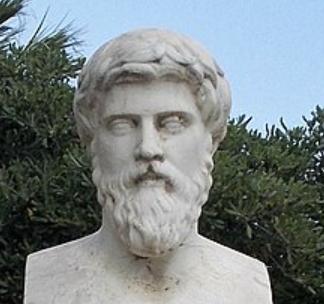
Once when Phocion had delivered an opinion which pleased the people,... he turned to his friend and said, "Have I not unawares spoken some mischievous thing or other?"
▼
Source
55 Phocion
3 months ago
When Philip had news brought him of divers and eminent successes in one day, "O Fortune!" said he, "for all these so great kindnesses do me some small mischief."
▼
Source
34 Philip
3 months ago
Themistocles being asked whether he would rather be Achilles or Homer, said, "Which would you rather be,-a conqueror in the Olympic games, or the crier that proclaims who are conquerors?"
▼
Source
48 Themistocles
3 months ago
The great god Pan is dead.
▼
Source
Why the Oracles cease to give Answers (Tr. Goodwin)
3 months ago
When Darius offered him ten thousand talents, and to divide Asia equally with him, "I would accept it," said Parmenio, "were I Alexander." "And so truly would I," said Alexander, "if I were Parmenio." But he answered Darius that the earth could not bear two suns, nor Asia two kings.
▼
Source
42 Alexander
3 months ago
Phocion compared the speeches of Leosthenes to cypress-trees. "They are tall," said he, "and comely, but bear no fruit."
▼
Source
56 Phocion
3 months ago
There were two brothers called Both and Either; perceiving Either was a good, understanding, busy fellow, and Both a silly fellow and good for little, Philip said, "Either is both, and Both is neither."
▼
Source
35 Philip
3 months ago
He preferred an honest man that wooed his daughter, before a rich man. "I would rather," said Themistocles, "have a man that wants money than money that wants a man."
▼
Source
49 Themistocles
3 months ago
He is a fool who lets slip a bird in the hand for a bird in the bush.
▼
Source
Of Garrulity (Tr. Goodwin)
3 months ago
When he was wounded with an arrow in the ankle, and many ran to him that were wont to call him a god, he said smiling, "That is blood, as you see, and not, as Homer saith, 'such humour as distils from blessed gods.'"
▼
Source
43 Alexander
3 months ago
Valour, however unfortunate, commands great respect even from enemies: but the Romans despise cowardice, even though it be prosperous.
▼
Source
Aemilius Paulus 26 (Tr. Stewart and Long)
3 months ago
Lycurgus the Lacedæmonian brought long hair into fashion among his countrymen, saying that it rendered those that were handsome more beautiful, and those that were deformed more terrible. To one that advised him to set up a democracy in Sparta, "Pray," said Lycurgus, "do you first set up a democracy in your own house."
▼
Source
57 Lycurgus
3 months ago
Philip being arbitrator betwixt two wicked persons, he commanded one to fly out of Macedonia and the other to pursue him.
▼
Source
36 Philip
3 months ago
Alcibiades had a very handsome dog, that cost him seven thousand drachmas; and he cut off his tail, "that," said he, "the Athenians may have this story to tell of me, and may concern themselves no further with me."
▼
Source
50 Alcibiades
3 months ago
The mind is not a vessel that needs filling, but wood that needs igniting.
▼
Source
On Listening to Lectures (Tr. Waterfield)
3 months ago
Aristodemus, a friend of Antigonus, supposed to be a cook's son, advised him to moderate his gifts and expenses. "Thy words," said he, "Aristodemus, smell of the apron."
▼
Source
44 Antigonus I
3 months ago
Perseverance is more prevailing than violence; and many things which cannot be overcome when they are together, yield themselves up when taken little by little.
▼
Source
Sertorius 16 (Tr. Dryden and Clough)
3 months ago
Lysander said, "Where the lion's skin will not reach, it must be pieced with the fox's."
▼
Source
60 Lysander
3 months ago
Being about to pitch his camp in a likely place, and hearing there was no hay to be had for the cattle, "What a life," said he, "is ours, since we must live according to the convenience of asses!"
▼
Source
37 Philip
3 months ago
Being summoned by the Athenians out of Sicily to plead for his life, Alcibiades absconded, saying that that criminal was a fool who studied a defence when he might fly for it.
▼
Source
51 Alcibiades
3 months ago
Scilurus on his death-bed, being about to leave four-score sons surviving, offered a bundle of darts to each of them, and bade them break them. When all refused, drawing out one by one, he easily broke them,-thus teaching them that if they held together, they would continue strong; but if they fell out and were divided, they would become weak.
▼
Source
31 Scilurus
3 months ago
Thrasyllus the Cynic begged a drachm of Antigonus. "That," said he, "is too little for a king to give." "Why, then," said the other, "give me a talent." "And that," said he, "is too much for a Cynic (or, for a dog) to receive."
▼
Source
45 Antigonus I
3 months ago
Authority and place demonstrate and try the tempers of men, by moving every passion and discovering every frailty.
▼
Source
Comparison of Demosthenes and Cicero 3 (Tr. Dryden and Clough)
3 months ago
To one that promised to give him hardy cocks that would die fighting, "Prithee," said Cleomenes, "give me cocks that will kill fighting."
▼
Source
61 Cleomenes
3 months ago
"These Macedonians," said he, "are a rude and clownish people, that call a spade a spade."
▼
Source
39 Philip
3 months ago
Lamachus chid a captain for a fault; and when he had said he would do so no more, "Sir," said he, "in war there is no room for a second miscarriage." Said one to Iphicrates, "What are ye afraid of?" "Of all speeches," said he, "none is so dishonourable for a general as 'I should not have thought of it.'"
▼
Source
52 Iphicrates
3 months ago
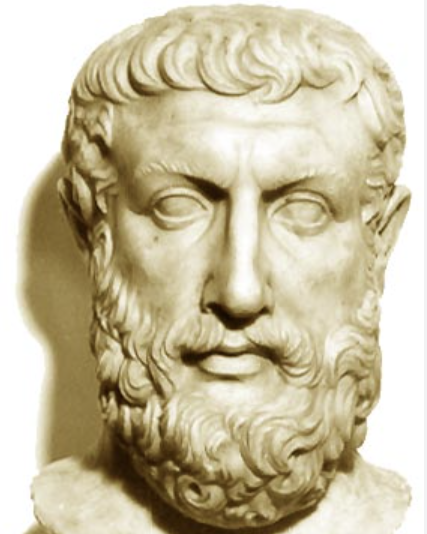
Never will this prevail, that the things that are not are - bar your thought from this road of inquiry.
▼
Source
Frag. B 7.1-2, quoted by Plato, Sophist, 237a
3 months ago
Do not let habit, born from experience, force you along this road, directing aimless eye and echoing ear and tongue; but judge by reason the much contested proof which I have spoken.
▼
Source
Frag. B 7.3-8.1, quoted by Sextus Empiricus, Against the Mathematicians, vii. 3
3 months ago
There is one story left, one road: that it is. And on this road there are very many signs that, being, is uncreated and imperishable, whole, unique, unwavering, and complete.
▼
Source
Frag. B 8.1-4, quoted by Simplicius, Commentary on the Physics, 144
3 months ago
You must learn all things, both the unshaken heart of persuasive truth, and the opinions of mortals in which there is no true warranty.
▼
Source
Frag B 1.28-30, quoted by Sextus Empiricus, Against the Mathematicians, vii. 3
3 months ago
The only roads of enquiry there are to think of: one, that it is and that it is not possible for it not to be, this is the path of persuasion (for truth is its companion); the other, that it is not and that it must not be - this I say to you is a path wholly unknowable.
▼
Source
Frag. B 2.2-6, quoted by Proclus, Commentary on the Timaeus I, 345
3 months ago
For it is the same thing that can be thought and that can be.
▼
Source
Frag. B 3, quoted by Plotinus, Enneads V, i.8
3 months ago
It is indifferent to me where I am to begin, for there shall I return again.
▼
Source
Frag. B 5, quoted by Proclus, Commentary on the Parmenides, 708
3 months ago
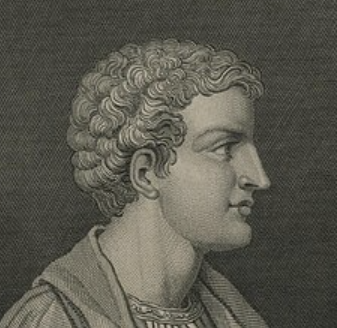
Now drown care in wine.
▼
Source
Book I, ode vii, line 32
3 months ago
It is your concern when your neighbor's wall is on fire.
▼
Source
Book I, epistle xviii, line 84
3 months ago
Brave men were living before Agamemnon.
▼
Source
Book IV, ode ix, line 25
3 months ago
When you wish to instruct, be brief; that men's minds may take in quickly what you say, learn its lesson, and retain it faithfully. Every word that is unnecessary only pours over the side of a brimming mind.
▼
Source
Lines 335-337; Edward Charles Wickham translation
3 months ago
So live, my boys, as brave men; and if fortune is adverse, front its blows with brave hearts.
▼
Source
Book II, Satire II, Line 135-136 (trans. E. C. Wickham)
3 months ago
You may drive out Nature with a pitchfork, yet she still will hurry back.
▼
Source
Book I, epistle x, line 24
3 months ago
The man who is tenacious of purpose in a rightful cause is not shaken from his firm resolve by the frenzy of his fellow citizens clamoring for what is wrong, or by the tyrant's threatening countenance.
▼
Source
Book III, ode iii, line 1
3 months ago
It is difficult to speak of the universal specifically.
▼
Source
Line 128
3 months ago
Let's put a limit to the scramble for money. ... Having got what you wanted, you ought to begin to bring that struggle to an end.
▼
Source
Book I, satire i, lines 92-94, as translated by N. Rudd
3 months ago
He who postpones the hour of living rightly is like the rustic who waits for the river to run out before he crosses.
▼
Source
Book I, epistle ii, lines 41-42
3 months ago
As we speak cruel time is fleeing. Seize the day, believing as little as possible in the morrow.
▼
Source
Book I, ode xi, line 7
3 months ago
To have a great man for an intimate friend seems pleasant to those who have never tried it; those who have, fear it.
▼
Source
Book I, epistle xviii, line 86
3 months ago
My cares and my inquiries are for decency and truth, and in this I am wholly occupied.
▼
Source
Book I, epistle i, line 11
3 months ago
He wins every hand who mingles profit with pleasure, by delighting and instructing the reader at the same time.
▼
Source
Line 343
3 months ago
This to the right, that to the left hand strays, and all are wrong, but wrong in different ways.
▼
Source
Book II, satire iii, line 50 (trans. Conington)
3 months ago
He is not poor who has enough of things to use. If it is well with your belly, chest and feet, the wealth of kings can give you nothing more.
▼
Source
Book I, epistle xii, line 4
3 months ago
If the world should break and fall on him, it would strike him fearless.
▼
Source
Book III, ode iii, line 7
CivilSimian.com created by AxiomaticPanic, CivilSimian, Kalokagathia