

2 months 3 weeks ago
Ministers and favorites are a sort of people who have a state prisoner in their custody, the whole management of whose understanding and actions they can easily engross.
▼
Source
source
Book V, Ch. 5

5 months ago
To become sober is: to come to oneself in self-knowledge and before God as nothing before him, yet infinitely, unconditionally engaged.

3 months 1 week ago
Power is the near neighbour of necessity.
▼
Source
source
As quoted in Aurea Carmina (8) by Hierocles of Alexandria, as translated in Dictionary of Quotations (1906) by Thomas Benfield Harbottle, p. 356

2 weeks 6 days ago
Wonder, indeed, is, on all hands, dying out: it is the sign of uncultivation to wonder.

4 months 1 week ago
Whatever you see in the more material part of yourself, learn to refer to God and to the invisible part of yourself. In that way, whatever offers itself to the senses will become for you an occasion for the practice of piety.
▼
Source
source
The Erasmus Reader (1990), p. 141.

2 months 3 weeks ago
At different degrees, everything is pathology, except for indifference.

4 months 2 days ago
The concept of space is not abstracted from external sensations.

4 months 3 weeks ago
Hungary conquered and in chains has done more for freedom and justice than any people for twenty years. But for this lesson to get through and convince those in the West who shut their eyes and ears, it was necessary, and it can be no comfort to us, for the people of Hungary to shed so much blood which is already drying in our memories. In Europe's isolation today, we have only one way of being true to Hungary, and that is never to betray, among ourselves and everywhere, what the Hungarian heroes died for, never to condone, among ourselves and everywhere, even indirectly, those who killed them. It would indeed be difficult for us to be worthy of such sacrifices.
3 months 1 week ago
Holding fast to these things, you will know the worlds of gods and mortals which permeates and governs everything. And you will know, as is right, nature similar in all respects, so that you will neither entertain unreasonable hopes nor be neglectful of anything.
▼
Source
source
As quoted in Divine Harmony: The Life and Teachings of Pythagoras by John Strohmeier and Peter Westbrook.
2 months 1 week ago
The universities are schools of education, and schools of research. But the primary reason for their existence is not to be found either in the mere knowledge conveyed to the students or in the mere opportunities for research afforded to the members of the faculty. Both these functions could be performed at a cheaper rate, apart from these very expensive institutions. Books are cheap, and the system of apprenticeship is well understood. So far as the mere imparting of information is concerned, no university has had any justification for existence since the popularization of printing in the fifteenth century. Yet the chief impetus to the foundation of universities came after that date, and in more recent times has even increased. The justification for a university is that it preserves the connection between knowledge and the zest of life, by uniting the young and the old in the imaginative consideration of learning.

3 months 4 weeks ago
The doctrine of the Second Coming teaches us that we do not and cannot know when the world drama will end. The curtain may be rung down at any moment: say, before you have finished reading this paragraph.
3 months 3 weeks ago
From our human experience and history, at least as far as I am informed, I know that everything essential and great has only emerged when human beings had a home and were rooted in a tradition. Today's literature is, for instance, largely destructive.

2 months 1 week ago
Everywhere and always, since its very inception, Christianity has turned the earth into a vale of tears; always it has made of life a weak, diseased thing, always it has instilled fear in man, turning him into a dual being, whose life energies are spent in the struggle between body and soul. In decrying the body as something evil, the flesh as the tempter to everything that is sinful, man has mutilated his being in the vain attempt to keep his soul pure, while his body rotted away from the injuries and tortures inflicted upon it.The Christian religion and morality extols the glory of the Hereafter, and therefore remains indifferent to the horrors of the earth. Indeed, the idea of self-denial and of all that makes for pain and sorrow is its test of human worth, its passport to the entry into heaven.

4 months 3 weeks ago
I wouldn't give an astrologer the time of day.

1 month 4 weeks ago
If a poor person envies a rich person, he is no better than the rich person.
▼
Source
source
p. 89

1 month 3 weeks ago
In tetrad form, the artefact is seen to be not netural or passive, but an active logos or utterance of the human mind or body that transforms the user and his ground.
▼
Source
source
p. 99

4 months ago
To be without some of the things you want is an indispensable part of happiness.
3 months 2 weeks ago
We appear to be faced with a general difficulty about psychophysical reduction. In other areas the process of reduction is a move in the direction of greater objectivity, toward a more accurate view of the real nature of things. ... The less it depends on a specifically human viewpoint, the more objective is our description. ...Experience itself, however, does not seem to fit the pattern. ... If the subjective character of experience is fully comprehensible only from one point of view, then any shift to greater objectivity - that is, less attachment to a specific viewpoint - does not take us nearer to the real nature of the phenomenon: it takes us further away from it.
▼
Source
source
p. 174.
3 months 4 weeks ago
Try to exclude the possibility of suffering which the order of nature and the existence of free-wills involve, and you find that you have excluded life itself.

3 months 2 weeks ago
The resolute one who moved by the principles of Thy FaithExtends the prosperity of order to his neighbors And works the land the evil now hold desolate, Earns through Righteousness, the Blessed Recompense Thy Good Mind has promised in Thy Kingdom of Heaven.
▼
Source
source
Spenta Mainyu Gatha; Yasna 50, 3.

2 months 1 week ago
Jung fiercely resented the implication that he was a hypocritical, self-seeking Judas, a 'rat'. Yet there was just enough truth in it to strike home. He was undoubtedly a man who liked his own way, no matter what the cost to others.
▼
Source
source
p. 72

3 months 4 weeks ago
The young men were born with knives in their brain, a tendency to introversion, self-dissection, anatomizing of motives.
▼
Source
source
p. 530, col. 2

4 months 3 weeks ago
Knowledge is the food of the soul; and we must take care, my friend, that the Sophist does not deceive us when he praises what he sells, like the dealers wholesale or retail who sell the food of the body; for they praise indiscriminately all their goods, without knowing what are really beneficial or hurtful.

3 months 4 weeks ago
When communist workmen associate with one another, theory, propaganda, etc., is their first end. But at the same time, as a result of this association, they acquire a new need - the need for society - and what appears as a means becomes an end. You can observe this practical processing its most splendid results whenever you see French socialist workers together. Such things as smoking, drinking, eating, etc., are no longer means of contact or means that bring together. Company, association, and conversation, which again has society as its end, are enough for them; the brotherhood of man is on mere phase with them, but a fact of life, and the nobility of man shines upon us from their work-hardened bodies.
▼
Source
source
"The Meaning of Human Requirements" p.99-100,The Marx-Engels Reader

3 weeks 3 days ago
There are defects and gaps in a liberal society that are constantly being filled by other longings and... structures... that sometimes end up undermining that liberal project.
▼
Source
source
13:05

2 months 1 day ago
There is no gender identity behind the expressions of gender; that identity is performatively constituted by the very "expressions" that are said to be its results.
▼
Source
source
Gender Trouble: Feminism and the Subversion of Identity
3 months 2 weeks ago
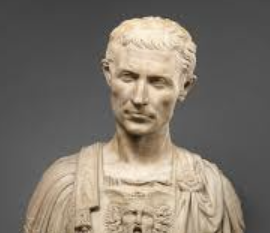
Bear in mind, that if through toil you accomplish a good deed, that toil will quickly pass from you, the good deed will not leave you so long as you live; but if through pleasure you do anything dishonourable, the pleasure will quickly pass away, that dishonourable act will remain with you for ever.
▼
Source
source
In the speech which he delivered ('At Numantia to the Knights'); quoted by Aulus Gellius, Attic Nights, XVI, i, 4 John C. Rolfe, ed. The Attic Nights of Aulus Gellius, Vol. 3, LCL 212 (1928), p. 131
3 months 4 weeks ago
The world is upheld by the veracity of good men: they make the earth wholesome.
▼
Source
source
Uses of Great Men

2 months 4 weeks ago
The person who grieves, suffers his passion to grow upon him; he indulges it, he loves it; but this never happens in the case of actual pain, which no man ever willingly endured for any considerable time.
▼
Source
source
Part I Section V
3 months 3 weeks ago
How can one be late to the end of history? A question for today. It is serious because it obliges one to reflect again, as we have been doing since Hegel, on what happens and deserves the name of event, after history; it obliges one to wonder if the end of history is but the end of a certain concept of history.
▼
Source
source
Injunctions of Marx

3 months 3 weeks ago
If we compare the third-person attitude of someone who simply says how things stand (this is the attitude of the scientist, for example) with the performative attitude of someone who tries to understand what is said to him (this is the attitude of the interpreter, for example), the implications ... become clear. ... First, interpreters relinquish superiority that observers have by virtue of their privileged position, in that they themselves are drawn, at least potentially, into negotiations about the meaning and validity of utterances. By taking part in communicative action, they accept in principle the same status as those whose utterances they are trying to understand. ... It is impossible to decide a priori who is to learn from whom.
▼
Source
source
p. 26
3 months 4 weeks ago
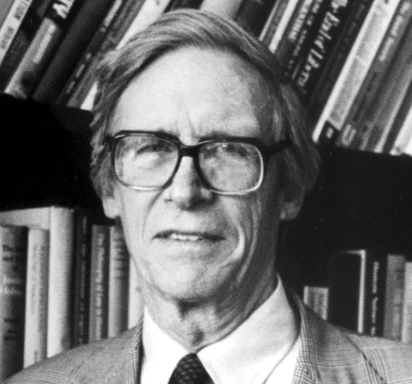
First of all, no one knows his place in society, his class position or social status; nor does he know his fortune in the distribution of natural assets and abilities, his intelligence and strength, and the like. Nor, again, does anyone know his conception of the good, the particulars of his rational plan of life, or even the special features of psychology such as his aversion to risk or liability to optimism or pessimism. More than this, I assume that the parties do not know the particular circumstances of their own society. That is, they do not know its particular economic or political situation, or the level of civilization and culture it has been able to achieve. The persons in the original position have no information as to which generation they belong.
▼
Source
source
p. 117
3 months 4 weeks ago
But the man is a humbug - a vulgar, shallow, self-satisfied mind, absolutely inaccessible to the complexities and delicacies of the real world. He has the journalist's air of being a specialist in everything, of taking in all points of view and being always on the side of the angels: he merely annoys a reader who has the least experience of knowing things, of what knowing is like. There is not two pence worth of real thought or real nobility in him. But he isn't dull.
▼
Source
source
Part of a diary entry dated "Wednesday-Wednesday 9-16 July", 1924, regarding Thomas Babington Macaulay

3 months 4 weeks ago
Ha! to forget. How childish! I feel you in my bones. Your silence screams in my ears. You may nail your mouth shut, you may cut out your tongue, can you keep yourself from existing? Will you stop your thoughts.
▼
Source
source
Inès reiterating to Garcin that they cannot ignore one another, Act 1, sc. 5
3 months 4 weeks ago
It costs a beautiful person no exertion to paint her image on our eyes; yet how splendid is that benefit! It costs no more for a wise soul to convey his quality to other men.
▼
Source
source
Uses of Great Men
4 months 2 days ago
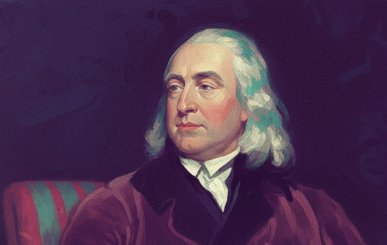
Want keeps pace with dignity. Destitute of the lawful means of supporting his rank, his dignity presents a motive for malversation, and his power furnishes the means.
▼
Source
source
The Rationale of Reward, 1811

4 months 3 days ago
It is a great mortification to the vanity of man, that his utmost art and industry can never equal the meanest of nature's productions, either for beauty or value. Art is only the under-workman, and is employed to give a few strokes of embellishment to those pieces, which come from the hand of the master.
▼
Source
source
Part I, Essay 15: The Epicurean

4 months 6 days ago
I speak the truth, not my fill of it, but as much as I dare speak; and I dare to do so a little more as I grow old.
▼
Source
source
Ch. 2
4 months ago
My first advice (on how not to grow old) would be to choose you ancestors carefully. Although both my parents died young, I have done well in this respect as regards my other ancestors. My maternal grandfather, it is true, was cut off in the flower of his youth, at the age of sixty-seven, but my other three grandparents all lived to be over eighty. Of remoter ancestors I can only discover one who did not live to a great age, and he died of a disease which is now rare, namely, having his head cut off.
▼
Source
source
p. 50

4 months 2 weeks ago
When a man at forty is the object of dislike, he will always continue what he is.

5 months 1 day ago
He who thinks a great deal is not suited to be a party man: he thinks his way through the party and out the other side too soon.
2 months 1 day ago
People no longer look at each other, but there are institutes for that. They no longer touch each other, but there is contactotherapy. They no longer walk, but they go jogging, etc. Everywhere one recycles lost faculties, or lost bodies, or lost sociality, or the lost taste for food.
▼
Source
source
"The Precession of Simulacra," p. 13

4 months 1 week ago
Let us not flutter too high, but remain by the manger and the swaddling clothes of Christ, in whom dwelleth all the fulness of the Godhead bodily.
▼
Source
source
50
4 months ago
In former days, men sold themselves to the Devil to acquire magical powers. Nowadays they acquire those powers from science, and find themselves compelled to become devils. There is no hope for the world unless power can be tamed, and brought into the service, not of this or that group of fanatical tyrants, but of the whole human race, white and yellow and black, fascist and communist and democrat; for science has made it inevitable that all must live or all must die.
▼
Source
source
Ch. 2: Leaders and Followers
1 week 6 days ago
I never read a book before reviewing it: it prejudices a man so.
▼
Source
source
Reported in Bon-Mots of Sydney Smith and R. Brinsley Sheridan, edited by Walter Jerrold with grotesques by Aubrey Beardsley (London: J. M. Dent and Company, 1893), p. 24
2 months 1 week ago
Art is the imposing of a pattern on experience, and our aesthetic enjoyment in recognition of the pattern.
▼
Source
source
Ch. 29, June 10, 1943.
4 months ago
The significance of that 'absolute commandment', know thyself - whether we look at it in itself or under the historical circumstances of its first utterance - is not to promote mere self-knowledge in respect of the particular capacities, character, propensities, and foibles of the single self. The knowledge it commands means that of man's genuine reality - of what is essentially and ultimately true and real - of spirit as the true and essential being.
1 week 2 days ago
If wandering is the liberation from every given point in space, and thus the conceptional opposite to fixation at such a point, the sociological form of the "stranger" presents the unity, as it were, of these two characteristics.
▼
Source
source
p. 402; Opening line.
2 months 4 weeks ago
The Revolution and Hanover succession had been objects of the highest veneration to the old Whigs. They thought them not only proofs of the sober and steady spirit of liberty which guided their ancestors; but of their wisdom and provident care of posterity.-The modern Whigs have quite other notions of these events and actions. They do not deny that Mr. Burke has given truly the words of the acts of parliament which secured the succession, and the just sense of them. They attack not him but the law.
▼
Source
source
p. 436
2 months 3 weeks ago
You can take away a man's gods, but only to give him others in return.
▼
Source
source
p 63
CivilSimian.com created by AxiomaticPanic, CivilSimian, Kalokagathia