

1 month 2 weeks ago
For him who loves labor, there is always something to do.
▼
Source
source
Maxim 219

4 months 2 weeks ago
"My field," said Goethe, "is time." That is indeed the absurd speech. What, in fact, is the Absurd Man? He who, without negating it, does nothing for the eternal. Not that nostalgia is foreign to him. But he prefers his courage and his reasoning. The first teaches him to live without appeal and to get along with what he has; the second informs him of his limits. Assured of his temporally limited freedom, of his revolt devoid of future, and of his mortal consciousness, he lives out his adventure within the span of his lifetime.

3 months 2 weeks ago
I think of death only with tranquility, as an end. I refuse to let death hamper life. Death must enter life only to define it.
2 months 1 week ago
The 'public' is a phantom, the phantom of an opinion supposed to exist in a vast number of persons who have no effective interrelation and though the opinion is not effectively present in the units. Such an opinion is spoken of as 'public opinion,' a fiction which is appealed to by individuals and by groups as supporting their special views. It is impalpable, illusory, transient; "'tis here, 'tis there, 'tis gone"; a nullity which can nevertheless for a moment endow the multitude with power to uplift or destroy.
2 months 1 week ago
Nonbeing must in some sense be, otherwise what is it that there is not? This tangled doctrine might be nicknamed Plato's beard; historically it has proved tough, frequently dulling the edge of Occam's razor.
▼
Source
source
"On What There Is"
2 months 4 days ago
It is a sign of sovereignty to risk one's life, that is, to turn life into a game.

2 months 3 weeks ago
The Crown of Great Britain cannot, in my opinion, be too magnificent. Let us see some great public works set on foot; let it never be said, that the Commons of Great Britain failed in what they owe to the first Crown in the world. Looking up to royalty, I do say, it is the oldest and one of the best parts of our constitution. I wish it should look like royalty; that it should look like a King; like a King of Great Britain.
▼
Source
source
Speech in the House of Commons (28 February 1769)
1 week 4 days ago
When the British came there was, throughout India, a system of communal schools, managed by the village communities. The agents of the East India Company destroyed these village communities, and took steps to replace the schools; even today, after a century of effort to restore them, they stand at only 66% of their number a hundred years ago. Hence, the 93 % illiteracy of India.
▼
Source
source
(source: The Case for India - By Will Durant Simon and Schuster, New York. 1930 p.44).

3 months 3 days ago
Concern should drive us into action and not into a depression.
▼
Source
source
The Collected Works of Karen Horney (1957) by Karen Horney, p. 154: "We may feel genuinely concerned about world conditions, though such a concern should drive us into action and not into a depression."
1 month ago
In future, nerve cell responsiveness to naturally occurring endogenous opioids can be increased via receptor enrichment in the brain too. In principle, we can modulate their lifelong "overexpression", intermittently heightened (or gently diminished) by whatever kinds of personal and environmental contingencies we judge fit. Both functionally and anatomically, our reward pathways can be made "bigger and better". But intelligent emotional self-mastery will involve re-engineering the mind-brain so we derive the most intense rewards from activities we deem most lastingly worthwhile: i.e. prioritising our higher-order desires over legacy first-order appetites. Natural selection has "encephalised" our emotions to benefit our genes. Rational agents can "re-encephalise" our emotions to benefit us.
▼
Source
source
Utopian Neuroscience, BLTC Research, 2019

3 months 2 weeks ago
If we compare the third-person attitude of someone who simply says how things stand (this is the attitude of the scientist, for example) with the performative attitude of someone who tries to understand what is said to him (this is the attitude of the interpreter, for example), the implications ... become clear. ... First, interpreters relinquish superiority that observers have by virtue of their privileged position, in that they themselves are drawn, at least potentially, into negotiations about the meaning and validity of utterances. By taking part in communicative action, they accept in principle the same status as those whose utterances they are trying to understand. ... It is impossible to decide a priori who is to learn from whom.
▼
Source
source
p. 26
3 months 2 weeks ago
The domination of the public way in which things have been interpreted has already decided upon even the possibilities of being attuned, that is, about the basic way in which Da-sein lets itself be affected by the world. The they prescribes that attunement, it determines what and how one "sees."
▼
Source
source
Stambaugh translation

3 months 2 weeks ago
It is true: Man is the microcosm: I am my world.
▼
Source
source
Journal entry (12 October 1916), p. 84e

2 months 3 weeks ago
Obstinacy in a bad cause, is but constancy in a good.
▼
Source
source
Section 25
2 days ago
Life, liberty, and the pursuit of property were just what Aristotle did not talk about. They are the conditions of happiness; but the essence of happiness, according to Aristotle, is virtue. So the moderns decided to deal with the conditions and to let happiness take care of itself.
▼
Source
source
Commerce and Culture, p. 284.

2 months 2 weeks ago
To be or not to be...Neither one nor the other.
2 months 3 weeks ago
That is a long word: forever!
▼
Source
source
Act I.
2 days ago
What really matters is that we should all of us realize that we are guilty of inhumanity. The horror of this realization should shake us out of our lethargy so that we can direct our hopes and our intentions to the coming of an era in which war will have no place.
3 months 1 week ago
There are two sentences inscribed upon the Delphic oracle, hugely accommodated to the usages of man's life: "Know thyself," and "Nothing too much;" and upon these all other precepts depend.
2 months 2 weeks ago
The erotic instinct is something questionable, and will always be so whatever a future set of laws may have to say on the matter. It belongs, on the one hand, to the original animal nature of man, which will exist as long as man has an animal body. On the other hand, it is connected with the highest forms of the spirit. But it blooms only when the spirit and instinct are in true harmony. If one or the other aspect is missing, then an injury occurs, or at least there is a one-sided lack of balance which easily slips into the pathological. Too much of the animal disfigures the civilized human being, too much culture makes a sick animal.

1 month 2 weeks ago
Headlines are icons, not literature.
▼
Source
source
(p. 5)

1 week 5 days ago
The Noble in the high place, the Ignoble in the low; that is, in all times and in all countries, the Almighty Maker's Law.
2 months 2 weeks ago
Aging people should know that their lives are not mounting and unfolding but that an inexorable inner process forces the contraction of life. For a young person it is almost a sin - and certainly a danger - to be too much occupied with himself; but for the aging person it is a duty and a necessity to give serious attention to himself.
▼
Source
source
p. 125

3 months 4 weeks ago
How many things served us yesterday for articles of faith, which today are fables for us?
▼
Source
source
Ch. 27. Of Friendship
3 months 2 weeks ago
I maintain that inversion is the effect of neither a prenatal choice nor an endocrinal malformation nor even the passive and determined result of complexes. It is an outlet that a child discovers when he is suffocating.

2 weeks 1 day ago
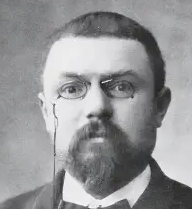
It is often said that experiments should be made without preconceived ideas. That is impossible. Not only would it make every experiment fruitless, but even if we wished to do so, it could not be done. Every man has his own conception of the world, and this he cannot so easily lay aside. We must, for example, use language, and our language is necessarily steeped in preconceived ideas.
▼
Source
source
Ch. IX: Hypotheses in Physics, Tr. George Bruce Halsted
2 months 3 weeks ago
I thanke God for my happy Dreams|dreames, as I doe for my good rest, for there is a satisfaction in them unto reasonable desires, and such as can be content with a fit of happinesse; and surely it is not a melancholy conceite to thinke we are all asleepe in this world, and that the conceits of this life are as meare dreames to those of the next, as the Phantasmes of the night, to the conceit of the day. There is an equall delusion in both, and the one doth but seeme to bee the embleme or picture of the other;
▼
Source
source
Section 12
4 months 3 weeks ago
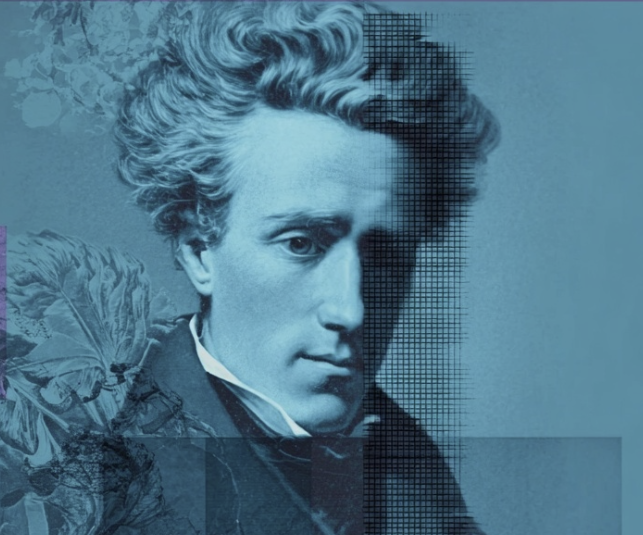
Anxiety may be compared with dizziness. He whose eye happens to look down into the yawning abyss becomes dizzy. But what is the reason for this? It is just as much in his own eye as in the abyss, for suppose he had not looked down. Hence, anxiety is the dizziness of freedom, which emerges when the spirit wants to posit the synthesis and freedom looks down into its own possibility, laying hold of finiteness to support itself. Freedom succumbs to dizziness. Further than this, psychology cannot and will not go. In that very moment everything is changed, and freedom, when it again rises, sees that it is guilty. Between these two moments lies the leap, which no science has explained and which no science can explain. He who becomes guilty in anxiety becomes as ambiguously guilty as it is possible to become.
4 months 3 weeks ago
Now men seem, not unreasonably, to form their notions of the supreme good and of happiness from the lives of men.

3 months 3 weeks ago
By the removal of the unnecessary mouths, and by extracting from the farmer the full value of the farm, a greater surplus, or what is the same thing, the price of a greater surplus, was obtained for the proprietor...
▼
Source
source
Chapter IV, p. 450 (On Highland Clearances).

3 months 3 weeks ago
Stop Traveller! Near this place lieth John Locke. If you ask what kind of a man he was, he answers that he lived content with his own small fortune. Bred a scholar he made his learning subservient only to the cause of truth. This thou will learn from his writings, which will show thee everything else concerning him, with greater truth, than the suspect praises of an epitaph. His virtues, indeed, if he had any, were too little for him to propose as matter of praise to himself, or as an example to thee. Let his vices be buried together. As to an example of manners, if you seek that, you have it in the Gospels; of vices, to wish you have one nowhere; if mortality, certainly, (and may it profit thee), thou hast one here and everywhere.
▼
Source
source
Epitaph, as translated from the Latin.

2 months 1 week ago
Your own philosophy condemns you and supports us.
▼
Source
source
Salbatore Mitxelena (1958): Unamuno eta Abendats, Baiona: Darracq
1 month 2 weeks ago
We are swiftly moving at present from an era where business was our culture into an era when culture will be our business. Between these poles stand the huge and ambiguous entertainment industries.
▼
Source
source
(p. 384)
3 months 4 weeks ago
The people resemble a wild beast, which, naturally fierce and accustomed to live in the woods, has been brought up, as it were, in a prison and in servitude, and having by accident got its liberty, not being accustomed to search for its food, and not knowing where to conceal itself, easily becomes the prey of the first who seeks to incarcerate it again.
▼
Source
source
Book 1, Ch. 16
3 months 2 weeks ago
...in order to change poverty into wealth, one must start by displaying it.
▼
Source
source
p. 420
3 months 2 weeks ago
Three o'clock is always too late or too early for anything you want to do.
2 months 2 weeks ago
Once we reject lyricism, to blacken a page becomes an ordeal: what's the use of writing in order to say exactly what we had to say?
4 months 3 weeks ago
It is the mark of an educated mind to be able to entertain a thought without accepting it.

6 days ago
There are more things, Lucilius, likely to frighten us than there are to crush us; we suffer more often in imagination than in reality.
2 months 1 week ago
Blessed art thou, Simon Barjona: for flesh and blood hath not revealed it unto thee, but my Father which is in heaven. And I say also unto thee, That thou art Peter, and upon this rock I will build my church; and the gates of hell shall not prevail against it. And I will give unto thee the keys of the kingdom of heaven: and whatsoever thou shalt bind on earth shall be bound in heaven: and whatsoever thou shalt loose on earth shall be loosed in heaven.
▼
Source
source
16:17-19 (KJV)

4 months 5 days ago
Nothing is ever gotten out of nothing by divine power.
▼
Source
source
Book I, line 150 (tr. Munro)
1 month 2 weeks ago
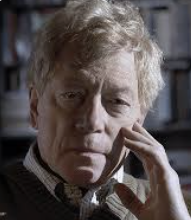
Hayek's theory of evolutionary rationality shows how traditions and customs (those surrounding sexual relations, for example) might be reasonable solutions to complex social problems, even when, and especially when, no clear rational grounds can be provided to the individual for obeying them. These customs have been selected by the ''invisible hand'' of social reproduction, and societies that reject them will soon enter the condition of ''maladaptation,'' which is the normal prelude to extinction.
▼
Source
source
Hayek and conservatism, in Edward Feser (ed.), The Cambridge Companion to Hayek
2 months 1 week ago
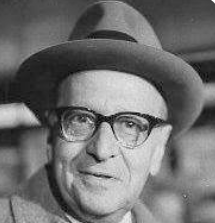
It is as if thinking itself had been reduced to the level of industrial processes, subjected to a close schedule-in short, made part and parcel of production.
▼
Source
source
p. 21.
3 months 3 weeks ago
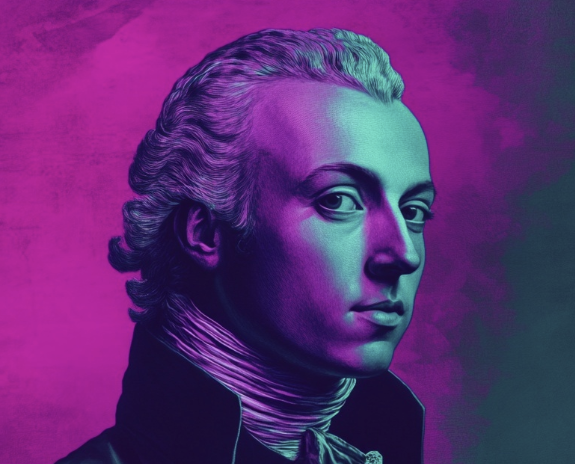
It is precisely in knowing its limits that philosophy consists.
▼
Source
source
A 727, B 755
4 months 3 weeks ago
The life-giving Spirit is the very one who slays you; the first thing the life-giving Spirit says is that you must enter into death, that you must die to, it is this way in order that you many not take Christianity in vain. A life-giving Spirit, that is the invitation; who would not willingly take hold of it! But die first, that is the halt!
2 months 1 week ago
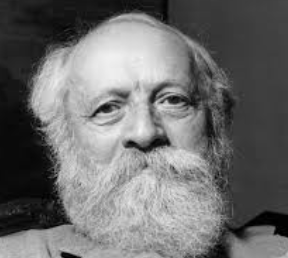
You do not attain to knowledge by remaining on the shore and watching the foaming waves, you must make the venture and cast yourself in, you must swim, alert and with all your force, even if a moment comes when you think you are losing consciousness; in this way, and in no other, do you reach anthropological insight.
▼
Source
source
p. 148
CivilSimian.com created by AxiomaticPanic, CivilSimian, Kalokagathia