


1 month 6 days ago
Pure and complete sorrow is as impossible as pure and complete joy.
▼
Source
source
Bk. XV, ch. 1
1 month 2 weeks ago
What makes our poetry so contemptible nowadays is its paucity of ideas. If you want to be read, invent. Who the Devil wouldn't like to read something new?
▼
Source
source
D 62

2 months 1 week ago
Why count the days, when even one days is enough for a man to know all happiness?

1 month 4 weeks ago
I disclose my mysteries to those who are worthy of my mysteries.
2 months 1 week ago
There is no good father who would want to resemble our Heavenly Father.
▼
Source
source
No. 51
3 months 3 weeks ago
Listen widely to remove your doubts and be careful when speaking about the rest and your mistakes will be few. See much and get rid of what is dangerous and be careful in acting on the rest and your causes for regret will be few. Speaking without fault, acting without causing regret: 'upgrading' consists in this.
1 month 6 days ago
The more is given the less the people will work for themselves, and the less they work the more their poverty will increase.
▼
Source
source
Help for the Starving, Pt. III

3 months 6 days ago
Who does not see that we are likely to ascertain the distinctive significance of religious melancholy and happiness, or of religious trances, far better by comparing them as conscientiously as we can with other varieties of melancholy, happiness, and trance, than by refusing to consider their place in any more general series, and treating them as if they were outside of nature's order altogether?
▼
Source
source
Lecture I, "Religion and Neurology"
2 months 4 days ago
Man consists in Truth. If he exposes Truth, he exposes himself. If he betrays Truth, he betrays himself. We speak not here of lies, but of acting against Conviction.

3 months 1 week ago
Religious suffering is, at one and the same time, the expression of real suffering and a protest against real suffering. Religion is the sigh of the oppressed creature, the heart of a heartless world, and the soul of soulless conditions. It is the opium of the people.The abolition of religion as the illusory happiness of the people is the demand for their real happiness. To call on them to give up their illusions about their condition is to call on them to give up a condition that requires illusions. The criticism of religion is, therefore, in embryo, the criticism of that vale of tears of which religion is the halo.Criticism has plucked the imaginary flowers on the chain not in order that man shall continue to bear that chain without fantasy or consolation, but so that he shall throw off the chain and pluck the living flower.
3 months 3 weeks ago
It is better to conceal ignorance than to expose it.

1 month 3 weeks ago
I will not say that the more or less poetical and unphilosophical doctrines that I am about to set forth are those which make me live; but I will venture to say that it is my longing to live and to live for ever that inspires these doctrines within me. And if by means of them I succeed in strengthening and sustaining this same longing in another, perhaps when it is all but dead, then I shall have performed a man's work, and above all, I shall have lived. In a word, be it with reason or without reason or against reason, I am resolved not to die. And if, when at last I die out, I die altogether, then I shall not have died out of myself - that is, I shall not have yielded myself to death, but my human destiny shall have killed me. Unless I come to lose my head, or rather my heart, I will not abdicate from life - life will be wrested from me.
3 months 6 days ago
The baby, assailed by eyes, ears, nose, skin, and entrails at once, feels it all as one great blooming, buzzing confusion; and to the very end of life, our location of all things in one space is due to the fact that the original extents or bignesses of all the sensations which came to our notice at once, coalesced together into one and the same space.
▼
Source
source
Ch. 13

3 months 2 weeks ago
No matter that we may mount on stilts, we still must walk on our own legs. And on the highest throne in the world, we still sit only on our own bottom.
▼
Source
source
Ch. 13

1 month 2 weeks ago
The "passion for incredulity" can produce as much self-deception as the uncritical will to believe.
▼
Source
source
p. 209
3 weeks 1 day ago
Every living creature commences its existence under a form different from, and simpler than, that which it eventually attains.
▼
Source
source
Ch.2, p. 74

2 months 1 week ago
Religion, always a principle of energy, in this new people, is no way worn out or impaired; and their mode of professing it is also one main cause of this free spirit. The people are Protestants; and of that kind which is the most adverse to all implicit submission of mind and opinion. This is a persuasion not only favourable to liberty, but built upon it.
3 months 2 days ago
The small are always dependent on the great; they are "small" precisely because they think they are independent. The great thinker is one who can hear what is greatest in the work of other "greats" and who can transform it in an original manner.
▼
Source
source
p. 35

3 months 5 days ago
Night is falling: at dusk, you must have good eyesight to be able to tell the Good Lord from the Devil.
▼
Source
source
Act 10, sc. 2
2 months 1 week ago
How it could come to pass I do not know, but I remember it clearly. The dream embraced thousands of years and left in me only a sense of the whole. I only know that I was the cause of their sin and downfall. Like a vile trichina, like a germ of the plague infecting whole kingdoms, so I contaminated all this earth, so happy and sinless before my coming. They learnt to lie, grew fond of lying, and discovered the charm of falsehood.
3 months 2 weeks ago
I care not so much what I am to others as what I am to myself. I will be rich by myself, and not by borrowing.
▼
Source
source
Book II, Ch. 16

3 months 5 days ago
There have been men before ... who got so interested in proving the existence of God that they came to care nothing for God himself... as if the good Lord had nothing to do but to exist. There have been some who were so preoccupied with spreading Christianity that they never gave a thought to Christ.
▼
Source
source
Ch. 9
2 months 4 days ago
Pure mathematics is religion.

3 months 1 day ago
But what then is this confrontation below the language of reason? Where might this interrogation lead, following not reason in its horizontal becoming, but seeking to retrace in time this constant verticality, which, the length of Western culture, confronts it with what it is not, measuring it with its own extravagance?
▼
Source
source
Preface to 1961 edition
1 month 3 weeks ago
And neither ought we to be surprised by the affirmation that the consciousness of the Universe is composed and integrated by the consciousnesses of the beings which form the Universe, by the consciousnesses of all the beings that exist, and that nevertheless it remains a personal consciousness distinct from those which compose it. Only thus is it possible to understand how in God we live, move, and have our being.

3 months 2 weeks ago
Once we have tasted the sweetness of what is spiritual, the pleasures of the world will have no attraction for us. If we disregard the shadows of things, then we will penetrate their inner substance.
3 months 3 weeks ago
It is difficulties that show what men are.
▼
Source
source
Book I, ch. 24, 1.
1 month 3 weeks ago
The philosophy of Bergson, which is a spiritualist restoration, essentially mystical, medieval, Quixotesque, has been called a demi-mondaine philosophy. Leave out the demi; call it mondaine, mundane. Mundane - yes, a philosophy for the world and not for philosophers, just as chemistry ought to be not for chemists alone. The world desires illusion (mundus vult decipi) - either the illusion antecedent to reason, which is poetry, or the illusion subsequent to reason, which is religion. And Machiavelli has said that whosoever wishes to delude will always find someone willing to be deluded. Blessed are they who are easily befooled!
1 month 3 weeks ago
... Nietzsche's ideas and plans: for example, the idea of giving up the whole wretched academic world to form a secular monastic community.

4 months 3 days ago
Idleness is only fatal to the mediocre.
2 months 6 days ago
It is a proof that the state is not an arbitrary invention, but is established by nature and reason, when we actually find that, in places where men have lived together for a time and have become educated, states are erected, although the people in the one such place know not that the same thing has been done in other places. Each people, which does not live in a condition of nature, but has a government, no matter how constituted, has a right to compel its recognition from all adjoining states.
▼
Source
source
P. 474, 477

3 months 2 days ago
Your questions refer to words; so I have to talk about words. You say: The point isn't the word, but its meaning, and you think of the meaning as a thing of the same kind as the word, though also different from the word. Here the word, there the meaning.
▼
Source
source
§ 120

3 months 1 week ago
Every man, as the Stoics used to say, is first and principally recommended to his own care; and every man is certainly, in every respect, fitter and abler to take care of himself than of any other person. Every man feels his own pleasures and his own pains more sensibly than those of other people. The former are the original sensations; the latter the reflected or sympathetic images of those sensations. The former may be said to be the substance; the latter the shadow.
▼
Source
source
Section II, Chap. I.
3 months 1 week ago
As the variable capital always stays in the hands of the capitalist in some form or other, it cannot be claimed in any way that it converts itself into revenue for anyone.
▼
Source
source
Vol. II, Ch. XX, p. 452.
3 months 3 weeks ago
There are only the wise of the highest class, and the stupid of the lowest class, who cannot be changed.

2 months 1 week ago
The whole life of an American is passed like a game of chance, a revolutionary crisis, or a battle.
▼
Source
source
Chapter XVIII.

2 months 2 days ago
The need for novelty is the characteristic of an alienated gorilla.
3 months 1 week ago
Nature has placed mankind under the governance of two sovereign masters, pain and pleasure. It is for them alone to point out what we ought to do, as well as to determine what we shall do. On the one hand the standard of right and wrong, on the other the chain of causes and effects, are fastened to their throne. They govern us in all we do, in all we say, in all we think: every effort we can make to throw off our subjection, will serve but to demonstrate and confirm it. In words a man may pretend to abjure their empire: but in reality he will remain subject to it all the while. The principle of utility recognizes this subjection, and assumes it for the foundation of that system, the object of which is to rear the fabric of felicity by the hands of reason and of law. Systems which attempt to question it, deal in sounds instead of sense, in caprice instead of reason, in darkness instead of light.
▼
Source
source
Ch. 1: Of the Principle of Utility
4 months 3 days ago
The most elementary form of rebellion, paradoxically, expresses an aspiration for order.
2 months 6 days ago
The fundamental maxim of those who stand at the head of this Age, and therefore the principle of the Age, is this,-to accept nothing as really existing or obligatory, but that which they can understand and clearly comprehend. With regard to this fundamental principle, as we have now declared and adopted it without farther definition or limitation, this third Age is precisely similar to that which is to follow it, the fourth, or age of Reason as Science,-and by virtue of this similarity prepares the way for it. Before the tribunal of Science, too, nothing is accepted but the Conceivable. Only in the application of the principle there is this difference between the two Ages,-that the third, which we shall shortly name that of Empty Freedom, makes its fixed and previously acquired conceptions the measure of existence; while the fourth-that of Science-on the contrary, makes existence the measure, not of its acquired, but of its desiderated beliefs.
▼
Source
source
p. 19
1 month 2 weeks ago
One might call habit a moral friction: something that prevents the mind from gliding over things but connects it with them and makes it hard for it to free itself from them.
▼
Source
source
A 10
3 months 5 days ago
Some day you will be old enough to start reading fairy tales again.
▼
Source
source
The Lion, the Witch and the Wardrobe (1950), Dedication: "To Lucy Barfield"
2 months 6 days ago
The Age of Empty Freedom ... does not know that man must first through labour, industry, and art, learn how to know; but it has a certain fixed standard for all conceptions, and an established Common Sense of Mankind always ready and at hand, innate within itself and there present without trouble on its part;-and those conceptions and this Common Sense are to it the measure of the efficient and the real. It has this great advantage over the Age of Science, that it knows all things without having learned anything; and can pass judgment upon whatever comes before it at once and without hesitation,-without needing any preliminary evidence:-'That which I do not immediately comprehend by the conceptions which dwell within me, is nothing,'-says Empty Freedom.
▼
Source
source
p. 20
2 months 1 week ago
Do you see this egg? With this you can topple every theological theory, every church or temple in the world. What is it, this egg, before the seed is introduced into it? An insentient mass. And after the seed has been introduced to into it? What is it then? An insentient mass. For what is the seed itself other than a crude and inanimate fluid? How is this mass to make a transition to a different structure, to sentience, to life? Through heat. And what will produce that heat in it? Motion. "Conversation Between D'Alembert and Diderot", as quoted in Selected Writings (1966) edited by Lester G. Crocker, and The Enlightenment and the Intellectual Foundations of Modern Culture (2004) by Louis K Dupré, p. 30 Variant translation: See this egg. It is with this that all the schools of theology and all the temples of the earth are to be overturned.
▼
Source
source
As quoted in Diderot, Reason and Resonance (1982) by Élisabeth de Fontenay, p. 217
2 weeks 5 days ago
When I was a child, the institution of war, which, by then, had been in existence for perhaps about five thousand years, was still being taken for granted by most people in the World as a normal and acceptable fact of life. One small religious community, the Society of Friends, was at that time singular in condemning war as immoral and in consequently refusing to have any part or lot in war-making.
▼
Source
source
Experiences (New York: Oxford UP, 1969) pt. 2, sect. 4
1 month 6 days ago
People continued - regardless of all that leads man forward - to try to unite the incompatibles : the virtue of love, and what is opposed to love, namely, the restraining of evil by violence. And such a teaching, despite its inner contradiction, was so firmly established that the very people who recognize love as a virtue accept as lawful at the same time an order of life based on violence and allowing men not merely to torture but even to kill one another.
▼
Source
source
III
2 months 2 days ago
Without the faculty of forgetting, our past would weigh so heavily on our present that we should not have the strength to confront another moment, still less to live through it. Life would be bearable only to frivolous natures, those in fact who do not remember.
4 weeks 1 day ago
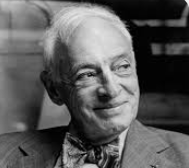
For the first time in history, the human species as a whole has gone into politics. Everyone is in the act, and there is no telling what may come of it.
▼
Source
source
To Jerusalem and Back: A Personal Account (1976), p. 38
3 months 3 weeks ago
Time is a game played beautifully by children.
1 month 2 weeks ago
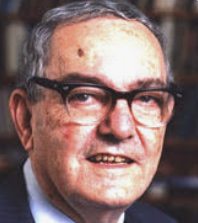
Before we can establish any immutable 'principles' of administration, we must be able to describe, in words, exactly how an administrative organization looks and exactly how it works.
▼
Source
source
p. xiv.
CivilSimian.com created by AxiomaticPanic, CivilSimian, Kalokagathia