


3 months 3 weeks ago
Opinion is like a pendulum and obeys the same law. If it goes past the centre of gravity on one side, it must go a like distance on the other; and it is only after a certain time that it finds the true point at which it can remain at rest.
▼
Source
source
Vol. 2 "Further Psychological Observations" as translated in Essays and Aphorisms (1970), as translated by R. J. Hollingdale
4 days ago
Manners are the shadows of virtues; the momentary display of those qualities which our fellow creatures love, and respect.
▼
Source
source
Sermon XII, Sermons



1 week 3 days ago
To a shower of gold most things are penetrable.
▼
Source
source
Pt. I, Bk. III, ch. 7.

3 months 3 weeks ago
In the metaphysical elements of aesthetics the various nonmoral feelings are to be made use of; in the elements of moral metaphysics the various moral feelings of men, according to the differences in sex, age, education, and government, of races and climates, are to be employed.
▼
Source
source
Part III : Selection on Education from Kant's other Writings, Ch. I Pedagogical Fragments, # 58
1 month 1 week ago
For the first time in history, the human species as a whole has gone into politics. Everyone is in the act, and there is no telling what may come of it.
▼
Source
source
To Jerusalem and Back: A Personal Account (1976), p. 38

2 months 2 weeks ago
No one has the audacity to exclaim: "I don't want to do anything!" - we are more indulgent with a murderer than with a mind emancipated from actions.

2 months 2 weeks ago
Among all my patients in the second half of life-that is to say, over thirty-five-there has not been one whose problem in the last resort was not that of finding a religious outlook on life. It is safe to say that every one of them fell ill because he had lost what the living religions of every age have given their followers, and none of them has been really healed who did not regain his religious outlook.
▼
Source
source
Chap. 11 (Psychotherapists or the Clergy), p. 229

3 months 4 weeks ago
For we have in Latin only a few small streams and muddy puddles, while they have pure springs and rivers flowing in gold. I see that it is utter madness even to touch with the little finger that branch of theology that deals chiefly with the divine mysteries, unless one is also provided with the equipment of Greek.
▼
Source
source
As quoted in Martin Luther: The Man Who Rediscovered God and Changed the World (2017) by By Eric Metaxas, p. 85

3 months 1 day ago
Holding fast to these things, you will know the worlds of gods and mortals which permeates and governs everything. And you will know, as is right, nature similar in all respects, so that you will neither entertain unreasonable hopes nor be neglectful of anything.
▼
Source
source
As quoted in Divine Harmony: The Life and Teachings of Pythagoras by John Strohmeier and Peter Westbrook.

2 months 1 week ago
An integral part of totalitarian control is the attack on critical and independent thought. The appeal to facts is substituted for the appeal to reason. No reason can sanction a regime that uses the greatest productive apparatus man has ever created in the interest of an increasing restriction on human satisfactions-no reason except the fact that the economic system can be retained in no other way. Just as the Fascist emphasis on action and change prevents the insight into necessity of rational courses of action and change, [Giovanni] Gentile's deification of thinking prevents the liberation of thought from the shackles of 'the given.'
▼
Source
source
P. 405
2 months 1 week ago
With the abolition of otium and of the ego no aloof thinking is left. ... Without otium philosophical thought is impossible, cannot be conceived or understood.
▼
Source
source
p. 39.
1 month 3 weeks ago
Well, what does "good" mean anyway...? As Wittgenstein suggested, "good," like "game," has a family of meanings. Prominent among them is this one: "meets the criteria or standards of assessment or evaluation."
▼
Source
source
P. 152.

3 months 3 weeks ago
Sophistry is only fit to make men more conceited in their ignorance.

3 months 2 weeks ago
Someone who knows too much finds it hard not to lie.
▼
Source
source
p. 64e

2 months 1 week ago
Thou sayest that I am a king. To this end was I born, and for this cause came I into the world, that I should bear witness unto the truth. Every one that is of the truth heareth my voice.
▼
Source
source
18:37, (KJV)

2 months 6 days ago
To know something is to make this something that I know myself; but to avail myself of it, to dominate it, it has to remain distinct from myself.
1 month 2 days ago
A life which does not go into action is a failure.
▼
Source
source
Vol. 10

3 months 2 weeks ago
As we passed under the last bridge over the canal, just before reaching the Merrimack, the people coming out of church paused to look at us from above, and apparently, so strong is custom, indulged in some heathenish comparisons; but we were the truest observers of this sunny day.

3 months 2 weeks ago
"I wish I had never been born," she said. "What are we born for?" "For infinite happiness," said the Spirit. "You can step out into it at any moment..."
▼
Source
source
Ch. 8

2 weeks 1 day ago
Multitude is a class concept. ... Class is determined by class struggle. There are, of course, in infinite number of ways that humans can be grouped into classes - hair color, blood type, and so forth - but the classes that matter are those defined by the lines of collective struggle. Race is just as much a political concept as economic class is in this regard. ... Class is a political concept, in short, in that a class is and can only be a collectivity that struggles in common.
▼
Source
source
104

1 month 2 weeks ago
Ignorance, to a scientist, is an itch that begs to be pleasurably scratched. Ignorance, if you are a theologian, is something to be washed away by shamelessly making something up.
▼
Source
source
The Intellectual and Moral Courage of Atheism

1 month 2 weeks ago
By electricity we have not been driven out of our senses so much as our senses have been driven out of us.
▼
Source
source
(p. 375)
2 months 1 week ago
Whit Meynell was a sociologist; he had got into an intellectual muddle early on in life and never managed to get out.
▼
Source
source
The Philosopher's Pupil (1983) p. 165.

1 month 2 weeks ago
Condemn me if you choose - I do that myself, - but condemn me, and not the path which I am following, and which I point out to those who ask me where, in my opinion, the path is.
▼
Source
source
"Letter to N.N.," quoted by Havelock Ellis in "The New Spirit" (1892) p. 226

3 months 3 weeks ago
I cannot imagine how the clockwork of the universe can exist without a clockmaker.
▼
Source
source
As attributed in More Random Walks in Science : An Anthology (1982) by Robert L. Weber, p. 65
1 month 1 week ago
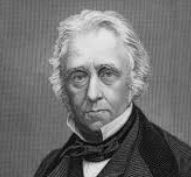
At last I have attained true glory. As I walked through Fleet Street the day before yesterday, I saw a copy of Hume at a bookseller's window with the following label: "Only 2l. 2s. Hume's History of England in eight volumes, highly valuable as an introduction to Macaulay." I laughed so convulsively that the other people who were staring at the books took me for a poor demented gentleman.
▼
Source
source
Alas for poor David! Journal entry (8 March 1849), quoted in George Otto Trevelyan, The Life and Letters of Lord Macaulay, Volume II (1876), p. 253
2 months 1 day ago
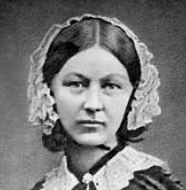
What the horrors of war are, no one can imagine - they are not wounds and blood and fever, spotted and low, or dysentery, chronic and acute, cold and heat and famine - they are intoxication, drunken brutality, demoralization and disorder on the part of the inferior, jealousies, meanness, indifference, selfish brutality on the part of the superior.
▼
Source
source
Letter (5 May 1855), published in Florence Nightingale : An Introduction to Her Life and Family (2001), edited by Lynn McDonald, p. 141
4 days ago
To take Macaulay out of literature and society and put him in the House of Commons, is like taking the chief physician out of London during a pestilence.
▼
Source
source
Vol. I, ch. 9, p. 315
1 month 2 weeks ago
He is a despicable sage whose wisdom does not profit himself.
▼
Source
source
Maxim 629
3 months 3 weeks ago
If at times I have thought myself unfortunate, it is because of a confusion, an error. I have mistaken myself for someone else... Who am I really? I am the author of The World as Will and Representation, I am the one who has given an answer to the mystery of Being that will occupy the thinkers of future centuries. That is what I am, and who can dispute it in the years of life that still remain for me?
▼
Source
source
From The Total Library by Jorge Luis Borges, 1999

3 months 4 weeks ago
Cato said the best way to keep good acts in memory was to refresh them with new.
▼
Source
source
No. 247

2 months 2 weeks ago
...a monarchy is a thing perfectly susceptible of reform; perfectly susceptible of a balance of power; and that, when reformed and balanced, for a great country, it is the best of all governments. The example of our country might have led France, as it has led him, to perceive that monarchy is not only reconcilable to liberty, but that it may be rendered a great and stable security to its perpetual enjoyment.
▼
Source
source
p. 400
2 months 2 weeks ago
One may observe, that men of all persuasions confine the word persecution, and all the ill ideas of injustice and violence which belong to it, solely to those severities which are exercised upon themselves, or upon the party they are inclined to favour. Whatever is inflicted upon others, is a just punishment upon obstinate impiety, and not a restraint upon conscientious differences.
▼
Source
source
Volume II, p. 146
2 months 2 weeks ago
Their principles always go to the extreme. They who go with the principles of the ancient Whigs, which are those contained in Mr. Burke's book, never can go too far. ... The opinions maintained in that book never can lead to an extreme, because their foundation is laid in an opposition to extremes.
▼
Source
source
p. 470
3 months 2 weeks ago
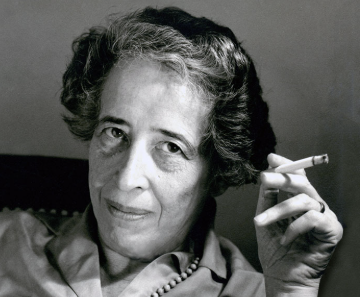
Since it is always the same person whose mind thinks, wills, and judges, the autonomous nature of these activities has created great difficulties. Reason's inability to move the will, plus the fact that thinking can only "understand" what is past what neither remove it nor "rejuvenate it" ... have led to the various doctrines asserting the mind's impotence and the force of the irrational, in brief to Hume's famous dictum that "Reason is and ought only to be the slave of the passions," that is, to a rather simple-minded reversal of the Platonic notion of reason's uncontested rulership in the household of the soul. What is so remarkable in all these theories and doctrines is their implicit monism, the claim that behind the obvious multiplicity of the world's appearances and, even more pertinently to our context, behind the obvious plurality of man's faculties and abilities, there must exist a oneness - the old hen pan, "the all is one" - either a single source or a single ruler.

2 months 2 days ago
But Zarathustra made it clear in which direction the answer lay; it is towards the artist-psychologist, the intuitional thinker. There are very few such men in the world's literature; the great artists are not thinkers, the great thinkers are seldom artists.
▼
Source
source
p. 158

3 months 2 weeks ago
Ethics is in origin the art of recommending to others the sacrifices required for co-operation with oneself.
▼
Source
source
Ch. 6: On the Scientific Method in Philosophy
2 months 2 weeks ago
Ministers become a sort of miniature kings in their turn. Though they have the greatest opportunity of observing the impotence and unmeaningness of the character, they envy it. It is their trade perpetually to extol the dignity and importance of the master they serve; and men cannot long anxiously endeavor to convince others of the truth of any proposition without becoming half convinced themselves.
▼
Source
source
Book V, Ch. 5
2 months 1 week ago
To know how just a cause we have for grieving is already a consolation.
▼
Source
source
Ch. IV.: Music
2 months 6 days ago
The vain man is in like cause with the avaricious - he takes the mean for the end; forgetting the end he pursues the means for its own sake and goes no further. The seeming to be something, conducive to being it, ends by forming our objective. We need that others should believe in our superiority to them in order that we may believe in it ourselves, and upon their belief base our faith in our own persistence, or at least in the persistence of our fame. We are more grateful to him that congratulates us on the skill with which we defend a cause than we are to him who recognizes the truth or goodness of the cause itself. A rabid mania for originality is rife in the modern intellectual world and characterizes all individual effort. We would rather err with genius than hit the mark with the crowd.
2 months 2 weeks ago
It may be confidently asserted that no man chooses evil because it is evil; he only mistakes it for happiness, the good he seeks. And the desire of rectifying these mistakes, is the noble ambition of an enlightened understanding, the impulse of feelings that Philosophy invigorates.
▼
Source
source
A Vindication of the Rights of Men
3 months 2 weeks ago
All testing, all confirmation and disconfirmation of a hypothesis takes place already within a system. And this system is not a more or less arbitrary and doubtful point of departure for all our arguments; no it belongs to the essence of what we call an argument. The system is not so much the point of departure, as the element in which our arguments have their life.
2 months 2 weeks ago
Crime in full glory consolidates authority by the sacred fear it inspires.

4 months 2 weeks ago
Modesty is an unnatural attitude, and one which is only with difficulty taught to children.

4 months 2 weeks ago
The male has more teeth than the female in mankind, and sheep, and goats, and swine. This has not been observed in other animals.
4 months 2 weeks ago
I joke sometimes to the effect that when I approach a part of a book where I must explain something I don't understand, I just type faster and faster and faster. Then, when I get to the part I don't understand, sheer inertia pushes me through. That's not literally true, of course, but there's something to it psychologically.
CivilSimian.com created by AxiomaticPanic, CivilSimian, Kalokagathia