


4 months 6 days ago
No particular results then, so far, but only an attitude of orientation, is what the pragmatic method means. The attitude of looking away from first things, principles, 'categories,' supposed necessities; and of looking towards last things, fruits, consequences, facts.
▼
Source
source
Lecture II, What Pragmatism Means
1 month 2 weeks ago
Humans are prone to status quo bias. So let's do a thought-experiment. Imagine we stumble across an advanced civilisation that has abolished predation, disease, famine, and all the horrors of primitive Darwinian life. The descendants of archaic lifeforms flourish unmolested in their wildlife parks - free living, but not "wild". Should we urge scrapping their regime of compassionate stewardship of the living world - and a return to asphyxiation, disembowelling and being eaten alive? Or is a happy biosphere best conserved intact? Reply to "Should humans wipe out all carnivorous animals so the succeeding generations of herbivores can live in peace?"
▼
Source
source
, Quora, 16 Jun. 2018
2 months 1 week ago
One reason an egalitarian approach to the value of life is important is that it draws from ideals of radical democracy at the same time that it enters into ethical considerations about how best to practice nonviolence. The institutional life of violence will not be brought down by a prohibition, but only by a counter-institutional ethos and practice.
▼
Source
source
p. 61

2 months 3 weeks ago
I must avert here once again to my view of the opposition that exists between individuality and personality, notwithstanding the fact that the one demands the other. Individuality is, if I may so express it, the container or thing which contains, personality the content or thing contained, or I might say that my personality is in a certain sense my comprehension, that which I comprehend or embrace within myself - which is in a certain way the whole Universe - and that my individuality is my extension; the one my infinite, the other my finite.
2 months 4 weeks ago
Liberal philosophy, at this point, ceases to be empirical and British in order to become German and transcendental. Moral life, it now believes, is not the pursuit of liberty and happiness of all sorts by all sorts of different creatures; it is the development of a single spirit in all life through a series of necessary phases, each higher than the preceding one. No man, accordingly, can really or ultimately desire anything but what the best people desire. This is the principle of the higher snobbery; and in fact, all earnest liberals are higher snobs.
▼
Source
source
"The Irony of Liberalism"

2 months 2 weeks ago
Government exists but to maintain special privilege and property rights; it coerces man into submission and therefore robs him of dignity, self-respect, and life.
2 months 3 weeks ago
So long as you "have" yourself, have yourself as an object, your experience of man is only as of a thing among things.
▼
Source
source
p. 148

4 months 1 day ago
A man will be imprisoned in a room with a door that's unlocked and opens inwards; as long as it does not occur to him to pull rather than push it.
▼
Source
source
p. 42e
2 weeks 2 days ago
A state of war only serves as an excuse for domestic tyranny.
▼
Source
source
The Gulag Archipelago

3 weeks ago
Of course, however, the living voice and the intimacy of a common life will help you more than the written word. You must go to the scene of action, first, because men put more faith in their eyes than in their ears, and second, because the way is long if one follows precepts, but short and helpful, if one follows patterns.
▼
Source
source
Line 5. Alternate translation: Teaching by precept is a long road, but short and beneficial is the way by example.
4 months 1 week ago
Psychologists have hitherto failed to realize that imagination is a necessary ingredient of perception itself.
▼
Source
source
A 120

3 days ago
Wherever an altar is found, there civilization exists.
▼
Source
source
Original text:Partout où vous verrez un autel, là se trouve la civilisation. "Second Dialogue," p. 44

3 weeks 6 days ago
And wonderful it is to see how the Ideal or Soul, place it in what ugliest Body you may, will irradiate said Body with its own nobleness; will gradually, incessantly, mould, modify, new-form or reform said ugliest Body, and make it at last beautiful, and to a certain degree divine!
4 months 1 week ago
No man's knowledge here can go beyond his experience.
▼
Source
source
Book II, Ch. 1, sec. 19
2 days ago
For we carry our fate with us - and it carries us.
▼
Source
source
(Hays translation) III, 4

2 months 5 days ago
No feats of heroism are needed to achieve the greatest and most important changes in the existence of humanity; neither the armament of millions of soldiers, nor the construction of new roads and machines, nor the arrangement of exhibitions, nor the organization of workmen's unions, nor revolutions, nor barricades, nor explosions, nor the perfection of aerial navigation; but a change in public opinion. And to accomplish this change no exertions of the mind are needed, nor the refutation of anything in existence, nor the invention of any extraordinary novelty; it is only needful that we should not succumb to the erroneous, already defunct, public opinion of the past, which governments have induced artificially; it is only needful that each individual should say what he really feels or thinks, or at least that he should not say what he does not think.
▼
Source
source
Ch. 17
5 days ago
Do not think me gentle because I speak in praise of gentleness, or elegant because I honor the grace that keeps this world. I am a man crude as any, gross of speech, intolerant, stubborn, angry, full of fits and furies. That I may have spoken well at times, is not natural. A wonder is what it is.
▼
Source
source
A Warning To My Readers

2 weeks 3 days ago
The awareness that we are all human beings together has become lost in war and through politics. We have reached the point of regarding each other only as members of a people either allied with us or against us and our approach; prejudice, sympathy, or antipathy are all conditioned on that. Now we must rediscover the fact that we - all together - are human beings, and that we must strive to concede to each other what moral capacity we have. Only in this way can we begin to believe that in other peoples as well as in ourselves there will arise the need for a new spirit which can be the beginning of a feeling of mutual trustworthiness toward each other.
▼
Source
source
Radio appeal for peace, Oslo, Norway (30 March 1958); also in Peace or Atomic War (1958) Three Appeals Broadcast from Oslo, Norway, on April 28, 29, and 30, 1958.

3 months 2 days ago
Society: an inferno of saviors!
3 months 2 days ago
No one has the audacity to exclaim: "I don't want to do anything!" - we are more indulgent with a murderer than with a mind emancipated from actions.
3 days ago
Nations are barbarian in their infancy but not savage. The barbarian is a proportional mean between the savage and the citizen. He already possesses no end of knowledge: he has habitations, some agriculture, domestic animals, laws, a cult, regular tribunals; he lacks only the sciences.
▼
Source
source
p. 25
4 months 1 week ago
The evil effect of science upon men is principally this, that by far the greatest number of those who wish to display a knowledge of it accomplish no improvement at all of the understanding, but only a perversity of it, not to mention that it serves most of them as a tool of vanity.
▼
Source
source
Part III : Selection on Education from Kant's other Writings, Ch. I Pedagogical Fragments, # 52
3 months 2 days ago
Scaffolds, dungeons, jails flourish only in the shadow of a faith - of that need to believe which has infested the mind forever. The devil pales beside the man who owns a truth, his truth. We are unfair to a Nero, a Tiberius: it was not they who invented the concept heretic: they were only degenerate dreamers who happened to be entertained by massacres. The real criminals are men who establish an orthodoxy on the religious or political level, men who distinguish between the faithful and the schismatic.
1 month 2 weeks ago
Experience is what you get while looking for something else.
▼
Source
source
"Experience"
3 days ago
War is divine in itself, since it is a law of the world. War is divine through its consequences of a supernatural nature which are as much general as particular, consequences little known because little studied, but which are nevertheless incontestable. War is divine in the mysterious glory that surrounds it and in the no less inexplicable attraction that draws us to it. War is divine by the manner in which it breaks out.
▼
Source
source
Seventh Dialogue, p. 218

2 months 2 days ago
I am often accused of expressing contempt and despising religious people. I don't despise religious people, I despise what they stand for. I like to quote the British journalist Johann Hari who said, "I have so much respect for you, that I cannot respect your ridiculous ideas."
▼
Source
source
Reason Rally, National Mall, Washington, DC, 2012-03-24 Richard Dawkins and his Foundation at the Reason Rally, YouTube, 7 April 2012

6 days ago
God forbid we should ever be twenty years without such a rebellion. The people cannot be all, and always, well informed. The part which is wrong will be discontented, in proportion to the importance of the facts they misconceive. If they remain quiet under such misconceptions, it is lethargy, the forerunner of death to the public liberty. What country before ever existed a century and half without a rebellion? And what country can preserve its liberties if their rulers are not warned from time to time that their people preserve the spirit of resistance? Let them take arms. The remedy is to set them right as to facts, pardon and pacify them. What signify a few lives lost in a century or two? The tree of liberty must be refreshed from time to time with the blood of patriots and tyrants. It is its natural manure.
▼
Source
source
Letter to William Stephens Smith (13 November 1787). Manuscript at the Library of Congress.

2 months 3 weeks ago
The essential characteristic of the first half of the twentieth century is the growing weakness, and almost the disappearance, of the idea of value.
▼
Source
source
"The responsibility of writers," p. 167
2 months 3 weeks ago
When I read the catechism of the Council of Trent, it seems as though I had nothing in common with the religion there set forth.

5 months 2 days ago
This was her finest role and the hardest one to play. Choosing between heaven and a ridiculous fidelity, preferring oneself to eternity or losing oneself in God is the age-old tragedy in which each must play his part.
2 days ago
The controlling Intelligence understands its own nature, and what it does, and whereon it works.
▼
Source
source
VI, 5

2 months 2 weeks ago
A philosopher of imposing stature doesn't think in a vacuum. Even his most abstract ideas are, to some extent, conditioned by what is or is not known in the time when he lives.
▼
Source
source
Ch. 29, June 10, 1943.

3 months 2 weeks ago
That which exercises reason is more excellent than that which does not exercise reason; there is nothing more excellent than the universe, therefore the universe exercises reason.
▼
Source
source
As quoted in De Natura Deorum by Cicero, ii. 8.; iii. 9.
4 months 1 week ago
It is absurd to excite reason against the primary postulates of pure time, as, for example, continuity, etc., since they follow from laws prior and superior to which nothing is found, and since reason herself in the use of the principle of contradiction cannot dispense with the support of this concept, so primitive and original is it.
2 months 2 weeks ago
When I first read The Wretched of the Earth I heard a new history spoken-the voice of the decolonised subject raised in resistance. That voice . . . articulated a yearning for freedom that was so intense and a quality of emotional hunger that was so fierce that it was overwhelming. Dying into the text, I abandoned and forgot myself. The lust for freedom in those pages awakened and resurrected me.
▼
Source
source
Gender and Decolonization in the Congo (2010) ISBN 978-0-230-11040-3
4 months 1 week ago
The end of law is not to abolish or restrain, but to preserve and enlarge freedom. For in all the states of created beings, capable of laws, where there is no law there is no freedom.
▼
Source
source
Second Treatise of Government, Ch. VI, sec. 57

2 months 3 days ago
The alphabet, when pushed to a high degree of abstract visual intensity, became typography. The printed word with its specialist intensity burst the bonds of medieval corporate guilds and monasteries, created extreme individualist patterns of enterprise and monopoly.
▼
Source
source
(p. 23)
4 months 3 weeks ago
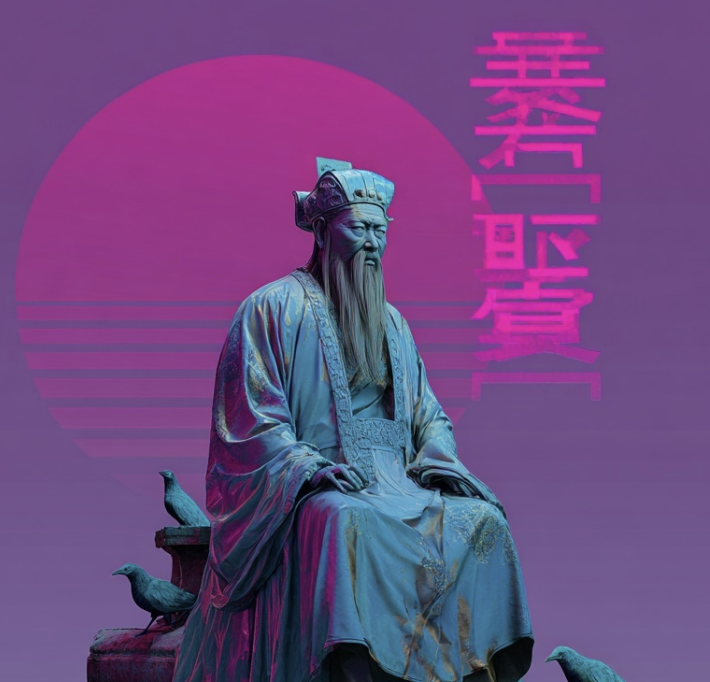
When a country is well governed, poverty and a mean condition are things to be ashamed of. When a country is ill governed, riches and honor are things to be ashamed of.
3 weeks 5 days ago
Somehow, the practice of astronomy, physics, chemistry or biology normally fails to evoke the controversies over fundamentals that today seem endemic among, say, psychologists or sociologists. Attempting to discover the source of that difference led me to recognize the role in scientific research of what I have since called "paradigms." These I take to be universally recognized scientific achievements that for a time provide model problems and solutions for a community of practitioners.
▼
Source
source
p. xiii
2 months 3 weeks ago
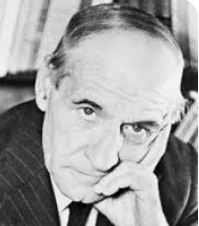
The history of the Roman Empire is also the history of the uprising of the Empire of the Masses, who absorb and annul the directing minorities and put themselves in their place. Then, also, is produced the phenomenon of agglomeration, of "the full." For that reason, as Spengler has very well observed, it was necessary, just as in our day, to construct enormous buildings. The epoch of the masses is the epoch of the colossal.
▼
Source
source
Chap.II: The Rise Of The Historic Level

2 months 2 weeks ago
As man loses touch with his 'inner being', his instinctive depths, he finds himself trapped in the world of consciousness, that is to say, in the world of other people. Any poet knows this truth; when other people sicken him, he turns to hidden resources of power inside himself, and he knows then that other people don't matter a damn. He knows the 'secret life' inside him is the reality; other people are mere shadows in comparison. but the 'shadows' themselves cling to one another. 'Man is a political animal', said Aristotle, telling one of the greatest lies in human history. Man has more in common with the hills, or with the stars, than with other men.
▼
Source
source
p. 170
2 months 4 weeks ago
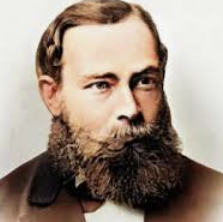
I hope I may claim in the present work to have made it probable that the laws of arithmetic are analytic judgments and consequently a priori. Arithmetic thus becomes simply a development of logic, and every proposition of arithmetic a law of logic, albeit a derivative one. To apply arithmetic in the physical sciences is to bring logic to bear on observed facts; calculation becomes deduction.
▼
Source
source
Gottlob Frege (1950 ). The Foundations of Arithmetic. p. 99.
2 months 2 days ago
Bush and bin Laden are really on the same side: the side of faith and violence against the side of reason and discussion. Both have implacable faith that they are right and the other is evil. Each believes that when he dies he is going to heaven. Each believes that if he could kill the other, his path to paradise in the next world would be even swifter. The delusional "next world" is welcome to both of them. This world would be a much better place without either of them.
▼
Source
source
Gordy Slack, "The Atheist" Salon.com
3 months 1 day ago
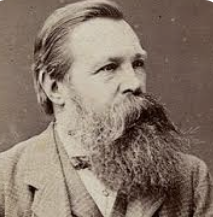
Labor is a commodity, like any other, and its price is therefore determined by exactly the same laws that apply to other commodities. In a regime of big industry or of free competition - as we shall see, the two come to the same thing - the price of a commodity is, on the average, always equal to its cost of production. Hence, the price of labor is also equal to the cost of production of labor. But, the costs of production of labor consist of precisely the quantity of means of subsistence necessary to enable the worker to continue working, and to prevent the working class from dying out. The worker will therefore get no more for his labor than is necessary for this purpose; the price of labor, or the wage, will, in other words, be the lowest, the minimum, required for the maintenance of life.

3 months 6 days ago
I go to spread the tidings, I want to spread the tidings - of what? Of the truth, for I have seen it, have seen it with my own eyes, have seen it in all its glory.
2 months 3 weeks ago
There are pretenses which are very sincere, and marriage is their school.
▼
Source
source
Tres novelas ejemplares y un prólogo [Three Exemplary Novels and a Prologue] (1920); Two Mothers
1 month 2 days ago
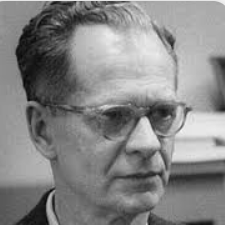
Society attacks early, when the individual is helpless.
▼
Source
source
Walden Two (1948), p. 95
3 months 3 days ago
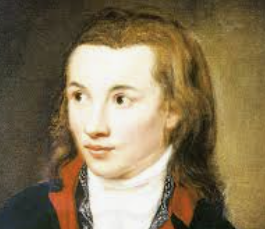
The first Man is the first Spirit-seer; all appears to him as Spirit. What are children, but first men? The fresh gaze of the Child is richer in significance than the forecasting of the most indubitable Seer.
CivilSimian.com created by AxiomaticPanic, CivilSimian, Kalokagathia