


2 months 2 weeks ago
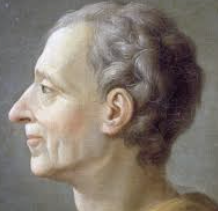
As long as I live I shall not allow myself to forget that I shall die; I am waiting for death so that I can forget about it.
2 months 1 week ago
I have read descriptions of Paradise that would make any sensible person stop wanting to go there.
▼
Source
source
No. 125. (Usbek writing to Rhedi)

3 months 3 weeks ago
And when his hours are numbered, and the world Is all his own, retiring, as he were not, Leaves, when the sun appears, astonished Art To mimic in slow structures, stone by stone Built in an age, the mad wind's night-work, The frolic architecture of the snow.
▼
Source
source
The Snow-Storm

2 months 3 weeks ago
It is an advantage to all narrow wisdom and narrow morals that their maxims have a plausible air; and, on a cursory view, appear equal to first principles. They are light and portable. They are as current as copper coin; and about as valuable. They serve equally the first capacities and the lowest; and they are, at least, as useful to the worst men as to the best. Of this stamp is the cant of not man, but measures; a sort of charm by which many people get loose from every honourable engagement.

2 months 1 week ago
From whatever side the matter is regarded, it is always found that reason confronts our longing for personal immortality and contradicts it. And the truth is, in all strictness, that reason is the enemy of life.

2 months 3 weeks ago
There are two things which a democratic people will always find very difficult-to begin a war and to end it.
▼
Source
source
Book Three, Chapter XXII.
2 months 3 weeks ago
There is hardly a member of Congress who can make up his mind to go home without having despatched at least one speech to his constituents; nor who will endure any interruption until he has introduced into his harangue whatever useful suggestions may be made touching the four-and-twenty States of which the Union is composed, and especially the district which he represents.
▼
Source
source
Book One, Chapter XXI.

3 months 3 weeks ago
When Descartes said, "Conquer yourself rather than the world," what he meant was, at bottom, - the same - that we should act without hope. Marxists, to whom I have said thus have answered: "Your action is limited, obviously, by your death: but you can rely upon the help of others.
▼
Source
source
p. 39

2 months 2 weeks ago
The ontological concept of truth is in the centre of a logic which may serve as a model of pre- technological rationality. It is the rationality of a two-dimensional universe of discourse which, contrasts with the of thought and behavior that develop in the execution of the technological project.
▼
Source
source
p. 130
4 months 1 day ago
We are much beholden to Machiavel and others, that write what men do, and not what they ought to do.
▼
Source
source
Book II, xxi, 9

3 months 1 week ago
For a man petticoat government is the limit of insolence.
4 months 1 week ago
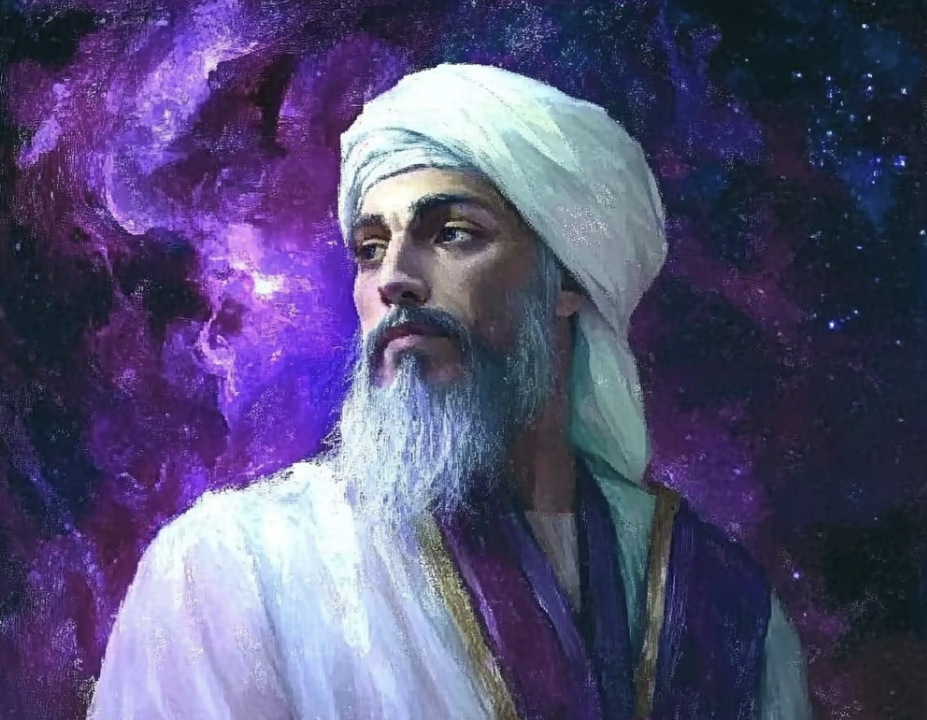
Religious law makes it illegal for the ignorant to drink wine, but intelligence makes it legal for the intellectual.

3 months 3 weeks ago
Through the emancipation of private property from the community, the State has become a separate entity, beside and outside civil society; but is it nothing more than the form of organization which the bourgeois necessarily adopt both for internal and external purposes, for the mutual guarantee of their property and interests.
▼
Source
source
Part One The Marx-Engels Reader, p. 187
2 months 2 weeks ago
Speech and silence. We feel safer with a madman who talks than with one who cannot open his mouth.
2 months 3 weeks ago
Abstract liberty, like other mere abstractions, is not to be found.

2 months 3 weeks ago
The noblest Digladiation is in the Theatre of ourselves.
▼
Source
source
Part I, Section XXIV

2 months 3 weeks ago
If exclusive privileges were not granted, and if the financial system would not tend to concentrate wealth, there would be few great fortunes and no quick wealth. When the means of growing rich is divided between a greater number of citizens, wealth will also be more evenly distributed; extreme poverty and extreme wealth would be also rare.
▼
Source
source
Article on Wealth
3 months 4 weeks ago
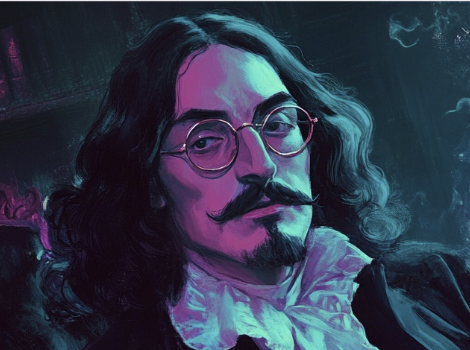
René Descartes is more widely known as a philosopher than as a mathematician, although his philosophy has been controverted while his mathematics has not. ...In accordance with the ideals of his age, when experimental science was first seriously challenging arrogant speculation, Descartes set a greater store by his philosophy than his mathematics. But he fully appreciated the power of his new method in geometry.
▼
Source
source
Eric Temple Bell, The Development of Mathematics

3 months 3 weeks ago
To be taken without consent from my home and friends; to lose my liberty; to undergo all those assaults on my personality which modern psychotherapy knows how to deliver; to be re-made after some pattern of "normality" hatched in a Viennese laboratory to which I never professed allegiance; to know that this process will never end until either my captors have succeeded or I have grown wise enough to cheat them with apparent success-who cares whether this is called Punishment or not? "The Humanitarian Theory of Punishment"
▼
Source
source
1949

1 month 2 weeks ago
Since Sputnik there is no Nature. Nature is an item contained in a man-made environment of satellites and information.
3 days ago
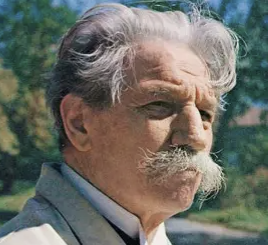
To the man who is truly ethical all life is sacred, including that which from the human point of view seems lower in the scale. He makes distinctions only as each case comes before him, and under the pressure of necessity, as, for example, when it falls to him to decide which of two lives he must sacrifice in order to preserve the other. But all through this series of decisions he is conscious of acting on subjective grounds and arbitrarily, and knows that he bears the responsibility for the life which is sacrificed.
▼
Source
source
p. 269

2 months 5 days ago
As man loses touch with his 'inner being', his instinctive depths, he finds himself trapped in the world of consciousness, that is to say, in the world of other people. Any poet knows this truth; when other people sicken him, he turns to hidden resources of power inside himself, and he knows then that other people don't matter a damn. He knows the 'secret life' inside him is the reality; other people are mere shadows in comparison. but the 'shadows' themselves cling to one another. 'Man is a political animal', said Aristotle, telling one of the greatest lies in human history. Man has more in common with the hills, or with the stars, than with other men.
▼
Source
source
p. 170
2 months 2 weeks ago
Functional communication is only the outer layer of the one- dimensional universe in which man is trained to target-to translate the negative into the positive so that he can continue to function, reduced but fit and reasonably well. The institutions of free speech and freedom of thought do not hamper the mental coordination with the established reality. What is taking place is a sweeping redefinition of thought itself, of its function and content. The coordination of the individual with his society reaches into those layers of the mind where the very concepts are elaborated which are designed to comprehend the established reality. These concepts are taken from the intellectual tradition and translated into operational terms-a translation which has the effect of reducing the tension between thought and reality by weakening the negative power of thought.
▼
Source
source
p. 104

1 week 6 days ago
In every man's writings, the character of the writer must lie recorded.
▼
Source
source
Goethe (1828).

3 months 3 weeks ago
Our island is this earth; and the most striking object we behold is the sun. As soon as we pass beyond our immediate surroundings, one or both of these must meet our eye. Thus the philosophy of most savage races is mainly directed to imaginary divisions of the earth or to the divinity of the sun.
3 months 3 weeks ago
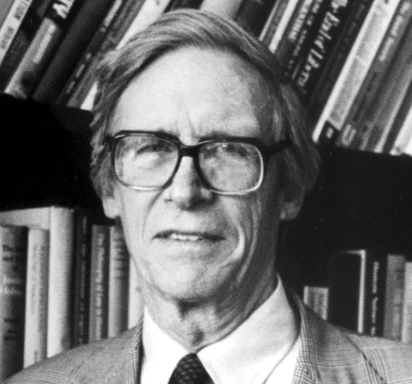
The concept of justice I take to be defined, then, by the role of its principles in assigning rights and duties and in defining the appropriate division of social advantages. A conception of justice is an interpretation of this role.
▼
Source
source
Chapter I, Section 2, pg. 10

4 months 3 weeks ago
Style ought to prove that one believes in an idea; not only that one thinks it but also feels it.


4 months 2 weeks ago
In that daily effort in which intelligence and passion mingle and delight each other, the absurd man discovers a discipline that will make up the greatest of his strengths. The required diligence and doggedness and lucidity thus resemble the conqueror's attitude. To create is likewise to give a shape to one's fate. For all these characters, their work defines them at least as much as it is defined by them. The actor taught us this: There is no frontier between being and appearing.
2 months 1 week ago
If a philosopher is not a man, he is anything but a philosopher; he is above all a pedant, and a pedant is a caricature of a man. The cultivation of any branch of science - of chemistry, of physics, of geometry, of philology - may be a work of differentiated specialization, and even so, only within very narrow limits and restrictions; but philosophy, like poetry, is a work of integration and synthesis, or else it is merely pseudo-philosophical erudition.

4 months 2 weeks ago
Neither perception nor true opinion, nor reason or explanation combined with true opinion could be knowledge. Then our art of midwifery declare to us that all the offspring that have been born are mere wind-eggs and not worth rearing and if you remain barren, you will be less harsh and gentler to your associates, for you will have the wisdom not to think you know that which you do not know.

4 months 3 weeks ago
Is there anything we cannot contrive to call the demands of the times, and is there anything that does not acquire a certain prestige by being the demand of the times? But for decisive religious categories to become the demand for the times is eo ipso a contradiction. “The times” is too abstract a category to be able as claimant to demand the decisive religious categories that belong specifically to individuality and particularity; loud collective demands en mass for what can be shared only by the single individual in particularity, in solitariness, in silence, cannot be made.
▼
Source
source
Two Ages: The Age of Revolution and the Present Age. A Literary Review.
2 months 2 weeks ago
Our place is somewhere between being and nonbeing - between two fictions.

3 months 3 weeks ago
The greatest improvement in the productive powers of labour, and the greatest part of skill, dexterity, and judgment with which it is any where directed, or applied, seem to have been the effects of the division of labour.
▼
Source
source
Chapter I, p. 7

3 months 4 weeks ago
Rejoice in the things that are present; all else is beyond thee.
3 months 3 weeks ago
The evident justice and utility of the foregoing maxims have recommended them more or less to the attention of all nations.
▼
Source
source
Chapter II, Part II, p. 894.

1 month 1 week ago
[On members of the Nazi Party] The most shocking, but also important thing, is they were not the uneducated masses. The majority had academic degrees. We like to think that education provides immunity to racist and fascist ideology. And it doesn't.
3 months 1 week ago
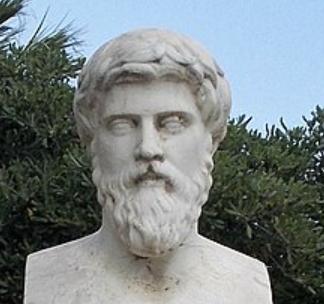
And when the physician said, "Sir, you are an old man," "That happens," replied Pausanias, "because you never were my doctor."
▼
Source
source
Of Pausanias the Son of Phistoanax
2 months 2 weeks ago
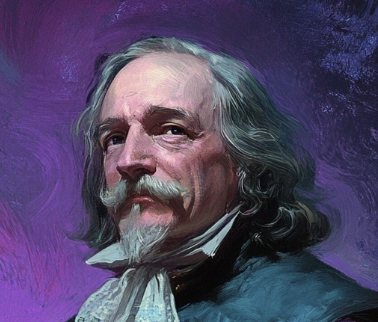
Hereby it is manifest, that during the time men live without a common Power to keep them all in awe, they are in that conditions called Warre; and such a warre, as is of every man, against every man.
▼
Source
source
The First Part, Chapter 13, p. 62

4 weeks 1 day ago
Might there not be a connection between the attempt to eradicate religion and the loss of freedom? It is unlikely that Mao, who launched his assault on the people and culture of Tibet with the slogan "Religion is poison," would have agreed that his atheist world-view had no bearing on his policies.

3 months 3 weeks ago
The Chinese are a great nation, incapable of permanent suppression by foreigners. They will not consent to adopt our vices in order to acquire military strength; but they are willing to adopt our virtues in order to advance in wisdom. I think they are the only people in the world who quite genuinely believe that wisdom is more precious than rubies. That is why the West regards them as uncivilized.
▼
Source
source
The Problem of China (1922), Ch. XIII: Higher education in China

2 months 2 weeks ago
Verily I say unto thee, That this night, before the cock crow, thou shalt deny me thrice.
▼
Source
source
26:34 (KJV) Said to Peter.
4 months 2 weeks ago
One recognizes one's course by discovering the paths that stray from it.
2 months 2 weeks ago
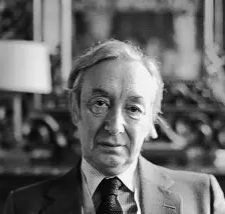
To say that authority, whether secular or religious, supplies no ground for morality is not to deny the obvious fact that it supplies a sanction.
▼
Source
source
"The Meaning of Life".
3 months 3 weeks ago
There are men who astonish and delight, men who instruct and guide. Some men's words I remember so well that I must often use them to express my thought. Yes, because I perceive that we have heard the same truth, but they have heard it better.
▼
Source
source
Character
2 months 5 days ago
No artist can develop without increasing his self-knowledge; but self-knowledge supposes a certain preoccupation with the meaning of human life and the destiny of man. A definite set of beliefs - Methodist Christianity, for example - may only be a hindrance to development; but it is not more so than Beckett's refusal to think at all. Shaw says somewhere that all intelligent men must be preoccupied with either religion, politics, or sex. (He seems to attribute T. E. Lawrence's tragedy to his refusal to come to grips with any of them.) It is hard to see how an artist could hope to achieve any degree of self-knowledge without being deeply concerned with at least one of the three.
▼
Source
source
p. 197
1 month 3 weeks ago
But it is not to be conceived that mere mechanical causes could give birth to so many regular motions: since the Comets range over all parts of the heavens, in very eccentric orbits. For by that kind of motion they pass easily through the orbs of the Planets, and with great rapidity; and in their aphelions, where they move the slowest, and are detain'd the longest, they recede to the greatest distances from each other, and thence suffer the least disturbance from their mutual attractions.
2 months 2 weeks ago
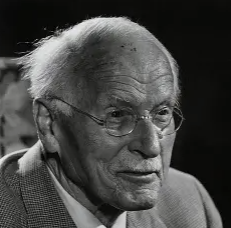
When we assume God to be a guiding principle-well, sure enough, a god is usually characteristic of a certain system of thought or morality. For instance, take the Christian God, the summum bonum: God is love, love being the highest moral principle; and God is spirit, the spirit being the supreme idea of meaning. All our Christian moral concepts derive from such assumptions, and the supreme essence of all of them is what we call God.
▼
Source
source
Nietzsche's Zarathustra (1988), p. 40
3 months 3 weeks ago
Solitude, the safeguard of mediocrity, is to genius the stern friend.
▼
Source
source
Culture
2 months 2 weeks ago
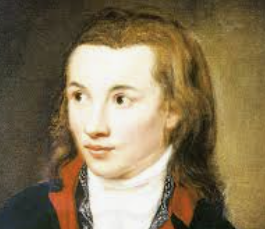
Someone arrived there - who lifted the veil of the goddess, at Sais. - But what did he see? He saw - wonder of wonders - himself. Novalis here alludes to Plutarch's account of the shrine of the goddess Minerva, identified with Isis, at Sais, which he reports had the inscription "I am all that hath been, and is, and shall be; and my veil no mortal has hitherto raised."
CivilSimian.com created by AxiomaticPanic, CivilSimian, Kalokagathia