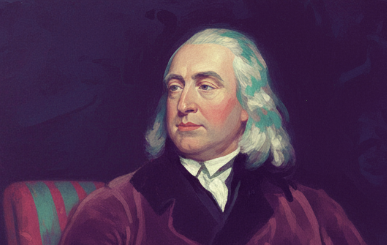
Create all the happiness you are able to create: remove all the misery you are able to remove. Every day will allow you to add something to the pleasure of others, or to diminish something of their pains. And for every grain of enjoyment you sow in the bosom of another, you shall find a harvest in your own bosom; while every sorrow which you pluck out from the thoughts and feelings of a fellow creature shall be replaced by beautiful peace and joy in the sanctuary of your soul.
Priestley was the first (unless it was Beccaria) who taught my lips to pronounce this sacred truth — that the greatest happiness of the greatest number is the foundation of morals and legislation.
0
⚖0
▼Source
source
"Extracts from Bentham's Commonplace Book", in Collected Works, x, p. 142; He credits Priestley in his Essay on the First Principles of Government (1768) or Beccaria with inspiring his use of the phrase, often paraphrased as "The greatest good for the gre
In looking over the catalogue of human actions (says a partizan of this principle) in order to determine which of them are to be marked with the seal of disapprobation, you need but to take counsel of your own feelings: whatever you find in yourself a propensity to condemn, is wrong for that very reason. For the same reason it is also meet for punishment: in what proportion it is adverse to utility, or whether it be adverse to utility at all, is a matter that makes no difference. In that same proportion also is it meet for punishment: if you hate much, punish much: if you hate little, punish little: punish as you hate. If you hate not at all, punish not at all: the fine feelings of the soul are not to be overborne and tyrannized by the harsh and rugged dictates of political utility.
Pleasure is in itself a good; nay, even setting aside immunity from pain, the only good: pain is in itself an evil; and, indeed, without exception, the only evil; or else the words good and evil have no meaning. And this is alike true of every sort of pain, and of every sort of pleasure.
The community is a fictitious body, composed of the individual persons who are considered as constituting as it were its members. The interest of the community then is what? The sum of the interests of the several members who compose it.
Intense, long, certain, speedy, fruitful, pure-Such marks in pleasures and in pains endure. Such pleasures seek if private be thy end: If it be public, wide let them extend.Such pains avoid, whichever be thy view: If pains must come, let them extend to few.
0
⚖0
▼Source
source
Ch. 4: Value of a Lot of Pleasure or Pain, How to be Measured