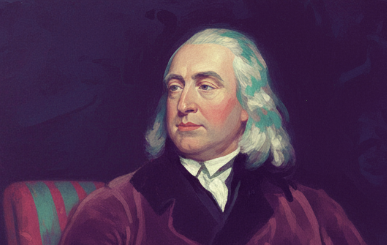
Pleasure is in itself a good; nay, even setting aside immunity from pain, the only good: pain is in itself an evil; and, indeed, without exception, the only evil; or else the words good and evil have no meaning. And this is alike true of every sort of pain, and of every sort of pleasure.
The community is a fictitious body, composed of the individual persons who are considered as constituting as it were its members. The interest of the community then is what? The sum of the interests of the several members who compose it.
Intense, long, certain, speedy, fruitful, pure—Such marks in pleasures and in pains endure.Such pleasures seek if private be thy end:If it be public, wide let them extend.Such pains avoid, whichever be thy view:If pains must come, let them extend to few.
0
⚖0
▼Source
source
Ch. 4: Value of a Lot of Pleasure or Pain, How to be Measured
Nature has placed mankind under the governance of two sovereign masters, pain and pleasure. It is for them alone to point out what we ought to do, as well as to determine what we shall do. On the one hand the standard of right and wrong, on the other the chain of causes and effects, are fastened to their throne. They govern us in all we do, in all we say, in all we think: every effort we can make to throw off our subjection, will serve but to demonstrate and confirm it. In words a man may pretend to abjure their empire: but in reality he will remain subject to it all the while. The principle of utility recognizes this subjection, and assumes it for the foundation of that system, the object of which is to rear the fabric of felicity by the hands of reason and of law. Systems which attempt to question it, deal in sounds instead of sense, in caprice instead of reason, in darkness instead of light.
The principle of utility judges any action to be right by the tendency it appears to have to augment or diminish the happiness of the party whose interests are in question... if that party be the community the happiness of the community, if a particular individual, the happiness of that individual.
Whenever you are about to be oppressed, you have a right to resist oppression: whenever you conceive yourself to be oppressed, conceive yourself to have a right to make resistance, and act accordingly. In proportion as a law of any kind—any act of power, supreme or subordinate, legislative, administrative, or judicial, is unpleasant to a man, especially if, in consideration of such its unpleasantness, his opinion is, that such act of power ought not to have been exercised, he of course looks upon it as oppression: as often as anything of this sort happens to a man—as often as anything happens to a man to inflame his passions,—this article, for fear his passions should not be sufficiently inflamed of themselves, sets itself to work to blow the flame, and urges him to resistance. Submit not to any decree or other act of power, of the justice of which you are not yourself perfectly convinced. If a constable call upon you to serve in the militia, shoot the constable and not the enemy;—if the commander of a press-gang trouble you, push him into the sea—if a bailiff, throw him out of the window. If a judge sentence you to be imprisoned or put to death, have a dagger ready, and take a stroke first at the judge.
That which has no existence cannot be destroyed — that which cannot be destroyed cannot require anything to preserve it from destruction. Natural rights is simple nonsense: natural and imprescriptible rights, rhetorical nonsense — nonsense upon stilts. But this rhetorical nonsense ends in the old strain of mischievous nonsense for immediately a list of these pretended natural rights is given, and those are so expressed as to present to view legal rights. And of these rights, whatever they are, there is not, it seems, any one of which any government can, upon any occasion whatever, abrogate the smallest particle.
0
⚖0
▼Source
source
The often-quoted phrase ‘nonsense upon stilts’ is often modernised to ‘nonsense on stilts’.
Secrecy is an instrument of conspiracy; it ought not, therefore, to be the system of a regular government.
0
⚖0
▼Source
source
[http://books.google.com/books?id=AusJAAAAIAAJ&q="Secresy+is+an+instrument+of+conspiracy+it+ought+not+therefore+to+be+the+system+of+a+regular+government"&pg=PA315#v=onepage On Publicity] from The Works of Jeremy Bentham volume 2, part 2 (1839)
Of corruption, the principal and direct use is, to engage the representatives of the people to betray their trust, and sell themselves and the people to the universal corrupter—the monarch, in his capacity of corrupter-general.
0
⚖0
▼Source
source
Constitutional Code (written between 1820 and 1832), quoted in The Works of Jeremy Bentham, Vol. XVII (1841), p. 76